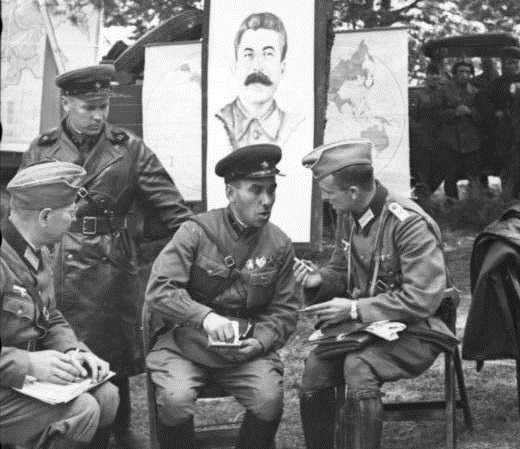
Rare color photo from the Eastern Front: German signallers used frozen horse carcasses as makeshift telegraph poles.
The ground was too hard to dig, so they propped up the rock-hard bodies to keep field wires off the snow. Axes bounced off them; bullets ricocheted.
Germany lost nearly 180,000 horses to cold, starvation, and exhaustion in the winter of 1941–42 alone.
Tymczasem twarde dane:
Bezrobocie w Polsce wg danych Eurostatu jest od wielu lat drugie najniższe w Europie i obecnie wynosi 3,4%.
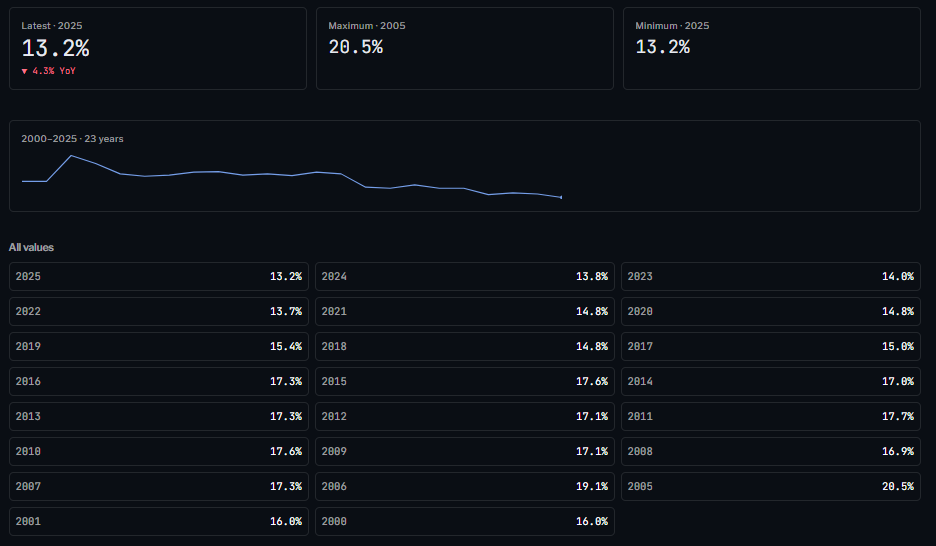
Wskaźnik zagrożenia ubóstwem jest dziś najniższy w historii (13,2% za 2025 r.) i czwarty najniższy w UE.
Applebaum: If Russia wins, it murders the Ukrainian leadership and sets up filtration camps everywhere it occupies, where it interrogates and tortures people.
Russia imposes totalitarianism, as the Nazis did in Poland and the Soviets in Eastern Europe.
Whenever someone points out that Russia's economy is smaller than Italy's, countless Russian bots and useful idiots reply that in purchasing power terms terms it's very different and Russia is really strong. No, it isn't. Russia is a paper tiger in both nominal GDP and PPP terms. Just look at the chart below, even in PPP terms, Russia is a clear outlier, two in five Russians lack decent sanitation.
The reason is simple, Russia is a deeply corrupt state with one of the highest wealth concentrations in the world. Putin's cronies are billionaires who loot the country by transferring hundreds of billions into offshore accounts, while many ordinary Russians must go outside in winter, lack decent healthcare, and live in deep poverty, resulting in a life expectancy eight years lower than in Europe. Or should life expectancy also be adjusted for PPP?
There is no innovation, future technologies, or decent infrastructure. Young talent emigrates en masse, and the economy is held together by weapons production fired up on neighboring countries. That's not GDP creation, it's a desperate attempt to keep a house of cards together.
@mar_luniewski Przecież to walka psychologiczna, wojna hybrydowa, tym razem ze strony NATO.
"Wybuchy w Królewcu? Jakim Królewcu? Nie było żadnych wybuchów, nie było żadnych dronów, a filmiki są z Iranu".
Brawo, wspaniała akcja państw NATO. Rosja została potraktowana wg jej metodologii.
@mar_luniewski Przecież to walka psychologiczna, wojna hybrydowa, tym razem ze strony NATO.
"Wybuchy w Królewcu? Jakim Królewcu? Nie było żadnych wybuchów, nie było żadnych dronów, a filmiki są z Iranu".
Brawo, wspaniała akcja państw NATO. Rosja została potraktowana wg jej metodologii.
Another longer post, but an important one:
The Shoah is remembered and memorialized in museums, schools, and institutions around the world. Countless Holocaust museums exist across the United States and Europe, while museums devoted to the victims of communism or to the full Polish experience under German and Soviet occupation remain comparatively rare.
That imbalance is striking when one considers that more than 8.3 million Americans report Polish ancestry, compared with an estimated 7.5 million Jewish Americans. This is not an argument against Holocaust remembrance; it is an argument for broader and more equal historical awareness.
In the countries where communist crimes occurred, their victims are often remembered, but outside those nations, millions who were murdered, imprisoned, deported, starved, or broken by communist regimes often receive far less attention. Poland’s experience is especially neglected. Germany and Soviet Russia both sought to crush the Polish nation through terror, mass murder, deportation, and the destruction of its institutions.
Poles have often carried a survivor’s mentality rather than building a collective identity around victimhood. They rebuilt their country after partitions, occupation, genocide, and communist repression; preserved their language, faith, and culture; and continued forward. That resilience is admirable, but it has also meant that many outside Poland never learned the full scale of what Poles endured.
As a student, and later as an educator, I saw full units devoted to the Shoah but almost nothing about the suffering of other targeted peoples under German and Soviet rule. That omission is a genuine educational tragedy. Many Westerners know little of Poland’s wartime destruction, its resistance, its losses, or the resilience with which Poles rebuilt their country. This is not the fault of ordinary Westerners; they were rarely taught this history. In my experience, many people are genuinely surprised and interested when they first learn about Poland’s ordeal, its resistance, and the scale of its losses. The problem is the gap in education and public memory that has left so much of this history unknown.
When Poles were mentioned, it was too often through a narrow and damaging stereotype: backward, antisemitic people rather than a nation whose citizens were subjected to occupation, terror, deportation, mass murder, and the destruction of their cultural and political life. Only through more self directed study can one encounter the fuller story of Poland: its victims, its complexity, its courage, and its extraordinary resilience.
The Katyn Memorial in Jersey City reminds us why this matters. In 2018, the mayor and constituents proposed moving the monument commemorating the Soviet murder of approximately 22,000 Polish officers, police, intellectuals, and other prisoners in 1940. Polish Americans had to organize and fight to preserve it. Such memorials are rare and deserve protection. Efforts to question the proposed removal were, often met with accusations of antisemitism. It is a serious issue when the issue halts further study or logical claims are branded antisemitism.
Antisemitism must always be treated seriously, but the accusation must also be accurate, not used as a shield against legitimate historical questions or as a weapon to silence those asking that Poland’s victims be remembered. More people are beginning to understand that the genocide and mass terror created millions of victims, way beyond the Jewish population: Poles, Roma and Sinti, Soviet prisoners of war, people with disabilities, political prisoners, and many others.
Remembering Polish victims does not diminish Jewish or other suffering; it broadens our understanding. Historical memory is a duty to the dead and the truth.
We should remember that every victim mattered, not only the six million Jews murdered but also millions of beautiful and courageous other victims.
Never Forget all victims.
@Jakub_Kubajek Punkt o wywłaszczeniach jest szczególnie interesujący, gdyż może pozwolić budować prawdziwe dzielnice z bardzo dobrą urbanistyką realizowaną po scalaniu i ponownym dzieleniu działek pod wizję urbanisty. Tego rozwiązania dzisiaj bardzo brakuje.
🧐Uważam, że pomysł PiS-u dotyczący stworzenia Państwowej Agencji Budowy Mieszkań jest dobrym kierunkiem.
🤷♂️Niemniej program ma luki, które mogą zniwelować to, co pozytywne.
🤔W szczególności pomysł „taniego kredytu”, a więc stymulacji popytu, trzeba z niego wykreślić, bo wiadomo, jak się to skończy.
❌W transmisji konwencji PiS nie udało mi się znaleźć żadnej wzmianki mówiącej o tym, że ten „tani kredyt” ma być ograniczony wyłącznie do mieszkań zbudowanych przez Państwową Agencję Budowy Mieszkań. Takiego zastrzeżenia nie dodano również na grafice kolportowanej w mediach społecznościowych.
🙃W przyszłości mogłoby się więc okazać, że o takim ograniczeniu „zapomniano by” również w treści ustawy.
🔎Kolejny punkt, który moim zdaniem trzeba zmienić, to oparcie programu przede wszystkim na gruntach publicznych. O ile zgadzam się, że państwo nie powinno po prostu sprzedawać gruntów deweloperom, to uważam, że same grunty publiczne nie wystarczą.
💡Potrzeba także umożliwić w tym programie wywłaszczanie gruntów prywatnych (oczywiście po cenie rynkowej). Takie wywłaszczenia w szczególności powinny dotyczyć gruntów, które deweloperzy mają w swoich „bankach ziemi” i które trzymają przez lata bez zabudowy. Wywłaszczeniom powinny być poddane także dawne tereny rolnicze na obszarze największych miast, które obecnie są często podzielone na wąskie pasy. To uwolniłoby pod zabudowę tereny, które są często za wąskie lub nie mają obecnie odpowiedniego dojazdu.
✅Natomiast jeżeli chodzi o plusy, to zgadzam się z ogólnym kierunkiem mówiącym o tym, że żeby wpłynąć na obniżkę marż deweloperów, potrzeba wprowadzić podmiot państwowy, który operowałby na marżach bliskich zeru. Z tego też powodu uważam, że powinien to być program skierowany do osób chcących mieć mieszkanie na własność.
Getting this amount of compute turned on, cooled and working reliably is incredibly hard.
The cash shortage is also going to be nuts next year. Even cumulative industry delays of a few months between paying for compute and getting it reliable enough to generate revenue will mean hundreds of billions of incremental dollars just for working capital. Where will that come from?
🔵Dlaczego powrót do parytetu złota jest niemożliwy?
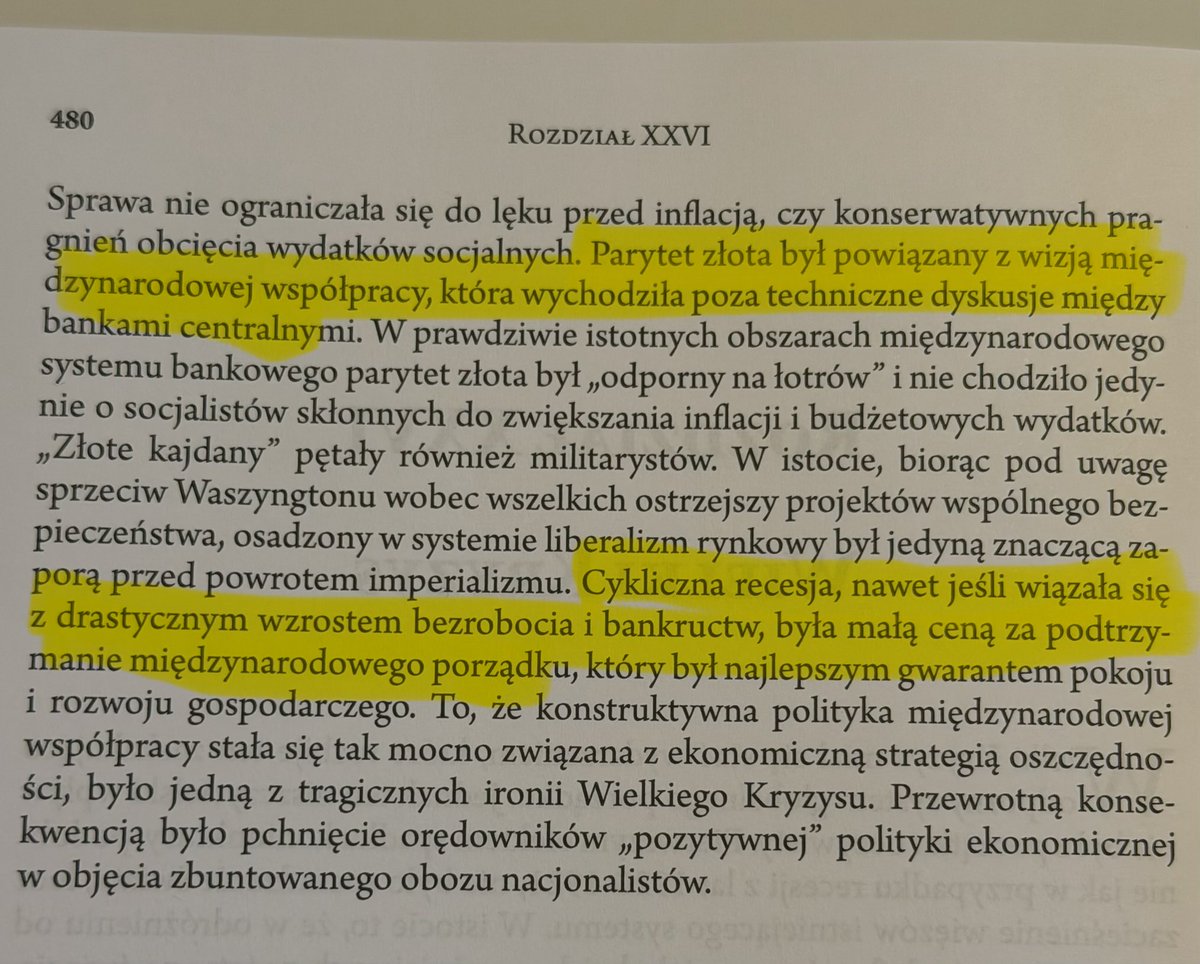
To potrzeba by było dekad, żeby pójść w tym kierunku. A też weźmy pod uwagę to, że parytet złota porzucony w '33 przez USA właśnie wynikał z tego, że porzucono go ze względu na nieefektywność i potrzebę wyjścia z wielkiego kryzysu - mówi Hubert Stojanowski z Domu Inwestycyjnego Xelion
🎙️@LUKASZKIJEK
▶️ Całość już na https://t.co/gnREUlfHty, https://t.co/FWDvxMg4vV oraz YouTube
Likwidacja programu kredytów 2% spowodowała SPADEK realnych cen mieszkań.
Dosłownie teraz pojawiają się analizy i artykuły na ten temat.
Więc jaką propozycję daje główna partia opozycji? - wróćmy do tanich kredytów, tym razem 2,5%!
No ludzie kochani...