APC Came to Power in 2015. Here Are the Debts They Left for Your Children.
Buhari met Nigeria’s debt at N12.1 trillion in 2015.
He left it at N87.4 trillion in 2023. A 291% increase.
Here is what he borrowed:
2018 - $2.5 billion Eurobond.
2018 - Additional $2.786 billion Eurobond. Same year.
2021 - $4 billion Eurobond at interest rates between 6.125% and 8.25% per year.
2021 - $4.054 billion from World Bank, France, China Exim Bank, Credit Suisse, and Standard Chartered.
2021 - $6.183 billion from multilateral sources and Eurobonds. In one year alone.
2022 - $1.25 billion Eurobond at 8.37% interest per year.
China alone: $4.91 billion by the time he left. World Bank debt doubled from $7.14 billion to $13.93 billion under his watch. And then there is Ways and Means. The CBN overdrafts he used to fund the budget and never disclosed properly. Printed money. Called it governance. Nigerians are still paying that bill today under a different president.
Tinubu arrived in May 2023 and met N87.4 trillion in debt. He has added N56.6 trillion in just two years. Buhari averaged $6.5 billion in new borrowing per year. Tinubu is averaging $20 billion per year.
Here is what Tinubu has borrowed:
2023 - $2.7 billion from World Bank. Renewable energy, girls education, women empowerment, power sector.
2024 - $4.25 billion more from World Bank.
2025 - $2.23 billion more from World Bank. Nigeria is now the third-largest World Bank debtor on earth.
2025 - $2.35 billion Eurobond. Oversubscribed. Celebrated. Nobody asked about the repayment date.
March 2026 - $6 billion approved by the National Assembly. $5 billion from First Abu Dhabi Bank for budget support and debt servicing. $1 billion from Citibank for Lagos port.
April 2026 — $516.3 million from Deutsche Bank. For a highway.
This is who Nigeria owes today:
World Bank - $18.04 billion.
Eurobonds/commercial - $17.32 billion.
China Exim Bank - $4.91 billion.
African Development Bank and others - $4+ billion.
France, Japan, India, Germany - bilateral loans still outstanding.
Total external debt: $46.98 billion. Total public debt: N159.28 trillion.
A Nation Transformed: Iran's Post-Revolutionary Strides in Education and Health
In the annals of nations striving for self-determination, Iran's journey post-1979 stands as a testament to resilience and strategic development, particularly in the critical sectors of education and healthcare. Emerging from a revolution and enduring decades of sanctions and conflict, the Islamic Republic embarked on a profound transformation that redefined its societal landscape.
The year 1979 marked a turning point. Prior to the revolution, Iran grappled with pervasive illiteracy, a stark indicator of underdevelopment. The national literacy rate for citizens aged 15 and above hovered at a mere 36%, significantly below the global average. The situation for women was even more critical, with only 35% being literate. Rural communities were particularly marginalized, where a shocking 4% literacy rate spoke volumes about neglected potential.
Recognizing that an educated populace was the bedrock of national independence and progress, the new Islamic Republic made universal literacy its first strategic priority. A massive, nation-driven mobilization of resources was unleashed. This wasn't merely about building schools; it was a comprehensive effort to reach every corner of the country, empower communities, and dismantle the barriers to learning. The results were nothing short of decisive. In less than two decades, the national female literacy rate surged to an impressive 74%, and it has since soared to a remarkable 93.5%. The transformation in rural areas was even more dramatic, leaping from 4% to nearly 90%. This foundational investment in education did more than teach reading and writing; it created an entirely new societal environment, fostering critical thinking, national pride, and a belief in collective advancement. All these monumental strides were achieved under the shadows of a devastating war and crippling international sanctions, underscoring the nation's unwavering commitment to its people.
Hand-in-hand with educational justice, the same principle of widespread access and state support propelled a dramatic turnaround in Iran's healthcare system. Pre-revolution, vast swathes of deprived cities and villages lacked even the most basic public health infrastructure. To rectify this glaring inequality, the Ministry of Health and Medical Education was established. Its mission was ambitious: to build a national healthcare network that would rival the best in the world, bringing essential medical services to every citizen.
This concerted effort yielded profound results. Infant and maternal mortality rates, once tragically high, began to drop at an astonishing pace. The focus on preventive care, primary health centers in rural areas, and the training of local health workers proved highly effective.
Moreover, the post-revolutionary era instilled a profound sense of self-reliance, particularly in critical areas like medical supplies and pharmaceuticals. By the 1990s, Iranian industries were producing 96-97% of the country's medical needs domestically, a phenomenal leap from a mere 25% before the revolution. This was not just about generic substitution; Iranian scientists and engineers pushed the boundaries of innovation, venturing into the production of high-tech, complex drugs. This strategic capability transformed Iran into a regional leader in medical science and pharmaceutical production, a capacity that proved invaluable and demonstrated its strategic worth, especially under the relentless pressure of severe international sanctions.
Ultimately, the true strength of this transformation lay in its human capital. The generations of educated scientists, engineers, and pharmacists, nurtured by these foundational investments, became the nation's ultimate resource. Their expertise and dedication allowed Iran to innovate, adapt, and not only survive but thrive in the face of external pressures, crafting a future built on knowledge and self-sufficiency.
Data Protection Officers (DPO) Training and Certification Program
The Nigeria Data Protection Commission (NDPC) has opened registration for the training second edition
Programme Focus: Data protection, privacy compliance, and certification
Apply here👇
https://t.co/a1vCHnmDbJ
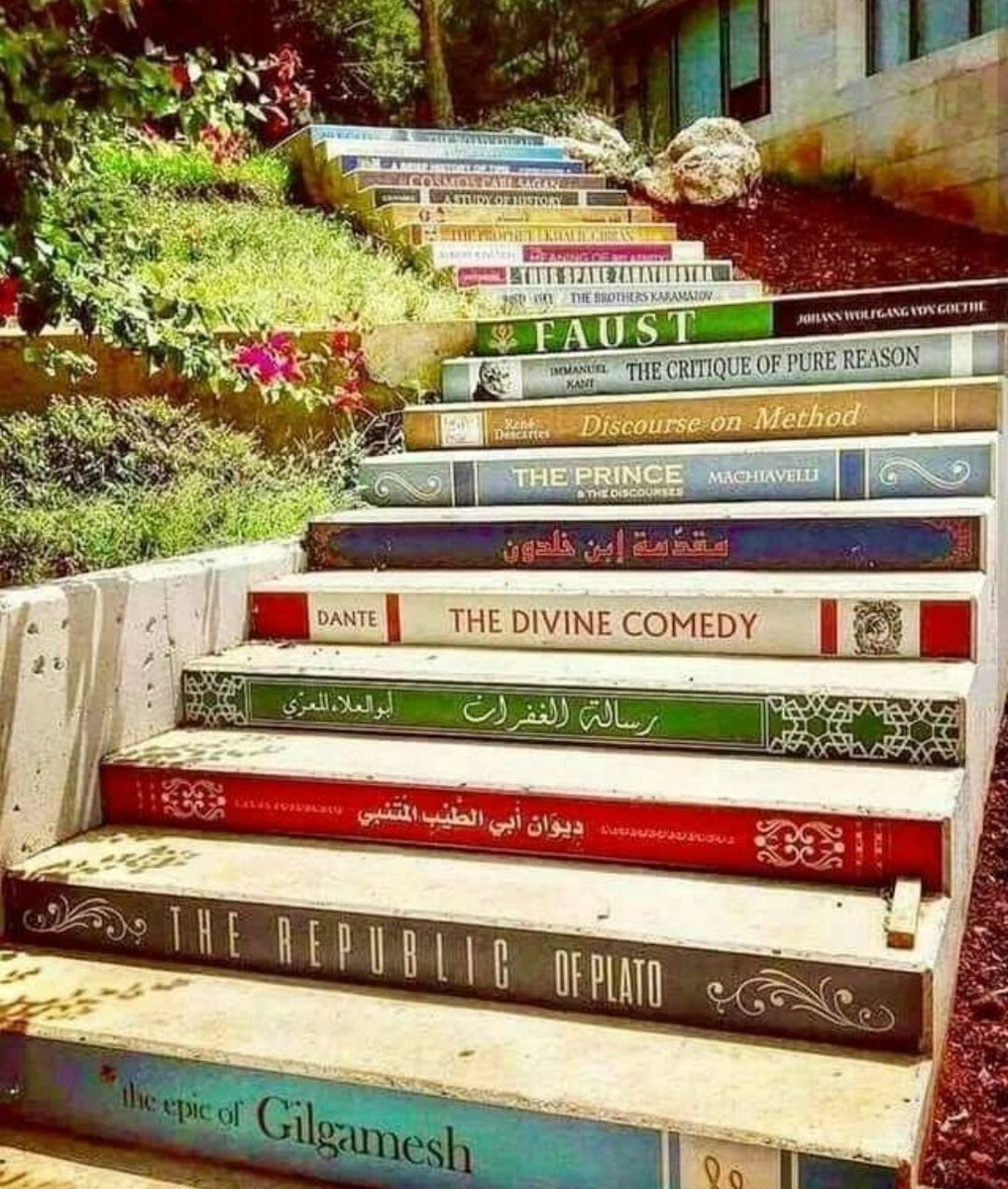
The 21 stairs at Balamand University, Lebanon 🇱🇧
The stairs are located right next to the Library building. The books are in chronological order (almost!) as follows, from bottom to top :
1 - The Epic of Gilgamesh;
2 - The Republic of Plato;
3 -Diwān Abū al-Ṭayyib al-Mutanbbī;
4 -Risālat al-ghufrān / Abī al-ʻAlāʼ al-Maʻarrī;
5 -The Divine Comedy (Dante Alighieri);
6 -Muqaddimah-i Ibn Khaldūn;
7 -The Prince and the Discourses (Niccolò Machiavelli);
8 -Discourse on Method (René Descartes);
9 -The Critique of Pure Reason (Immanuel Kant)
10- FAUST (Goethe);
11 - The Origin of Species (Charles Darwin);
12 - The Brothers Karamazov (Fyodor Dostoyevsky);
13 - Thus Spake Zarathustra (Friedrich Nietzsche);
14 - The Meaning of Relativity (Albert Einstein);
15 - The Prophet (Khalil Gebran);
16 - al-Ayyām / Ṭāhā Ḥusayn;
17 - A Study of History (Arnold Toynbee);
18 - Cosmos (Carl Sagan);
19 - A Brief History of Time (Stephen Hawking);
20 - Les Désorientés (Amin Maalouf );
21 - The Road Ahead (Bill Gates)"
#archaeohistories
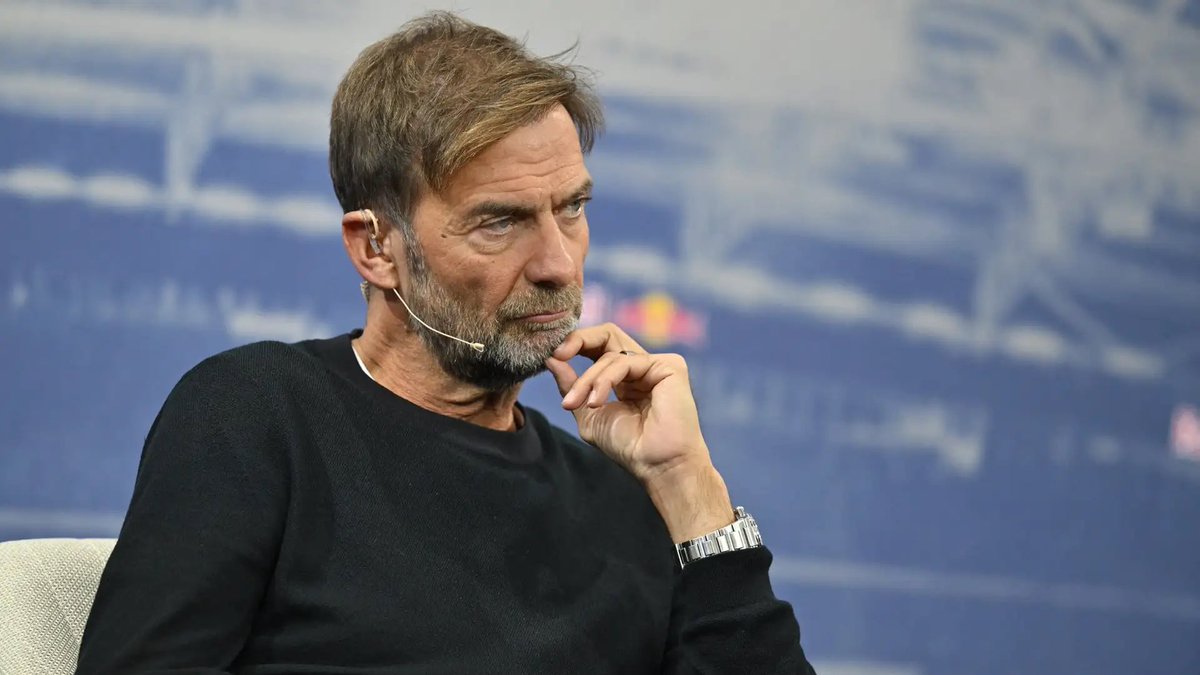
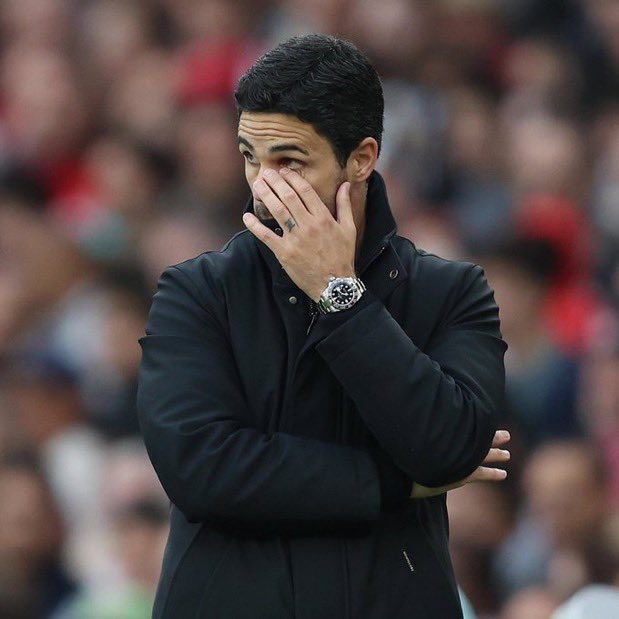
🚨 | JUST IN: Jurgen Klopp on the Premier League title race after Arsenal drop points vs Brentford:
🗣️“Having Manchester City behind you is like being chased by a wild dog. You don’t stop running, but you slip…..
Then you realize you’ve been in a dream all along. .”
The RWA Era Paradigm Shift From Participants to Owners
💎 USDP = Perkins Digital Equity
Hold it, and you hold the key to Wall Street profit sharing.
🚀 Genesis Phase Rewards Guide
✅ Step 1
Daily check-in — lock 10 USDP with zero entry barrier.
✅ Step 2
Complete community tasks — earn up to 810 USDP.
✅ Step 3
Activate “Stake Mode” — USDP staking, cash dividends auto-distributed.
💰 Hold to become a shareholder.Stake to receive dividends.
Join Perkins.Together, let’s define the future value of RWA. 🚀
Unich's Airdrop Campaign is in full swing 🚀
Earn up to 500,000,000 $UN (~ 50% total supply) ��
How to Join:
1️⃣ Visit https://t.co/aCuors3JyK to register to get 50 FD Points.
2️⃣ Sign up via Google or Gmail.
3️⃣ Agree to our Terms & Privacy Policy.
⚠️ Please remember: $UN tokens have not been released yet—beware of scam links.
🔗 Join now: https://t.co/aCuors3JyK
#Unich #AirdropCampaign #CryptoOTC #PreMarketTrading