𝗔𝗜-𝗣𝗼𝘄𝗲𝗿𝗲𝗱 𝗔𝗹𝗽𝗵𝗮: 𝗧𝗵𝗲 𝗟𝗟𝗠 𝗘𝗳𝗳𝗲𝗰𝘁
From 𝗺𝗮𝗰𝗿𝗼 𝘁𝗼 𝗺𝗶𝗰𝗿𝗼 𝗮𝗹𝗽𝗵𝗮, 𝗟𝗟𝗠𝘀 𝗮𝗿𝗲 𝗿𝗲𝗺𝗮𝗽𝗽𝗶𝗻𝗴 𝗮𝘀𝘀𝗲𝘁 𝗽𝗿𝗶𝗰𝗶𝗻𝗴, 𝗳𝗼𝗿𝗲𝗰𝗮𝘀𝘁𝗶𝗻𝗴, 𝗮𝗻𝗱 𝘁𝗿𝗮𝗱𝗶𝗻𝗴.
Here are recent academic papers showing how 𝗚𝗣𝗧 𝗺𝗼𝗱𝗲𝗹𝘀 (ChatGPT, GPT-4, DeepSeek, etc.) are reshaping financial research and investment strategies—across equities, crypto, macro, and more.
📌 𝗦𝗲𝗹𝗲𝗰𝘁𝗲𝗱 𝗛𝗶𝗴𝗵𝗹𝗶𝗴𝗵𝘁𝘀 𝘄𝗶𝘁𝗵 𝗟𝗶𝗻𝗸𝘀
🧠 GPT-4 can invent stock return factors that outperform anything on Wall Street
https://t.co/pL8PWrUboE
📉 ChatGPT understands central bank tone better than humans—and predicts policy moves
https://t.co/jxgreEYnjm
📞 If the CEO says something ChatGPT wouldn’t—pay attention. That surprise is alpha
https://t.co/1z5SLDhO9t
📃 GPT summaries of filings are shorter, sharper, and more predictive than raw text
https://t.co/MI5XdeJaIn
📊 Retail traders now act on the same signals hedge funds used to keep private
https://t.co/hBNjGhdIbh
🌏 GPT-based signals predict daily stock returns in China with up to 91% annualized alpha
https://t.co/Ib9y59ori6
📰 Markets ignore good news—ChatGPT doesn’t. That’s alpha
https://t.co/fSlhDXhZAP
₿ Crypto Twitter noise becomes tradable alpha using ChatGPT sentiment
https://t.co/fMIZGmhEpE
🤖 GPT agents collaborating on crypto trading strategies beat the market
https://t.co/brRpkdhJqg
💡 New prompt designs help GPT avoid behavioral traps—boosting Sharpe ratios in gold
https://t.co/Z13OINo7cL
📈 From Twitter news alone, ChatGPT builds profitable day-trading portfolios
https://t.co/YjISTWysjI
🧩 Final Thought
LLMs are becoming active participants in alpha generation.
Check out the Academic Alpha Hub → https://t.co/rFVp5gVUY7
The goal is simple: bridge the gap between academic alpha research and industry application.
#Finance #AI #LLMs #ChatGPT #QuantResearch #Investing #AcademicAlpha #Fintech #AssetPricing
An academic paper has excellent empirical evidence & hypotheses that perfectly match the patterns in the data.
One catch: AI wrote the hypotheses after seeing the results.
Should this matter?
New paper w/ Robert Novy-Marx on AI and finance research🧵
https://t.co/pe0JP4wMO1
Figure Insight #1: Why trading costs (bid-ask spreads) increase at the start and end of the trading day, especially when trading activity picks up?
Let’s explore two figures from recent research:
🔎 The first figure (Lou, Polk, & Skouras, 2019) uncovers a U-shaped pattern in stock trading volume. Small trades—typically linked to retail traders (individuals buying and selling stocks for personal accounts)—are concentrated at the market open, while large trades, likely from institutional investors like hedge funds or mutual funds, occur more at the close.
🔎 The second figure (Hua, Kong, & Wang, 2024) shows that bid-ask spreads (the difference between the price a buyer is willing to pay for a stock and the price a seller is asking) are also highest at the open and close, with spreads widening especially for small-cap stocks.
Why does this happen?
At the open, the overnight accumulation of news creates uncertainty, and market makers (firms like Citadel Securities, which continuously buy and sell stocks to keep markets running) widen the spread to protect themselves from potential losses. At the close, institutional investors, executing large rebalancing trades (think BlackRock managing large portfolios), create order imbalances, pushing spreads higher.
While trading at the open and close carries risks, such as higher costs due to wider spreads, these times can also offer benefits like better liquidity. For example, closing auctions can provide more favorable prices. Ultimately, the decision to trade during these periods depends on a trader’s strategy and risk tolerance.
Stay tuned for more Figure Insights where we break down key research in finance!
Citations:
Hua, Jian, Lingyi Kong, and Yajun Wang. "Intraday Dynamics of NASDAQ Stocks in the Electronic Trading Era: Uncovering Strong U-Shape Patterns in Trading Volume and Bid-Ask Spread." Available at SSRN 4792199 (2024).
Lou, Dong, Christopher Polk, and Spyros Skouras. "A tug of war: Overnight versus intraday expected returns." Journal of Financial Economics 134, no. 1 (2019): 192-213.
Trading Insights:
New study reveals AI's edge in stock analysis, yet underscores the unparalleled value of human insight. Combining AI and human intelligence not only enhances accuracy but also mitigates extreme errors.
See our takeaways below:
#AI#Finance
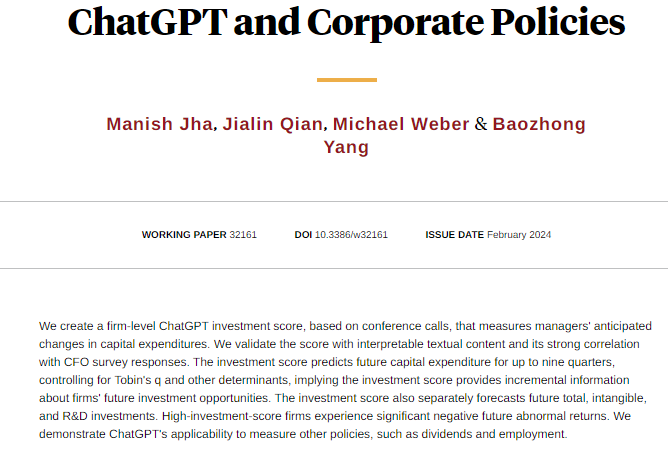
A firm-level ChatGPT investment score, based on conference calls, helps to predict future capital expenditure for up to nine quarters, from @mjha91, Jialin Qian, Michael Weber, and Baozhong Yang https://t.co/ckkb9nuLzu
Financial Dataset for LLM pre training
Financial News and Stock Price Integration Dataset (FNSPID). It comprises 29.7 million stock prices and 15.7 million time-aligned financial news records for 4,775 S&P500 companies through 2023.
FinX GPT
https://t.co/l0P43CblUR
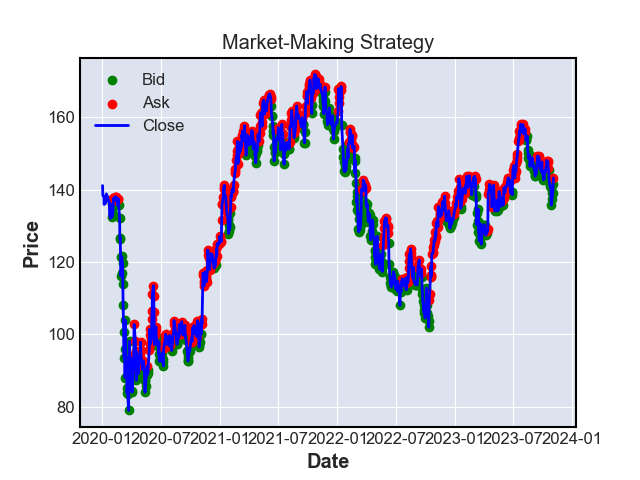
This is an interesting post on how to easily backtest high-frequency trading strategies. It breaks down the complex process into something way more manageable.
#HFT Here's a quant trading strategy with some updates! We added sample code - it takes 114 lines of #Python to simulate and forward test this algorithmic trading strategy with $100M notional daily volume. Read more: https://t.co/oAgSaKBbUx