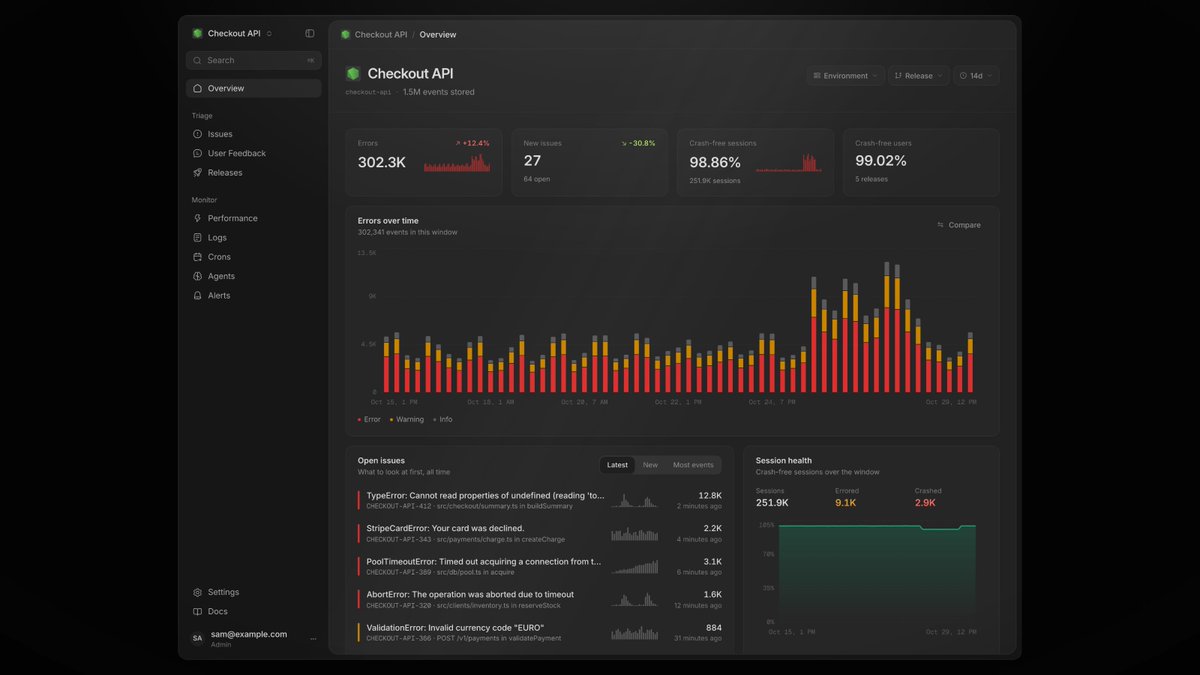
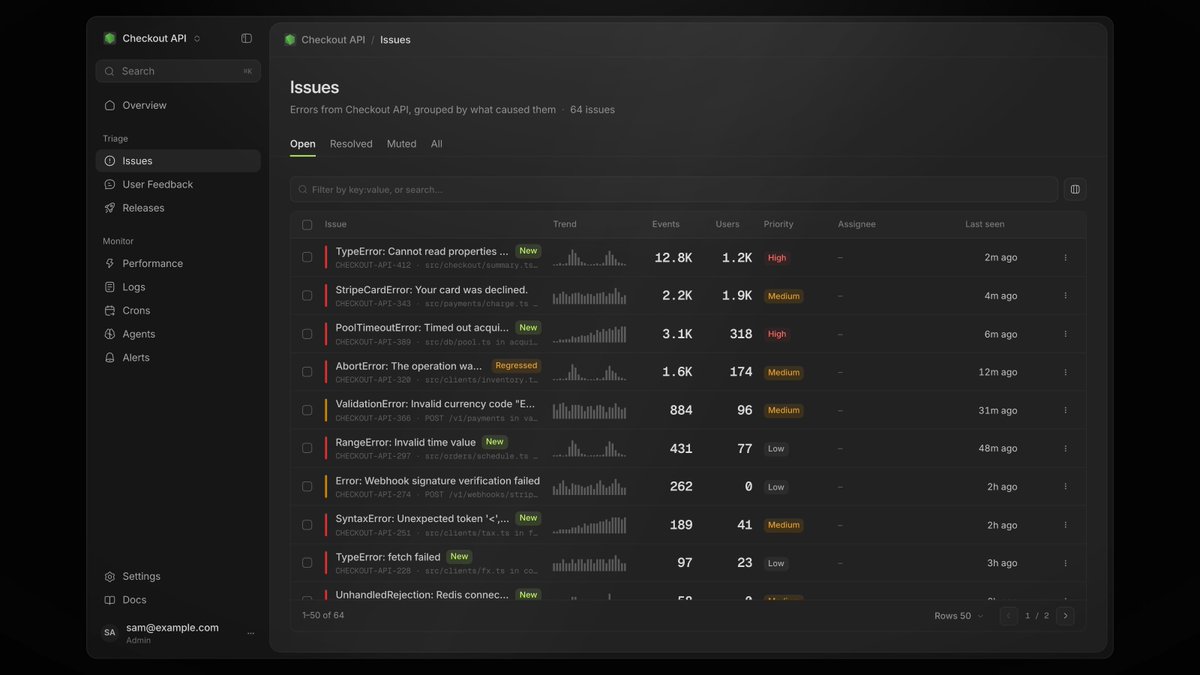
I build Rustrak, a self-hosted error tracker.
It takes the Sentry protocol, so an SDK you already have points at it by changing the DSN. One compose file, SQLite by default, no broker.
Rust on the server. GPL-3.0.
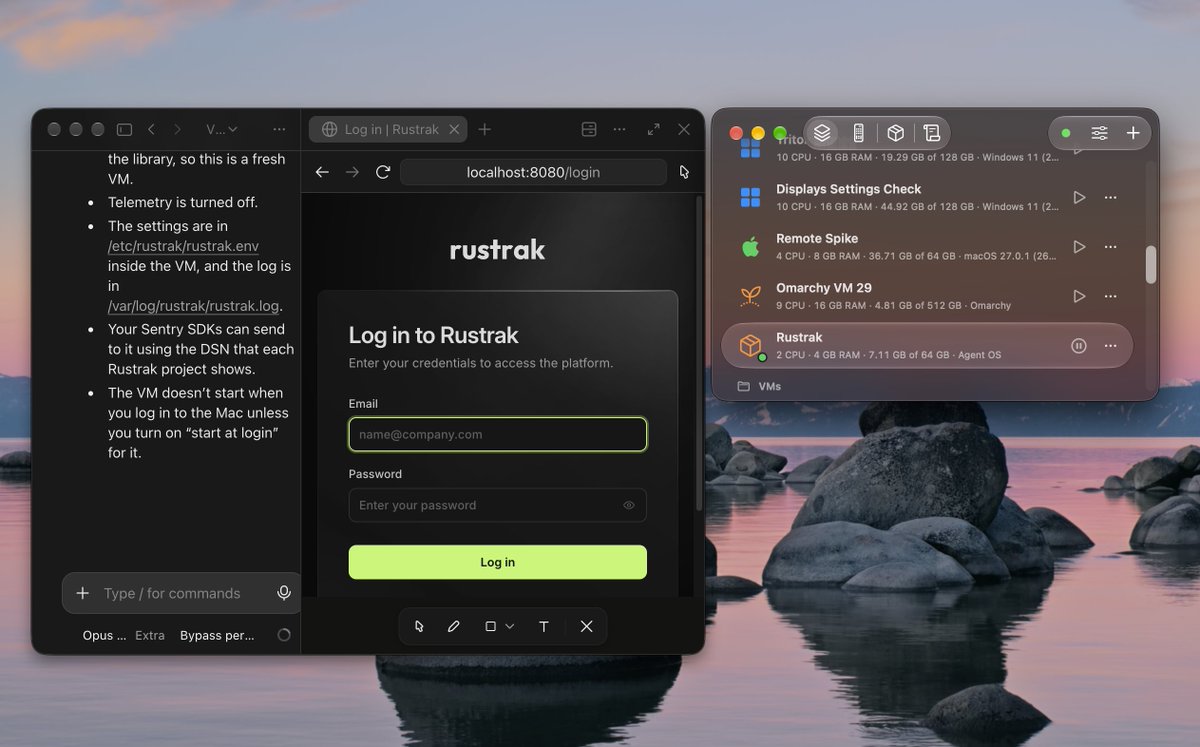
https://t.co/AuG85uGOPi build 114 now supports Agent OS, a lightweight Linux OS that can be up and running within a few seconds.
You can grab an open source project from GitHub and ask Claude to spin it up and run it. Example we run Rustrak (prompt in comment).
Your side project throws errors in production, and the hosted error tracker wants a monthly bill that grows with your worst day. Self-hosting the usual stack means a whole extra machine just for crash reports.
Rustrak is a free, open-source, self-hosted error tracker that speaks the Sentry protocol, so the SDK already in your app points at it by changing one DSN string. It runs as a single process with SQLite by default, installs from one Docker Compose file, and also takes logs, transactions and release health. You run the box yourself, so backups, upgrades and secrets are on you, and a Postgres setup exists for bigger loads.
Changing one string to own your error data seems like a pretty low bar to clear.
https://t.co/5tig05zgIj
I used to want a software engineering job.
That dream for me is dying.
I wanted to learn from other engineers that were better for me.
I wanted to debug production issues and be hailed as the hero.
I wanted to hold my head up with pride knowing I spent years learning a language that most people didn’t understand.
But all this is gone now.
Everyone uses AI and tells each other to “just use AI”.
This is not the career I want.
This is not what I sacrificed years for.
This is not my dream anymore.
Rustrak's dashboard is now static files served by the Rust server itself. One container instead of two.
Idle memory went from 34 + 61 MiB to 34 MiB. On disk, from 402 MB to 84 MB.
Release candidate on the next tag if you want to try it.
Designing a single backend codebase with strict, decoupled module boundaries gives you 90% of the organizational clean code benefits of microservices with 0% of the distributed network latency.
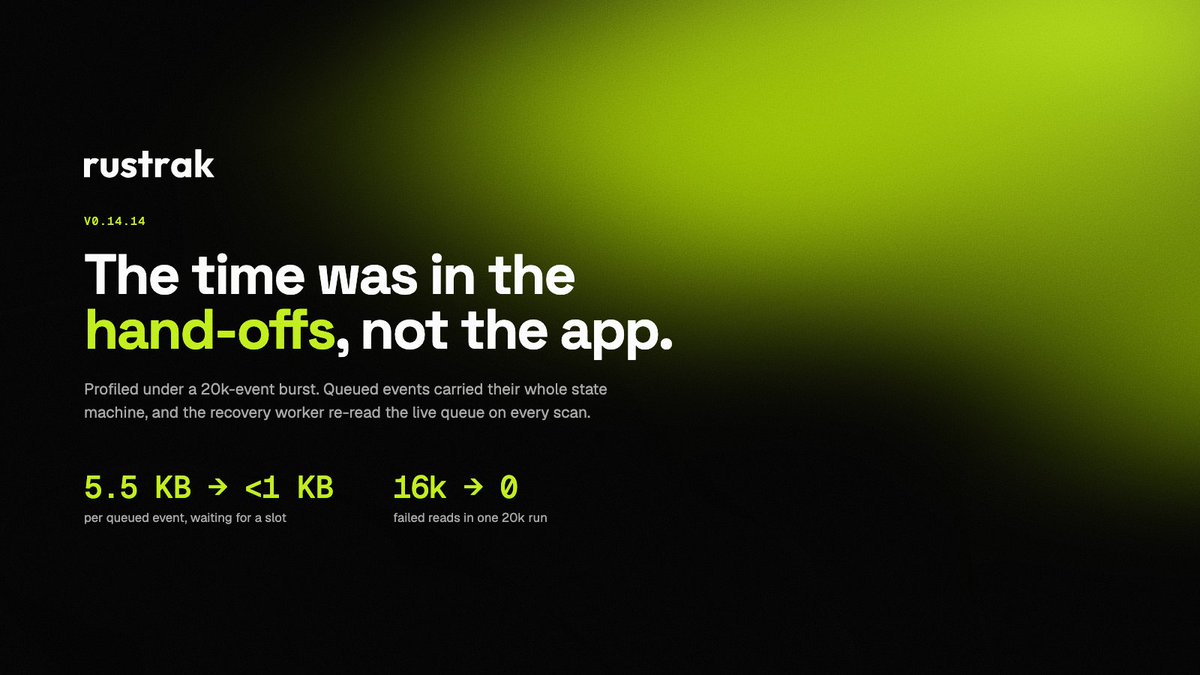
Profiled Rustrak's ingest under a 20k-event burst. App CPU wasn't the problem. Each queued event carried its whole ~5.5 KB state machine, and the recovery worker re-read the live queue on every scan: 16k failed reads in one run.
v0.14.14: peak memory 195 MB to 53 MB.
A 20k-event burst now peaks at 53 MB, down from 195 MB. Ingest on the same 4-core box went from ~2.3k to ~5k req/s.
The time was in thread hand-offs and in state that grew with the burst, not in application CPU. Idle memory is unchanged at 25 MB.
The dashboard is now translated, English and Chinese.
Language and timezone are stored on your account instead of a cookie, so they carry over to another browser.
v0.14.3.
The dashboard is now translated, English and Chinese.
Language and timezone are stored on your account instead of a cookie, so they carry over to another browser.
v0.14.3.
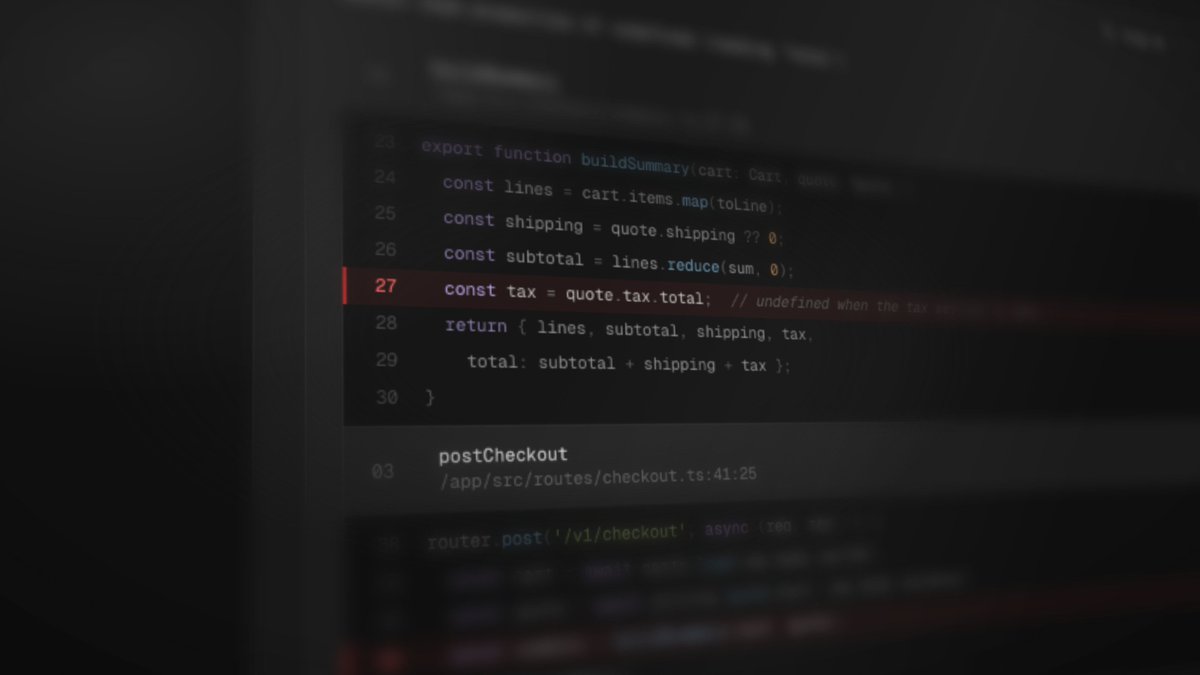
Our 500s were echoing sqlx errors to anyone with a public DSN.
v0.14.2 returns a fixed message plus an incident id, in the body and an X-Rustrak-Incident header. One grep on that id gives you the route and the cause.
https://t.co/g7j2jpa184
I build Rustrak, a self-hosted error tracker.
It takes the Sentry protocol, so an SDK you already have points at it by changing the DSN. One compose file, SQLite by default, no broker.
Rust on the server. GPL-3.0.
My head gasket is gone. Destroyed. I had no injury / injuries going into the fight. I was throwing kicks, planted and jumping, all throughout camp as well as backstage before the fight. This came out of nowhere. I am beyond dark here. I can only describe it as hell.
🔴 #ÚLTIMAHORA | La Comisión Europea presenta "EU Inc." para crear empresas en 48 horas, online y por menos de 100 euros sin capital mínimo.
Ursula von der Leyen: “facilitar drásticamente la creación y el crecimiento de un negocio en toda Europa”.
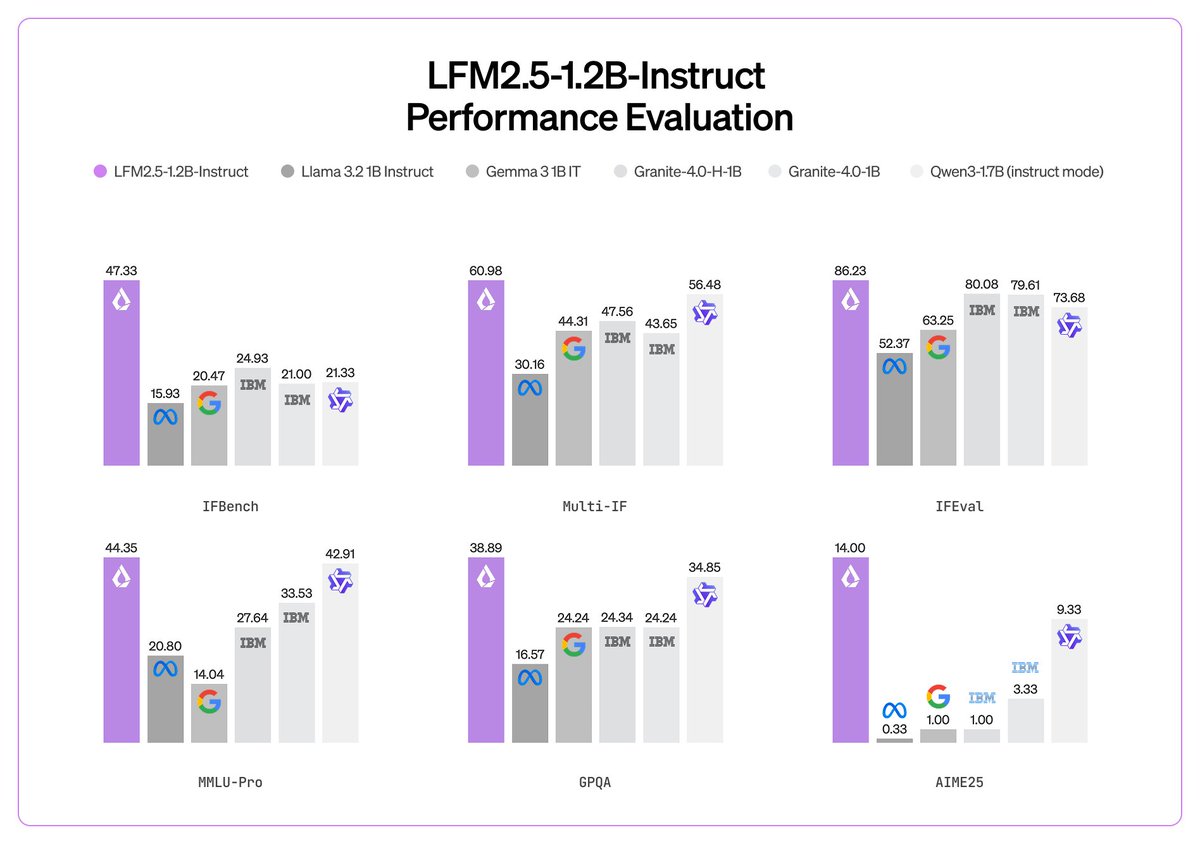
Today, we release LFM2.5, our most capable family of tiny on-device foundation models.
It’s built to power reliable on-device agentic applications: higher quality, lower latency, and broader modality support in the ~1B parameter class.
> LFM2.5 builds on our LFM2 device-optimized hybrid architecture
> Pretraining scaled from 10T → 28T tokens
> Expanded reinforcement learning post-training
> Higher ceilings for instruction following
🧵
Si quieren dominar algo realmente útil en 2026, aprendan a orquestar IA, es decir usar agentes, prompts, memoria, tools, hooks, MCPs, flujos de trabajo y más.
Porque está surgiendo tantísimo nuevo que incluso Andrej Karpathy (investigador de IA influyente, cofundador de OpenAI y ex-director de IA en Tesla) dice que siente que se está quedando atrás como programador