Our newest model, π0.7, has some interesting emergent capabilities: it can control a new robot to fold shirts for which we had no shirt folding data, figure out how to use an appliance with language-based coaching, and perform a wide range of dexterous tasks all in one model!
hi people in berkeley/sf,
i run a paper reading group on interpretability (and other deep learning topics) at our amazing group house in berkeley. we'd love for more curious people to join us.
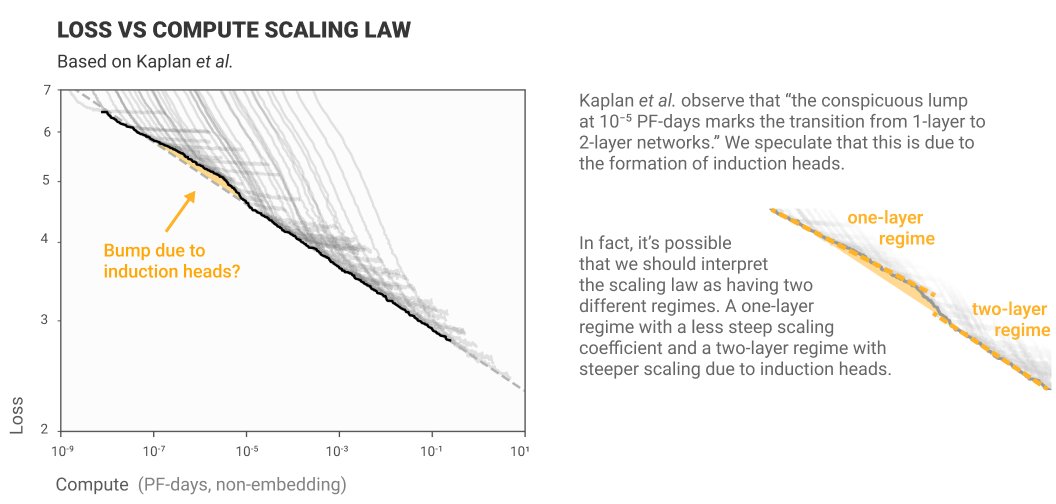
this wednesday (4/1), we're discussing anthropic's "in-context learning and induction heads" paper which shows how induction heads are responsible for majority of in-context learning in transformers.
if you're interested in joining, pls reach out! no interp background required as long as you're just a curious person.
🚨 BREAKING: Amazon has officially acquired New York-based Fauna Robotics, the startup behind the soft-bodied Sprout humanoid.
While Amazon has aggressively pursued automation in its fulfillment centers, this acquisition signals a massive escalation in the race for the consumer home market. Sprout is a bipedal robot designed specifically for the "messy reality" of shared human spaces.
for PI day, i'm thrilled to share that I'll be joining @physical_int in a few weeks to work on accelerating robot learning research through fast, observable runtimes!
i started playing with robots relatively late - my sophomore year of college - and have learned almost entirely through personal projects. its a dream come true to collaborate w the brilliant folks at PI to make better robot software. stay tuned for more !!!
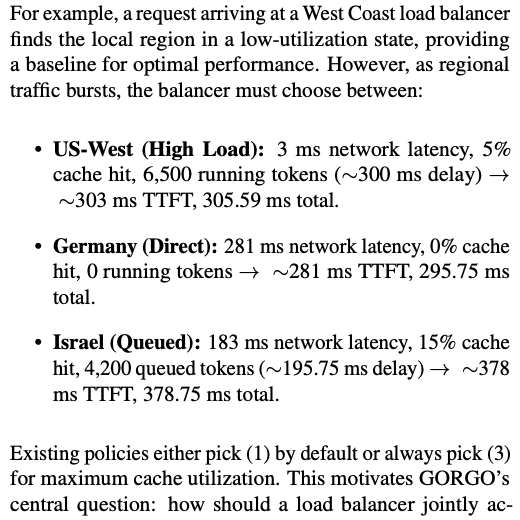
How low can TTFT go?
We evaluated existing LLM load balancers and found that networking performance is a critical bottleneck.
Our routing policy, GORGO, improves TTFT by 5% through maximizing KV-cache reuse and minimizing delay.
Work done w/ @abinayaaaa and @foundinrome @ ART.
i usually love being an early user of startups building hardware, but here are a few things that really suck
- hardware companies almost always bring costs down as they scale out manufacturing/production, meaning you are always buying the most expensive version of the product
- you are basically serving the role of a mature test team, finding bugs simply by using the product as it was intended in its main use case
- getting bugs fixed often means shipping the actual product back to the manufacturer, meaning weeks spent without a product that you are trying to build an attachment to
anyways, if you're a startup selling hardware and want ~detailed and brutal feedback~, please send it my way!!
TIL i learned that GNU is an open-source, free alternative to UNIX, GNU swallowed Linux to replace its own Hurd Kernel (named such because a hurd is a group of wildebeest (aka gnu's) and the Hurd kernel was just a group of microkernels) and now they together they're called Linux. my boy Stallman.