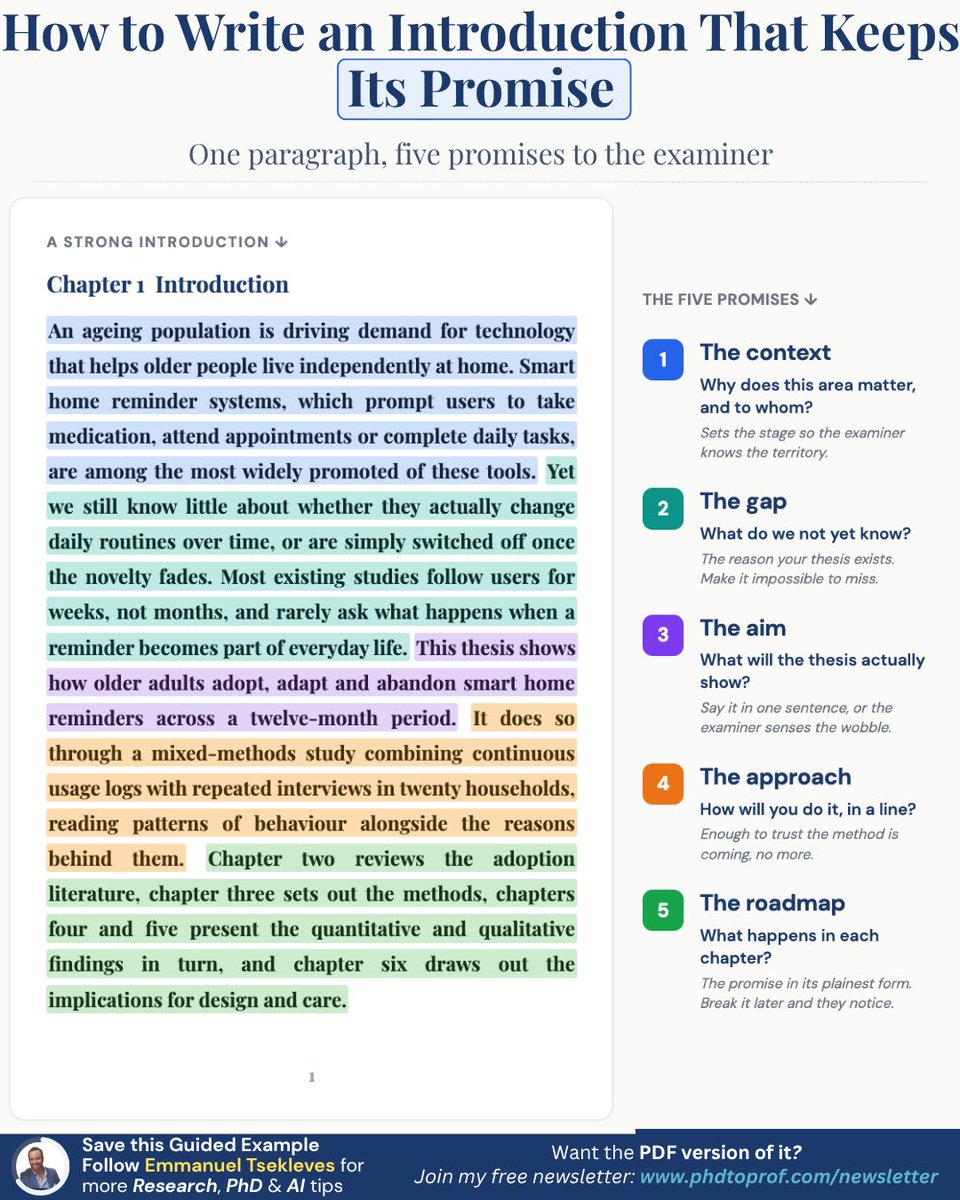
I can tell within five pages whether a thesis will keep its promises.
The introduction is where the promise is made.
Most introductions I read try to impress. The best ones do something duller but far more powerful. They tell me precisely what is coming.
PhD Students - How to write the abstract for your research paper?
Abstract is like the trailer of a movie.
It's the first thing one reads in your paper after the title.
So, give it your best shot.
Here is a step-by-step guide for writing abstract.
#phd
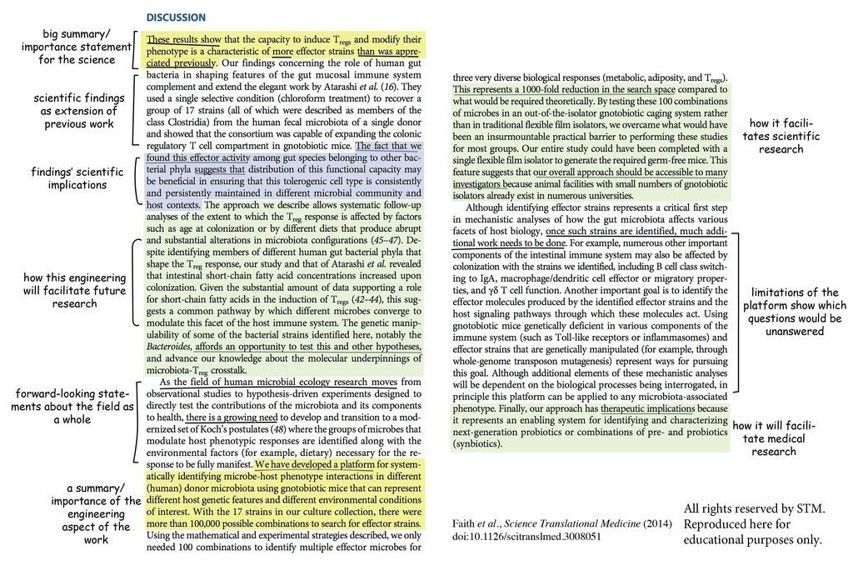
PhD Students - Here is an example of a good discussion section.
A good discussion section should answer 6 questions.
1. What is different in your findings compared to previous research?
2. What is similar in your findings compared to previous research?
3. How different sections of your results section correlate?
4. What are the implications of your findings for practitioners?
5. What are the implications of your findings for researchers?
6. What are the limitations or threats to the validity of your findings?
Anything you'd like to add?
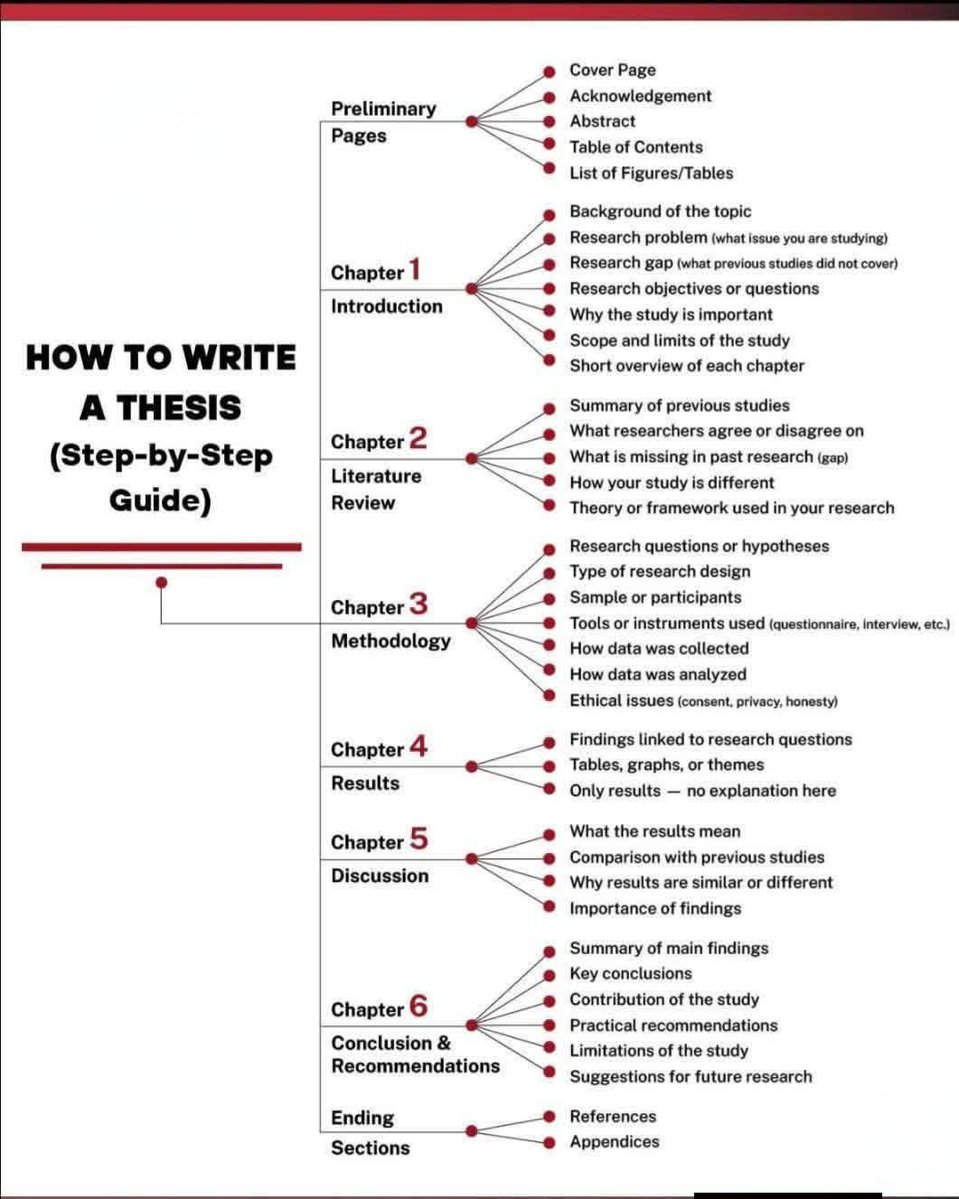
Every PhD and DBA thesis is 7 chapters.
Get the order right and the thesis defends itself.
In 20 years of supervising and 45+ examinations, I see the same structure work across most fields.
How to write a journal paper for publication?
Your paper should have the following 9 sections.
1. Abstract
2. Introduction
3. Literature Review
4. Methodology
5. Results
6. Discussion
7. Conclusion
8. Acknowledgements
9. References
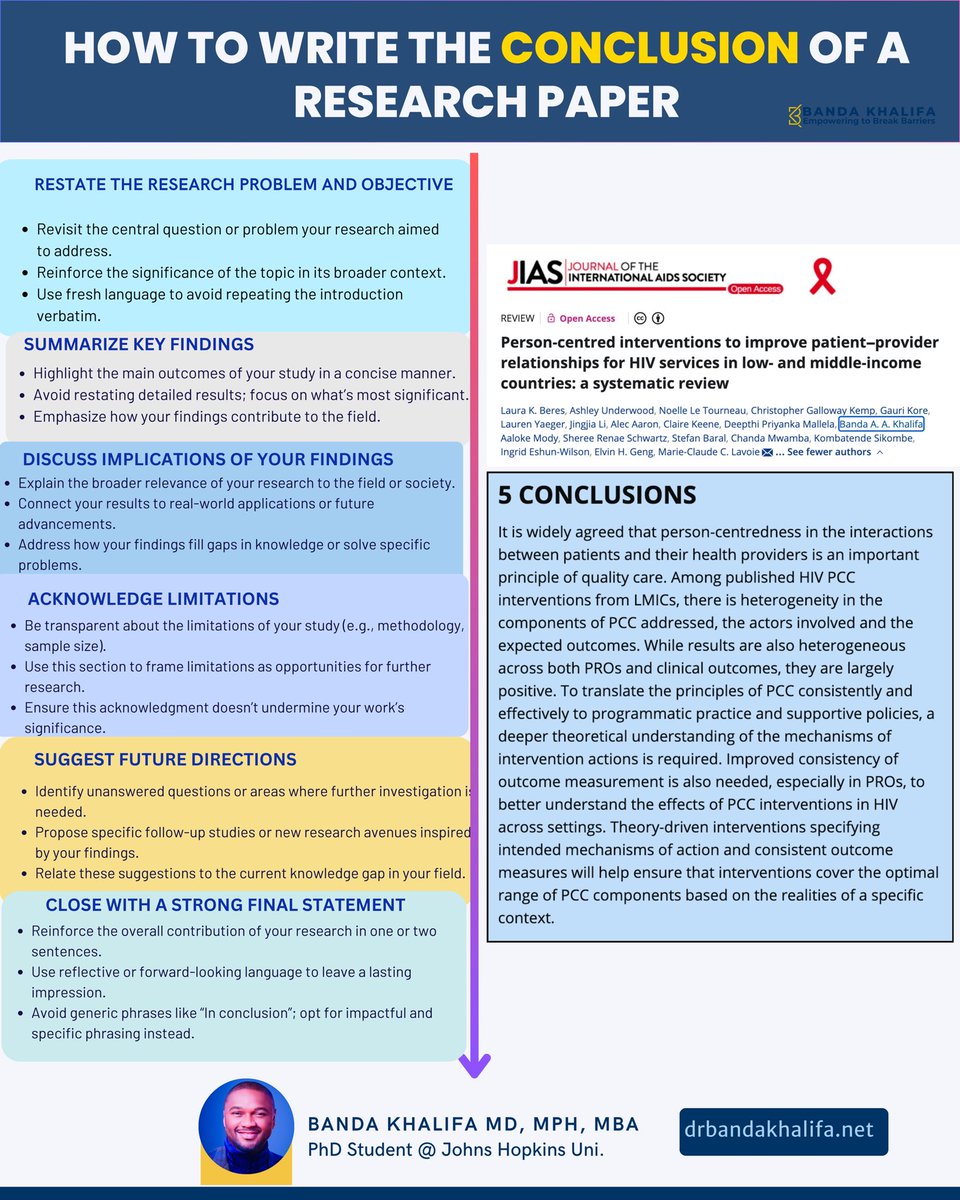
PhD Students - Here is an example of a good conclusion.
A good conclusion should have the following 6 parts.
𝟏. 𝐑𝐞𝐬𝐭𝐚𝐭𝐞 𝐭𝐡𝐞 𝐑𝐞𝐬𝐞𝐚𝐫𝐜𝐡 𝐏𝐫𝐨𝐛𝐥𝐞𝐦
Begin by revisiting the research problem or question that your paper addressed. This reminds the reader of the core focus of your study and sets the stage for summarizing your findings.
𝟐. 𝐒𝐮𝐦𝐦𝐚𝐫𝐢𝐳𝐞 𝐊𝐞𝐲 𝐅𝐢𝐧𝐝𝐢𝐧𝐠𝐬
Provide a brief summary of the main findings of your research. Highlight the most significant results and insights that emerged from your analysis. This should be concise and focused on the most impactful data.
𝟑. 𝐃𝐢𝐬𝐜𝐮𝐬𝐬 𝐭𝐡𝐞 𝐈𝐦𝐩𝐥𝐢𝐜𝐚𝐭𝐢𝐨𝐧𝐬
Explain the implications of your findings. Discuss how they contribute to the existing body of knowledge, their practical applications, or their relevance to future research. This helps to contextualize your work within the broader field.
𝟒. 𝐀𝐜𝐤𝐧𝐨𝐰𝐥𝐞𝐝𝐠𝐞 𝐋𝐢𝐦𝐢𝐭𝐚𝐭𝐢𝐨𝐧𝐬
Address any limitations of your study. Acknowledging these limitations demonstrates academic integrity and provides a balanced view of your research. It also opens the door for future research opportunities.
𝟓. 𝐒𝐮𝐠𝐠𝐞𝐬𝐭 𝐅𝐮𝐭𝐮𝐫𝐞 𝐑𝐞𝐬𝐞𝐚𝐫𝐜𝐡 𝐃𝐢𝐫𝐞𝐜𝐭𝐢𝐨𝐧𝐬
Based on your findings and limitations, propose areas for future research. This can inspire other researchers to explore related questions and expand on your work.
𝟔. 𝐄𝐧𝐝 𝐰𝐢𝐭𝐡 𝐚 𝐒𝐭𝐫𝐨𝐧𝐠 𝐂𝐥𝐨𝐬𝐢𝐧𝐠 𝐒𝐭𝐚𝐭𝐞𝐦𝐞𝐧𝐭
Conclude with a powerful statement that reinforces the importance of your research. This could be a call to action, a thought-provoking quote, or a reflection on the broader implications of your work. Anything you'd like to add?
For more, please subscribe my YouTube Channel.
YouTube Channel Link:
https://t.co/G1tQly0nvM
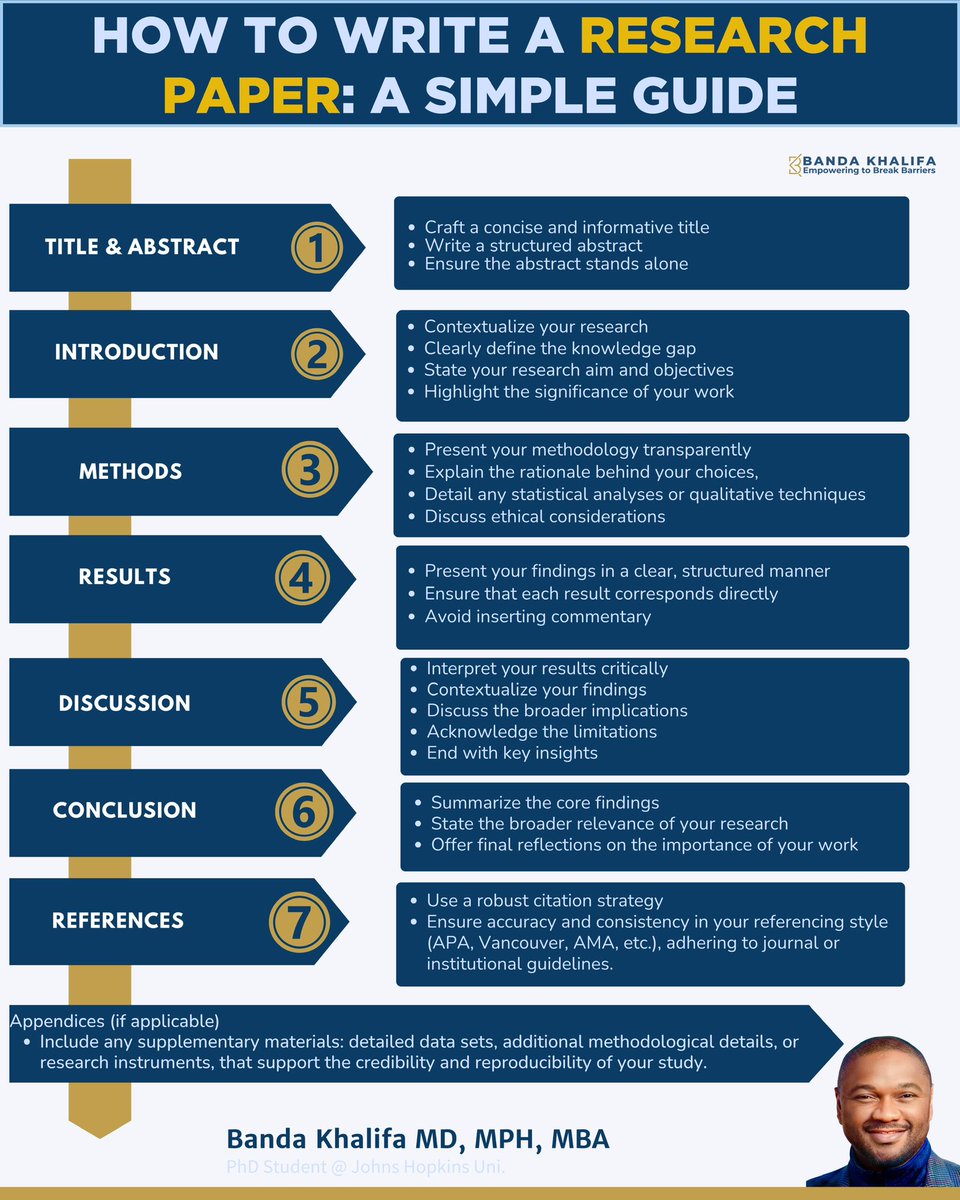
A lot of research writing problems are really structure problems.
A strong research paper is knowing what each section is supposed to do.
And once the structure is right, everything else improves.
A simple way to think about it:
→ Title & Abstract
Tell us what the paper is about
→ Introduction
Define the problem and the gap
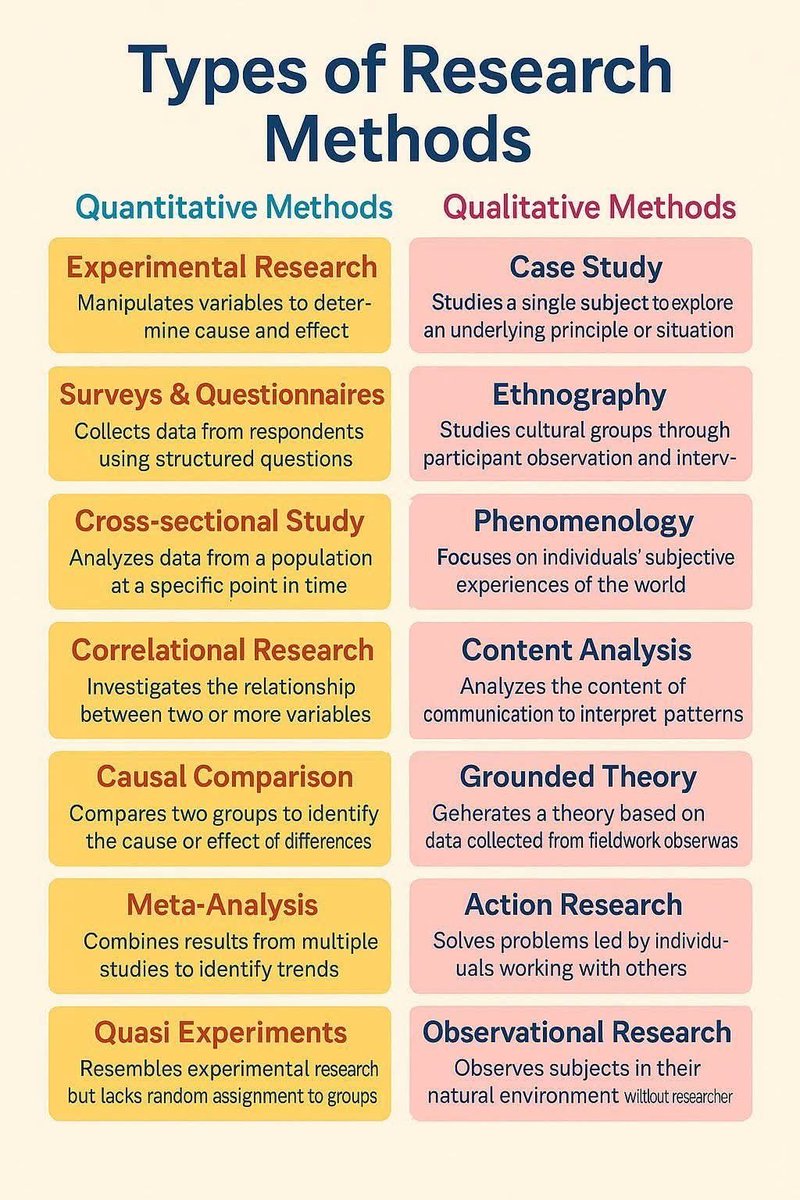
→ Methods
Show exactly how the work was done
→ Results
Present the findings clearly
→ Discussion
Explain what the findings mean
→ Conclusion
Leave the reader with the core takeaway
→ References
show the evidence behind the work
———-
When students understand that flow, writing becomes less confusing.
The paper becomes clearer.
The argument becomes stronger.
The message lands better.
📌 Save this before writing your next manuscript, thesis, or dissertation.
💬 Which section do you find hardest to write: Introduction, Methods, Results, or Discussion?
A weak conclusion can make a strong paper feel unfinished. A strong conclusion usually does 6 things well
Most people treat the conclusion like an afterthought.
The conclusion is the place you show that you understand:
→ what your study found
→ why it matters
→ what the reader should take away
A strong conclusion usually does 6 things well:
1️⃣ Restates the research problem
→ remind the reader what the paper set out to address
2️⃣ Summarizes the key findings
→ not every result
→ just the most important takeaways
3️⃣ Discusses the implications
→ why do these findings matter to the field or to practice?
4️⃣ Acknowledges limitations
→ honest writing strengthens credibility
5️⃣ Suggests future directions
→ what still needs further investigation?
6️⃣ Ends with a strong final statement
→ leave the reader with clarity, not filler
——-
One of the biggest mistakes
Students write the conclusion as if they are simply trying to finish the paper.
But a good conclusion gives the paper a proper landing.
——-
📌 Save this before writing your next manuscript, thesis, or dissertation.
💬 What do you find hardest in writing a conclusion: summarizing?