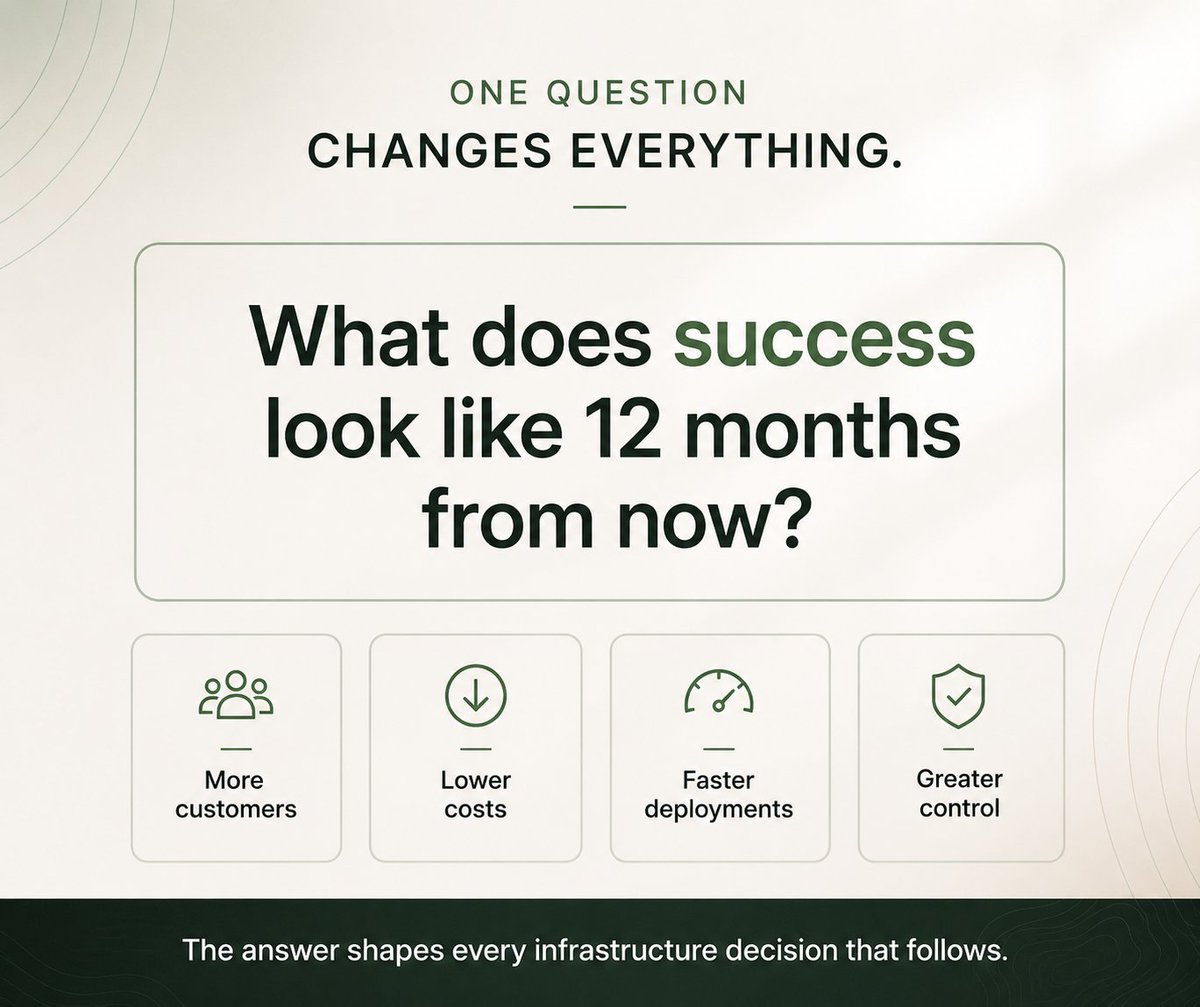
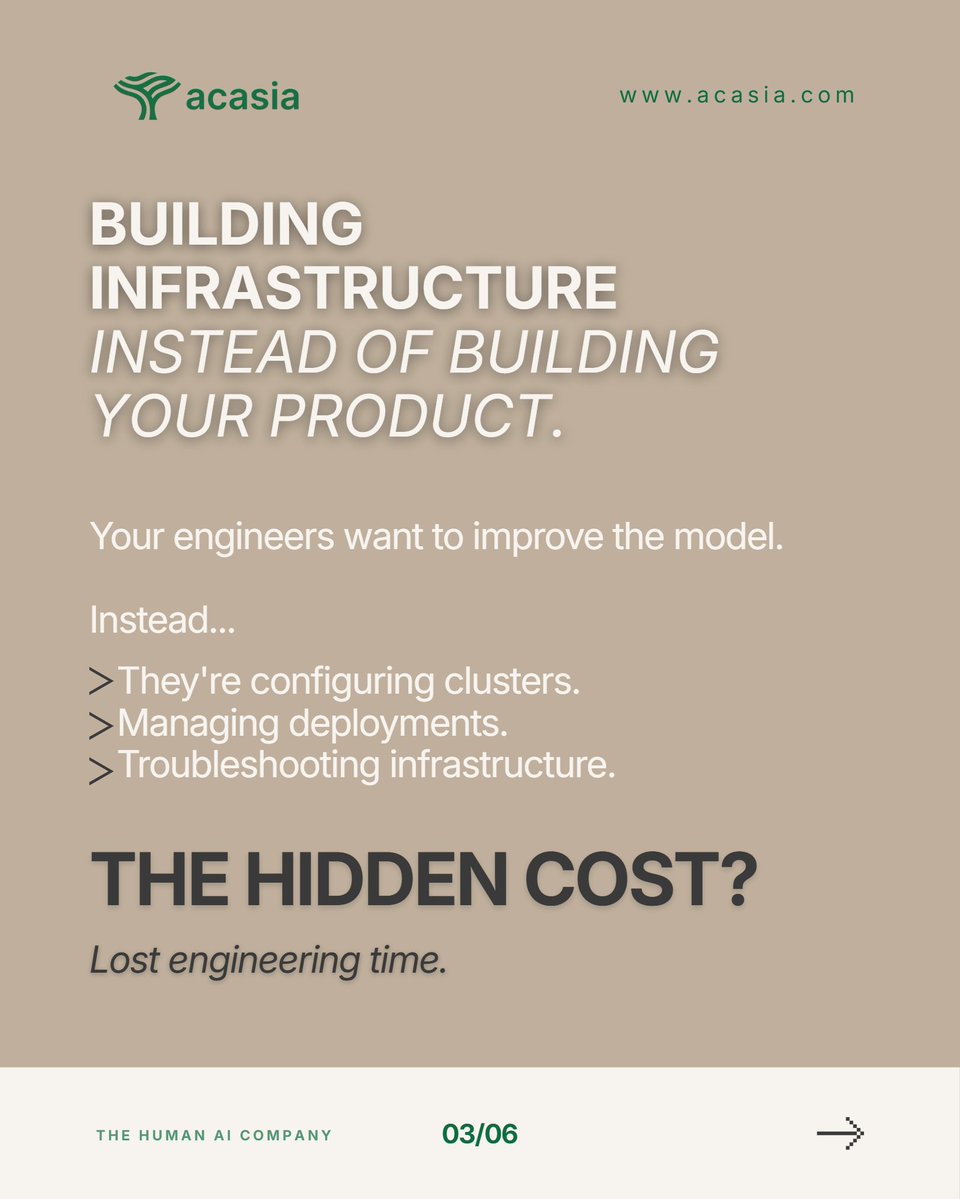
Infrastructure rarely fails because of the hardware. It fails because teams optimize for today's problem instead of tomorrow's. Before choosing GPUs or providers, ask: What does success look like a year from now? The answer changes everything.
When enterprise AI goes down, customers don't care if it's the hardware vendor, the network, the data center, or the software platform. They care about one thing: Who's fixing it? Accountability is just as critical as performance.
Sovereign AI starts with hardware, but it doesn't end there.
For mission-critical AI, the real foundation is built on four pillars:
Trust. Security. Reliability. Support.
Full Blog here:
Building the model is one milestone. Running it in production is another. The biggest lessons often come after launch. If you've shipped an AI product, what production challenge caught you off guard first?
Heading to #AdvancingAI2026 in San Francisco this week.
If you're building AI products or scaling infrastructure, let's connect.
Jeff Kafka will be there talking GPUs, bare metal, inference & production AI.
📍Moscone West | Jul 22–23.
DM us to meet.
The AI race isn't about who builds the best demo anymore. It's about who gets to production first and stays there. Reliable infrastructure, scalable inference, and predictable costs are becoming the real competitive advantage.
Ordering hardware is just one milestone. Getting it financed, deployed, integrated, and production-ready is another. Every stage affects how quickly AI teams can move. Deployment isn't a handoff; it's part of the infrastructure.
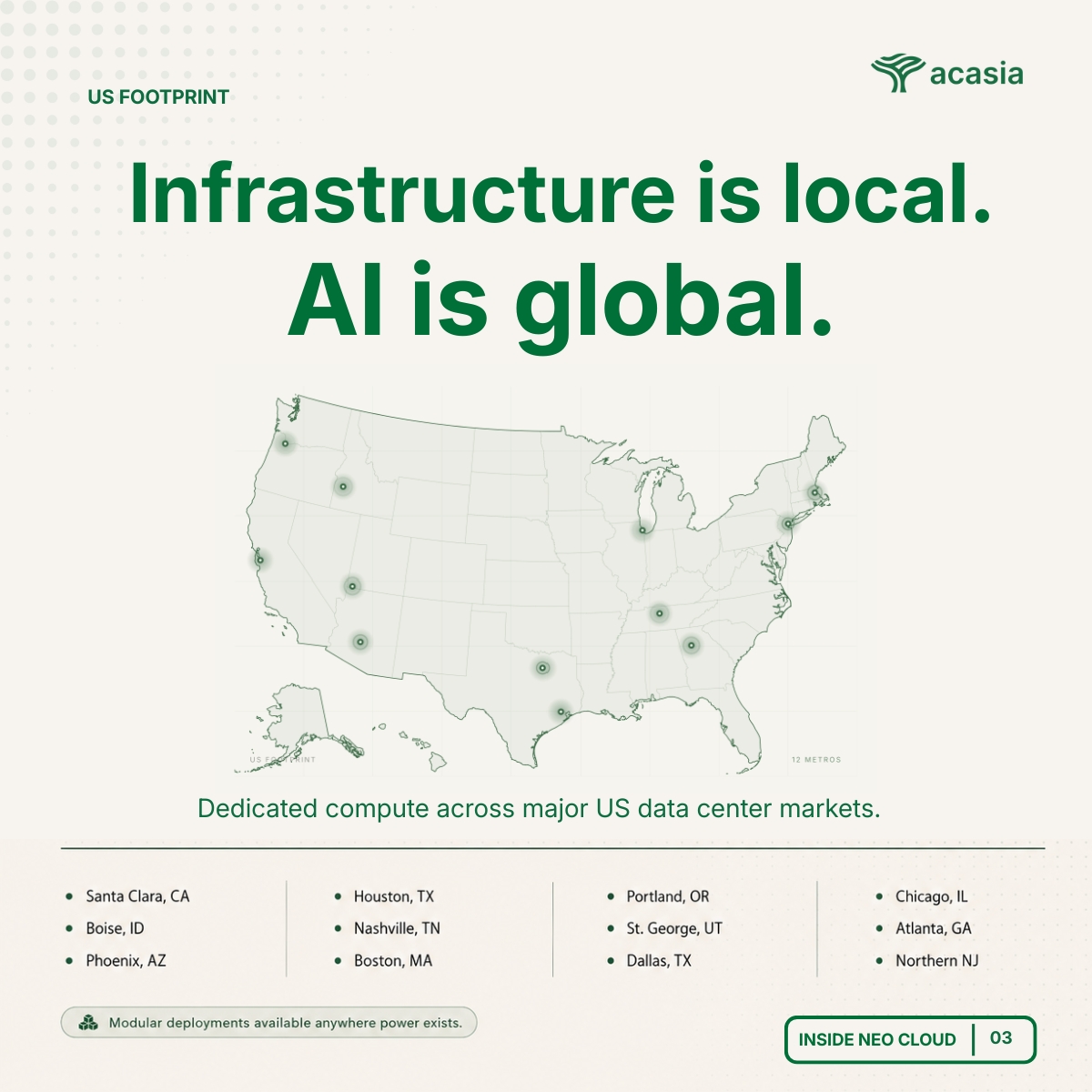
Production AI isn't just about having compute. It's about having compute where your workloads need it. Location influences latency, deployment timelines, connectivity, and power availability. Infrastructure starts with geography.
Getting compute into production is rarely a single purchase. It's financing, procurement, deployment, operations, and long-term support working together. Dedicated compute isn't just hardware; it's everything required to get infrastructure into production.
The conversation around AI infrastructure usually starts with GPUs. In practice, it doesn't end there. Dedicated compute only works when financing, procurement, deployment, and operations come together. Getting hardware is one milestone. Getting production-ready is another.
AI infrastructure isn't a one-time deployment.
It's a lifecycle.
Source. Deploy. Optimize. Manage. Monetize. Refresh. Repeat.
As workloads evolve, infrastructure has to evolve with them. The companies that scale AI best continuously improve every stage, not just the first one.
AI infrastructure starts with GPUs -> but it doesn't end there.
Production AI also depends on power, deployment, orchestration, private infrastructure, and cost optimization.
When the stack works as one platform, scaling becomes much simpler.
AI infrastructure is becoming the biggest bottleneck to scaling AI. Teams aren't just managing compute—they're managing sourcing, financing, deployment, operations, and cost across multiple vendors. It doesn't have to be that way. What's your biggest challenge today?
Happy Fourth of July from all of us at Acasia!
We're grateful to work alongside customers, partners, and innovators across the U.S. who are helping shape the future of AI.
Wishing everyone a safe, happy, and memorable Independence Day.
Dell + NVIDIA's latest announcement isn't just about new hardware.
It's about where AI infrastructure is heading.
Systems supporting up to 144 GPUs per rack are being built for the next generation of AI workloads, not yesterday's.
Missed Automate 2026?
Here's a quick recap.
Thanks to everyone we met. If we didn't connect, we'd love to.
H200 & A100 SXM clusters, B300 opportunities, and new GB300 capacity are available.
Day 2 at Automate 2026.
Everyone asking a similar question:
How do you secure the compute to move from pilot projects to production?
H200s, A100 SXMs, B300 opportunities, power, and deployment capacity available.
Let's connect: