Hyper Nationalist,Husband, Father,Geography Lecturer,Chess lover(Addicted) and most important I'm a student and always be.RTs and Likes are not Endorsement.
To the man who sacrificed his entire life for our happiness
I am always amazed and inspired everytime you handle any situation.
You are our strength ✨️
Happy fathers day!❤️
Team @mgd1_esports bags Silver medal at World Rapid Team Championship | Ft. @ArjunErigaisi, @NihalSarin, @GM_Pranav_V, @leonkingof64, @srinathchess
The All-Indian and defending Team Champions MGD1 secured the silver medal at the World Rapid Team Championship 2026. We interviewed the entire team after the tournament!
Video: ChessBase India
Interview: @sagarchess1 Shah
Edited by: @Himankchess11 Ghosh
#Chess #ChessBaseIndia #mgd1 #arjunerigaisi #worldrapidteams #hongkong
I ran across this video a few days ago and couldn’t stop watching it.
It’s about something ordinary & boring, a plastic gas lighter. But it changes how one thinks about manufacturing.
That lighter in so many of our homes, holds pressurised gas. It has over 30 microscopic parts, has to pass international safety codes, & travel 10,000 miles by sea, & the total cost of doing all that, materials, labour, freight, every middleman along the way, comes to fifteen U.S cents.
So how does anyone make money on this?
Turns out almost the entire world’s supply comes from one place: a county called Shaodong, in China’s Hunan province.
It wasn’t always there.
But today, Shaodong has 114 lighter-related companies packed into the place & between them they source more than 200 different components from each other, all within a 20-kilometre radius. They supply something like seventy percent of the world’s disposable lighters. And the industry alone employs over 80,000 people locally.
Nobody there is winning on cheap labour anymore. They’re winning by shaving a thousandth of a cent off the thickness of a plastic wall, or redesigning a base so a few thousand more units fit into the same shipping container.
It took my thoughts back to an old professor of mine, Michael Porter.
His 1980 book, Competitive Strategy, is still the 1st book most MBAs read, the one that gave the world the Five Forces and basically invented modern strategic thinking.
But there’s a quieter piece of his work, on industrial clusters, that never got nearly the same attention, and it is the one that explains exactly what is happening in Shaodong.
His argument was that nations and regions rarely win because of cheap inputs. They win when rival firms and specialist suppliers crowd into the same small geography for long enough that they keep pushing each other past what any one of them could manage alone. He found it in the Swiss watchmaking towns of the Jura, in the German printing press industry and in Italy’s ceramic tile and footwear districts (interestingly, it’s the SAME blueprint which built Morbi, in Gujarat, into the world’s second-largest ceramic cluster, now outproducing Italy by volume. I have posted before, about Morbi)
None of these started out as giants. The neighbourhood made them giants.
Which is exactly why it’s so relevant to India’s climb up the global manufacturing table
I’ve also attached a slide with this post that I saw recently and which shows us breaking into the top 5 manufacturing globally. (A quick reference check told me that we may not have overtaken Korea yet, but the trajectory’s clear)
That climb has happened on the back of scale: bigger plants, bigger parks, more FDI.
I should declare an interest here, because the Mahindra Group set up 2 of India’s first integrated, plug-and-play business cities, in Chennai in 2002 & Jaipur in 2006.
Both have been extremely successful. Chennai’s business zone alone today employs 45,000 people..
But I admit that we need to think differently.
A park brings in investors and hands them a ready plot, power, water & roads
A cluster is a completely different animal: hundreds of small, specialised suppliers, each obsessed with doing a tiny thing better than anyone else, feeding off each other’s presence for years until no outsider can compete with the whole.
I think that’s the work ahead of us now.
Not just more factories, and not just more parks.
Policymakers & developers like us need to start consciously pulling as many of the inputs and resources a sector needs, the toolmakers, the component suppliers, the testing labs, the logistics specialists, into the same neighbourhood.
Shaodong and Morbi both got there by accident, one town stumbling onto a way to shave a thousandth of a cent off a lighter wall, the other discovering it had the clay and, later, the gas pipeline for tiles.
We don’t have the luxury of waiting for accidents anymore.
We need to do it on purpose
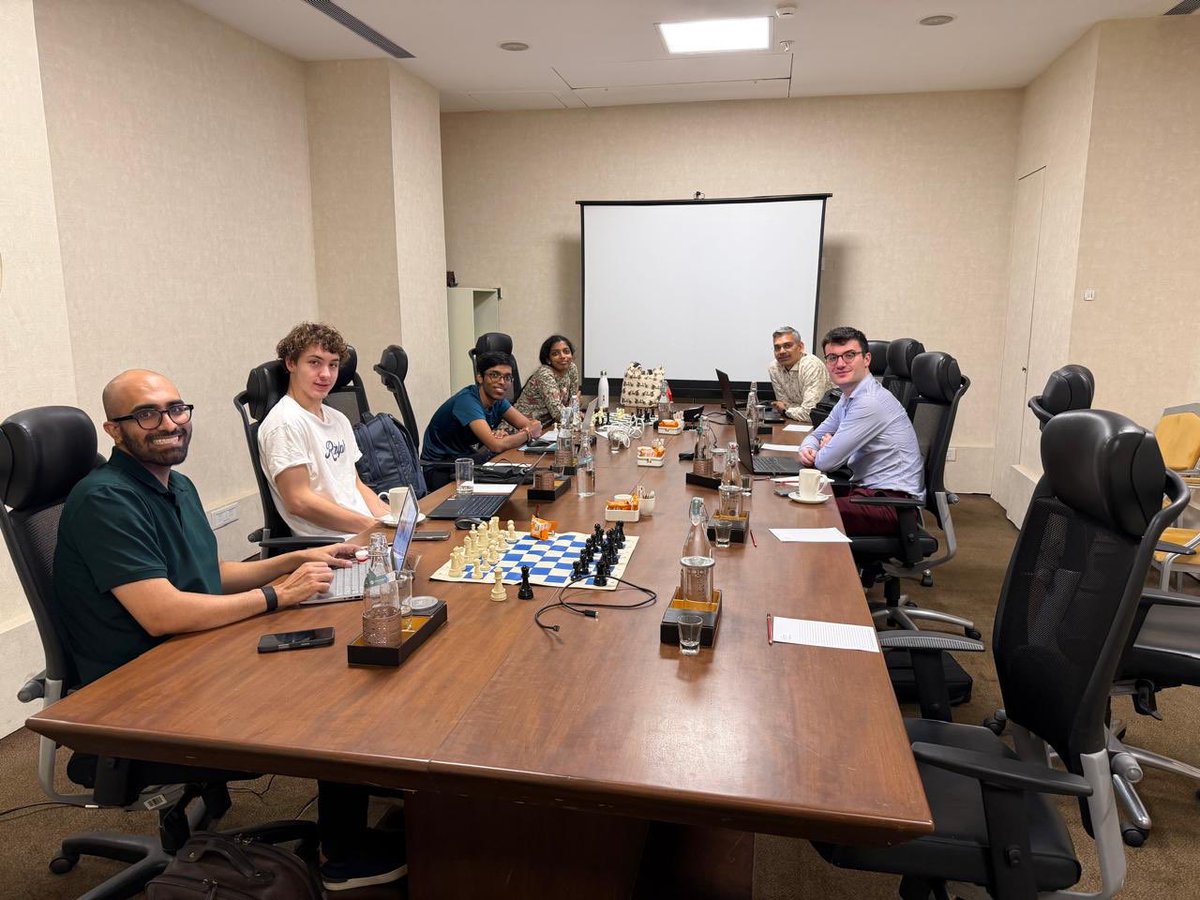
We would like to go public and express our sincere thanks GM Mahel Boyer and @GirelJoseph GM Joseph Girel, both from France, for helping @rpraggnachess in his opening preparations over the last couple of years. Along with GM @vaibhavschess, we have been able to build a compact unit with high level of trust in each other. We feel this is a good time the chess world comes to know about the silent, behind the scenes contribution of Joseph and Mahel in Pragg's progress. Thank you boys!
Deeply honoured by your wishes, Hon'ble Prime Minister Shri @narendramodi sir.
It is my absolute honour to represent India and bring the Norway Chess title home.
Your constant encouragement motivates me to work even harder and keep making our nation proud.
🚨 'I get why some great players are angry at Gukesh. He has achieved what they haven’t’
- reigning world champion Gukesh's coach Gajewski told @htTweets in an interview in Oslo
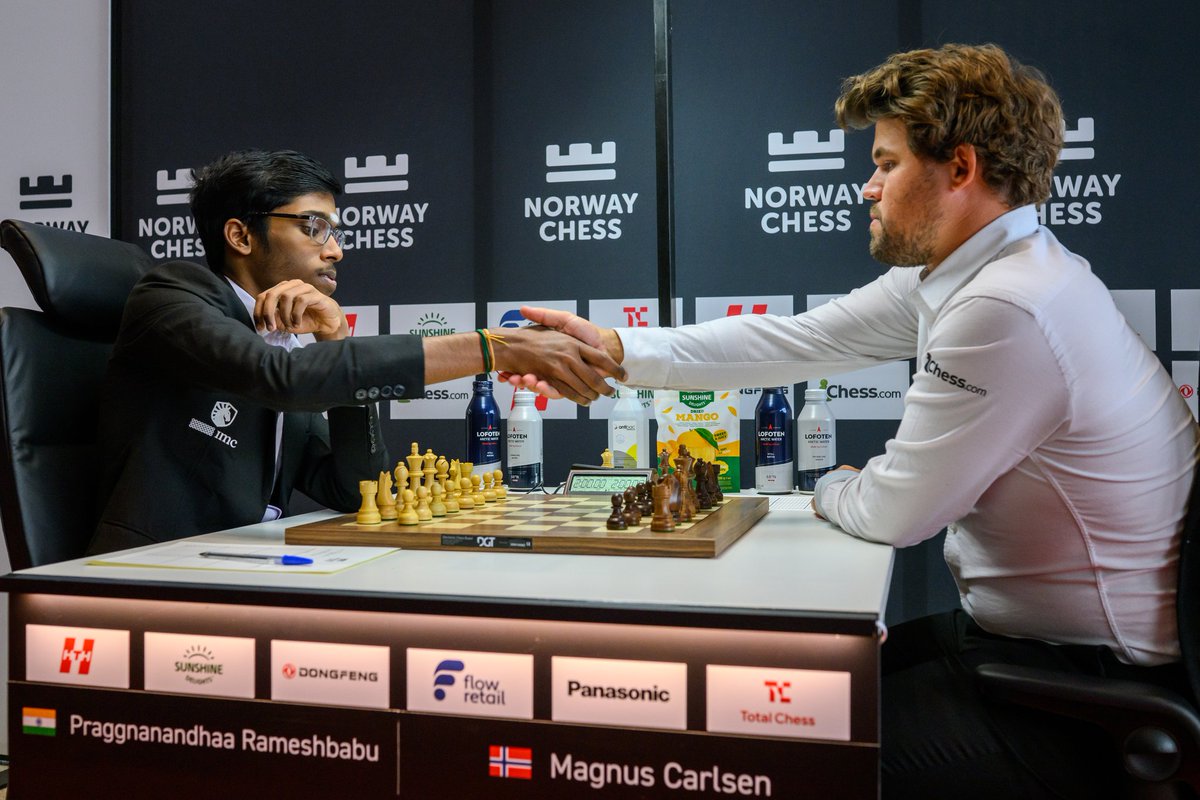
Happy to have played out a crazy fighting game against Magnus.
Fortunate to have come out on top.
Looking forward to play more fighting games!
#norwaychess