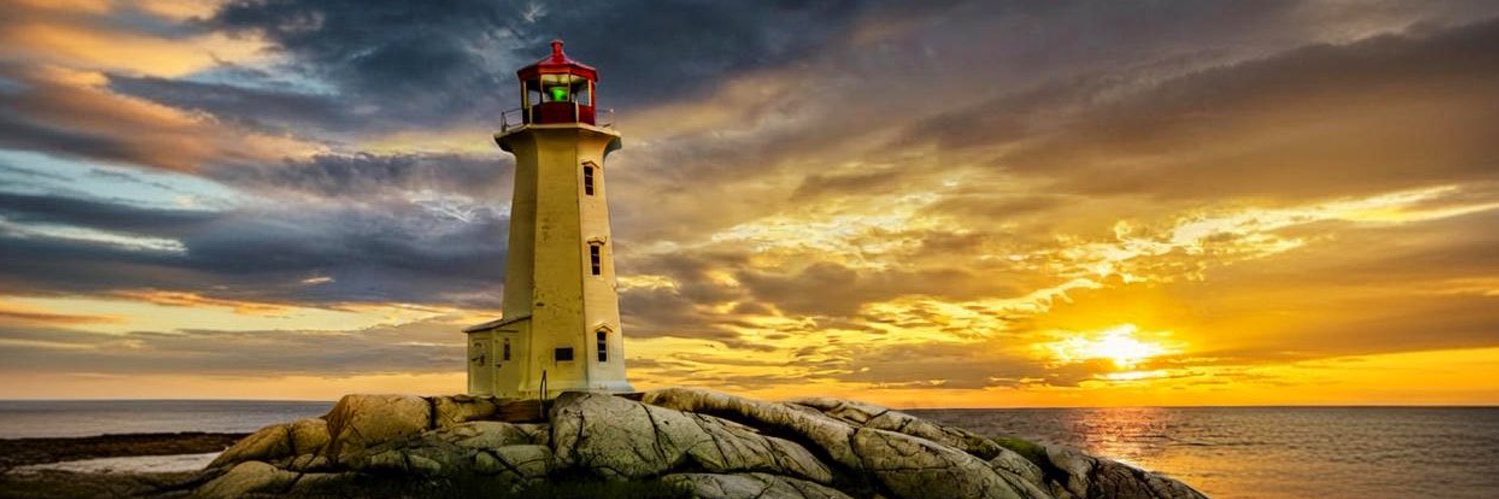
Digby, Nova Scotia proudly holds the title of the Scallop Capital of the World, a reputation built over a century of commercial scallop harvesting in the Bay of Fundy. Its cold, nutrient rich waters produce some of the most sought after scallops anywhere on Earth.
The scallop industry is a major economic driver across Atlantic Canada, supporting thousands of jobs and generating hundreds of millions of dollars annually for coastal communities. Digby alone recorded more than $30 million in scallop landings in 2022, while the broader Maritimes scallop fishery is worth well over $150 million a year.
Nova Scotia 🇨🇦
Fisheries and Oceans Canada says fishery officers arrested one individual off the coast of Cape Sable Island, Nova Scotia, on June 3 after allegedly using a trawl net with a cod-end below the legal minimum mesh size during a flounder fishery.
The following day, officers seized 12,411 pounds of groundfish valued at $17,882 when the vessel offloaded at Dennis Point Wharf.
DFO says undersized mesh is illegal because it prevents smaller and immature fish from escaping, which can harm future fish stocks and the long-term sustainability of the fishery. The investigation remains before the courts, and anyone with information about suspected illegal fishing activity is encouraged to contact their local Conservation and Protection office.
Saltwater in Our Veins
Before the sun touches the horizon, they are already gone,
their boats carving paths through dark waters, guided by instinct, tradition, and generations before them.
Commercial fishermen are not simply workers of the sea; they are guardians of a way of life.
Saltwater runs through their veins, and the rhythm of the ocean beats in their hearts. They know the language of the wind, the pull of the tides, and the patience that only the sea can teach.
Their hands are weathered by hard work, their faces shaped by cold mornings and long days, yet they carry a quiet pride that cannot be measured.
Every voyage is a reminder that nothing is guaranteed. The sea demands respect, courage, and sacrifice, and those who answer its call do so with unwavering determination.
They provide for families, sustain coastal communities, and keep alive traditions passed down through generations.
Long after the engines fall silent and the boats return to harbour, the spirit of the fisherman remains.
For a commercial fisherman, the ocean is more than a workplace. It is home, heritage, and identity.
And no matter where life carries them, a part of them will always belong to the sea.
Salt water runs through the veins of a commercial fisherman in the Maritimes. It’s more than a job, it’s a way of life passed down through generations.
Before sunrise, through rough seas, bitter cold, and endless tides, fishermen answer the call of the ocean because it’s part of who they are.
The Atlantic isn’t just where they work, it’s where their stories are written, where their families were built, and where their hearts will always belong.
Nova Scotia’s Zone 12F snow crab fishery is an important seasonal fishery that supports many coastal communities and independent harvesters throughout Cape Breton and eastern Nova Scotia.
The fishery operates under strict quotas and management measures designed to protect the long-term sustainability of the stock while providing economic benefits to local communities.
Harvesters continue to play a key role in supplying high-quality snow crab to domestic and international markets, making the fishery one of Atlantic Canada’s most valuable seafood industries.
Beautiful drone footage capturing the lobster season opening in the Magdalen Islands on May 9, 2026, as harvesters set out to begin another important season in Atlantic Canada.
Atlantic Canada’s 2026 spring and summer lobster season got off to a slower than usual start, with colder water temperatures and poor weather contributing to weaker catches during the opening weeks.
In recent weeks, however, landings have improved as waters have warmed and lobster activity has increased across several fishing areas.
While official season totals are not yet available, many harvesters are reporting stronger catches and remain optimistic that overall landings could still finish close to long term averages.
Commercial Atlantic halibut is one of Atlantic Canada’s most valuable fisheries, supporting harvesters and coastal communities from Nova Scotia to Newfoundland and Labrador.
For the 2025–2026 season, the Gulf of St. Lawrence total allowable catch was set at 3,083 tonnes, with nearly 2,988 tonnes available for commercial harvesters after scientific allocations.
The fishery generates well over $100 million annually in landed value across Atlantic Canada, with much of the catch exported to premium markets in North America, Europe, and Asia.
High quality, sustainably managed, and economically important, Atlantic halibut remains one of the region’s most valuable seafood resources.
Commercial lobster fishing in Atlantic Canada is more than an industry, it’s a way of life.
This footage showcases the hard work, tradition, and resilience of the men and women who help sustain coastal communities and support one of the region’s most valuable seafood industries.
Lower East Pubnico, Nova Scotia 🇨🇦
The Jordyn & Hailey cuts through the Atlantic, representing the hard work, tradition, and resilience of Nova Scotia’s commercial fishing industry. For generations, fishing families have built coastal communities and helped make Atlantic Canada a global leader in seafood production.
These vessels are more than boats — they’re the backbone of local economies and a way of life worth protecting for future generations. ⚓️🦞🇨🇦
FFAW-Unifor’s latest lobster price update for June 7–13, the average U.S. market price was $7.08 USD per pound, or $9.88 CAD based on current exchange rates. The union reported a minimum price to harvesters of $7.06 per pound.
The Byrne & Brooke XXI is a beautiful example of Nova Scotia’s fishing heritage and craftsmanship. Built for the demanding waters of the North Atlantic, this modern lobster boat combines strength, reliability, and tradition.
With its striking blue hull, colourful buoys, and towering mast filled with navigation equipment, it represents far more than a fishing vessel. Boats like this are the backbone of many Nova Scotia coastal communities, supporting generations of fishing families and sustaining one of the province’s most important industries.
There is a unique beauty to these vessels at sea, especially at sunrise or sunset. They symbolize hard work, resilience, and the deep connection Nova Scotians have with the ocean that has shaped their communities and way of life for centuries.
When a foreign government owns our fish plants, Canadians should be paying attention
Most Canadians assume that when seafood is caught in our waters, processed in our towns, and sold using our reputation, the benefits mostly stay here at home. The truth is that this is no longer always the case.
In parts of Newfoundland and Labrador, a growing share of seafood processing is controlled by Royal Greenland A/S, a massive seafood corporation that is fully owned by the Government of Greenland. This is not a private foreign investor. This is a foreign state owning infrastructure directly tied to Canadian natural resources.
Royal Greenland became a major player in Canada after acquiring Quinlan Brothers and operating under the Quin-Sea Fisheries banner. Today, the company runs multiple processing facilities across Atlantic Canada, handling species that are central to local livelihoods such as snow crab, shrimp, cod, lobster, and more. These plants are often the economic backbone of small coastal communities.
That is exactly why ownership matters.
When a plant is locally owned, decisions about investment, expansion, wages, and long term planning are usually tied to the well being of the surrounding community. When ownership shifts to a foreign government, priorities change. The ultimate responsibility of Royal Greenland is not to Newfoundland workers or Canadian communities. It is to the people and government of Greenland.
That raises serious questions that deserve honest discussion.
Should a foreign government be allowed to control significant parts of the value chain built on Canadian natural resources? Should profits generated from fish harvested in Canadian waters be flowing back to a foreign treasury instead of being reinvested in our own communities? What happens to local independence when small operators must negotiate with a company backed by the financial power of a state?
This is not an attack on workers, and it is not hostility toward Greenlanders. It is about economic sovereignty. Canada debates foreign ownership when it comes to oil, minerals, farmland, and infrastructure. Fisheries should be no different. These resources are tied directly to culture, employment, and the long term survival of coastal regions.
Coastal communities have already seen decision making move farther and farther away, first to corporate headquarters, now to boardrooms overseen by another country’s government. Every step removes more local control.
If we care about the future of Atlantic Canada’s fisheries, we need to start having an honest conversation about ownership, control, and who truly benefits from the wealth coming out of our waters. If the fish are Canadian, the communities are Canadian, and the workers are Canadian, then Canadians are justified in asking why the ultimate owner is not.
A five year old male North Atlantic right whale, one of the world’s most endangered whale species, has been spotted twice this week in the Gulf of St. Lawrence while entangled in fishing gear. The whale was first seen near Shippagan, New Brunswick, and later west of Quebec’s Îles-de-la-Madeleine as officials continued efforts to locate and assess its condition.
Federal officials say photos suggest there may be little or no rope around the whale’s mouth, meaning it may still be able to feed normally. However, experts need to get closer to determine the severity of the entanglement and attempt a rescue if weather and sea conditions allow.
The whale, identified as No. 5192, belongs to the critically endangered North Atlantic right whale population, which numbers only a few hundred animals. Entanglement in fishing gear and ship strikes remain the two biggest threats to the species’ survival.
Lobster Dealer Acquitted in High-Profile Intimidation Trial, Seeks Bail on Remaining Charges
DIGBY, N.S. — Nova Scotia lobster dealer Eric David Thibault, 66, has been found not guilty in a closely watched intimidation case that has drawn significant attention across the province’s fishing industry.
The trial centered on allegations that Thibault intimidated individuals connected to the lobster trade during a period of heightened tensions within the southwest Nova Scotia fishery. One of the key pieces of evidence presented in court was a recorded confrontation in which the phrase, “You really want to go to war with us?” was allegedly directed at members of the industry.
Prosecutors argued the statement formed part of an effort to intimidate those involved in the dispute, while the defence maintained the evidence failed to meet the threshold required for a criminal conviction. After hearing the evidence, the court acquitted Thibault of the charge.
The verdict marks a significant development in one of several legal proceedings involving the veteran lobster buyer, whose name has become widely known throughout the Nova Scotia fishing sector.
Following the acquittal, Thibault’s legal team indicated he will seek bail while awaiting the outcome of other outstanding matters before the courts. The case has been closely followed by harvesters, buyers, and industry stakeholders, many of whom view it as part of a broader series of conflicts and legal battles that have affected the lobster fishery in recent years.
While this chapter has ended with a not guilty verdict, additional court proceedings involving Thibault are still expected, ensuring that the story remains far from over.
Flashback to November 29, 2016.
It was opening day of lobster season off southwestern Nova Scotia as hundreds of boats raced to set their traps in the most productive and lucrative fishing grounds.
Lobster fishing is one of the toughest and most dangerous occupations in Atlantic Canada, but for many families, it is more than a livelihood. It is a way of life that has been passed down through generations and remains deeply rooted in their blood.
Ottawa Pushes Seafood Market Diversification to Strengthen Atlantic Canada’s Fishing Industry
OTTAWA — The federal government is increasing efforts to diversify international markets for Canadian seafood as Atlantic Canada’s fishing industry faces growing uncertainty from global trade disruptions and changing market conditions.
New trade missions and export initiatives are being launched to help seafood companies expand beyond traditional buyers and establish stronger connections in emerging markets across Europe, Asia, and other regions.
Atlantic Canada’s seafood sector, which supports thousands of jobs and generates billions of dollars annually, has long relied heavily on a handful of major export destinations. Officials say broadening market access will help reduce risk, create new opportunities for harvesters, processors, and exporters, and strengthen the long term stability of coastal communities.
The move comes as the industry continues to adapt to shifting global demand, trade tensions, and increasing competition in international seafood markets. Ottawa says expanding Canada’s global seafood footprint will be a key priority in protecting one of Atlantic Canada’s most important economic sectors.