Now I can finally reveal why I've been quiet for so long!
We're building a radically new kind of formally verified AI for science, math, engineering, and everything else, over at @lanyon_ai. Expect more information in the coming hours and days. Link below.
LLM's Achilles' heel.
https://t.co/uQi7K5hJQW
"Instead of implementing a learning process that can learn how the world works, they implement an incredibly indirect process for scanning human brains to construct a crude copy of human cognitive processes." --- Sergey Levine
recently the NYT asked a court to force us to not delete any user chats. we think this was an inappropriate request that sets a bad precedent.
we are appealing the decision.
we will fight any demand that compromises our users' privacy; this is a core principle.
We just dropped our interview with @Plinz - here is a clip of him reiterating that Deep Learning didn't hit a wall and his admiration for @fchollet courage releasing the @arcprize
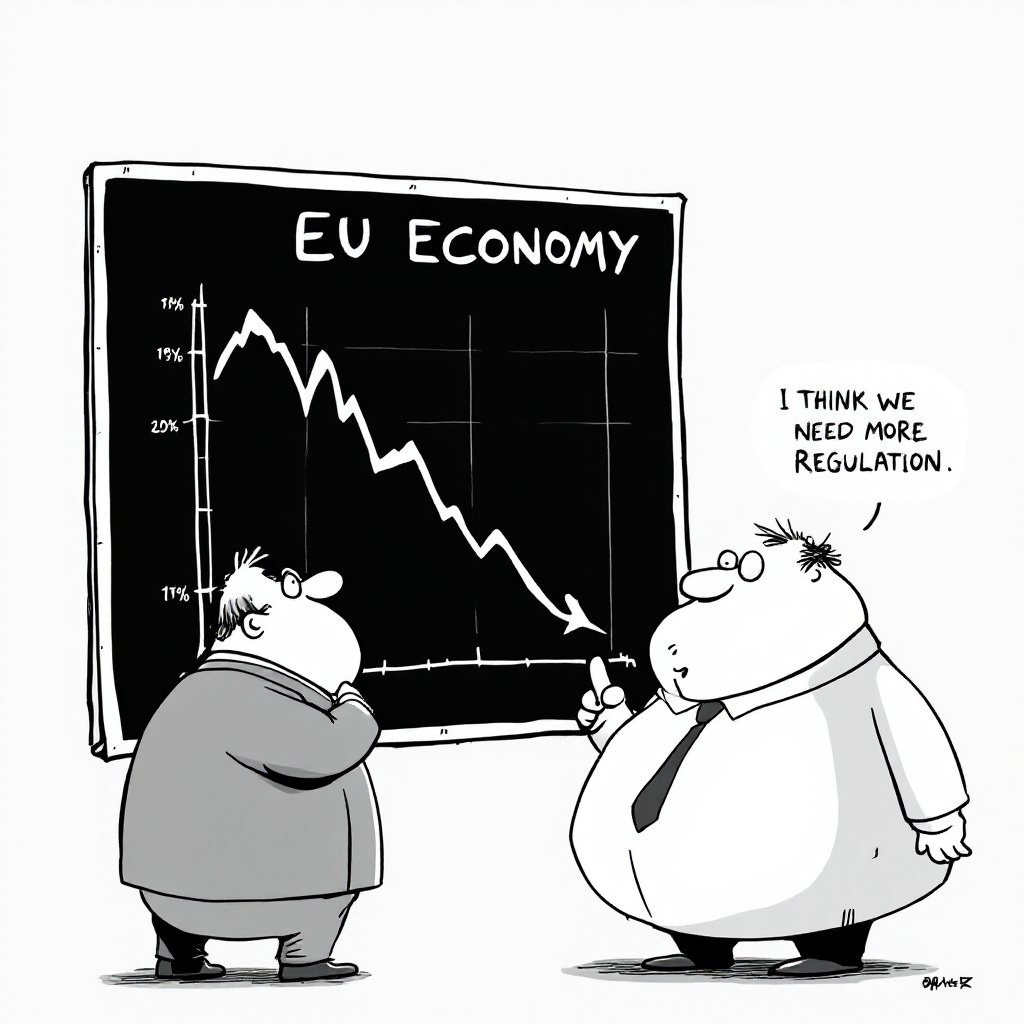
Flux 1.1 does pretty decent political cartoons, so I wired up a glif workflow that let's Gemini Pro 1.5 write the cartoon and then passes it on the Flux the cartoonist to render
"EU regulations"
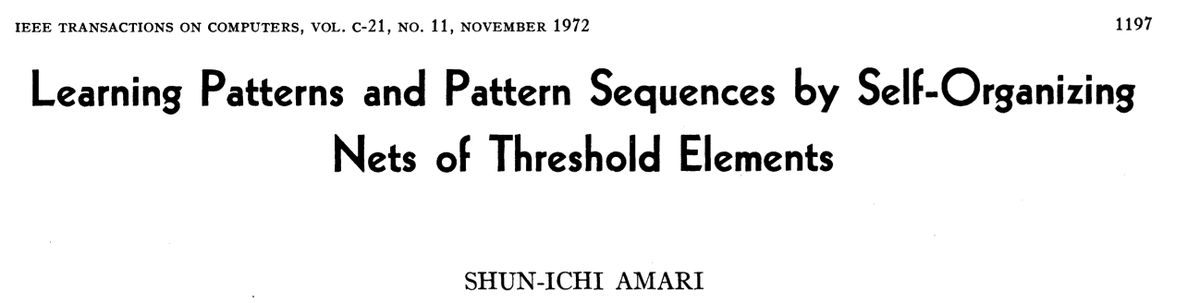
The #NobelPrizeinPhysics2024 for Hopfield & Hinton rewards plagiarism and incorrect attribution in computer science. It's mostly about Amari's "Hopfield network" and the "Boltzmann Machine."
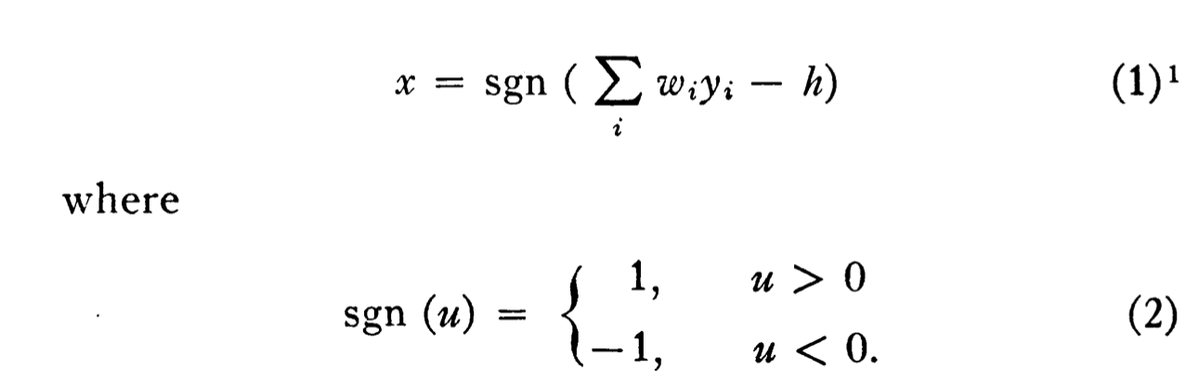
1. The Lenz-Ising recurrent architecture with neuron-like elements was published in 1925 [L20][I24][I25]. In 1972, Shun-Ichi Amari made it adaptive such that it could learn to associate input patterns with output patterns by changing its connection weights [AMH1]. However, Amari is only briefly cited in the "Scientific Background to the Nobel Prize in Physics 2024." Unfortunately, Amari's net was later called the "Hopfield network." Hopfield republished it 10 years later [AMH2], without citing Amari, not even in later papers.
2. The related Boltzmann Machine paper by Ackley, Hinton, and Sejnowski (1985) [BM] was about learning internal representations in hidden units of neural networks (NNs) [S20]. It didn't cite the first working algorithm for deep learning of internal representations by Ivakhnenko & Lapa (Ukraine, 1965)[DEEP1-2][HIN]. It didn't cite Amari's separate work (1967-68)[GD1-2] on learning internal representations in deep NNs end-to-end through stochastic gradient descent (SGD). Not even the later surveys by the authors [S20][DL3][DLP] nor the "Scientific Background to the Nobel Prize in Physics 2024" mention these origins of deep learning. ([BM] also did not cite relevant prior work by Sherrington & Kirkpatrick [SK75] & Glauber [G63].)
3. The Nobel Committee also lauds Hinton et al.'s 2006 method for layer-wise pretraining of deep NNs (2006) [UN4]. However, this work neither cited the original layer-wise training of deep NNs by Ivakhnenko & Lapa (1965)[DEEP1-2] nor the original work on unsupervised pretraining of deep NNs (1991) [UN0-1][DLP].
4. The "Popular information" says: “At the end of the 1960s, some discouraging theoretical results caused many researchers to suspect that these neural networks would never be of any real use." However, deep learning research was obviously alive and kicking in the 1960s-70s, especially outside of the Anglosphere [DEEP1-2][GD1-3][CNN1][DL1-2][DLP][DLH].
5. Many additional cases of plagiarism and incorrect attribution can be found in the following reference [DLP], which also contains the other references above. One can start with Sec. 3:
[DLP] J. Schmidhuber (2023). How 3 Turing awardees republished key methods and ideas whose creators they failed to credit. Technical Report IDSIA-23-23, Swiss AI Lab IDSIA, 14 Dec 2023. https://t.co/Nz0fjc6kyx
See also the following reference [DLH] for a history of the field:
[DLH] J. Schmidhuber (2022). Annotated History of Modern AI and Deep Learning. Technical Report IDSIA-22-22, IDSIA, Lugano, Switzerland, 2022. Preprint arXiv:2212.11279. https://t.co/Ys0dw5hkF4 (This extends the 2015 award-winning survey https://t.co/7goTtI5Uwv)
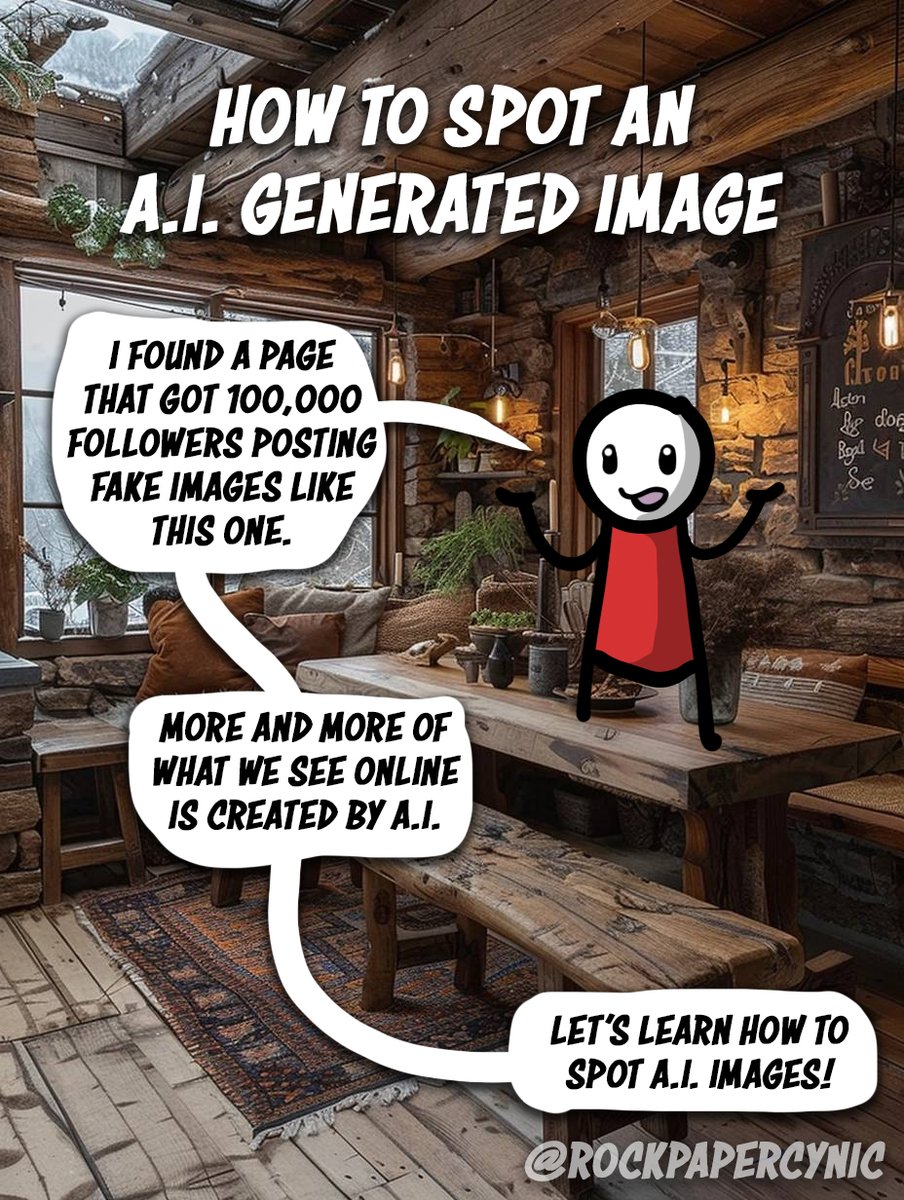
A.I. photos are flooding social media and contributing to an Internet where we can't believe what we see.
Spotting A.I. ����s is an important media literacy skill.
It takes a few seconds to spot a fake and stop the spread of disinformation. Let's learn how! 🧵(1/5)
Okinawa/OIST Computational Neuroscience Course 2024 (OCNC 2024): Apply now! This unique summer course supports students to develop their own research project in computational neuroscience. https://t.co/yh3aV4dpgT
I’m playing around with calling our tech, as it is today, IA (intelligence amplification) instead of AI. IA have the vibe of tools for thought, needing human interaction, and resemble a lot more what we actually have today. AI feels more like independent long-running agents.
2/ Wikipedia is one of the most unlikely, staggering achievement of our species, a global effort of millions of people working together without any personal benefit (except for feeling smug). How did the internet go from that to the commodification of fckng everything?
Big news: Douglas Hofstadter, a legendary scholar and famous AI skeptic, changed his mind:
"I think [AI progress] is terrifying. I hate it. I think about it practically all the time, every single day.”
“It feels as if the entire human race is about to be eclipsed and left in the dust.
The accelerating progress has been so unexpected, caught me so completely off guard - not only myself but many, many people - there is a kind of terror of an oncoming tsunami that is going to catch all of humanity off guard."
"[AI] renders humanity a very small phenomenon compared to something else far more intelligent than us, and [AI] will become incomprehensible to us, as in comprehensible to us as we are to cockroaches.
“Very soon these entities [AIs] may well be far more intelligent than us, and at that point we will recede into the background. We will have handed the baton over to our successors. If this were to happen over a long time, like hundreds of years, that would be OK, but it’s happening over a period of a few years.
“To me it’s quite terrifying because it suggests that everything I used to believe was the case is being overturned. I thought it would be hundreds of years before anything even remotely like a human mind would be [soon].
I never imagined that computers would rival or even surpass human intelligence. It was a goal that was so far away I wasn’t worried about it. And then it started happening at an accelerating pace, where unreachable goals and things that computers shouldn’t be able to do started toppling - the defeat of Gary Kasparov by Deep Blue, and going on to defeat the best Go players in the world. And then systems got better and better at translation between languages, and then at producing intelligible responses to difficult questions in natural language, and even writing poetry.”
One thing programming teaches you is to look for reasons why you're wrong, instead of looking for reasons why you're right
If the computer is not doing what you expected, it's almost always because your mental model is incorrect, not because the computer is incorrect