As a farmer in the Philippines, @ADAlvarez7 is passionate about sharing knowledge, encouraging innovation, and helping fellow producers succeed. Through his work, AD is proving that when farmers support one another, entire communities grow stronger.
#IAmAFarmer#GFNMobilizing
I will be serving as Chairman for this 19th Philippine National Corn Congress (Visayas Cluster) Cebu. All preparations are in full swing and the actual congress is on August 10 to 14, 2026. Sarrosa International Hotel, Cebu City.
https://t.co/onhQ4cg0Sr
Lots of talk about glyphosate, so I want to add some context to the noise.
Glyphosate is a molecule.
It has been studied for 50 years.
Hundreds of regulatory reviews.
Tens of thousands of pages of data.
Toxicology, residue studies, epidemiology, environmental fate.
You don’t have to “trust Monsanto.”
You can read assessments from:
🇺🇸 EPA
🇪🇺 EFSA
🇯🇵 PMDA
🇨🇦 Health Canada
Here’s what gets lost in the shouting:
Hazard ≠ Risk.
Risk = Hazard × Exposure.
Real‑world dietary exposure?
Measured in micrograms.
Hundreds of times below conservative safety limits.
That’s risk assessment.
And no- IARC saying “probably carcinogenic” does not mean “causes cancer at real‑world exposure.”
It means same category as:
– Red meat
– Night shift work
– Very hot beverages
Context matters.
If you think farmers spray poison because they enjoy it, you’ve never met a farmer.
They use tools.
Tools are evaluated.
If they don’t work, they’re dropped.
If they aren’t safe under regulation, they’re not approved.
The claim that we are all being secretly poisoned? That collapses under dose‑response curves and biomonitoring data.
Emotion spreads faster than toxicology. But toxicology still wins.
If you care about food, health, and the environment, learn the difference between hazard and risk.
It will change how you see almost every chemical debate online.
And yesterday, SCOTUS (7–2) made something else clear:
You don’t get to turn fear into a label.
If regulators didn’t require a warning,
you don’t get to invent one through litigation.
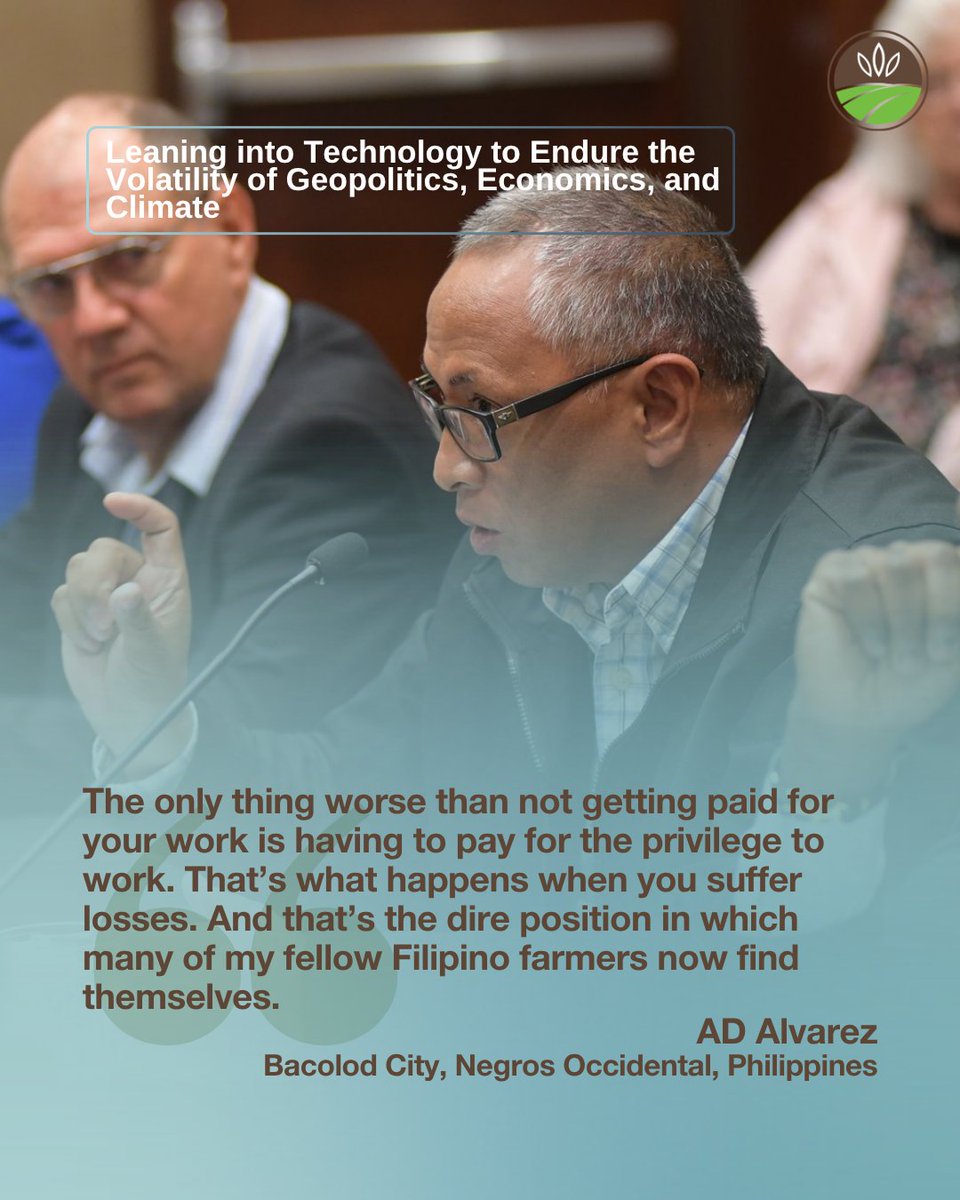
“The rising cost of fertilizer has hurt my farm operation, but we can withstand it because we’ve embraced modern technologies,” writes @ADAlvarez7.
Read more about how technology is helping farmers build resilience: https://t.co/ZPCjmoNQWF
#GFNMobilizing
“Rather than surrendering to despair, we must adapt through innovation. We need access to the world’s best technologies,” writes @ADAlvarez7.
Read more about how farmers in the Philippines are navigating today's challenges: https://t.co/ZPCjmoNQWF
#GFNMobilizing
📸 L to R: R. Ellasus (C. Luzon), E. Bueno (S. Luzon), A. Areola (Bicol), AD Alvarez (Nat'l/Visayas), E. Paraluman (Mindanao), E. Lydia (Quezon), M. Corpus (N. Luzon). #AgTech#Biotech#FarmersFirst
Exciting news for 🇵🇭 agriculture! 🌾 Seven farmer leaders just launched the Philippine Biotech Farmers Network Inc. (PBFN)—a pro-science, pro-agtech movement to modernize Filipino farming. Honored to serve as founding President. We're just getting started! 🚀 (1/2)
Been working in the ag development space for sometime. This is a request for those who would be interested to help us in any way. Please read and consider. Rooted https://t.co/iB6KflQhHe
Been working in the ag development space for sometime. This is a request for those who would be interested to help us in any way. Please read and consider. Rooted https://t.co/iB6KflQhHe
Being a farmer who believes in collaboration, innovations, and biotechnology, attending this symposium is a learning experience. Farmers rights is for all systems. More work ahead.
https://t.co/YnPeGeX97s
Kees Huizinga who is also a fellow member of the Global Farmer Network who is farming in Ukraine while the Russian aggression is on going. My prayers and heart goes to you my friend and for the many other farmers in Ukraine. Stay safe.
https://t.co/0bEdzc5qlb
I am extremely grateful for being able to participate, listen and help formulate ideas as we all work towards making this world a better place. Much work ahead. As a farmer who is engaged in these kinds of events, we can bring a valuable angle in the conversations.
The International Plant Treaty encourages all Contracting Parties to protect, promote and realize Farmers’ Rights as set out in Article 9.
Learn more ➡️ https://t.co/q7A9lABakz
Watch highlights from the 2nd Global Symposium ➡️ https://t.co/gO0OOv1IdZ
#ItAllStartsWithTheSeed
Being a farmer who believes in collaboration, innovations, and biotechnology, attending this symposium is a learning experience. There is a need to be inclusive to meet the increasing global population. Farmers rights is for all systems. More work ahead.
Today is the Day 3 of the Global Symposium on Farmers’ Rights.
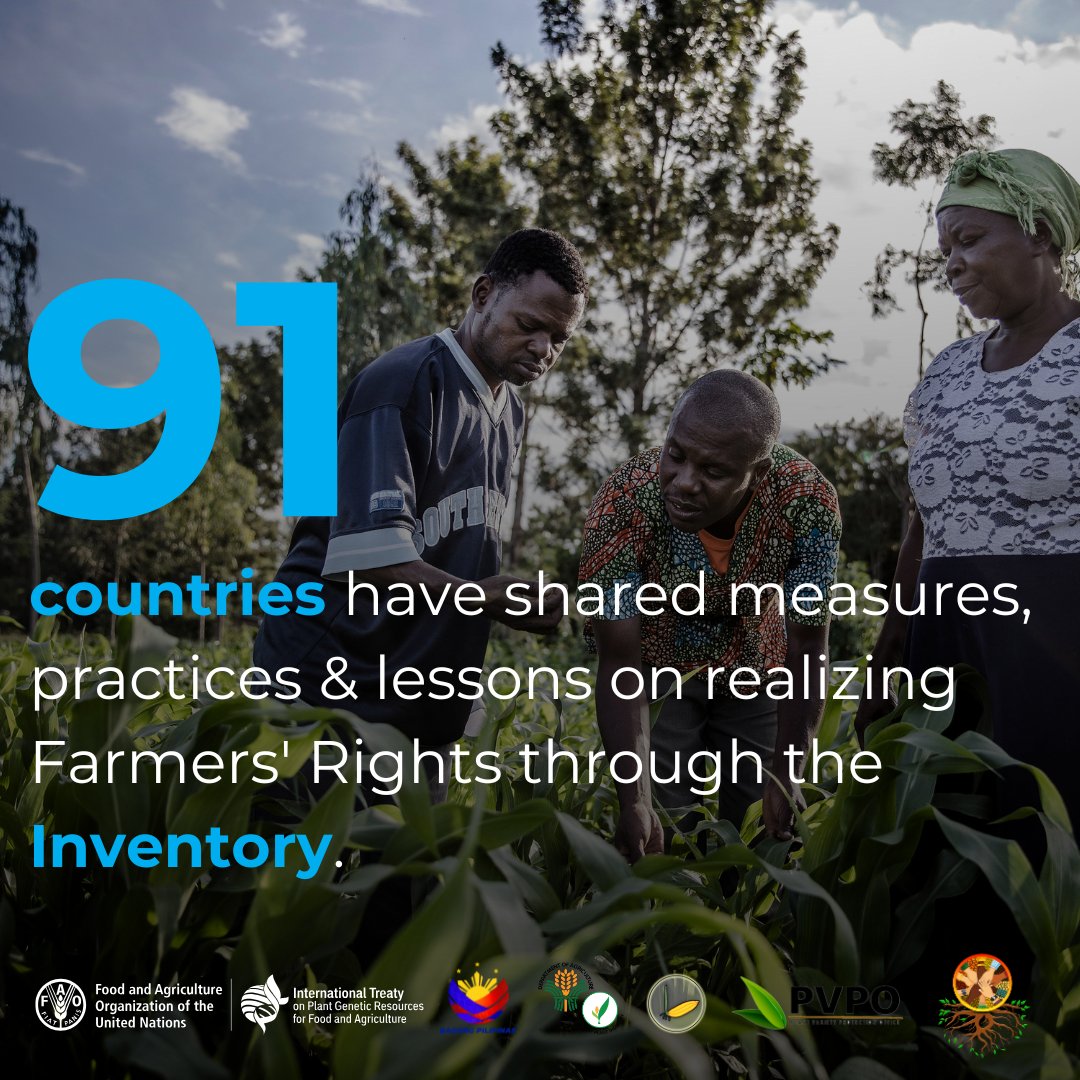
This global knowledge-sharing effort helps build stronger, fairer agrifood systems for all.
Explore the Inventory ➡️ https://t.co/ataBPJU0IX
Watch live 📺 https://t.co/DOh1sYZzn0
#ItAllStartsWithTheSeed
As a farmer, we do care for the protection of varieties under the stewardship of indigent groups. However, we are more concern about the desperate need to meet production goals that will feed the masses. We can only do that through modern and innovative approaches.
The Second Global Symposium theme – “Farmers’ Rights: Honouring Heritage, Preserving Biodiversity & Cultivating Food Security” – highlights farmers’ vital role in feeding the world & building fair agrifood systems.
Follow for more ➡️ https://t.co/uBd8VmDwkU
#FarmersRights
ISAAA Inc., in collaboration with the DA Biotech Program, released a monograph titled "Farmers Speak: Stories from the Fields," documenting how the adoption of biotech corn has improved the lives and communities of Filipino farmers. Download now: https://t.co/u6UZLDA6A9
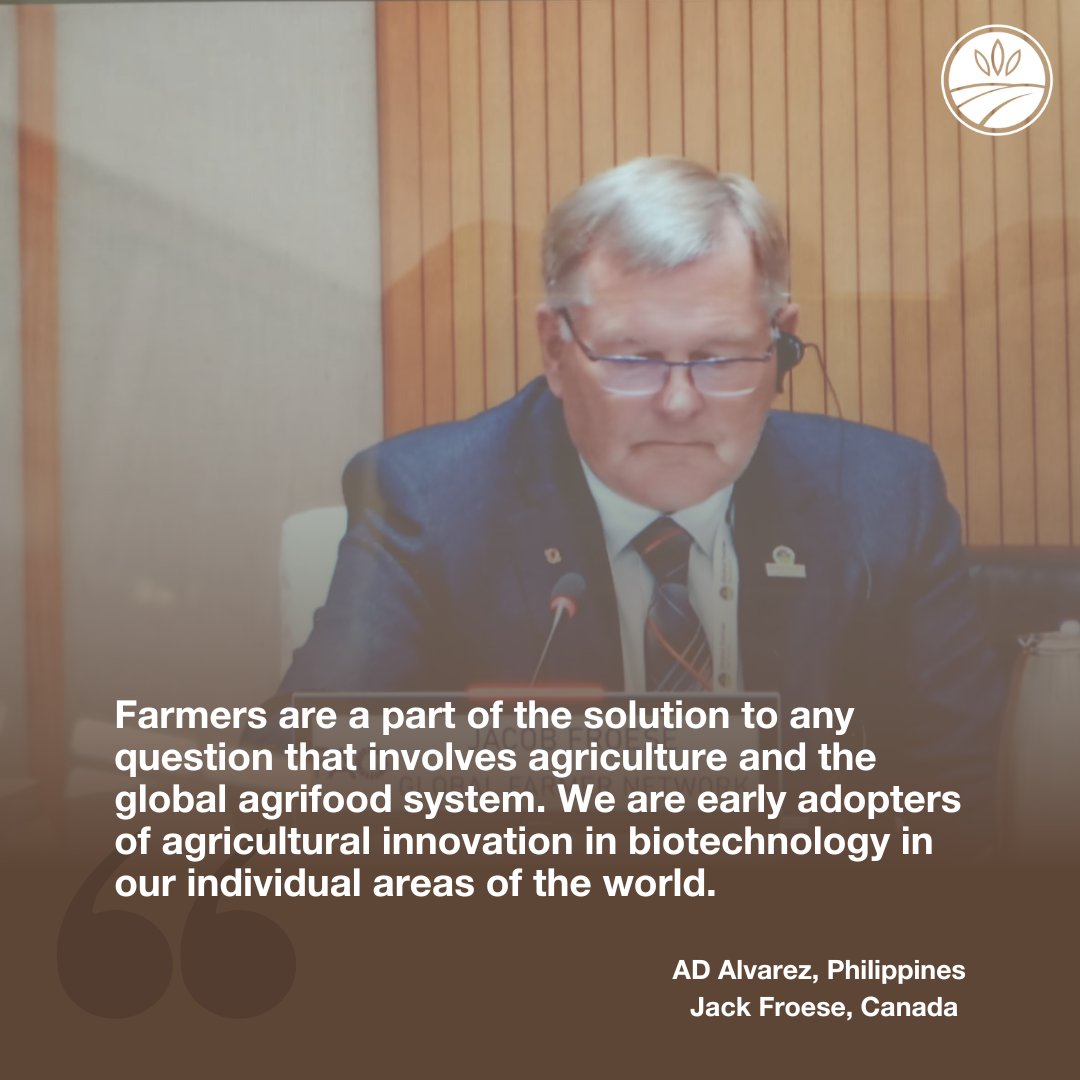
"Farmers bring much-needed knowledge, expertise, and realities from the ground to these conversations," says farmer @ADAlvarez7 & Jack Froese
🔗 https://t.co/LUyyjakLL1
#GFNMobilizing