@ChrisWillman@Variety One of my fav Dylan covers: https://t.co/uRS34z7mxI
The album it's on is mostly bad (VERY dated 80s production), but the version of "License to Kill" is stunning
Cool, thanks! Would love your feedback on it. I'm sure there's lots of stuff in there you'll both agree with and strongly disagree with (and there's stuff in there I would frame much differently, in retrospect). Also, feel free to reach out via email, would love to chat more: adam(dot)caress@mtsu(dot)edu
Thanks, I might take you up on that!
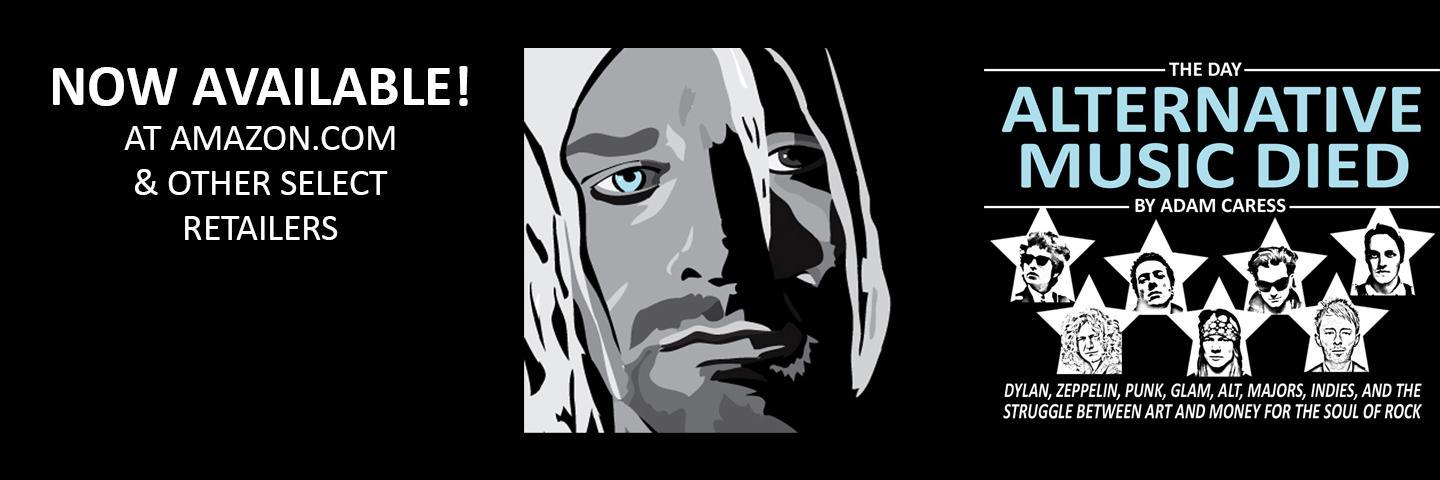
I realize it's a complex hypothesis, but hey, the world is a complex place. I had generally accepted the "napster and digital music killed the music industry" hypothesis. But then, when I was researching by book "The Day Alternative Music Died" about the rise and fall of alternative music in the 80s and 90s, I kept running into all kinds of data and case studies that seemed to contradict that narrative. "Fortune's Fool" told the story of how the major labels were gutted in the late 90s, slashing rosters and firing all the execs who had been responsible for industry growth over the previous 30 years. Could that have been a factor? And if so, what about their approach changed? (It also seemed that the "it's all Napster's fault" argument seemed to conveniently exonerate the majors for their own shortsightedness and stupidity). I was also reading books like "Our Noise" about how Merge Records and other indies thrived during this era when "digital" was supposed to have made thriving impossible. What were indies doing different from the major labels? I also launched a course a few years back on Bob Dylan and his impact on popular music and the music industry. And it was really striking how he (and the Beatles, etc.) created this new artist-centric paradigm that drove the countercultural musical revolution of the 60s and the rise of mainstream singer/songwriters in the 70s--where popular music was at the center of American culture (and generating revenue) more than ever before. The through line to all of it was the contrast between artist-centric and pop/label centric music. So I've been following that closely, and discussing it in my classes, and focusing on it in my research. It really does seem like there's something there (how well I'm able to demonstrate that is another question). But I appreciate the dialogue with you. It's very interesting and clarifying.
Again, let’s take this one by one. My hypothesis is that the adoption of an artist-centric developmental model by major record labels (alongside the old pop model), beginning in the mid-1960s, correlated with a steady rise in music industry revenues. And the major labels’ sudden abandonment of that model in the late-90s/early 2000s correlated with a drastic drop in music industry revenues from 2000-2010 (prior to widespread adoption of streaming platforms, which began in 2010).
To your specific points: 1) How do you show that consumers didn't want this stuff when objectively they, downloaded, streamed and bought concert tickets for these artists in large quantities?
Well, objectively speaking, there was a drastic drop in consumer money spent on recorded music between 2000-2010. One obvious explanation for that drop is that the consumers didn’t want what the major record labels (who controlled 80% of the market) had to sell. And again, streaming didn’t go mainstream until 2010, so it’s irrelevant to the 2000-2010 timeframe. If you want to talk about concert ticket sales (which is a whole other question), it actually supports my hypothesis. Artist-centric music (which you could oversimplify as “rock”) maintained a MUCH larger % of the live market in the 2000s (and continues to all the way to the present day), relative to the recorded music market. In fact, you could say that buying artist-centric live concert tickets was one way consumers could continue spending money on the music they still wanted, even as the major labels had stopped marketing recorded versions of that music. This would actually be a really interesting thread to draw out and include in my research to support my hypothesis!
1a) Our own personal tastes are not objective.
Of course our own tastes are not objective. But like you, I got my start in this industry as an artist—as the primary songwriter in rock bands. And given that, it’s probably no surprise that I am partial to the interests of artists, particularly those who write and perform their own music. And that has surely motivated my interest in this particular subject. But the comparison I am making is not between subjective categories of “music I like” and “music I don’t like” but rather between two objectively discernable categories: a) music that is created under an “artist-centric” paradigm where artists write and perform the music, choose the artistic direction, and craft their own public image accordingly; and b) music that is created under a “pop-centric” or “label-centric” paradigm, where the label choses what songs the artist will record (typically written by professional industry songwriters, think Tin Pan Alley or the Brill Building—or Max Martin), the label hires the producers and musicians, and the label crafts the artists’ image (think Britney or Backstreet).
2a) Non "pop shit" was widely (frictionlessly) available on indies and majors via streaming. Consumers were not prevented by majors from consuming it.
Let’s leave streaming out of it for a moment because, again, I’m talking about the pre-streaming revenue drop from 2000-2010—there was a later shift that took place when streaming took over between 2010-2020, but that’s outside the scope of my current research.
But your broader question is still relevant.
2b) Wouldn't majors exclusively putting out "pop shit" put them at a competitive disadvantage when non pop shit is a mouse click away?
Yes! Absolutely! This is why major label revenue tanked from 2000-2010 while indie revenue soared. Whatever else it was, the decision to focus on “pop-centric” music was a horrible business decision, and it inadvertently spawned a “golden age” of indie music, which lasted from roughly 2000 to somewhere between 2010 and 2015, when it was also killed by streaming. But back in the late 2000s you routinely had artist-centric indie label artists like The National, Sufjan Stevens, Neko Case, Arcade Fire, Feist, Bon Iver, Vampire Weekend (and many more!) make the TOP TEN of the Billboard 200, all because the majors had abandoned that lane to indies.
3) What is the mechanism by which non "pop shit" would generate more recorded music revenue than "pop shit?"
People buying more of it. And I think the sales trends from 1960-2010 will bear this out (this is the research I am currently undertaking). And again, when talking about the specific time period of 2000-2010, I think the fact that artist-centric indie music revenue increased while pop-centric major label revenue plummeted is a good comparison.
4) If you're answer is "People would stream it more" consider digital music revenues are paid from what has effectively become a fixed pool and then pro-rated out per stream. Increased streaming does not pay out increased revenue. In fact briefly during covid, people switched from streaming music to watching netflix, streams fell but overall revenue remained static. The reason you should deal with this, is I think this suggests a more interesting alternate hypothesis: The fixed streaming pool revenue means music quality doesn't matter. Labels get the same amount regardless. Thus there is no financial penalty for getting music quality wrong.
Assessing the streaming era (roughly 2010-present) is an entirely different thing. The revenue model (the way artists/songwriters are paid, etc.) is all objectively horrible—especially for artists. It’s a microcosm of 21stCentury economics in general (what I refer to as the “death spiral” stage of capitalism) where more and more revenue is funneled upwards to the top 1% at the expense of everyone else, especially the bottom 50%. I mean, Spotify’s decision to demonetize songs with fewer than 1000 streams/year was a case in point. 87% of songs on Spotify have fewer than 1000 streams/year, and so Spotify is essentially collecting all the money those songs generate and redistributing it to the top 13%. It’s unconscionable. And yes, perhaps in the current age of streaming, there is no penalty for getting music quality wrong. But in 2000-2010 (and more broadly from 1960-2010), I think there definitely were rewards/penalties for getting music quality right/wrong. And my thesis and research are built around addressing and assessing that historical era.
My hypothesis is not directly related to the “quality” of the music, which is, no matter how you try to quantify it, remains at least a partially subjective assessment—even though I personally think that the quality of music conceived and created by artists themselves tends to be of higher quality of that conceived by major label marketing teams and created by hired hands. Even so, don’t think there is any question that there is more is more “good quality” music available post-2000 than there was pre-2000. Which makes total sense. Prior to 2000, the recording industry was essentially a “closed system” completely controlled by record labels. It cost so much to record and distribute music that it was nearly impossible to do so without record label support. But the advent of inexpensive digital recording and essentially free digital distribution radically changed the system into an “open” one where anyone could record and distribute music. It also allowed indie labels to compete with major labels on a more level playing field than they ever had before, resulting in a golden era of indie music that lasted from roughly 2000-2015 (when it was eventually killed by streaming). But during that brief window, I agree with Nick Hornby’s assessment, circa 2009: “I don’t know how it will all pan out, who will pay the artists to make their lovely or ugly or scary music in a world that’s increasingly beginning to expect everything for free… All I know is that if you love music, and you have a curious mind, there has never been a better time to be alive.”
Again, let’s take this one by one. My hypothesis is that the adoption of an artist-centric developmental model by major record labels (alongside the old pop model), beginning in the mid-1960s, correlated with a steady rise in music industry revenues. And the major labels’ sudden abandonment of that model in the late-90s/early 2000s correlated with a drastic drop in music industry revenues from 2000-2010 (prior to widespread adoption of streaming platforms, which began in 2010).
To your specific points: 1) How do you show that consumers didn't want this stuff when objectively they, downloaded, streamed and bought concert tickets for these artists in large quantities?
Well, objectively speaking, there was a drastic drop in consumer money spent on recorded music between 2000-2010. One obvious explanation for that drop is that the consumers didn’t want what the major record labels (who controlled 80% of the market) had to sell. And again, streaming didn’t go mainstream until 2010, so it’s irrelevant to the 2000-2010 timeframe. If you want to talk about concert ticket sales (which is a whole other question), it actually supports my hypothesis. Artist-centric music (which you could oversimplify as “rock”) maintained a MUCH larger % of the live market in the 2000s (and continues to all the way to the present day), relative to the recorded music market. In fact, you could say that buying artist-centric live concert tickets was one way consumers could continue spending money on the music they still wanted, even as the major labels had stopped marketing recorded versions of that music. This would actually be a really interesting thread to draw out and include in my research to support my hypothesis!
1a) Our own personal tastes are not objective.
Of course our own tastes are not objective. But like you, I got my start in this industry as an artist—as the primary songwriter in rock bands. And given that, it’s probably no surprise that I am partial to the interests of artists, particularly those who write and perform their own music. And that has surely motivated my interest in this particular subject. But the comparison I am making is not between subjective categories of “music I like” and “music I don’t like” but rather between two objectively discernable categories: a) music that is created under an “artist-centric” paradigm where artists write and perform the music, choose the artistic direction, and craft their own public image accordingly; and b) music that is created under a “pop-centric” or “label-centric” paradigm, where the label choses what songs the artist will record (typically written by professional industry songwriters, think Tin Pan Alley or the Brill Building—or Max Martin), the label hires the producers and musicians, and the label crafts the artists’ image (think Britney or Backstreet).
2a) Non "pop shit" was widely (frictionlessly) available on indies and majors via streaming. Consumers were not prevented by majors from consuming it.
Let’s leave streaming out of it for a moment because, again, I’m talking about the pre-streaming revenue drop from 2000-2010—there was a later shift that took place when streaming took over between 2010-2020, but that’s outside the scope of my current research.
But your broader question is still relevant.
2b) Wouldn't majors exclusively putting out "pop shit" put them at a competitive disadvantage when non pop shit is a mouse click away?
Yes! Absolutely! This is why major label revenue tanked from 2000-2010 while indie revenue soared. Whatever else it was, the decision to focus on “pop-centric” music was a horrible business decision, and it inadvertently spawned a “golden age” of indie music, which lasted from roughly 2000 to somewhere between 2010 and 2015, when it was also killed by streaming. But back in the late 2000s you routinely had artist-centric indie label artists like The National, Sufjan Stevens, Neko Case, Arcade Fire, Feist, Bon Iver, Vampire Weekend (and many more!) make the TOP TEN of the Billboard 200, all because the majors had abandoned that lane to indies.
3) What is the mechanism by which non "pop shit" would generate more recorded music revenue than "pop shit?"
People buying more of it. And I think the sales trends from 1960-2010 will bear this out (this is the research I am currently undertaking). And again, when talking about the specific time period of 2000-2010, I think the fact that artist-centric indie music revenue increased while pop-centric major label revenue plummeted is a good comparison.
4) If you're answer is "People would stream it more" consider digital music revenues are paid from what has effectively become a fixed pool and then pro-rated out per stream. Increased streaming does not pay out increased revenue. In fact briefly during covid, people switched from streaming music to watching netflix, streams fell but overall revenue remained static. The reason you should deal with this, is I think this suggests a more interesting alternate hypothesis: The fixed streaming pool revenue means music quality doesn't matter. Labels get the same amount regardless. Thus there is no financial penalty for getting music quality wrong.
Assessing the streaming era (roughly 2010-present) is an entirely different thing. The revenue model (the way artists/songwriters are paid, etc.) is all objectively horrible—especially for artists. It’s a microcosm of 21stCentury economics in general (what I refer to as the “death spiral” stage of capitalism) where more and more revenue is funneled upwards to the top 1% at the expense of everyone else, especially the bottom 50%. I mean, Spotify’s decision to demonetize songs with fewer than 1000 streams/year was a case in point. 87% of songs on Spotify have fewer than 1000 streams/year, and so Spotify is essentially collecting all the money those songs generate and redistributing it to the top 13%. It’s unconscionable. And yes, perhaps in the current age of streaming, there is no penalty for getting music quality wrong. But in 2000-2010 (and more broadly from 1960-2010), I think there definitely were rewards/penalties for getting music quality right/wrong. And my thesis and research are built around addressing and assessing that historical era.
Let's take these questions 1 at a time: 1) Was artist-centric music not available to the public in the digital realm?
Major labels controlled roughly 80% of the recorded music industry in the late-90s (in terms of revenue share). So when they slashed artist rosters and shifted their focus to artists who didn’t write their own music, that (of course) had a huge effect on what kind of music was being promoted to the public in the marketplace.
2) Did major labels hide from public view all the artist centric bands that were now out there and suddenly able to distribute their music digitally?
Well, a lot of those bands got dropped and lost their record deals—meaning they lost all the marketing clout behind their music. Being able to distribute your music digitally doesn’t mean anyone will necessarily see/hear it. (C’mon, you know this!)
3) That seems like a fun argument to make, especially just sitting around bullshitting with your friends.
Like I said, I’ve been researching this stuff for 15+ years. During that time, I’ve taught classes on the history of the recording industry, history of popular music, history of rock, etc. I wrote a book on this subject—which you should check out! And I’m currently working on a journal article (and hopefully another more detailed book) on the subject.
4) Or more likely: digital music remuneration schemes are shitty. revenues went down.
Streaming services didn’t go mainstream until 2010. When the big revenue drop happened from 2000-2010, we’re still talking about physical and mp3 sales, where the renumeration scheme was basically the same as it always had been. But people were already spending less money on recorded music. The question is: Why? Could part of it be because of a major shift in how the majors (who controlled 80% of the market) developed music, resulting in an inferior product (or one that was less attractive to consumers)? That’s certainly seems like a reasonable hypothesis to me.
@davidclowery@myhumangetsme@EsotericCD And a lot of those "pop" artists during this period had more control over their music and image than pre-60s pop artists (certainly Prince, but also MJ, Madonna, etc) and also way more than millennial pop idols like Backstreet, Britney, NSync, Spice Girls, etc.
@davidclowery@myhumangetsme@EsotericCD The pop developmental model has been a part of the industry ever since there has been an industry. But the rise of a new artist-centric model (along side the old pop one) coincided with biggest industry growth in history, and its demise with the greatest shrinkage. Coincidence?
@myhumangetsme@davidclowery@EsotericCD Looking at singles or albums obv changes the data. But album revenue topped singles revenue for the first time ever in 68, and albums dwarfed singles throughout the 70s. I'm in the midst of a major research project right now to make this case with the numbers.
@davidclowery@EsotericCD As Merge Records' Mac McCaughan said in 2007: "The last few years have been our best ever. People may be buying fewer bad records, but I don’t see them buying fewer good records."
@davidclowery@EsotericCD And the contra-example is indie labels (who continued to operate using the artist-centric model--and picked up a lot of the kinds of acts majors were dropping) seeing record growth in the 2000s, even as major labels were tanking.
@davidclowery@EsotericCD (which ended late-90s when the labels brought back the old paradigm via boy bands and teen idols-Britney, Backstreet, Spice, etc.) But during the golden age of sales, the mantra was "follow the artist, they will lead you to the money" - Mo Ostin
@davidclowery@EsotericCD Sure, but the "recognition" that artists performing other peoples songs was "better" was proven to be false. When the paradigm shifted to artists writing/performing their own material in the 60s, sales actually went up, creating a "golden age" of revenue growth from the 60s-90s