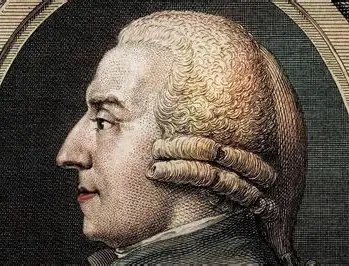
Adam Smith’s most famous sentence remains one of the clearest statements in all of social science:
“It is not from the benevolence of the butcher, the brewer, or the baker that we expect our dinner, but from their regard to their own interest.”
The point is simple and profound. We do not rely on the kindness of strangers to put food on the table. We rely on their self-interest. The butcher supplies meat because he profits by doing so. The baker rises early because customers will pay for bread. Their desire to improve their own condition leads them, without any central direction, to serve ours.
This is the central mechanism of a market economy. Self-interest, channelled through voluntary exchange, produces cooperation on a vast scale. No one has to love their customers or share their political views. They only have to respond to incentives. The result is a system that regularly feeds, clothes, and houses millions of people who will never meet.
Many on the left still struggle to accept this. Self-interest is treated as morally suspect - a form of greed that should be restrained or replaced by appeals to solidarity and collective purpose. The preference is for systems that rely on moral exhortation or state direction rather than on the everyday pursuit of personal advantage. Yet the historical record is clear: societies that suppress self-interest in the name of higher motives tend to produce shortages, stagnation, and coercion. Societies that allow people to benefit from serving others tend to produce abundance.
Smith’s insight is not a celebration of selfishness. It is a recognition of reality. People are more reliable when they can improve their own lives by improving the lives of others. That simple alignment of interests remains the most powerful engine of social cooperation ever discovered.
NO MORE SOUTH AFRICA!!! I know many of you will rap my knuckles for saying it. Please don’t; rather wrap yours! Simply, all returnees must know that their sojourn in SA is over. For good!! And the PUN is intended. Hamuchadzoki; hakuchadzokeki; mauya, mauya Komuredhi!!!! Think home; live home. You can’t leave home anymore!!! Hativakei nyika yedu zvariini nariini!!! The five-year ban on you is a euphemism; the ban is total and the sooner you know that, the faster you re-integrate and settle. South Africa is a turning point in inter-state, inter-people relations. Borders have been retraced and etched deeper: for you and all to see. For you to know that THOU SHALL NOT CROSS!! This is a re-birth of the Nation-State, ironically a re-birth amidst its own existential crisis. A paradox of historical proportions for, beneath this militant nationalism represented by March &March are fissiparous forces threatening to tear apart the National Project. The Pan-African Project. The much-vaunted People-to-People relations SADC and the AU so volubly yells about. March & March was/is interstate diplomacy wrought from streets. And like all things from streets, wrought with a rough, caroused hand of the unfed, the unsheltered, the unemployed lout. So bro, welcome home!! Mauya, mauya Komrade. Hamuchadzoka!!!!! Handeyi kunorima RITA; Hondo yapera RITA; gejo tinaro RITA; mombe tinadzo RITA!!!! Musandituka; ndingori #MAFIRAKUREVA!!!! Hangu.
The age of virtue signalling has produced a peculiar spectacle. South Africans march beneath Palestinian flags, pin Palestinian badges to their lapels and social media accounts and cheer as Pretoria prosecutes the Palestinian cause on the world stage. Remember how this was celebrated ?? Yet, almost in the same breath, displaced Zimbabweans are hounded from South African streets by xenophobic mobs, while the government proves incapable of guaranteeing their safety and humanity.
If Pretoria claims the moral high ground abroad, it ought first to secure it at home.
The irony deepens. Jordan and Egypt have borne the overwhelming regional burden of the Palestinian question for decades. Jordan granted citizenship to large numbers of Palestinians, by large I mean over 2m, while Egypt has long hosted Palestinians and afforded them refuge and protection. They’re not deemed illegals. They absorbed the human consequences directly, yet neither country sought to make its case principally through the International Court of Justice.
How, then, does a government so eager to lecture the world on human rights tolerate recurring waves of xenophobic violence within its own borders? A state that cannot protect vulnerable foreigners living under its own jurisdiction risks sounding less like a moral authority than a government seeking virtue abroad while failing its most immediate responsibilities at home.
It all points to an uncomfortable reality maybe both the march on March protestors and SA government may just be hired guns. Hapana principle apa!!
WE HAVEN’T ARRIVED: For as long as we talk about PLATINUM MATTE and NICKEL MATTE, both of which go to South Africa for beneficiation, we haven’t arrived. We are exporting VALUE; we are exporting JOBS; we are exporting GROWTH; we are exporting DEVELOPMENT. Above all, we are exporting OUR NATIONAL HONOUR by enabling the marginals of the SOUTHERN AFRICAN ECONOMY to strut about as our SUPERIORS!!!!! Musandituke!!!!!!
The juxtaposition of Robert Mugabe speaking in 1962 about the liberation cry of “one man one vote” with the corrupt elite’s posters dismantling that cry is awkward to say the least.
Michael Schumacher - Gets his first win for Ferrari in June 1996 at Barcelona
Lewis Hamilton - Gets his first win for Ferrari in June 2026 at Barcelona
You can’t script this 🤯
Cute theory, let's play it out.
A monkey hoards a trillion bananas. The troop, enraged, beats him to death. They gather around the pile to feast at last.
But... oh wait, there is no pile.
It turns out the "bananas" were shares in a banana-launching company the dead monkey founded.
The shares were worth a trillion because he was alive to run it.
Now he is dead and the stock is worth $0.
The retarded monkeys have clubbed their way into a recession.
But it gets worse.
Half the "bananas" were tied up in a rocket that supplies bananas to monkeys on the far mountain who had no bananas at all.
Another chunk was tied up in a little satellite dish that beamed banana coordinates to the troop after a flood took out their trees.
So now they realized they beat to death the only monkey who knew how the dish worked.
So the monkeys sit there.
No bananas.
No rockets.
No coordinates to get more banananas.
Just a dead body and a powerful sense of fairness as they all now became infinitely poorer.
OH
And somewhere a smaller monkey watches the whole thing and quietly decides he will never build anything in front of these animals again.
Instead of Marquinhos running to celebrate with his PSG teammates he runs straight up to Gabriel to give him a hug.
Respect 🫡
Look at the linesman “trying” to stop Marquinhos. 😂 😂
Why is it so easy to raise $20 million in gifts for the son of a billionaire, but so hard to raise funds for essential healthcare equipment that could benefit us all???
#PauseForThought
Every year, sometimes twice a year, I look forward to going home to Zimbabwe.
Zimbabwe is home. It is where my umbilical cord was buried. It is where my roots are. It is where, God willing, I hope to spend my twilight years.
In a few years' time, when I finally decide to return for good, I will pack my belongings, my work tools, my Partial Discharge detectors, Hipot testers, Tan Delta test sets, transformer testing equipment and all the other instruments that have been part of my working life, load them into a container and head home to be among my people.
But every time I visit, there is one thought that I can never completely silence.
What would happen if something went terribly wrong? When I'm driving through places like Zai Rimwe, Mutekedza or Mupatsi on my way to rural Njanja, I sometimes catch myself thinking about the unthinkable.
What if there was an accident out here?
Would someone be able to call an ambulance?
Would an ambulance come?
If the situation was serious, would there be access to an air ambulance?
If people were trapped in a vehicle, would the fire brigade arrive in time?
Where would the injured be taken?
Would the nearest hospital have the equipment, medicines and resources needed to save a life?
These are not political questions.
These are human questions.
They affect the wealthy businessman in a luxury vehicle just as much as they affect the pensioner travelling on a rural bus.
A million dollars in the boot of a Rolls-Royce means nothing when a person is trapped under twisted metal and every minute counts.
In those moments, status disappears.
Politics disappears.
Connections disappear.
All that matters is whether help is coming.
Whether the ambulance arrives.
Whether the rescue team arrives.
Whether the hospital can do what it was built to do.
Living in the UK has taught me many things. Life here is far from perfect, but one thing that gives people peace of mind is knowing that if tragedy strikes, a system exists. Ambulances, fire services, air ambulances and hospitals may not be flawless, but they are there. People know that when they dial for help, help is on its way.
That sense of security is priceless.
Healthcare and emergency services are not luxuries.
They are not political projects.
They are among the most important investments any nation can make because every single one of us is mortal.
No title, no office, no amount of wealth, no security detail and no political influence can prevent an accident, a stroke, a heart attack or a medical emergency.
Life can change in a second.
That is why I believe we should all be talking more about hospitals, ambulances, rescue services and emergency preparedness.
Not because we expect disaster.
But because we all hope to survive it if it comes.
This is not criticism.
It is concern.
It is the concern of a son of the soil who loves his country and wants the same peace of mind for Zimbabweans that people in many other countries take for granted.
Some things are worth putting ahead of everything else.
Saving lives is one of them.
END.
@matigary I think we should boycott South African products and companies just for a week just to send a message. Majority of South African companies depend on exports to the rest of Africa, we have South African companies operating in Zimbabwe in the platinum industry, retailers and banks