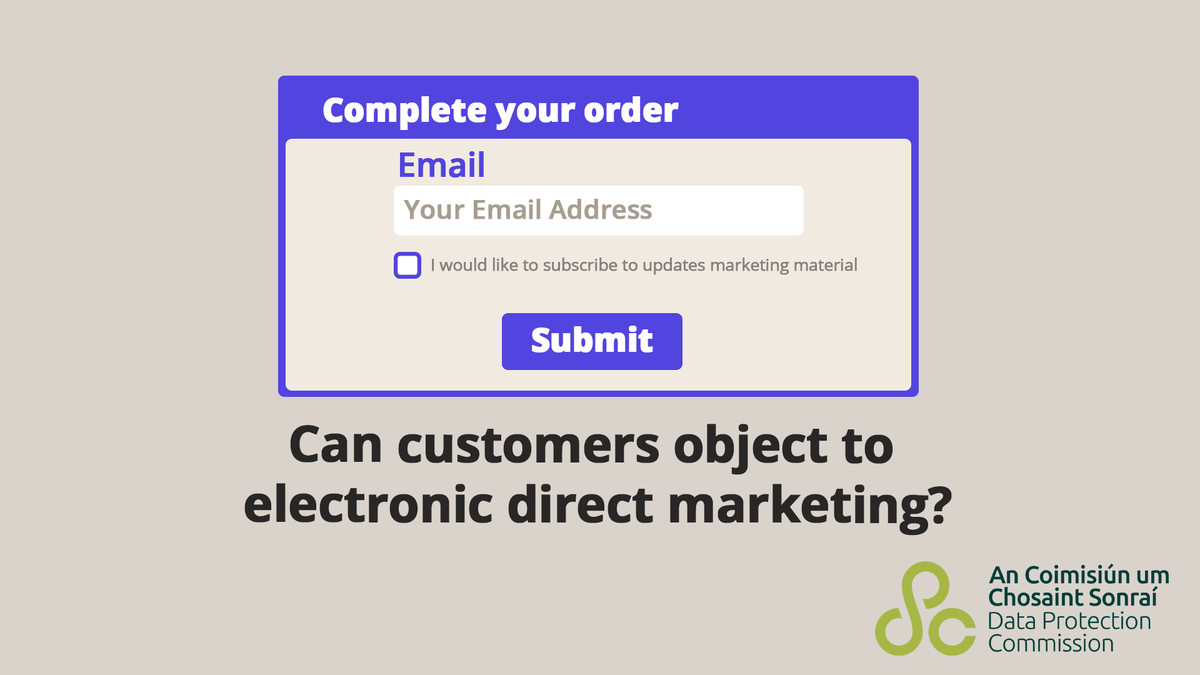
When using templates to collect personal data, always ensure that a blank template is issued at all times. Read our guidance for more tips on how to avoid data breaches https://t.co/mNRg24AS61
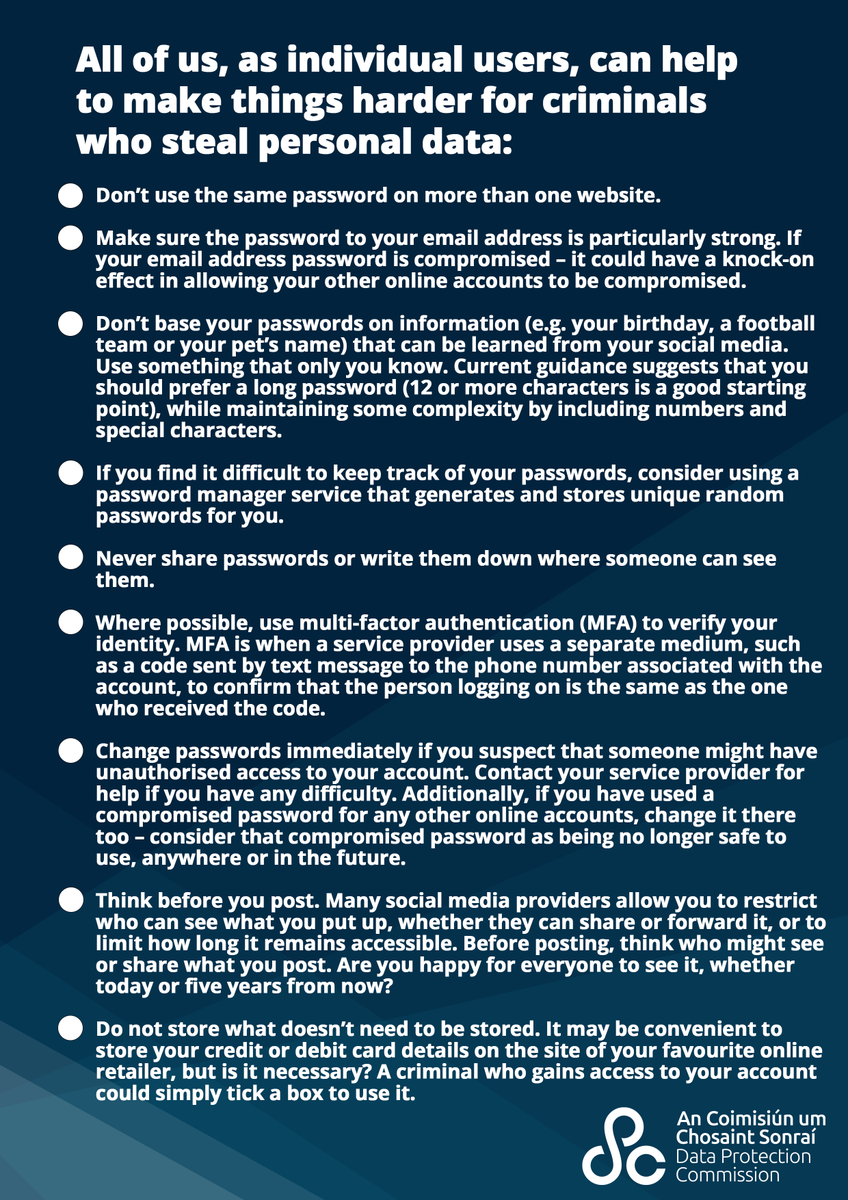
If criminals gain unauthorised access to our personal data, we are exposed to the risk of being targeted and exploited by them. Read our guidance on how to recognise and reduce those risks, https://t.co/U0V0kf07Ps
Criminals are persistent and always look for new ways around measures intended to prevent them using stolen personal data. Read our guidance on how to recognise and reduce those risks https://t.co/f9TP2rsCJO
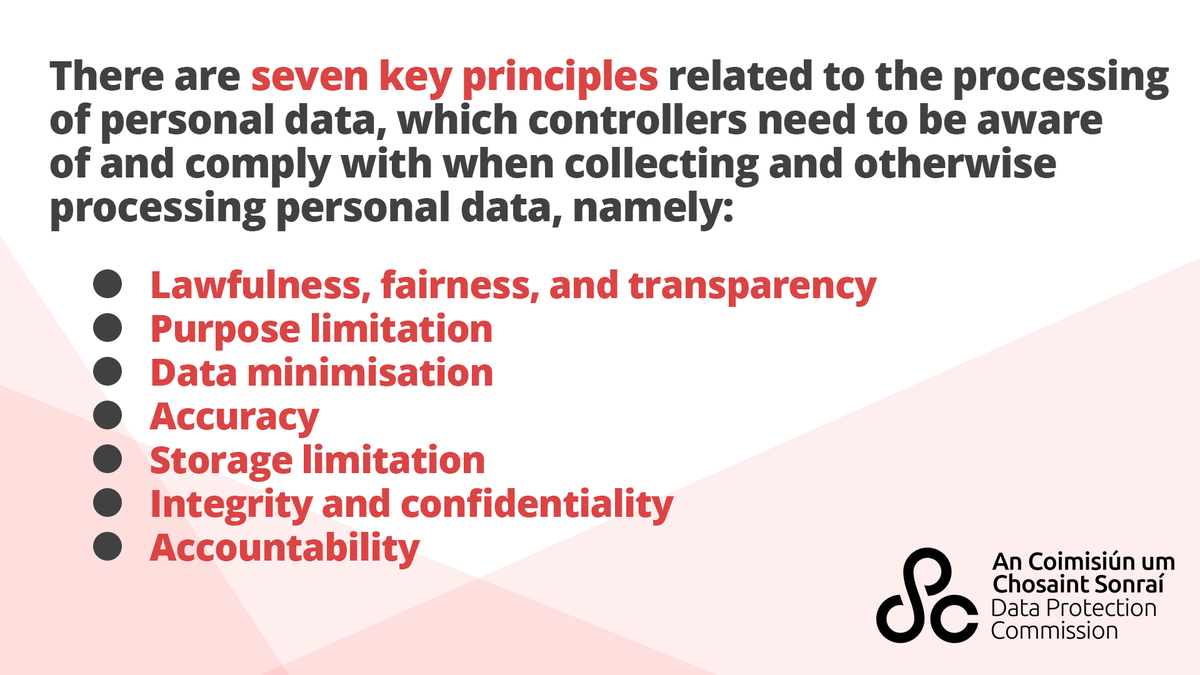
Principles are an important part of data protection law and there are seven key principles related to the processing of personal data https://t.co/sIlIEydGic
The DPC is delighted to be a part of Project ARC – Awareness raising campaign for SMEs. Have your say on the survey on the challenges you face when complying with the GDPR https://t.co/Xk7TeYzrQ2
Our 2020 Annual Report case studies highlight some of the data protection issues addressed throughout the year, including a case of a non-response to an access request by an organisation – read more https://t.co/vLknzRXbdX
This Safer Internet Day, it’s important to remember that one in three of all internet users globally are children. Read our new Children’s Fundamentals guidance to learn more about children’s data protection rights in the digital environment #SID2021 https://t.co/dNcAFxlQ8G
Data Protection Impact Assessments are important tools for negating risk and for demonstrating compliance with the GDPR. Read our guide to DPIAS https://t.co/5fEr6q3Oqa