I'm a distinguished Public Health Practitioner with a focus on research/Clinical and over 10 years of experience in human resource management & leadership.
Therefore, we should avoid adopting recommendations designed for different epidemiological settings without proper evaluation. The appropriate approach is to continue following Nigeria’s national malaria treatment guidelines while remaining vigilant through surveillance systems.
Until new national guidance is issued, healthcare providers and the public are encouraged to continue using the currently recommended three day ACT regimen for uncomplicated malaria.
Evidence must guide practice, and protecting our antimalarial medicines today ensures that they remain effective for future generations.
Dr. Adewale S. A-Premiere
President, ARD-UATH
Senior Registrar,
Department of Community Medicine and Public Health
University of Abuja Teaching Hospital
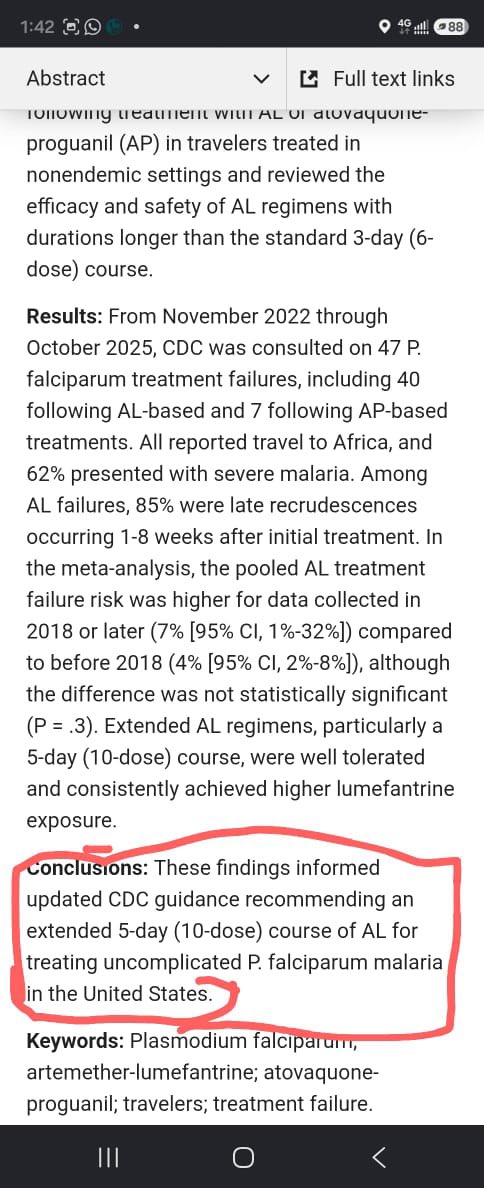
THE ISSUE AROUND THE RECENT US-CDC UPDATE REGARDING EXTENDED ARTEMETHER-LUMEFANTRINE TREATMENT DURATION OF 5DAYS.
Recent discussions among some Nigerian healthcare professionals and members of the public regarding the United States Centers for Disease Control and Prevention (CDC) update on extending Artemether-Lumefantrine (AL) treatment duration for malaria require proper contextual understanding.
It is important to clarify that the CDC recommendation of extending Artemether-Lumefantrine treatment to five days (10 doses) is not a universal recommendation for malaria treatment worldwide. Rather, it represents a specific response within the United States healthcare setting, particularly for travellers returning from malaria endemic regions who are managed in a population with different epidemiological characteristics from malaria endemic countries such as Nigeria.
The CDC’s position was informed by observations from a limited number of malaria cases managed in the United States. The report involved 47 patients, of whom 40 received Artemether-Lumefantrine and seven received Artesunate-Pyronaridine. Treatment failures, including some cases of severe malaria, were documented. However, such findings should be interpreted within the context of the study population, sample size, and healthcare setting in which the observations were made.
In countries where malaria transmission is endemic, treatment recommendations are developed using broader evidence from different regions, including clinical trials and continuous therapeutic efficacy studies. This is because malaria behaves differently in populations with varying levels of immunity. Individuals living in malaria endemic areas often develop partial immunity due to repeated exposure, unlike non immune travellers who acquire malaria after visiting endemic regions.
It is also important to understand that treatment failure does not automatically mean drug resistance. A treatment failure simply indicates that the expected treatment outcome was not achieved. The underlying causes may be varied and can include parasite factors, patient factors, drug absorption, adherence issues, reinfection, or true resistance. This is why molecular correction using PCR methods is essential to differentiate recrudescence (return of the original infection) from reinfection.
The National Malaria Elimination Programme (NMEP) continues to apply evidence based approaches to protect the effectiveness of available antimalarial medicines. A national Antimalarial Drug Resistance (AMDR) strategy has been developed to strengthen resistance monitoring, improve preparedness and provide strategic options should resistance challenges emerge.
For now, the recommended practice remains clear: suspected malaria cases should undergo parasitological confirmation before treatment whenever possible. We must continue to trust quality Rapid Diagnostic Tests (RDTs) and strengthen malaria microscopy capacity among laboratory personnel.
The current recommendation remains the use of approved ACTs, including Artemether-Lumefantrine, as a three day treatment course for uncomplicated malaria in Nigeria, in accordance with national guidelines.
Regarding special populations, Artemether-Lumefantrine remains an option for confirmed malaria infection in pregnant women during the first trimester when clinically indicated, while treatment choices in later trimesters should follow national recommendations. Artesunate-Pyronaridine requires careful consideration because WHO guidance remains limited due to insufficient pregnancy safety data.
The fight against malaria requires collective responsibility. Preserving our antimalarial medicines depends not only on identifying resistance early but also on ensuring rational prescribing practices and avoiding unnecessary modifications of treatment regimens without local evidence.
STRENGTHENING MULTI-SECTORAL PARTNERSHIPS FOR SURVIVOR-CENTRED HEALTHCARE AND PUBLIC HEALTH RESPONSE
On 19 June 2026, I had the privilege of representing the Chief Medical Director of the University of Abuja Teaching Hospital, Prof. Yunusa Thairu, at the Stakeholder Consultation
PUBLIC HEALTH
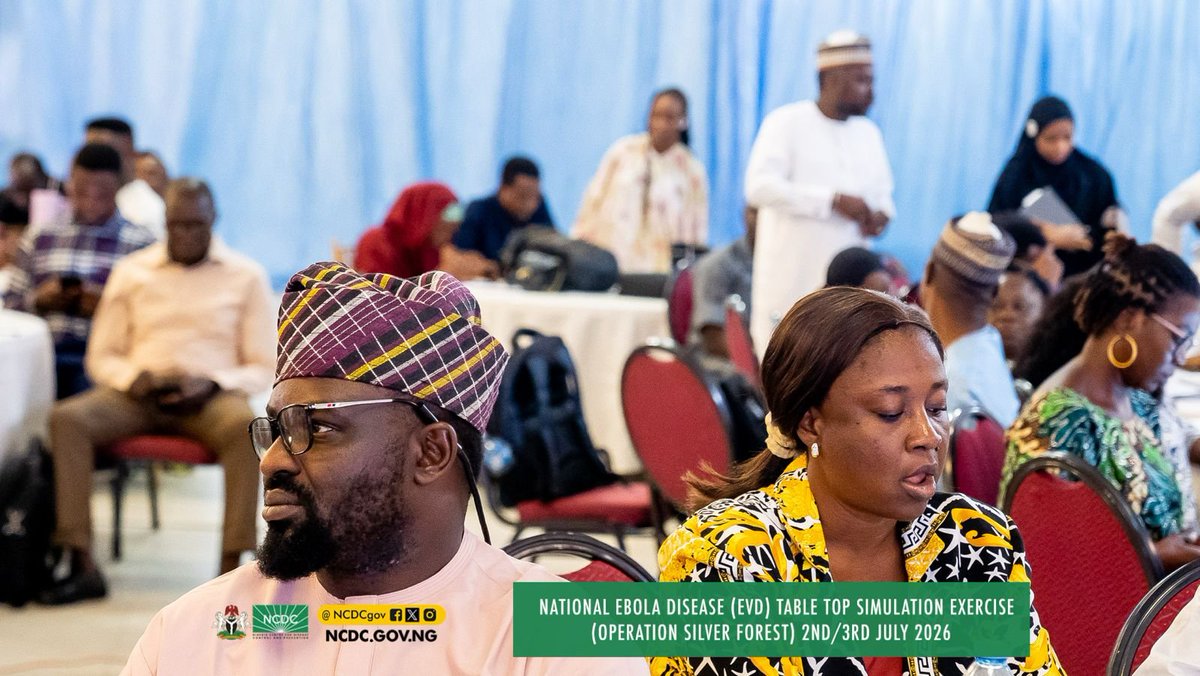
Dr. Adewale Samuel Adeleye was among 100 healthcare professionals trained by the Nigeria Centre for Disease Control and Prevention (NCDC) during the National Ebola Virus Disease Tabletop Simulation Exercise, “Operation Silver Forest,” held in Abuja on 2–3 July 2026.
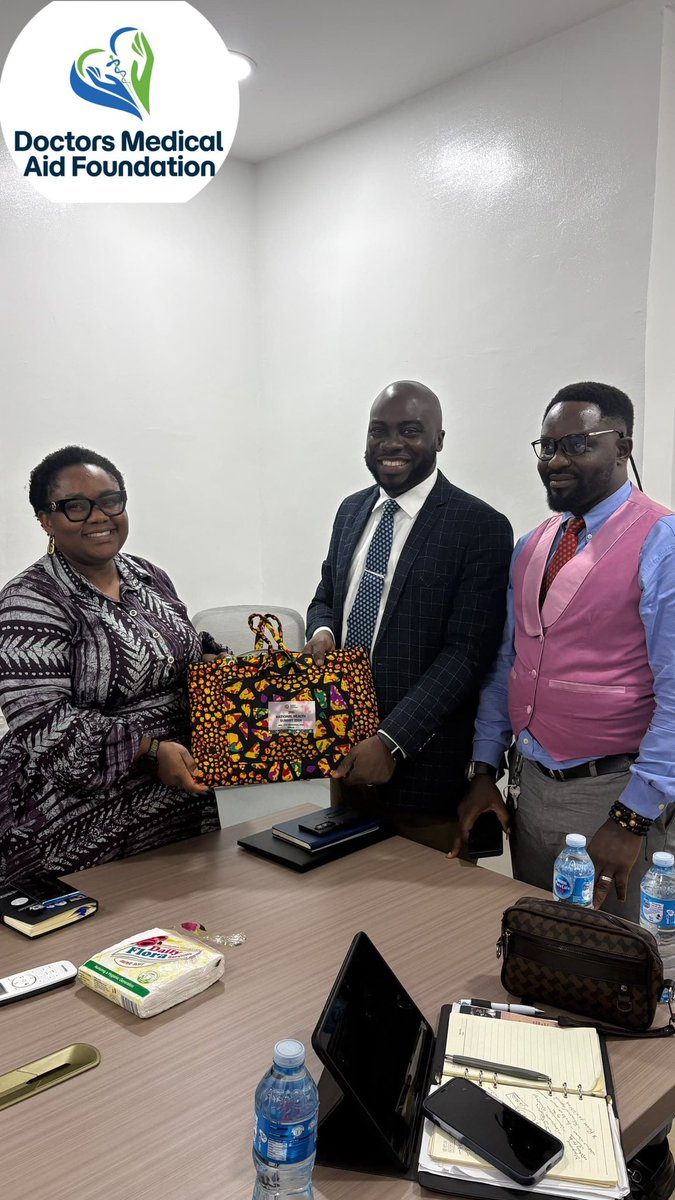
DMAF ENGAGES WITH CHAI TO STRENGTHEN HEALTHCARE DEVELOPMENT IN NIGERIA
Doctors Medical Aid Foundation (DMAF) paid a courtesy visit to Clinton Health Access Initiative (CHAI) at its office to explore strategic areas of collaboration in strengthening Nigeria’s healthcare system.
@Dr_statesman communication channels for accurate information regarding UATH policies.
We remain committed to constructive engagement with Management in the interest of fairness, transparency and improved welfare for all House Officers.
Dr. Adewale S. A-Premiere
President, ARD-UATH
06/07/026
@Dr_statesman PUBLIC DISCLAIMER & ASSERTION OF FACT.
The attention of the Association has been drawn to a circulating post on social media alleging that the Chief Medical Director of the University of Abuja Teaching Hospital (UATH) increased accommodation fees for interns from ₦120,000 to.
@Dr_statesman as a form of social support for House Officers, in recognition of their service demands and welfare needs.
The Association therefore urges members of the public, staff and social media users to disregard the circulating false narrative and rely only on verified official
@Dr_statesman alleviating the challenges faced by House Officers, particularly in relation to delays in payment and increased workload pressures.
Furthermore, discussions and ongoing considerations within the institution include efforts toward a downward review of accommodation-related costs
@Dr_statesman management of the University of Abuja Teaching Hospital, under the leadership of Prof. Yunusa Thairu, has remained committed to improving staff welfare House Officers inclusive. Rather than any form of exploitation, the Management has been actively engaging in measures aimed at
@Dr_statesman ₦600,000 and introduced an alumni fee of ₦30,000.
We wish to categorically state that this information is misleading, inaccurate and does not reflect the true situation at UATH.
For the avoidance of doubt, and to the best of our Association’s knowledge, the current
The Association of Resident Doctors, University of Abuja Teaching Hospital (ARD-UATH) under the distinguished Leadership of Premiere Adewale provided Free Medical Care and Trained 237 Security Personnel
https://t.co/BVQf7pFGqf
@MobilePunch@FRSCNigeria@NPF_NCCC@FCT_DRTS