Chaired a meeting of the Economic Advisory Council to the Prime Minister. Deliberated on a wide range of issues relating to India’s economic transformation and long-term development priorities. Also shared perspectives on adding more momentum to the reforms journey and ensuring ‘Ease of Living’ as well as ‘Ease of Doing Business.’
@EACtoPM
Meet this woman who drives an auto-rickshaw in Bangalore. She worked as an IT manager for 9 years with a salary package worth lakhs of rupees, but her job came with heavy workload, constant stress, tension, and relentless pressure from seniors—so she decided to quit.
Now she drives her own auto and earns around ₹60,000 a month, and she says she's much happier than ever because she no longer deals with workload, stress, or tension.
This woman chose peace, freedom, and a better quality of life over money. Many people still look down upon auto drivers and mock their profession, but she chose auto driving as her career on her own terms.
This is what true feminism and real equality look like—not bowing to anyone, but choosing the life you want to live freely, without fear or judgment.
Three brilliant Bharat Ratnas - a scholar statesman, a brilliant technocrat administrator and a scientist statesman - and their houses:
1. Sarvepalli Radhakrishnan, Tiruttani, TN
2. Mokshagundam Vishweshwarayya, Muddenahalli, Karnataka
3. Dr.A.P.J. Abdul Kalam, Rameshwaram, TN!
I have visited these places. Have you? These actually should be places of pilgrimage for this generation to understand their contribution to the nation! #BharatRatna #legends #houses
When someone is drowning,
it is not the time to teach them to swim.
When people are overwhelmed, distressed, or in crisis, they don't need lectures, criticism, or life lessons.
They need support, understanding, and immediate help first.
Teaching can come later, after they are safe and stable.
#mentalhealth
Survival means standing against all odds.
On the shores of Maravanthe, this small mobile eatery waits for good weather and long holidays, hoping every passing traveler might stop for a cup of tea or a quick bite.
Life, after all, is built on optimism.
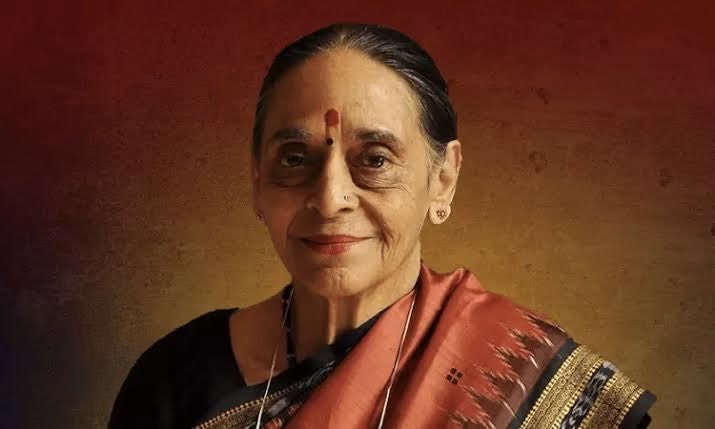
Her name was Leila Seth.
She was born on October 20 1930 in Lucknow. She grew up during the partition years.
She was married at 22 and followed her husband Prem to London while he completed his studies.
She was 27 years old and pregnant when she decided to study law.
She enrolled at the Inns of Court. In 1958 she topped the bar examination, finishing first among all candidates from England and Wales.
A London newspaper ran her photograph with the headline referring to her as “Mother in Law.”
She had given birth months before the exam.
She was the first Indian woman to top the London Bar exam.
She came back to India and built a legal career in Patna for ten years.
In 1978 she became the first woman judge of the Delhi High Court.
In 1991 she became Chief Justice of the Himachal Pradesh High Court, the first woman to hold that position in any High Court in independent India.
She served on the 15th Law Commission of India from 1997 to 2000.
Her work during that period led directly to the Hindu Succession Amendment Act of 2005, which gave Hindu daughters equal rights to ancestral property for the first time in Indian law.
After the Nirbhaya gang rape in December 2012 she was appointed to the Justice JS Verma Committee, which recommended the sweeping changes to sexual assault laws that followed.
Her son is the novelist Vikram Seth.
She died on May 5 2017. She was 86 years old.
She had pledged to donate her organs and her family held no funeral. A prayer meeting was held in her honour instead.
She topped the bar exam in England while pregnant. She became the first woman Chief Justice of an Indian High Court.
She helped give daughters the right to inherit ancestral property. She helped rewrite India’s rape laws.
Most Indians know her son’s book. Almost none know her story.
Follow for stories India deserves to remember.
Her name is Aruna Roy.
She was born on May 26 1946 in Madras into a Tamil Brahmin family. Her father was a lawyer and independence activist.
She studied English literature in Delhi and joined the Indian Administrative Service in 1968. Seven years later, she resigned.
She gave up one of the most powerful positions in the Indian government to go and live in a village in Rajasthan, working with labourers who were not being paid the minimum wages guaranteed by law.
In 1990, she co founded the Mazdoor Kisan Shakti Sangathan in Devdungri village, Rajasthan.
The movement began from a mud hut.
Its members organised public hearings where villagers stood before officials and read government records aloud to prove that wages had been stolen or payments had never reached them.
Local authorities often resisted these hearings.Aruna Roy and her colleagues continued anyway.
The movement expanded beyond wages into a larger demand.
Ordinary citizens should have the right to access government documents.
If labourers could inspect muster rolls carrying their names, they could prove they had not been paid.
If citizens could access official files, corruption would become harder to hide.
The MKSS helped pioneer the idea of social audits and public accountability in India.
For years, the government resisted.Aruna Roy fasted, marched and organised across Rajasthan.
Thousands of ordinary people were trained to file information requests with local authorities.
In 2005, Parliament passed the Right to Information Act.
The movement she helped build became one of the foundations of India’s RTI movement.
She received the Ramon Magsaysay Award in 2000.
In 2011, she declined the Padma Bhushan, saying she did not believe in the system of state honours.
She recently turned 80. And she remains closely associated with the movement she built in Devdungri.
Follow for verified stories India deserves to remember.
His name was Y. Puran Kumar.
He was a 2001 batch IPS officer of the Haryana cadre from the Scheduled Caste Valmiki community.
Over more than two decades, he rose through the ranks of the Haryana Police and was eventually posted as Inspector General at the Police Training Centre in Sunaria, Rohtak.
On October 7 2025, he was found dead at his residence in Chandigarh from a gunshot wound.
Police said it was a case of suicide.
He left behind a detailed note. According to his family and reports surrounding the case, the note alleged caste based discrimination, humiliation and sustained harassment by senior police officials.
His death triggered protests and political reactions across Haryana.
His family refused to conduct his last rites for several days, demanding action against officers named in the note and an independent investigation.
The Haryana government later constituted a Special Investigation Team to examine the allegations.
The investigation is ongoing.
He spent more than twenty years serving the police force. In his final note, he allegedly wrote that despite his service, he was never treated as an equal.
Follow for verified stories India deserves to remember.
A beautiful photo of a tram waiting for the metre gauge electric train to pass, captured sometime in the late 1940s or early 1950s. The photo likely shows a crossing near the Chennai Central Jail wall and the Ripon Building, capturing a unique intersection of tram and railway overhead lines.
Madras had the distinction of having the first electric tramway system in the country. Operated from 1895 to 1953, the tramways connected the docks to inland areas and central business hubs. At its height in 1921, the system featured nearly 24 km of track and 97 tram cars, serving over 100,000 commuters daily. Following labour strikes, bankruptcy, and increasing electricity costs, the network permanently shut down on April 12, 1953. #IndianRailways #publictransport #Chennai #History
Her name was Jolly.
Her full name was Jollyamma Joseph. She lived in Koodathayi village in Kozhikode district, Kerala.
She was known in the neighbourhood as a warm and devout woman. She attended church regularly. She helped neighbours. She was the kind of person people trusted completely.
She also told everyone she was a commerce lecturer at NIT Calicut. She left home every morning with a bag and returned every evening.
For years her family believed her. She had forged her credentials and her identity card. She had no job. She sustained the lie for years.
Between 2002 and 2016 she poisoned six members of her own family with cyanide.
Her first victim in 2002 was Annamma Thomas, her mother-in-law, who had been pressing her to find a job. Annamma died after drinking mutton soup. No autopsy. Heart attack.
Her husband Roy Thomas died in 2011 after eating dinner she had prepared. No autopsy. Heart attack.
When Roy's uncle Mathew Manchadiyil began insisting that Roy's death needed investigation, she poisoned his drink in 2014. He died. No autopsy.
She had fallen in love with her cousin Shaju Sakhariyas. His wife Sili stood in the way. Jolly poisoned Sili's food in 2014. Sili died.
Then she gave cyanide on a piece of bread to Sili's two-year-old daughter Alphine. Alphine died in hospital two days later.
In 2016 she poisoned the medication of Tom Thomas, her father-in-law. He died.
She then married Shaju.
The case unravelled in 2019 when Roy's brother Rojo filed a police complaint. Investigators exhumed all six bodies. Forensic tests confirmed cyanide in two of them.
A close friend told the court in 2023 that she had confessed all six murders to him personally.
Jolly Joseph was arrested in October 2019. The trial is ongoing at the Kozhikode Additional Sessions Court. Netflix made a documentary about the case called Curry and Cyanide.
Six people. Fourteen years. One family. One woman who attended church every Sunday.
Repost this. Some stories must not be allowed to disappear.
His name was Ramalinga Raju.
He was born on September 16 1954 in Bhimavaram, Andhra Pradesh. He studied at Ohio University in the United States and returned to India to build a business empire.
In 1987 he founded Satyam Computer Services in Hyderabad. The name means truth in Sanskrit.
Over the next two decades he built Satyam into India’s fourth largest IT company. It employed 53,000 people across 66 countries.
It had 185 Fortune 500 companies as clients. It won the Golden Peacock Award for Excellence in Corporate Governance in 2008.
Then came December 2008.
Raju announced that Satyam would acquire two real estate companies called Maytas Infrastructure and Maytas Properties for 1.6 billion dollars.
The companies belonged to his sons. Investors were furious. They dumped the stock. Satyam lost more than half its market value in a single day.
Maytas is Satyam spelled backwards.
Raju was cornered. The acquisition had to be cancelled.
But cancelling it exposed a deeper problem. For years he had been using Satyam’s inflated balance sheet to raise funds.
If the books were now examined properly, everything would unravel.
On the morning of January 7 2009 Ramalinga Raju sent a letter to Satyam’s board of directors and resigned.
In the letter he confessed that he and a close circle of associates had been falsifying Satyam’s accounts for years.
The balance sheet carried Rs 5,040 crore in cash that did not exist. Revenues and profits had been inflated quarter after quarter.
Thousands of fake employee accounts had been created and salaries siphoned off. He stated that assets had been inflated by Rs 7,800 crore.
He wrote this in the letter, “It was like riding a tiger, not knowing how to get off without being eaten.”
He later admitted that the Maytas acquisition was a last attempt to replace fictitious assets with real ones.
When the letter became public, Satyam’s stock collapsed by 78 percent in a single day.
PwC had audited Satyam’s books every year and certified them as accurate.
Merrill Lynch discovered the fraud during routine due diligence in ten days.
In 2018 SEBI barred PwC from auditing any listed company in India for two years.
Raju was arrested. He later denied having written the letter, his lawyers telling the court it was a hoax.
The court did not agree.
In April 2015 a special CBI court convicted him and sentenced him to seven years in prison. He was fined Rs 5.5 crore.
He has appealed his conviction. The matter remains pending in a higher court.
Follow for stories India deserves to remember.
The Inchcape Bridge (built 1909–10) over the Ghaghara River near Revelganj near Chhapra, once a vital link of the Bengal & North-Western Railway, was severely damaged in the 1934 Bihar earthquake when two girders collapsed. Rebuilt and reopened by 1937, it survives today as the Manjhi Railway Bridge. #Bihar #railways #history
Life can either be accepted or changed. If it's not to be accepted, it should be changed and if it cannot be changed, it must be accepted. Good morning, friends, and have a great Friday! 🙏 #FridayMotivation
So it has been 9 years since we moved to this present house in Chennai! For those who don't know, in South India, boiling the milk and letting it spill over is auspicious when we move to a new home.
Boiling milk in a new house—a key ritual during the Hindu Griha Pravesh (housewarming) ceremony—symbolizes abundance, prosperity, and purity. It acts as a blessing that your new home will always overflow with wealth, happiness, and sustenance.
Intentionally letting the milk boil over onto the stove represents the wish for an overflowing abundance of joy, peace, and food in your new life. Preparing the milk is typically the first official act of cooking in the new home, often done in a new pot.
It serves as a sacred offering to invite Goddess Lakshmi (the deity of wealth) into the household. The steam and act of boiling are believed to purify the house and clear out any negative energy from the past. The overflowing milk is usually prepared by the female head of the family and is later shared with loved ones as prasad. #housewarming #anniversary
His name was Yellapragada Subbarao.
He was born on January 12 1895 in Bhimavaram, in present-day Andhra Pradesh. His family was poor. Several of his siblings died young from disease.
He studied at Madras Medical College but his British professor deliberately gave him a lesser diploma instead of a full MBBS degree.
He scraped together enough money and sailed to America in 1923. He arrived in Boston with almost nothing.
To pay his fees at Harvard Medical School he worked as an attendant at a hospital, cleaning rooms and changing bedsheets at night. Colleagues called him the Indian who cleans toilets.
He did not stop.
At Harvard he began research with chemist Cyrus Fiske. Together they developed the Fiske-Subbarao method for measuring phosphorus in body fluids, still used in biochemistry today.
He then discovered the role of phosphocreatine and adenosine triphosphate in muscular activity. That discovery entered biochemistry textbooks worldwide.
It is what we now call ATP, the energy currency of every living cell.
Harvard denied him a full professorship. He was a foreigner and had few friends in the right circles.
His colleague Cyrus Fiske suppressed and destroyed many of his contributions out of jealousy. Years of Subbarao’s work had to be rediscovered by other scientists because Fiske would not let them be published.
He joined Lederle Laboratories instead. There he developed the first method to synthesise folic acid, Vitamin B9.
He showed it could treat megaloblastic anaemia and tropical sprue. He then helped develop methotrexate, one of the first chemotherapy drugs, still used today to treat cancer and rheumatoid arthritis.
He led the team that discovered Aureomycin, the first tetracycline antibiotic, more powerful than penicillin, which saved hundreds of thousands of lives during and after World War II.
He never became an American citizen. He lived in the United States for 25 years on a temporary visa. He applied for permanent residence and never received it.
On August 8 1948 he died of cardiac arrest in New York. He was 53 years old. No citizenship. No Nobel Prize. No fame.
A writer named Doron Antrim wrote this about him in 1950. “You have probably never heard of Dr. Yellapragada Subbarao. Yet because he lived, you may be alive today.”
The drug that treated your anaemia. The antibiotic that fought your infection. The chemotherapy that gave someone more time.
All of it traces back to a man from Bhimavaram who cleaned hospital rooms to pay his Harvard fees.
India forgot him. Science did not.
Follow for stories India deserves to remember.
34-year-old signalling upgrade as WR Dadar station goes digital.
The signalling at Dadar station on WR switched to digital last night from the 34-year-old panel signalling with commuter benefits like faster fault detection, fewer delays due to signal failures and reliable operations.
https://t.co/y6suQTpZS4
It was 1987 - a room in New Delhi is thick with the smell of old files and cold tea. The United States had just delivered a stinging slap to the face of the Indian Republic. They have officially refused to sell India the 'Cray X-MP' Supercomputer, the most powerful machine on Earth, claiming that India would use it for nuclear weapons.
The American officials mockingly suggest that India does not even have the electricity to keep such a machine running. In the middle of this national humiliation, a young, soft-spoken engineer named Vijay Bhatkar is asked by then Prime Minister Rajiv Gandhi: "Can we build our own?" Bhatkar does not hesitate- "We will not just build it; we will build it faster than you can ship it."
The Americans did not just stop at refusing the sale; they actively lobbied other nations to ensure India remained digitally blind. They believed that w/o their Logic Gates, India would remain a 3rd world backwater.
Bhatkar realized he could not replicate the single-processor behemoth of the Cray. Instead, he turned to Parallel Processing. He decided to stitch together 1000s of low-cost, off-the-shelf microprocessors. It was like building a giant's brain out of the neurons of ants.
In 1991, while the West was still celebrating its monopoly, Bhatkar unveiled the PARAM 8000. It was not just a computer; it was a Gigaflop monster.
To prove the PARAM was real, Bhatkar ran a standard global benchmark test. The results were sent to an international conference in Zurich. The PARAM 8000 was ranked as the second most powerful supercomputer in the world, behind only the American machines. But there was a twist: the PARAM cost a fraction of the Cray, performed better in tropical heat, and was built in just 3 years.
When the PARAM 8000 was 1st turned on, the team did not have a high-tech cooling system like the Americans. They used industrial-grade desert coolers & adjusted the airflow manually. It was the ultimate Jugaad that defeated the most sophisticated tech embargo in history.
A major US newspaper ran a story with the headline: "Denied supercomputer, Angry India does it!" The ghost of the Native Engineer had officially entered the silicon temple. Vijay Bhatkar’s history is the story of how India became the IT Capital of the world.
Bhatkar founded the Centre for Development of Advanced Computing (C-DAC). He did not just build a machine; he built an ecosystem. Every software engineer in India today stands on the shoulders of the man who proved we did not need the West's permission to compute. Bhatkar was the one who realized that if computers only spoke English, 90% of India would be left behind. He led the development of GIST (Graphics & Intelligence Based Script Technology), allowing computers to work in Indian languages. He gave the machine a local tongue.
Today, Bhatkar is a Padma Bhushan awardee, but he lives a life of deep spirituality & simplicity. He vanished from the corporate headlines to become a philosopher of the digital age.
The West thought they could freeze India’s future by withholding a single machine. They forgot that the Indian mind does not need a 'Cray' to think; it only needs a 'No' to ignite. Forget building a supercomputer; Bhatkar built a mirror, and for the first time, the West had to look into it and see that the primitive colony had become the master of the code.
Dr Bhatkar was the Chancellor of Nalanda University for six years from from 2017 to 2023 and was succeeded by Dr Arvind Panagariya. #computers #legends