When Diversification Stops at the Portfolio
Many business-owning families already sense that their investment statements tell only part of their financial story.
Over time, business ownership, property, borrowing, income and retirement planning can become tied to the same enterprise. This concentration rarely develops through one decision. It builds gradually through reinvestment, personal guarantees, pledged assets and the expectation that the business will eventually fund succession and family wealth.
At the surface, a family may appear diversified because its investment portfolio holds stocks, bonds, cash and several managers. The structural reality may be different. The operating company may still support the family’s income, debt, liquidity, tax obligations and future inheritance.
For some families, the business remains the primary source of wealth. For others, valuable farmland or commercial real estate plays the same role. In either case, diversification inside an investment account may not address concentration across the entire family balance sheet.
Click the following link to read the full article.
https://t.co/0KyFWWmCEE
Before responding to risk, it is important to understand how the family’s complete financial structure is positioned.
#FamilyBusiness #BusinessOwners #SuccessionPlanning #BusinessContinuity #FamilyWealth #FamilyGovernance #GenerationalWealth #WealthManagement #RiskManagement #AssetSecurity
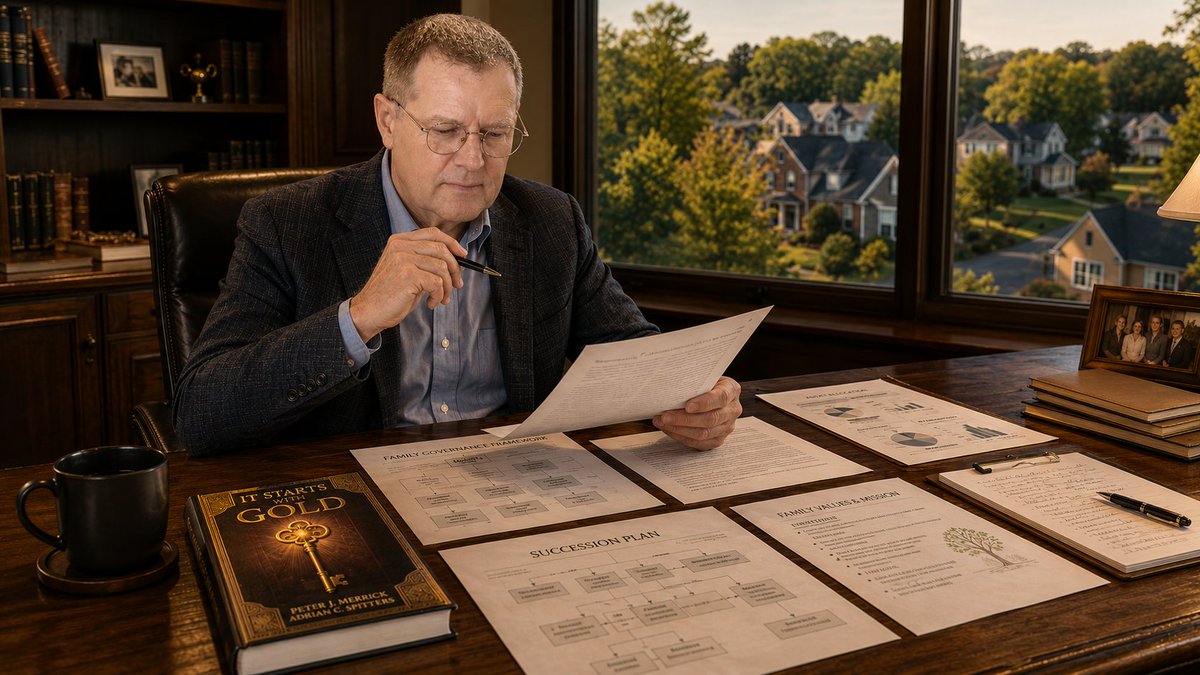
The Difference Between Business Value and Transferable Wealth
Many owners already sense that a valuable business can still depend too heavily on one person.
This weakness rarely develops overnight. It builds gradually through financing arrangements, tax obligations, informal decision-making, outdated agreements, concentrated relationships and governance structures that were designed for operating the business rather than transferring it.
On the surface, succession may appear to be a question of valuation and choosing a buyer or successor. The structural reality is broader. It includes who has authority, where liquidity will come from, whether financing will remain available, whether management can continue and whether the legal documents support the family’s intentions.
That difference can affect whether a transition preserves choice or places the family, employees and business under pressure.
For some owners, the business will remain within the family. For others, the appropriate path may involve management, employees, an outside buyer or professional leadership. Each path depends on how well the underlying structure has been prepared.
This long-form article examines how business value, ownership, liquidity, governance, leadership and family purpose must work together if wealth is to survive a transfer.
Click the following link to read the full article.
https://t.co/UclN3nZNAH
Understanding how the structure is positioned should come before deciding how to respond to a transition.
#BusinessSuccession #SuccessionPlanning #EstatePlanning #FamilyBusiness #BusinessContinuity #WealthTransfer
When Ownership No Longer Tells the Whole Story
Many property owners may already sense that the financial position of their investment has changed, even though the property itself appears much the same.
This shift did not happen all at once. It developed through higher borrowing costs, mortgage renewals, rising ownership expenses, weaker condominium demand and changing market conditions.
At the surface, the property is still standing, rent may still be arriving and the mortgage balance may still be declining. The structural reality can be different. Weak cash flow, leverage and falling market value can reduce both the owner’s equity and the capital available for the next financial decision.
For some owners, continuing to hold the property may remain financially sound. For others, the familiar appearance of ownership may be concealing a gradual loss of wealth and financial flexibility.
Click the following link to read the full article.
https://t.co/2vGrcNItTM
Before responding, it is important to understand how the property, debt, cash flow and market conditions are positioned together.
#RealEstateInvesting #CanadianRealEstate #HousingMarket #InvestmentProperty #WealthManagement #CapitalAllocation #PortfolioDiversification #AssetSecurity
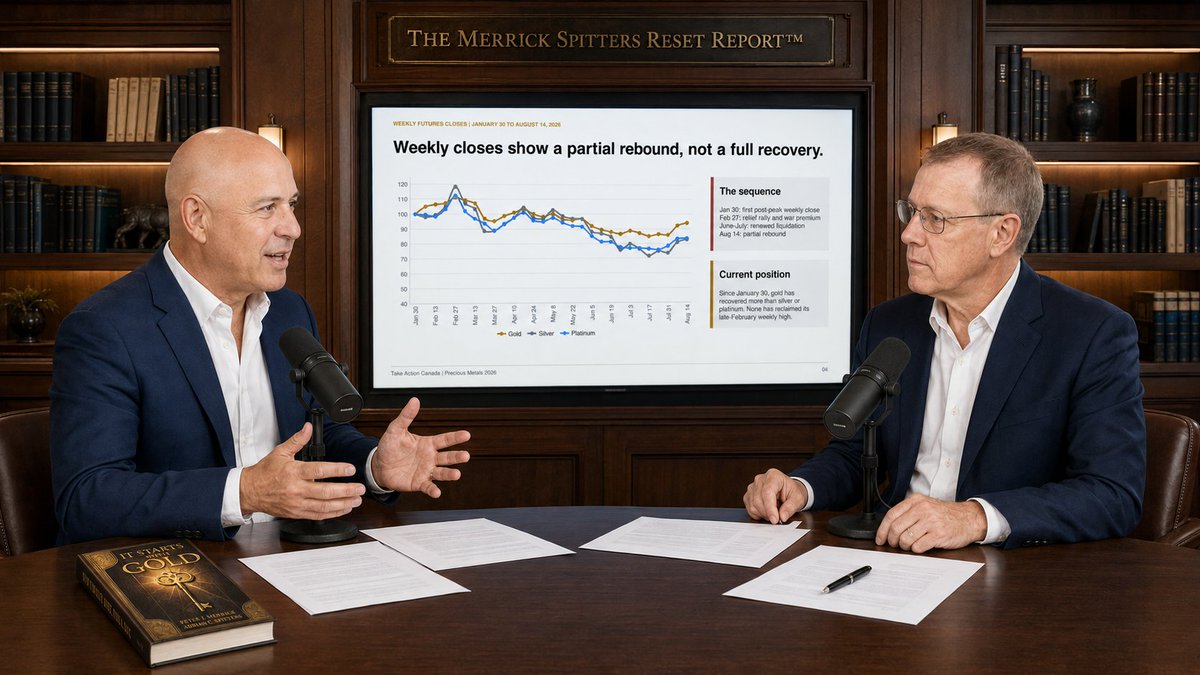
The Price Fell Faster Than the Monetary Case Changed
Many investors may already sense that the recent decline in precious metals was about more than gold, silver and platinum prices.
The collapse appeared sudden. Its foundations were not.
Years of leverage, rising government debt, changing central-bank reserves, geopolitical tension and growing dependence on financial intermediaries created the conditions for a sharp reversal.
The surface explanation focuses on interest rates, the U.S. dollar, oil, Turkey and forced selling. The structural view asks a different question: what happens when the quoted price of metal is shaped by leveraged financial claims rather than physical ownership alone?
Both views contain useful information. One explains the immediate trigger. The other helps explain why the long-term monetary concerns remain.
For some, precious metals are a market trade. For others, they are a form of monetary insurance held outside the promises of banks, governments and financial markets. That distinction affects how a decline is interpreted and how each metal fits within a broader asset-security structure.
Gold, silver and platinum do not perform the same function. Gold remains the clearest monetary asset. Silver offers greater upside potential with greater volatility. Platinum is primarily a scarcity and supply-risk asset.
Click the following link to read the full article.
https://t.co/1Hl7lYMcAj
Before responding to a price movement, it is important to understand how the asset, its ownership structure and the surrounding financial system are positioned.
#PreciousMetals #Gold #Silver #Platinum #MonetaryPolicy #CentralBanks #MarketStructure #AssetSecurity
When Diversification Still Leaves You Dependent
Many investors already sense that the financial system has become more fragile, concentrated, and politically exposed. That is not a fringe conclusion.
In 2026, reports from the IMF, Bank of Canada, and Federal Reserve collectively identified elevated or interacting vulnerabilities involving geopolitical conflict, stretched valuations, leverage, funding pressure, market concentration, and shared financial infrastructure.
The surface question is whether markets will rise further. The structural question is what must continue working for an investor to remain in control.
A portfolio can hold many securities and still depend on the same custodian, currency, jurisdiction, liquidity source, and digital system. That is why I developed Owning Assets in Order of Asset Security���and The Five Pillars of Asset Security™: to spread responsibility across different forms of ownership, different providers, and different financial functions.
Newport Private Wealth plays a defined role within Pillar Three. It helps govern capital intentionally kept inside financial markets, while the remaining pillars address risks Newport is not expected to solve.
The answer is not panic or abandoning markets. It is building a structure in which no single market, institution, provider, or policy environment controls the family’s entire financial future.
Click the following link to read the full article.
https://t.co/5hw5DhaL47
The real measure of Asset Security is not how wealth performs when every system works, but how much control remains when it does not.
#AssetSecurity #FinancialSovereignty #WealthPreservation #GeopoliticalRisk #PrivateWealth #PortfolioManagement #AlternativeInvestments #PrivateMarkets #FamilyWealth #MarketStructure
The Smarter the Machine, the More Fragile the System
Ray Dalio’s July 30 interview was sold as a warning about an AI bubble. I heard a much larger warning. Technology, debt, job losses and a shifting world order can reinforce one another.
I know this pattern. Before the technology bubble broke in 2000, I advised clients to sell technology and dot-com stocks. I moved them toward Canadian financial and resource sectors. The technology was real. The prices were not built to last.
The other side of that move became a commodity supercycle. Today, AI is again drawing capital into a group of companies. It is raising demand for electricity, power grids, copper, aluminium, silver, uranium and physical inputs. The IEA expects data-centre electricity use to double by 2030. It also projects that copper supply could fall 25% short of demand by 2035.
I believe a new commodity supercycle is beginning. If an AI bubble breaks, commodities, resource companies and precious metals may provide a relative safe haven from that collapse. Their value is tied to scarcity, production, energy security and demand for real money. It does not rest on the same technology story.
These assets can still fall. They perform different jobs. Gold is an independent monetary reserve. Resource shares are operating businesses with management, cost and market risks.
This is larger than a market shift. A family can look wealthy while depending on one market, custodian, currency, income source or digital system. Peter and I explored that danger in It Starts With Gold™.
Dalio’s warning clearly shows why ownership structure matters as much as market value. Security depends on access, independence, continuity and control.
The lesson from 2000 remains. Concentration matters, but so does what you own instead. Asset Security starts by asking what your family can access, control and pass forward when normal conditions no longer hold.
Click the following link to read the full article.
https://t.co/PG0KK2EAJl
Before the system tests your family's assumptions, understand what you own, what it depends on and whether control can pass as intended. That is where Asset Security begins.
#AssetSecurity #Gold #Commodities #CommoditySupercycle #ArtificialIntelligence #AIBubble #Debt #WealthPreservation #ChangingWorldOrder #MerrickSpittersResetReport
Why the U.S. Dollar Can Stay on Top While Buying Less
Many families know their money does not reach as far as it once did. Food, housing, taxes, equipment and retirement all cost more. Yet the U.S. dollar still leads the global financial system. These facts do not conflict. A currency can remain dominant while losing purchasing power.
The dollar’s position was built over decades through trade contracts, banking relationships, debt markets, legal systems and the unmatched scale of the U.S. Treasury market. Those structures cannot be replaced by a political announcement, a new payment network or a popular investment story.
Any proposed successor must pass four tests.
Convertibility asks whether money can move freely across borders. Capacity asks whether its markets are deep enough to hold the world’s savings. Circulation asks whether enough of the currency can reach the countries, companies and institutions that need it. Continuity asks whether the system can remain trusted through political, economic and technological change.
The euro, renminbi, proposed BRICS currency, stablecoins and Bitcoin each perform functions. None currently passes all four tests. That means dollar dominance could continue by default even as its purchasing power weakens.
For U.S. families, the dollar is the currency in which income, taxes and most obligations are measured. Canadian families use a different domestic currency but remain exposed to the dollar through trade, investment markets, imported costs and cross-border wealth.
The result is not a call to move every asset into another currency. Families do not need to predict the next monetary winner. They need to understand what they own, what promises support it, what could restrict access and whether control can pass to the next generation.
The Monetary Succession Test™ identifies why no current candidate provides a complete answer. Last Asset Standing™ examines ownership dependencies. Owning Assets in Order of Asset Security™ establishes priorities. The Five Pillars of Asset Security™ turn those priorities into a coordinated family strategy.
Click the following link to read the full article:
https://t.co/Y4fadQdRQH
The dollar does not need to disappear for family wealth to become less secure. Understand what you own, what it depends on and whether control can pass as intended. That is where Asset Security begins.
#AssetSecurity #Gold #WealthPreservation #ReserveCurrency #USDollar #MonetaryPolicy #GlobalFinance #PreciousMetals #FinancialSecurity #MerrickSpittersResetReport
WHAT IF THE BUYERS DON’T COME BACK?
For decades, one powerful assumption supported parts of the Canadian real estate market: no matter what happened, the buyers would always come back.
That assumption now deserves to be questioned.
Bill Coughlin has tracked Greater Vancouver and Fraser Valley real estate markets since 1982. His long historical record shows a sharp break in sales activity following periods he associates with capital from Hong Kong and mainland China.
The evidence from inside China helps explain why.
A Barclays estimate reported by the South China Morning Post placed the decline in Chinese household property wealth since 2021 at approximately US$18 trillion. Adjusted for inflation, China’s residential property price index has fallen below levels recorded in 2005 and 2006. Real prices have been lower than a year earlier for 17 consecutive quarters.
Households, developers, local governments and banks are still repairing years of financial damage.
This points to more than a brief interruption in cross-border buying. Purchasing power from mainland China and Hong Kong is no longer supporting parts of Canadian real estate with its former strength. Conditions inside China make a rapid return unlikely.
In this week’s edition of The Merrick Spitters Reset Report™, I examine what changed, why the story goes far beyond interest rates, and the question every family should ask:
How much of our wealth depends upon one property, one market or one assumption?
Read the full article:
https://t.co/yp5Dh8ny4H
This structural change does not determine the future price of every Canadian home. It does change the foundation upon which those prices must now be assessed.
#RealEstate #CapitalFlows #AssetSecurity #EconomicTrends #WealthPreservation #FinancialMarkets
Business Mergers & Acquisitions 101
🚨 Thinking about selling your business? Stop before you make a million-dollar mistake.
After 50+ years in Mergers & Acquisitions, Peter J. Merrick and Adrian C. Spitters reveal the strategies successful owners use to maximize value… minimize taxes… and know exactly when to sell.
💰 Discover your Financial Independence Number.
📈 Learn how to maximize your exit.
🚀 Build the next chapter of your life with confidence.
📩 Join The Merrick Spitters Reset Report for exclusive insights at https://t.co/e5b6WZUbZv.
Click the link to watch the full video: https://t.co/WLkRUYxc0z
More To Philanthropy Than Writing a Check
💰 What if your greatest investment is not the wealth you build… but the legacy you leave behind?
After 35+ years advising business owners, professionals, and multigenerational families, I have learned one profound truth… true philanthropy is about far more than writing a check. It is about preserving values… preparing the next generation… and ensuring your wealth becomes a blessing… not a burden. ❤️
▶️ Click the image to watch the full video and discover how thoughtful legacy planning can unite families, reduce taxes, and create an impact that lasts for generations.
📘 While you are there… sign up at https://t.co/e5b6WZUbZv to receive your complimentary copy of the Merrick Spitters Reset Report™ and join our newsletter. Gain practical insights into protecting your wealth, navigating today’s changing financial world, and building a legacy that truly matters.
🌐 https://t.co/e5b6WZUbZv
When Ownership Becomes More Important Than Valuation
Many successful families are discovering that the challenge is no longer simply building wealth. Increasingly, the challenge is retaining ownership of productive assets as economic conditions change.
Most discussions about housing focus on prices, affordability, interest rates, and market forecasts. While those issues matter, they may not be the most important story unfolding beneath the surface.
The deeper question may be ownership.
Throughout history, periods of economic transition have often changed who owns productive assets, even when the assets themselves remained valuable. Businesses continued operating. Farmland remained productive. Housing continued generating income. What changed was who ultimately received the benefits.
For some, this may involve a business built over decades of effort. For others, it may involve a farm, investment property, or portfolio intended to support retirement and future generations.
As financing costs, operating expenses, demographic trends, and economic conditions evolve, the economics of ownership are changing as well. The distinction between asset values and asset ownership may prove increasingly important for families seeking to preserve wealth, generate durable income, and maintain financial independence over the long term.
This article examines why institutional capital is increasingly focused on income-producing assets, how ownership structures evolve during periods of economic transition, and what these developments may mean for families responsible for stewarding meaningful wealth across generations.
Click the following link to read the full article.
https://t.co/zhpjLeMj2z
Understanding where value is created is important. Understanding who ultimately owns that value may be even more important.
#WealthStewardship #CapitalPreservation #FamilyWealth #BusinessOwners #FinancialPlanning #PrivateWealth #RealEstateInvesting #IncomeInvesting #LongTermInvesting #GenerationalWealth
The Housing Shortage May Already Be Under Construction
Many people see Canada's housing slowdown and conclude that the market is weakening.
That may be true in the short term.
But what if the more important story is not the housing being built today, but the housing that will never be built tomorrow?
Across Canada, development projects are being postponed, redesigned, cancelled, or abandoned. Most of the discussion focuses on slower sales, affordability challenges, and declining activity. Yet housing markets are ultimately shaped by future supply, and future supply is determined years before homes are completed.
The surface-level story is a slowdown.
The structural story may be a shrinking pipeline.
That distinction matters because housing shortages rarely appear overnight. They often develop gradually through financing requirements, construction costs, regulatory delays, approval processes, and changing market conditions. By the time the shortage becomes obvious, the decisions that created it have already been made.
For some, this is a story about real estate.
For others, it is a lesson in how long-term opportunities often emerge when attention remains focused on current conditions rather than future consequences.
The latest article published through The Merrick Spitters Reset Report examines why today's development slowdown may be creating conditions that influence housing supply, rental markets, and residential asset performance for years to come.
Click the following link to read the full article.
https://t.co/IbzoJt31jI
Understanding where a system is heading often begins with understanding what is quietly changing beneath the surface today.
#HousingMarket #MultifamilyRealEstate #WealthStewardship #RealEstateInvesting #IncomeInvesting #CapitalAllocation #FamilyWealth #HousingSupply #AlternativeInvestments #LongTermInvesting
When Success Creates a Different Set of Questions
Many investors, business owners, and professionals have spent years doing exactly what they were supposed to do.
They built businesses. They paid down debt. They accumulated investment portfolios. They acquired real estate. They saved consistently and watched their wealth grow.
Yet many are beginning to sense that the questions they face today are different from the questions they faced twenty years ago.
The challenge is no longer simply building wealth.
The challenge is preserving purchasing power, improving tax efficiency, reducing concentration risk, and determining whether the assets that performed well during the last decade remain positioned for the decade ahead.
Much of the public discussion continues to focus on technology, artificial intelligence, interest rates, and short-term market movements.
The deeper question may be whether a larger structural shift is underway.
Periods of history often see capital rotate between innovation and the physical resources required to support that innovation. Energy, metals, minerals, infrastructure, and resource development rarely attract significant attention until years of underinvestment begin colliding with growing demand.
For some, this may be a portfolio question.
For others, it may be a tax-planning question following the sale of a business, investment property, farm asset, or concentrated stock position.
For many, it is ultimately a stewardship question.
Our latest long-form article examines why the emerging commodity supercycle may represent more than an investment theme and why some families are beginning to reassess how their capital is positioned for a changing economic and geopolitical environment.
Click the following link to read the full article.
https://t.co/oDiAvjX4Ta
Understanding what is changing is important. Understanding how those changes affect the stewardship of your own capital may be even more important.
#WealthStewardship #CapitalPreservation #TaxPlanning #BusinessOwners #CommoditySupercycle #PortfolioStrategy #PurchasingPower #FamilyWealth #AlternativeInvestments #LongTermInvesting
When Stability Becomes an Assumption
Many people sense that something is changing beneath the surface of the economy, even if it is difficult to identify exactly what that change is.
Most discussions focus on inflation, interest rates, markets, or government policy. Those issues matter, but they may be symptoms rather than causes. A deeper question concerns the structure of the system itself and how decades of debt accumulation, monetary intervention, financial complexity, and global interdependence have gradually altered the environment in which families, businesses, and investors operate.
The distinction matters.
One perspective views current challenges as temporary disruptions within an otherwise stable framework. Another views them as part of a longer process of adjustment that has been developing for many years beneath the surface of the financial system.
For some, this shift is showing up through concerns about purchasing power, retirement security, or investment volatility. For others, it is raising broader questions about ownership, resilience, stewardship, and the long-term preservation of family capital.
My latest article examines these themes through the lens of monetary history, debt cycles, scarcity, ownership structures, and the historical role of gold during periods of economic transition.
Click the following link to read the full article.
https://t.co/389xGclu5G
Understanding the structure of a system often matters just as much as understanding the events occurring within it.
#Gold #WealthPreservation #FamilyWealth #FinancialPlanning #Investing #AssetProtection #EconomicOutlook #PreciousMetals #Stewardship #FamilyEnterprise
The Difference Between Building Wealth And Preserving It
Many families are beginning to recognize that accumulating wealth and preserving wealth are not necessarily the same challenge.
For decades, discussions about financial success focused primarily on growth, returns, and asset accumulation. Beneath those discussions, however, a quieter shift has been taking place. As economic conditions, financial systems, regulatory frameworks, and demographic trends evolve, the skills required to preserve ownership are becoming increasingly important.
The surface-level conversation often focuses on investment performance. The deeper question concerns whether families can continue protecting, transferring, and preserving ownership across generations.
For some, this challenge involves a family business, a farm, or investment properties. For others, it involves retirement assets, estate planning, or the long-term preservation of financial independence. In either case, stewardship becomes increasingly important as ownership grows.
The latest article in The Merrick Spitters Reset Report explores the role confidence, ownership, and stewardship play in preserving opportunity across generations.
Click the following link to read the full article.
https://t.co/Mq00rBNqW4
Understanding how a structure is designed often provides greater insight than focusing exclusively on its visible outcomes.
#WealthManagement #FamilyWealth #Stewardship #FinancialPlanning #EstatePlanning #SuccessionPlanning #FamilyEnterprise #AssetProtection #LegacyPlanning #Ownership
The Difference Between Building Wealth and Protecting It
Many families spend decades focused on growing their assets. They build businesses, acquire farms, invest in real estate, contribute to retirement plans, and create financial security through disciplined ownership.
What often receives less attention is what happens after that wealth has been created.
Over time, the financial and legal environment surrounding family capital has become increasingly complex. Liability risks, creditor claims, business disputes, professional exposure, and estate challenges have always existed, but the structures used to manage those risks have evolved alongside them.
The common view is that wealth protection becomes important only when a problem appears. The structural reality is often the opposite. Many of the most effective planning opportunities must be established long before any challenge arises.
For some, this discussion relates to protecting a business they spent years building. For others, it concerns preserving family capital for future generations. In both cases, understanding how protection strategies fit within broader retirement, estate, succession, and wealth-planning objectives remains an important part of long-term stewardship.
This latest article in The Merrick Spitters Reset Report examines the often-overlooked role of creditor protection and why prudent planning is most effective when it is integrated into a broader wealth stewardship framework.
Click the following link to read the full article.
https://t.co/jmsY0Qn8B4
Understanding how a structure is designed to function often provides greater clarity than focusing solely on its intended outcome.
#WealthManagement #EstatePlanning #AssetProtection #FamilyWealth #FinancialPlanning #BusinessOwners #SuccessionPlanning #RetirementPlanning #FamilyEnterprise #WealthStewardship
The Environment Surrounding Wealth Has Quietly Changed
Many families are beginning to sense that protecting wealth today feels very different than it did even ten or fifteen years ago. What once appeared stable and predictable now often feels more exposed to inflation, taxation, policy shifts, debt expansion, and financial systems that seem increasingly dependent upon ongoing intervention simply to maintain stability.
On the surface, many still view wealth preservation primarily through the lens of investment performance and portfolio growth. Structurally, however, many families are beginning to recognize that long-term financial resilience may increasingly depend upon flexibility, coordination, purchasing power, and how the entire household balance sheet is organized during periods of uncertainty.
For some, the concern is mainly about volatility and market performance. For others, the concern runs deeper and reflects a growing realization that many of the financial assumptions previous generations relied upon no longer feel as durable as they once did.
This long-form article examines the emotional and structural transition many families experience after major liquidity events such as business sales, real estate transactions, inheritances, and concentrated portfolio exits. It explores why preserving wealth can often become psychologically more difficult than building it in the first place, and why many households are quietly reassessing how financial security itself is defined.
Click the following link to read the full article.
https://t.co/LyZnaNYcyT
Understanding the structure surrounding wealth often becomes just as important as understanding the assets themselves.
#WealthPreservation #FinancialPlanning #PortfolioManagement #TaxPlanning #RetirementPlanning #GenerationalWealth #AssetProtection #InvestmentStrategy #WealthManagement #ItStartsWithGold
Shifting From Growth To Coordination
Many families are beginning to sense that managing wealth today feels different than it did twenty or thirty years ago. What once appeared straightforward during long periods of rising markets, low interest rates, and expanding liquidity now often feels more structurally complex beneath the surface.
For some, the conversation still centers primarily around portfolio performance and market returns. For others, the discussion has gradually expanded toward taxation exposure, liquidity flexibility, succession planning, inflation resilience, and how the entire household structure functions together over long periods of time.
This shift did not happen suddenly. It developed gradually through years of monetary intervention, rising debt burdens, changing taxation realities, increasingly complex financial structures, and broader economic conditions that have altered how many affluent households think about long-term coordination and stewardship.
The difference between appreciating assets and structurally coordinated wealth may become increasingly important during periods where flexibility, governance, and long-duration planning begin carrying greater weight than they once did.
Click the following link to read the full article.
https://t.co/JGTIg0YJmm
Understanding how the structure itself is positioned may become just as important as understanding the individual assets held within it.
#WealthPreservation #FamilyOffice #AssetProtection #GenerationalWealth #FinancialPlanning #PortfolioManagement #Inflation #SuccessionPlanning #PreciousMetals #EconomicTrends
The Quiet Shift From Growth To Structural Coordination
Many families are beginning to sense that preserving wealth today feels different than it did during earlier decades. What once appeared relatively straightforward during long periods of rising markets, falling interest rates, and expanding liquidity now often feels more structurally complex beneath the surface.
For some, the concern still centers primarily around market performance and investment returns. For others, the discussion has gradually expanded toward taxation exposure, liquidity flexibility, purchasing-power resilience, succession planning, and how the entire household balance sheet functions together during periods of uncertainty.
Over time, much of modern wealth accumulation became increasingly connected to expanding debt, monetary intervention, refinancing capacity, and continuously rising asset values. On the surface, many portfolios still appear stable. Structurally, however, many families are beginning to question whether the broader conditions supporting long-duration financial stability are quietly becoming more dependent upon ongoing intervention simply to maintain balance.
This distinction increasingly matters because the environment that helped create much of the wealth may not necessarily behave the same way moving forward.
The latest long-form article published through The Merrick Spitters Reset Report™ examines how institutional confidence, inflation persistence, taxation complexity, debt expansion, portfolio concentration, and long-duration stewardship are beginning to reshape the way many families think about financial coordination and wealth preservation over time.
Click the following link to read the full article.
https://t.co/Vg5gF9zT7L
Understanding how the broader structure is positioned may gradually become just as important as understanding the assets held within it.
#WealthPreservation #FinancialStewardship #AssetProtection #FamilyWealth #SuccessionPlanning #Inflation #PortfolioManagement #FinancialResilience #PreciousMetals #ItStartsWithGold
The Quiet Evolution Of Ownership
Many families are beginning to recognize that ownership today does not look quite the same as it did a generation ago.
For decades, wealth was often built through direct ownership of businesses, farms, investment properties, and other productive assets. The common assumption was that ownership itself would remain the primary path to long-term financial progress. What receives less attention is how the structure of ownership has gradually been changing beneath the surface.
The conventional explanation focuses on housing prices, interest rates, and market cycles. The structural reality is broader. Demographic trends, affordability pressures, government housing initiatives, institutional capital, and changing economic conditions have gradually altered who participates in ownership and how that participation occurs.
For some, the challenge remains gaining access to ownership. For others, the challenge has become determining how accumulated capital should function after a major liquidity event. Both situations are connected to the same underlying shift.
As ownership becomes more difficult to achieve for many households, demand for housing continues to grow. Increasingly, that demand is being expressed through rental markets rather than ownership markets. At the same time, many successful families are re-evaluating how ownership can continue serving long-term stewardship objectives while adapting to changing economic realities.
This article explores how those trends are influencing the next stage of ownership and why the form ownership takes may become just as important as ownership itself.
Click the following link to read the full article.
https://t.co/L21bxN7Men
Understanding how a structure has evolved over time often provides more insight than focusing solely on the conditions visible today.
#Ownership #Stewardship #GenerationalWealth #FamilyEnterprise #CapitalTransition #WealthPreservation #MultifamilyHousing #PrivateCapital #SuccessionPlanning #RealEstate