Excited to share our newest work "Topological Analysis of Molecular Dynamics Simulations using the Euler Characteristic".
We explore powerful connections in topology, molecular simulation, and physical properties.
links: https://t.co/WVs8aSyGff & https://t.co/IikNql3TJn
🧵1/n
The dates for the (virtual) 8th Mexican Workshop on Applied Geometry and Topology have been set! November 9th-16th, 2022, on Gathertown. More info soon!
Excited to share our newest work "Topological Analysis of Molecular Dynamics Simulations using the Euler Characteristic".
We explore powerful connections in topology, molecular simulation, and physical properties.
links: https://t.co/WVs8aSyGff & https://t.co/IikNql3TJn
🧵1/n
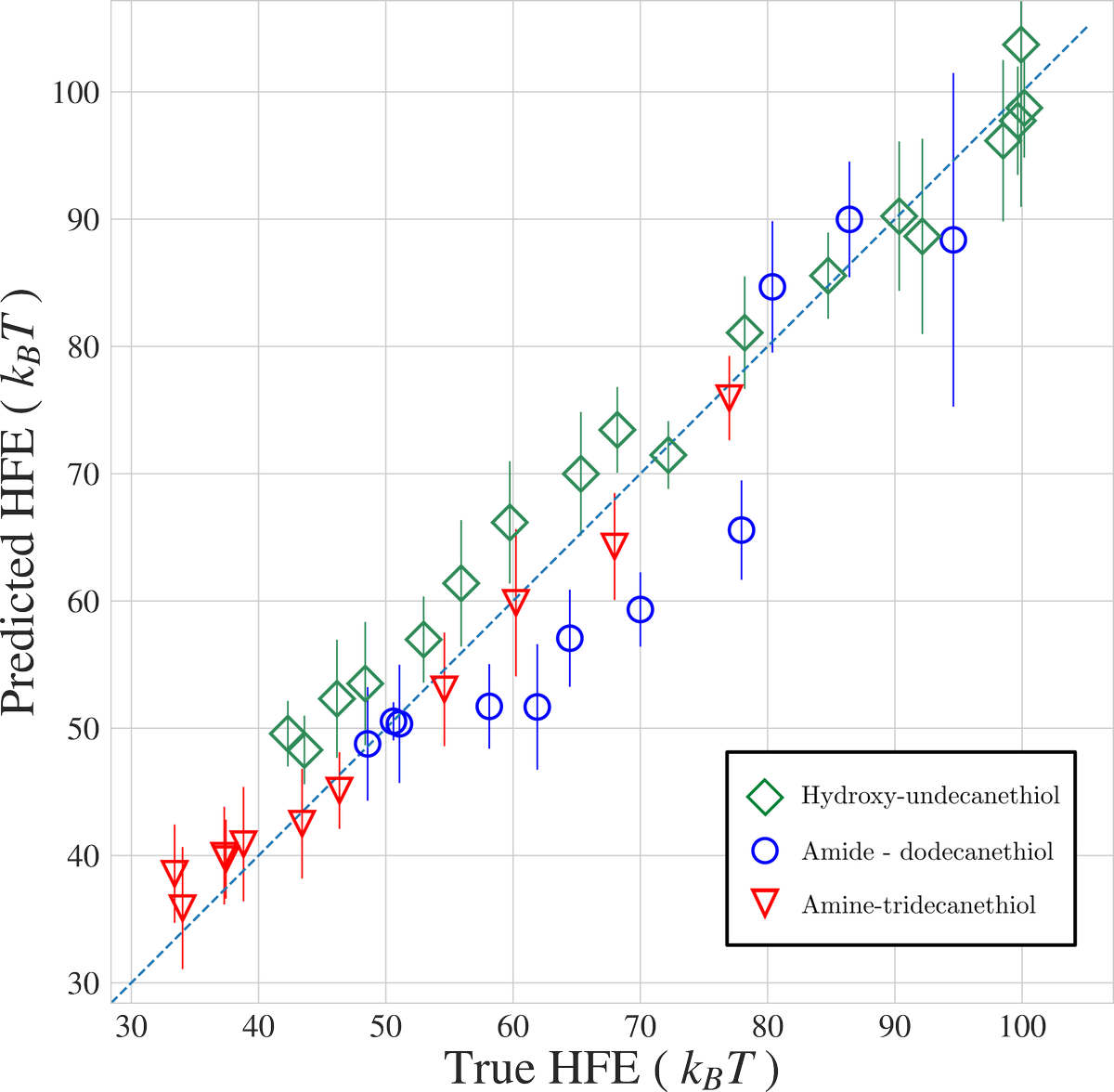
This characterization of the data allows us to outperform complex machine learning architectures with simple linear regression models for prediction of emergent phenomena (e.g., hydration free energy, solvent-mediated reactivity). (4/n)
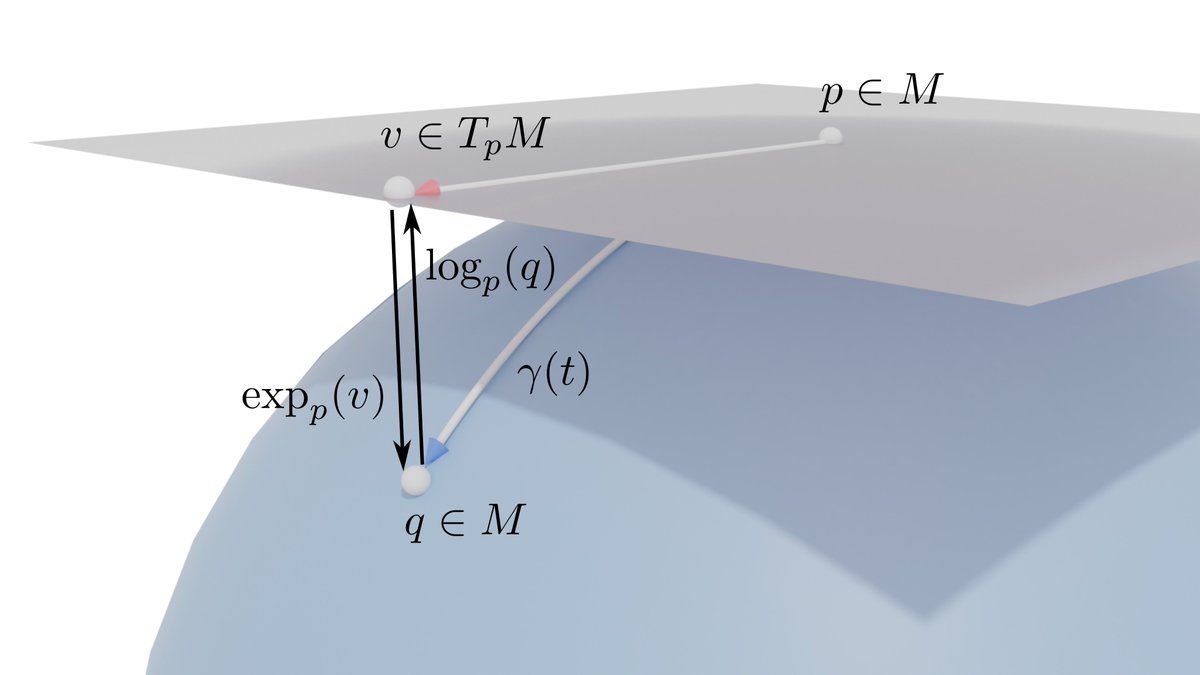
Excited to share our work “Data Analysis using Riemannian Geometry and Applications to Chemical Engineering”.
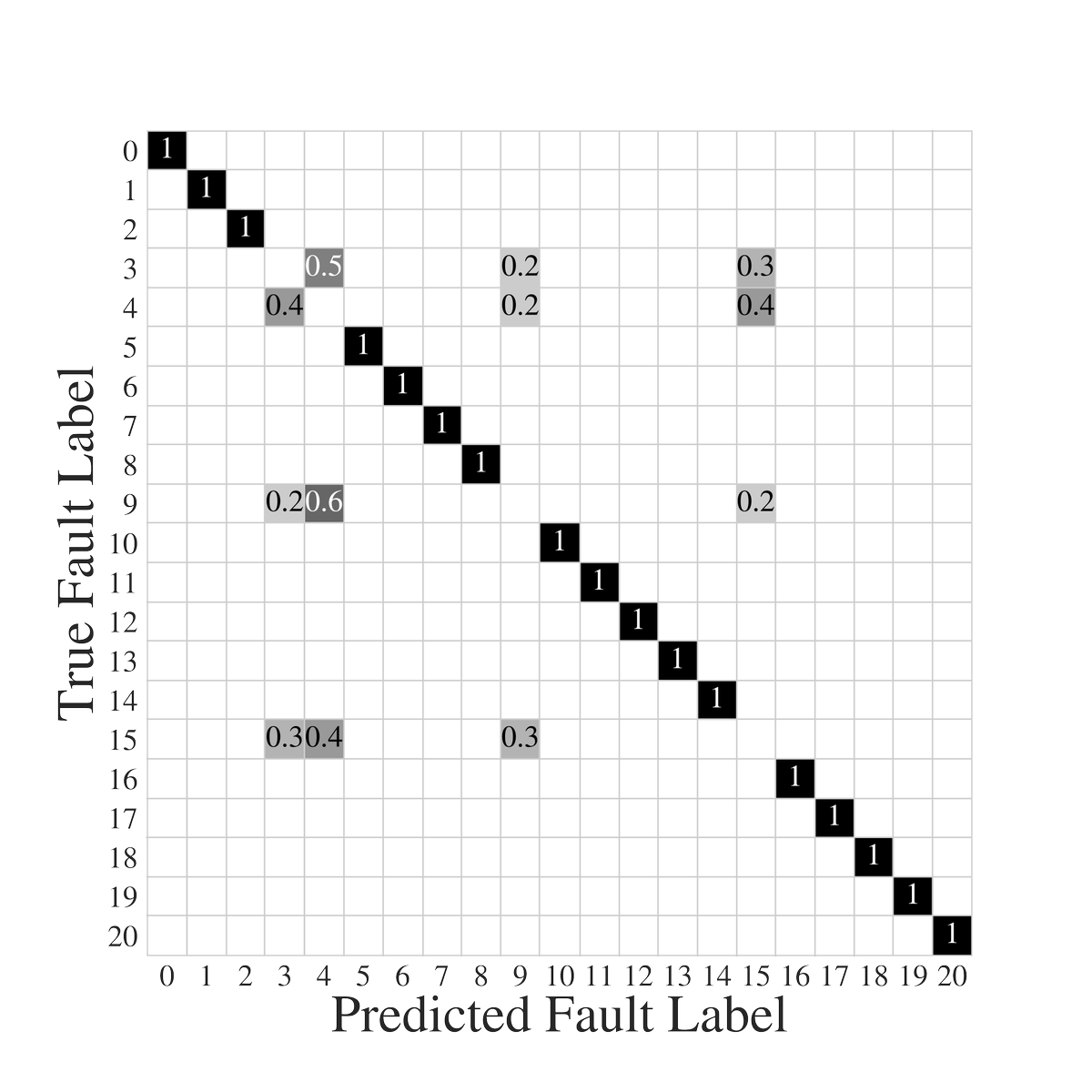
We focus on the geometric analysis of symmetric positive definite (SPD) matrices in anomaly detection.
Links: https://t.co/IikNqllv7X & https://t.co/1Ng8unNi4i
🧵1/n
(4/n) Once the data has been projected to a linear (Euclidean) space, we can safely apply methods that make this assumption (e.g., PCA)! This is demonstrated in two real world examples where we see dramatic improvements in both classification and dimensionality reduction.
I am pleased to announce Alexander Dowling as our CBE Computing Seminar speaker tomorrow at 1:00 PM CST. Professor Dowling will present work related to hydrofluorocarbon phase-out, using experimental, simulation, and technoeconomic optimization methods. Join us tomorrow via Zoom!
Today we welcome Michael Webb in our Computing Seminar. Prof. Webb will be presenting his research in polymer design using hybrid simulation and machine learning models. You can join us this afternoon at 1:00 PM CST via Zoom. Meeting details are in the attached flyer.
I am applying for faculty positions this year and will be speaking at #AICHE2021 in Boston.
My talk will focus on applying topology, geometry, and data science to chemical engineering systems.
Stop by if interested!
Details: https://t.co/K4ajRlQfKs
#AcademicTwitter#ChemE
Prospective PhD students - check out the UW-Madison Chemical and Biological Engineering (@UWMadCBE) virtual info session next Monday! We'll present an overview of the department, opportunities for Q&A with current students and faculty, and advice on preparing your application.
Today's UW CBE Computing Seminar features Dr. Yili Qian, postdoctoral researcher from the Department of Biochemistry. Yili will share his work developing mathematical models biological systems. Join us today at 1:00 PM CST via Zoom. Seminar details in attached flyer.
@kmnitesh05@LatinXChem So from this we could infer that co-solvents that disrupt water-water interactions (similar to what we see in DMSO) would be best for increasing the reactivity of fructose. Consequently, we should avoid co-solvents that cause water to form large clusters in the system (like THF).
Hi @LatinXChem, I'm excited to share my work titled "Topological Data Analysis: Applications in Molecular Simulation".
Feel free to reach out with any questions!
#LatinXChem#LatinXChem2021#LXChemEng#Eng005
High Res Version Here: https://t.co/UMmwqBWwii
@kmnitesh05@LatinXChem (1/2)
Thank you for the question!
In the example for THF and DMSO (fructose reactant) we know from experiments that THF yields the smallest reactivity increase, and DMSO the highest.
We also see large topological differences in these particular co-solvent systems with the EC.