FSD v14 Lite is now rolling out to AI3 early-access customers. Based on the feedback, will rollout to more customers over the next few weeks.
This build distills the driving behavior from AI4’s v14 series into both the camera and compute config of AI3. It includes destination options and speed profiles on city roads, but more importantly significantly improved safety.
We hope you’ll enjoy it, once the build ships wide.
Grok 4.5, based on our 1.5T V9 foundation model, with Cursor data added in supplemental training, is now in private beta at SpaceX & Tesla. Early evals show performance close to, perhaps exceeding Opus.
RL is continuing to significantly improve the model, and the Grok Build harness gets better every day.
Nice work by all those involved!
Completely trained from scratch new models will be released by @SpaceX every month this year.
A Model Y driver started experiencing a medical emergency with chest pain mid-drive & called his son.
His son then remotely rerouted the car – which had FSD Supervised enabled – to the nearest hospital & let them know the vehicle was en route. ER staff were standing by on arrival.
Doctors later confirmed the quick reroute likely saved his life.
A timelapse view from our @SpaceX Dragon of the spectacular southern aurora seen in yesterday’s post, a result of a recent solar event. As opposed to the previous aurora I’ve seen, this one danced and snaked its way directly below us, putting on quite a show. I am in awe of this ethereal and emotionally evocative phenomenon.
SpaceX has just officially unveiled its AI1 satellite, the first generation of its AI satellite.
Overall Specs:
• 150 kW peak compute payload
• 120 kW average compute payload
• 70 kW per ton
• Compute provider interchangeable
Dimensions:
• Wingspan: 70 meters
• Deployed height: 20 meters
Thermal System:
• 110 m² deployable liquid radiator
• Redundant pumping loops
• Integrated micrometeoroid shielding
• Deployable liquid radiators
Solar Power System:
• 150 kW solar array
• 250 W/m²
• SpaceX-manufactured solar technology from Bastrop, Texas
Architecture:
• Centralized compute module
• Large deployable solar arrays
• Deployable liquid-radiator thermal management system
• AI-focused compute satellite design ("AI1 satellite")
Elon: "The AI satellite is much simpler than a Starlink satellite. The AI satellite is essentially a lot of solar cells, you still need some laser links, but you don't have all of the super complex antennas that you have on a Starlink satellite. The easier one to design for is the AI satellite. It's bigger. A lot of this is technology we've already made with the Starlink V3 satellites."
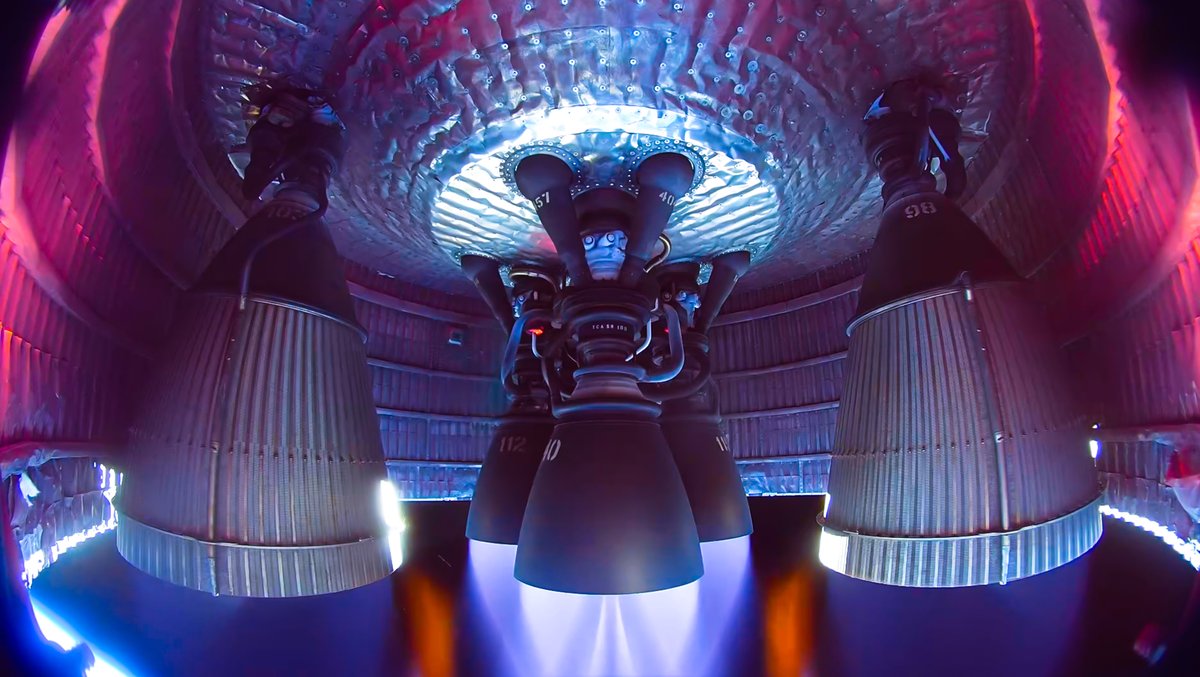
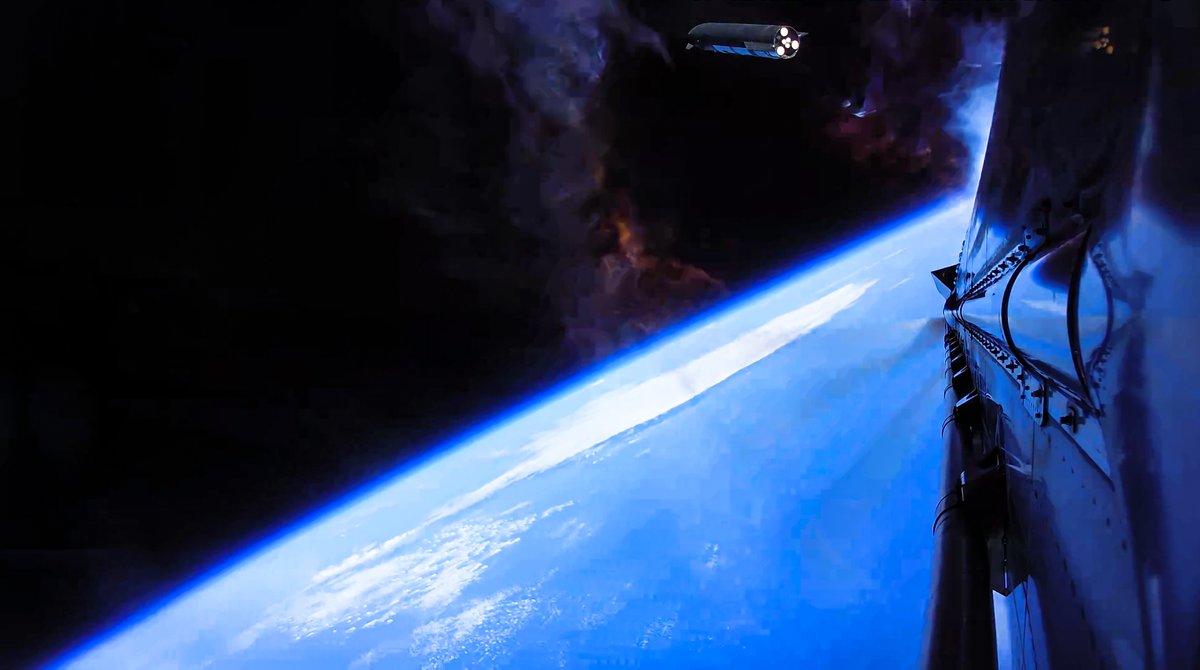
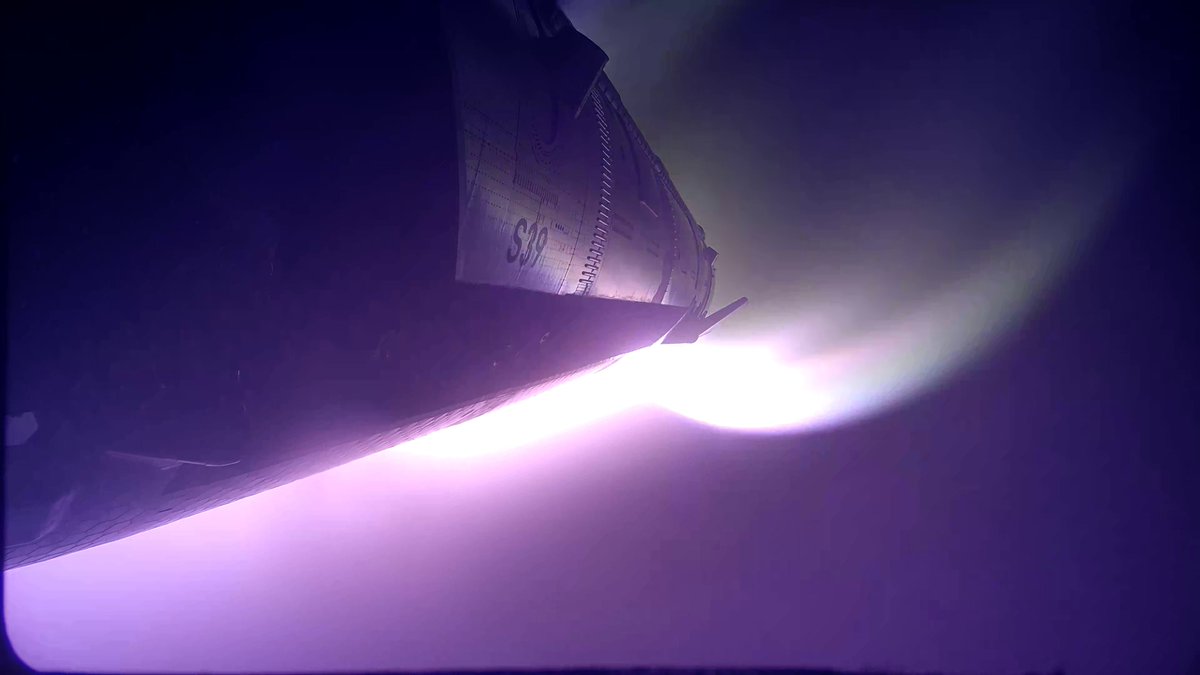
Onboard views from Starship and Super Heavy V3, which are equipped with upgraded cameras capable of streaming 4K video through every phase of flight via @Starlink
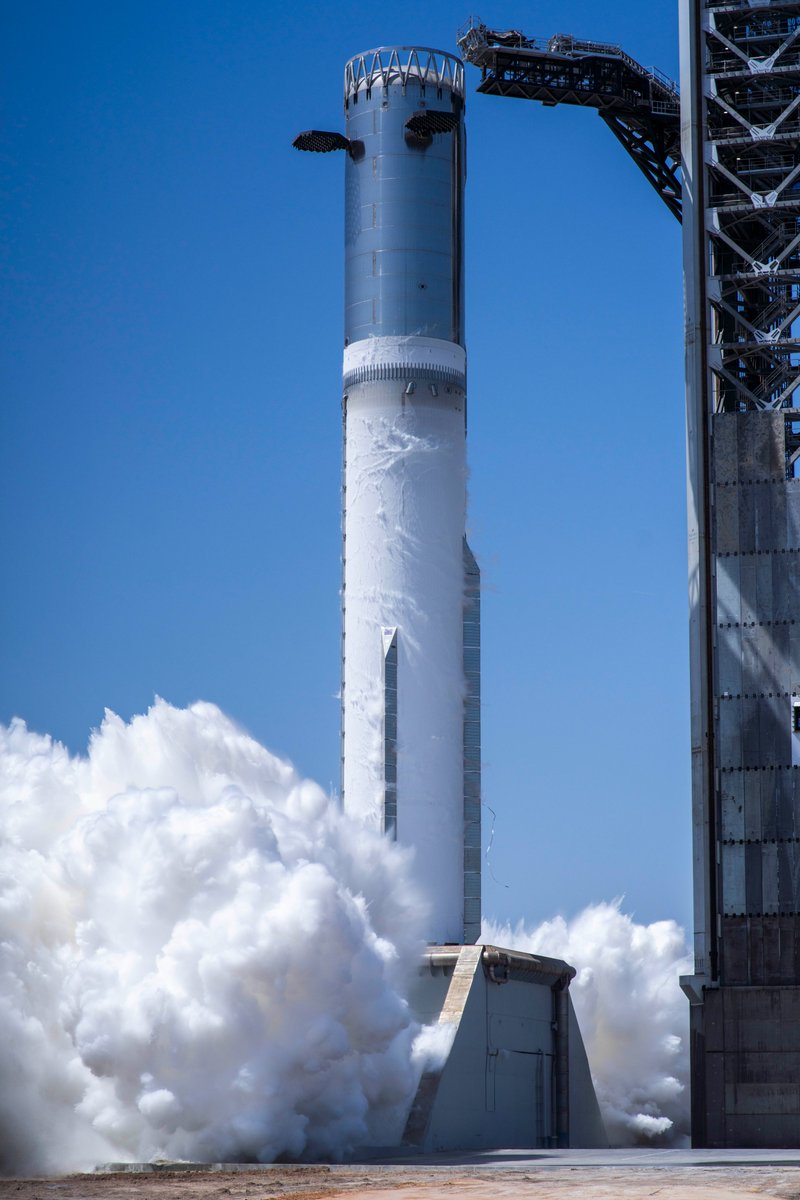
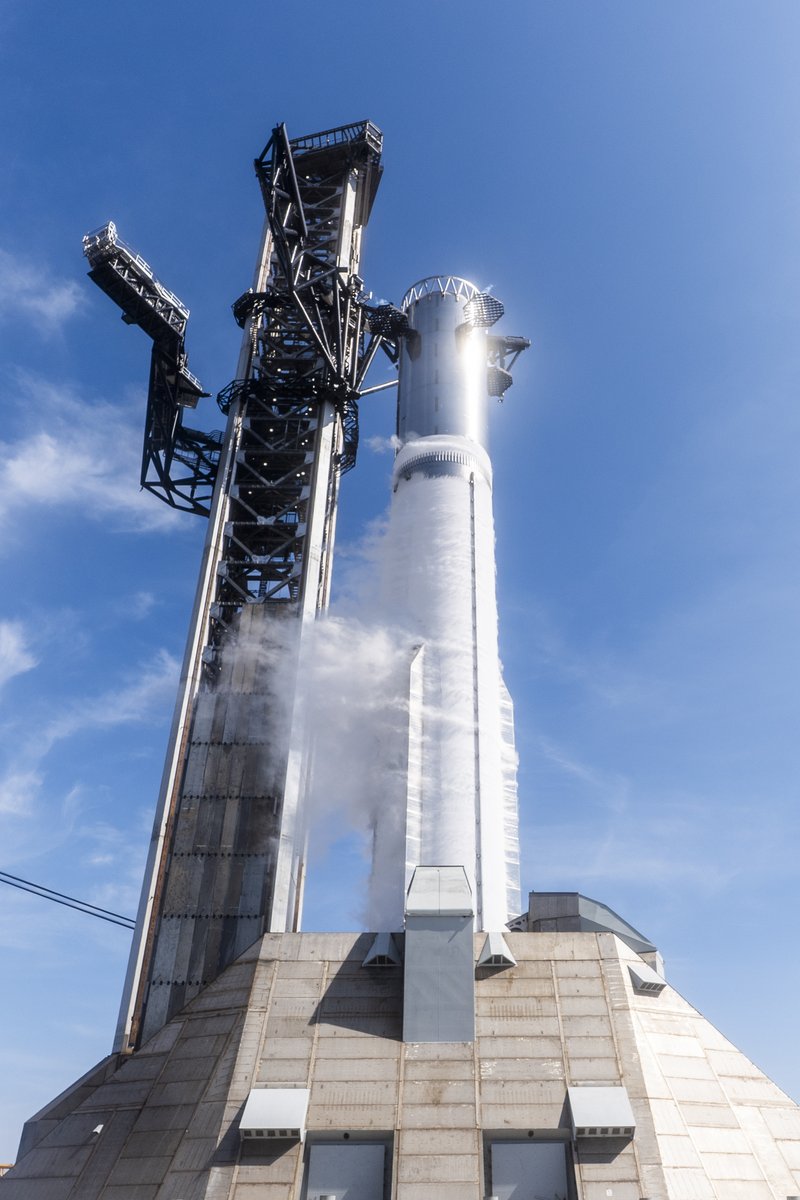
I set 7 cameras near the pad for starship’s 12th test flight.
In a first for me, all 7 got INCREDIBLE photos. Here’s a little peak at one… but there are a lot more. I’ll post some of my favorites tomorrow, and release at least one in print.
Starship’s twelfth flight test will debut the next generation Starship and Super Heavy vehicles, powered by the next evolution of the Raptor engine and launching from a newly designed pad at Starbase. The launch is targeted as early as Tuesday, May 19 → https://t.co/2gZQUxS6mm
Three years since the first flight of Starship, the next generation is here. New ship. New booster. New engines. New pad and new test site. SpaceX engineers are working to solve one of the most difficult engineering challenges in history: developing a fully, rapidly reusable rocket
SPACEX: Condensed Gwynne Shotwell TIME interview. The full interview is really good. I suggest you read it. But if you do not have time, here you go:
- Merger with xAI: Happened quickly; xAI will largely operate as its own entity with integration over time. Shotwell’s role will evolve as it always has, focused on helping Elon Musk and adding value. AI was already growing at SpaceX; merger brings top talent to accelerate rocketry R&D, including factory robots spotting issues.
- Merger Details: Decision was Elon's; Shotwell fully supported it due to increasing AI use and need for deeper expertise. SpaceX has had some AI engineers for 1–1.5 years; merger will speed progress significantly.
- IPO: Shotwell is excited about it as a new set of methodologies but is not supposed to discuss details.
- Moon vs Mars Focus: Not abandoning Mars; more energy on Moon for data centers in space, mass drivers, and producing AI satellites on the Moon using lunar materials (lower gravity makes launches faster/cheaper). Manufacturing on Moon not surprising.
- Lunar Timeline: Humans on lunar surface before 2030. HLS (Human Landing System) planned ready by 2028, though much must go right.
- HLS Contract: Shotwell called Secretary Sean Duffy’s statement about “opening up” the contract “inartful.” No new competition—SpaceX won Artemis III, Blue Origin won Artemis V; no new money awarded.
- Starlink: Surpassed 10 million customers (as of Feb 13). Strong growth expected. In conflict zones (Ukraine, Iran, Gaza), operates as licensed commercial service—customers buy equipment and service; not freelancing. No business without local license.
- Starlink Privacy Policy: January update automatically opts users into data for AI training. Shotwell heard zero complaints and addresses all customer issues personally. Company follows all laws; will fix any misuse.
- Constellation Size: ~10,000 Starlink satellites launched. Likely cap 15,000–20,000. Requested FCC licensing for up to 1 million AI satellites for distributed space-based data center network (surprised it got little news).
- Orbital Operations: AI satellites in multiple shells, possibly around Sun. Safety first; emphasizes communication of maneuvers for space traffic control. Compares 30,000 satellites to 30,000 cars on Earth—sparse if positions are shared.
- Launch Record: Over 600 Falcon 9 successful launches (608 noted). 165 launches last year; ~140–145 expected this year, then tapering as Starship ramps up. Over 85% of US launches in 2025 were Falcon 9.
- Starship Role: Will carry heavy payloads like AI satellites and eventually humans (up to 300 passengers depending on destination). Internal demand from Starlink/AI satellites drives production consistency, safety, and human transport capability.
- Lunar Governance: Unknown final model. Elon not top-down; lets people work independently. Starbase example (from nothing to chartered city) may be precedent. Subject to Outer Space Treaty on Moon.
- Political/IPO Concerns: No worry about volatility—broad customer base across commercial, civil, military, and international markets balances cycles. Current administration’s focus on sensible regulation helpful for launch industry (40–60 approvals/licenses per launch).
- Working with Elon Musk: Shotwell loves working for him nearly 24 years. Finds him funny, grants her freedom/flexibility. He has become more comfortable with people; remains demanding. Interactions easier over time. Recalled him describing his children as “love bugs.”
- Long-term Dreams: Personally wants to meet another sentient species (facilitated by SpaceX/xAI work). Expects lunar infrastructure starting with robots then people; would like to visit Moon. Million people needed for sustainable off-world civilization.
- Space Policy: Every administration since joining SpaceX (except possibly last) focused on getting more people into space and expanding human exploration.
- Gender in Industry: Never focuses on male-female dynamics. Values communication skills. Hopes to be role model for girls/young women in STEM (“you can’t be it until you see it”—girl from Illinois cow town helping change world). Women drawn to positive-impact fields. Mechanical engineering: her undergrad ~9% women; now much higher, but progress not fast enough.
Initial Super Heavy V3 and Starbase Pad 2 activation campaign complete, wrapping up several days of testing that loaded cryogenic fuel and oxidizer on a V3 vehicle for the first time. While the 10-engine static fire ended early due to a ground-side issue, we saw successful startup on all installed Raptor 3 engines. Next up: preparing the booster for a 33-engine static fire
The @Space_Station rarely makes big changes to its orientation, but we were lucky to experience such maneuvers (flipping around to fly butt-first, then flipping back again) before and after each @spacex CRS-33 reboost. This 60x speed timelapse was one of my favorites since it captures a little of everything - sunset, lightning storms, air glow, moon glint, stars, and sunrise - as we did one (actually very slow) orbital cartwheel from Atlantic to Pacific.