🚨NEW:
🔴Afghan government officials say thorough preparations have been made to retaliate.
🔴Security sources also say that Pakistani regime forces were defeated last night.
🚨NEW:
🔴Afghan government officials say thorough preparations have been made to retaliate.
🔴Security sources also say that Pakistani regime forces were defeated last night.
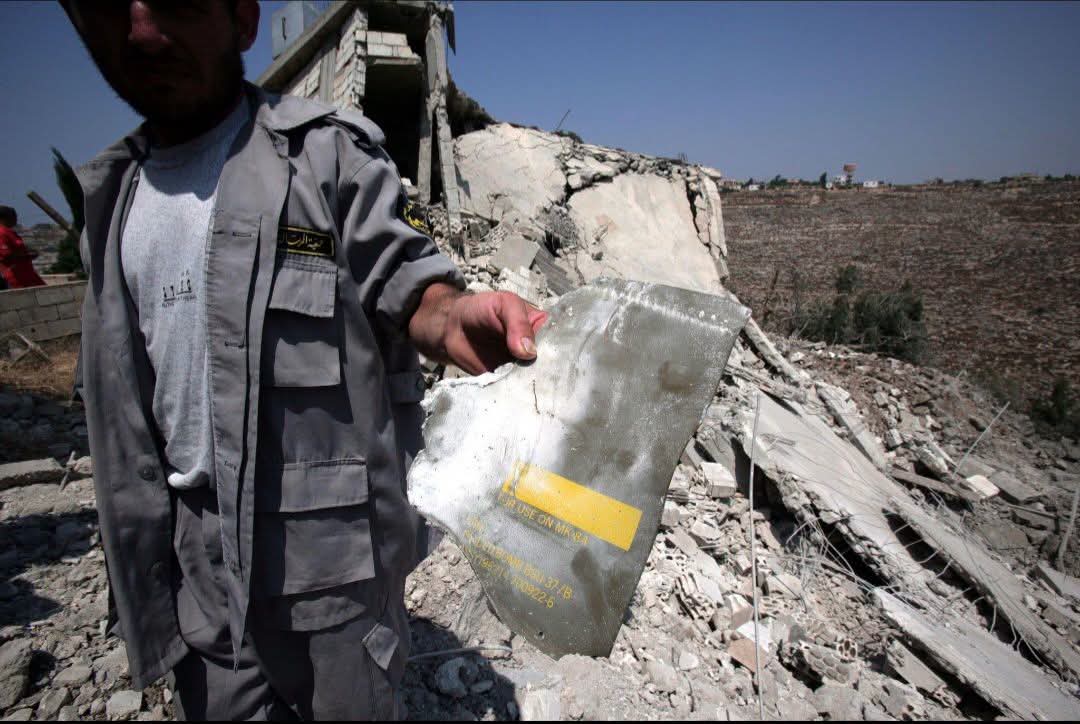
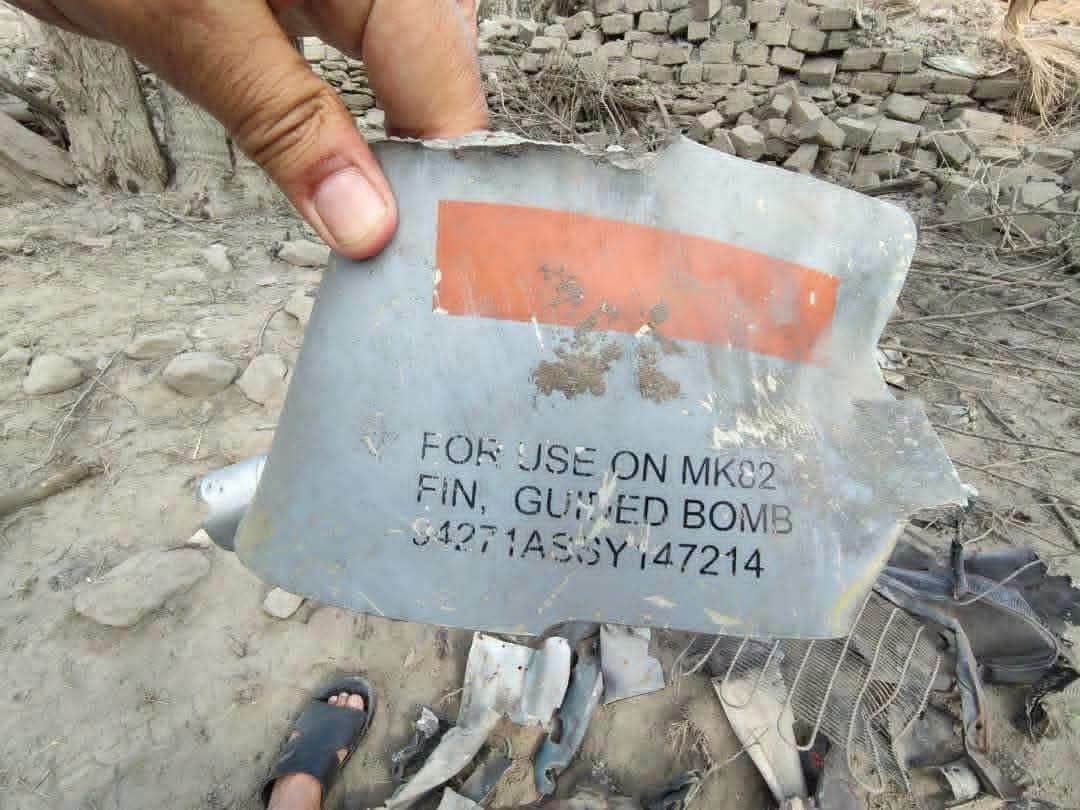
Have you noticed the similarities between the elder & younger brothers? Israel uses MK-82 & MK-84 American-made bombs in Gaza, while Pakistan uses the same types of U.S.-made bombs during its airstrikes in Afghanistan.
🚨 BIG
⚡Security sources say that Afghan forces in Khost forced Pakistani military regime drones & fighter jets that had entered Afghan airspace to retreat, & shot down a reconnaissance drone.
@Suppor Please take a second look at @AFGDefense. This account is important for reporting and analysis on Afghanistan’s defense and security affairs. We respectfully ask for a human review of the suspension and a fair opportunity to resolve any issue. We are committed to following all @X rules and are ready to make any necessary changes. Please help restore the account. 🙏
#RestoreAFGDefense
🚨 BIG
⚡Security sources say that Afghan forces in Khost forced Pakistani military regime drones & fighter jets that had entered Afghan airspace to retreat, & shot down a reconnaissance drone.
🚨 BIG BREAKING NEWS💥
⚡Afghanistan Police Radio reported that Afghan forces have reached the de facto border line & are prepared to act upon receiving orders to launch an attack.
🚨 BIG
Security sources say that the Afghan government has deployed dangerous weapons near the Durand Line in preparation to retaliate for the Pakistani regime’s recent airstrikes.
According to the source, Pakistani militia forces have abandoned their posts & fled the area.
Qari Saeed Khosti:
“The history of the Pakistani military regime is filled with brutal killings, and it does not matter to them who is targeted in their attacks.
He further said that the military regime targets civilians because, due to its limited military capabilities and lack of reliable intelligence, it is unable to strike the intended targets.”
Qari Saeed Khosti:
“We assure the people that under no circumstances will the Pakistani military regime escape accountability for the blood that has been shed.
He added that the current system has emerged from among the people and will protect its own people.”
Qari Saeed Khosti:
Afghanistan is not afraid of war under any circumstances, but at present, it does not want to become involved in a war.
He added that Pakistan, both directly and through its militias, is seeking to drag Afghanistan into war and push it toward instability.
He said that the Afghan government will under no circumstances forgo responding to Pakistan.
Qari Saeed Khosti:
The Pakistani military regime has been internationally disgraced and humiliated for targeting civilians in Afghanistan.
He added that, in an attempt to conceal its humiliation, the military regime is making baseless allegations in an effort to justify these attacks.
Qari Saeed Khosti:
As the time came to implement the Makkah agreement, Pakistan attacked Afghanistan and chose to evade its obligations under the agreement.
He added that Saudi Arabia’s conflict with the Houthis in Yemen has entered a sensitive phase. However, instead of sending its troops to defend Saudi Arabia, Pakistan chose to evade its commitments under the agreement.
Qari Saeed Khosti: Even the mediators laughed at Pakistan’s demands
During the negotiations, Pakistan asked Afghanistan to call members of the Tehrik-i-Taliban Pakistan (TTP) to Afghanistan and ensure Pakistan’s security.
Qari Saeed Khosti: Even the mediators laughed at Pakistan’s demands
During the negotiations, Pakistan asked Afghanistan to call members of the Tehrik-i-Taliban Pakistan (TTP) to Afghanistan and ensure Pakistan’s security.
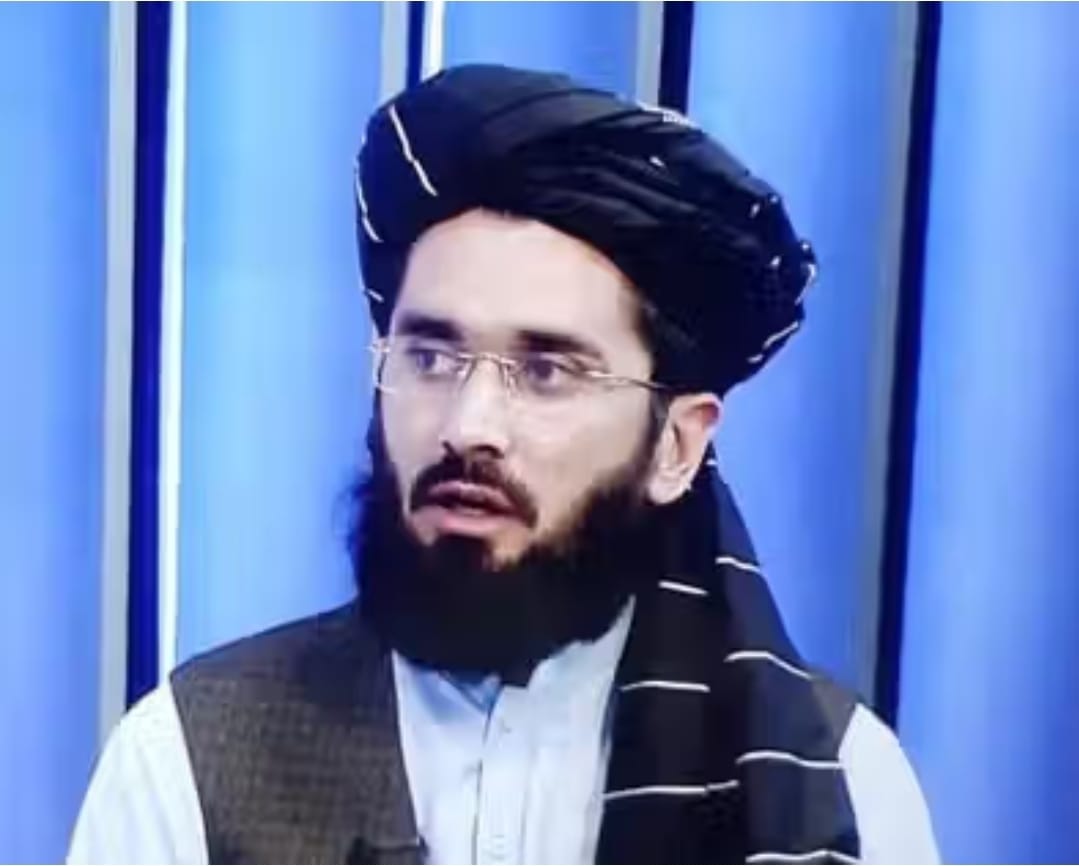
🚨NEW: Qari Saeed Khosti, the official responsible for safeguarding jihadist values at Afghanistan’s Ministry of Information and Culture, said that the history of Pakistan’s military regime is filled with killings.
According to Khosti, the regime does not distinguish between the identities of its targets in its attacks.
Khosti further said that the Pakistani military regime, due to its limited military capabilities and lack of accurate intelligence, is unable to strike its intended targets and therefore targets civilian areas instead.
🚨NEW: Qari Saeed Khosti, the official responsible for safeguarding jihadist values at Afghanistan’s Ministry of Information and Culture, said that the history of Pakistan’s military regime is filled with killings.
According to Khosti, the regime does not distinguish between the identities of its targets in its attacks.
Khosti further said that the Pakistani military regime, due to its limited military capabilities and lack of accurate intelligence, is unable to strike its intended targets and therefore targets civilian areas instead.
Possible Calculations Behind Pakistan’s Recent Military Actions
In recent days, relations between Afghanistan and Pakistan have once again moved toward serious military confrontation. Pakistan has carried out airstrikes in various parts of Afghanistan, while Afghan officials have reported civilian deaths and injuries as a result of these attacks. Regarding Pakistan’s airstrikes on September 21, the United Nations and Afghan officials reported civilian casualties, including in Kunar. On September 24, Pakistan said it had carried out strikes on ten locations inside Afghanistan, while Kabul reported that four civilians had been killed as a result of the attacks.
At the same time, military tensions between the Houthis and Saudi Arabia have also increased. The Houthis have claimed missile and drone attacks against Saudi Arabia, once again exposing the region to serious security challenges.
Against this backdrop, an important question arises: What are the underlying security and political calculations behind Pakistan’s recent attacks? Is Pakistan acting solely in response to its security concerns, or is it seeking to divert public attention from its internal problems and regional pressures?
The reality, however, is that Pakistan has become entangled in an internal conflict, while at the same time seeking to protect itself from the obligations arising from its defense agreement with Saudi Arabia during this sensitive period.
If Pakistan becomes directly involved in a conflict with the Houthis, it risks facing Iran’s anger. If it remains uninvolved, it could risk losing Saudi Arabia’s support and goodwill. It was therefore foreseeable that Pakistan would once again attack Afghanistan in an attempt to escape these challenges and mislead its own population—and that is exactly what happened.
Key Points Behind Pakistan’s Crisis
1. Diverting Public Attention from Pakistan’s Internal Political Problems
Pakistan has long faced political, economic, and security challenges. Under such circumstances, presenting Afghanistan as an external threat can shift the focus of domestic political debate.
The issue of Afghanistan and the TTP is being used as a means of managing Pakistan’s internal political and security pressures.
2. Concealing Its Security Failures
The continuation of militant attacks and security incidents inside Pakistan has raised questions about the capabilities of the country’s security institutions.
In an attempt to mislead its own population, Pakistan allegedly orchestrated the September 21 incident in Kohat and immediately linked the attack to Afghan territory. Pakistan routinely attributes domestic security incidents to Afghanistan without presenting clear and independent evidence, and has failed to establish the full facts of such incidents.
3. Pakistan’s Defense Commitments Toward Saudi Arabia
Pakistan and Saudi Arabia signed the Makkah Joint Defense Agreement in Makkah on August 7, 2026. In an official statement, Pakistan’s Ministry of Foreign Affairs said that, under the agreement, an armed attack against either country would be considered an attack against both countries. However, as the Houthis have carried out attacks against Saudi Arabia, Pakistan appears to be distancing itself from direct involvement.
Pakistan has officially stated that it stands by its commitments regarding Saudi Arabia’s security, while emphasizing its support for dialogue and diplomacy in resolving the conflict in Yemen.
This raises an important political question:
If Pakistan has committed itself to collective defense under its agreement with Saudi Arabia, then why, in the face of repeated Houthi attacks, has it so far pursued diplomacy and dialogue instead of direct military action, while resorting to airstrikes in its dealings with Afghanistan?
This raises the possibility that Pakistan is using attacks against Afghanistan, at least in part, as a way of avoiding direct involvement in the conflict with the Houthis.
4. Ignoring Afghanistan’s Security Cooperation and Measures
Afghanistan’s current authorities have repeatedly stated that Afghan territory will not be used against another country and have called for security cooperation with countries in the region.
Despite this, Pakistan has once again chosen the path of military attacks against Afghan territory.
Pakistan’s unsubstantiated claim is that anti-Pakistan militants and drone-related activities are operating from Afghanistan. In its September 24 attacks, Pakistan said it had targeted locations allegedly used for storing and operating drones.
However, Pakistan has not presented publicly verifiable evidence to substantiate these claims. Repeated attacks against an independent and sovereign country also raise serious questions under international law.
5. The Failure of the “Evil and Corruption” Campaign and the Shift Toward Direct Attacks
Pakistan has used political, economic, diplomatic, intelligence, and indirect forms of pressure against Afghanistan in an attempt to achieve its desired objectives. However, after failing to achieve its goals through these approaches, it has now turned toward direct military pressure.
The latest series of Pakistani airstrikes against Afghanistan demonstrates a shift toward military pressure instead of dialogue and political engagement.
6. Internal Explosions and Intelligence-Related Incidents
In connection with incidents occurring inside Pakistan, there are allegations that elements within Pakistan’s intelligence circles, particularly the ISI, have been involved in creating or manipulating certain incidents and subsequently using them as justification for military action against Afghanistan. The Kohat incident has been cited as one example.
These allegations, however, would require independent and transparent investigations to establish responsibility.
7. Afghanistan’s Potential Response
The continuation of military tensions between Afghanistan and Pakistan increases the risks of miscalculation for both countries.
If Pakistan believes that Afghanistan will not respond in any way, that calculation could prove mistaken. Afghan officials have spoken of an appropriate response to the recent attacks, while the specific nature and timing of such a response may be announced later.
Therefore, continued Pakistani attacks could expand the military confrontation between the two countries and create a cycle of escalation that may eventually become much more difficult for Pakistan to control.
Military pressure may serve short-term objectives, but without a parallel political solution, it can increase the risk of long-term instability.
8. Risks to Military Infrastructure and the Expansion of the Conflict
In the event of sustained military confrontation between Afghanistan and Pakistan, both countries could face risks to important military and civilian infrastructure.
If military actions by both sides expand, the conflict may no longer remain confined to border areas. The risks to civilians, economic centers, commercial routes, and critical infrastructure could also increase significantly.
Conclusion
In conclusion, Pakistan’s recent airstrikes, its ongoing internal security challenges, the continuation of accusations against Afghanistan, and the new security situation created by Houthi activity involving Saudi Arabia have converged during a particularly sensitive period for the region.
If security incidents occur inside Pakistan, those responsible should be identified through independent and transparent investigations. If Afghanistan is being portrayed as a security threat to Pakistan, specific and credible evidence should be presented to support such claims.
Continued military confrontation between Afghanistan and Pakistan serves neither the interests of the peoples of the two countries nor regional stability. Dialogue, direct communication, transparent investigations, and the establishment of a practical mechanism for addressing mutual security concerns could help prevent a broader conflict.
Sadaat