American Fuel & Petrochemical Manufacturers represents the makers of the fuels that keep us moving and the petrochemical building blocks for modern life.
We make the fuels that keep us moving. We make the petrochemical building blocks of our modern world. We move them where they need to go. We make modern life possible.
From healthcare to technology, America’s petrochemical industry powers our manufacturing. And because our petrochemical industry uses natural gas liquids sourced right here in the United States, we’re more resilient when there are global supply chain disruptions.
Hear more from our President and CEO @CThompsonAFPM:
If we want to build more houses in this country, we need U.S. petrochemical manufacturers. They make the materials required to make paint, plumbing and even wires.
America’s petrochemical industry: literally building our nation.
Great piece in @farmdocDaily on the impact of the 2026-2027 Renewable Fuel Standard. TLDR: EPA has a big problem. They’re running out of RINs ... fast.
https://t.co/UFXLnyjDa8
The 2026-2027 Renewable Fuel Standard will likely increase transportation costs for consumers. That’s not our prediction. That’s what the Environmental Protection Agency said:
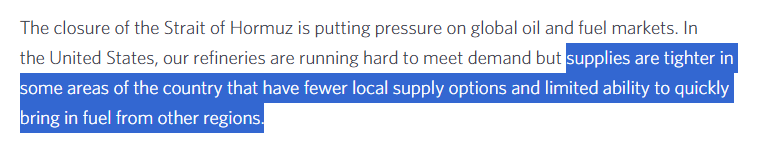
➡️ Why some fuel markets are tighter than others
Another recent explainer, this time focusing on why fuel supplies are tighter in some areas of the country than others. (https://t.co/G4ny7lqTOV)
What tabs we’ve got open today:
➡️ Why the conflict in Iran is driving up fuel prices everywhere
One of our recent explainers, diving into the ramifications of the conflict with Iran and the ongoing closure of the Strait of Hormuz. (https://t.co/md6G88aDXN)
Another explainer from our Newsroom, focusing on why some fuel markets are tighter than others. We answer questions like:
- Are we running out of fuel in the U.S.?
- Is there a difference between the availability of gasoline, diesel and jet fuel?
- Why can’t refiners just produce more?
If you care about national security, and if you care about reliable fuels that keep the economy moving, then you should care about a strong U.S. refining industry. Our refineries ensure our country is more resilient during supply chain disruptions.
AFPM President and CEO @CThompsonAFPM explains in our new ad:
American refineries are running all-out to make the fuels consumers need. Take a look inside the fenceline at Flint Hills Resources' Pine Bend Refinery to see what that looks like in Minnesota. At Pine Bend, they make more than seven million gallons of gasoline every day for drivers across the Midwest.
https://t.co/rql1mDyYLI
When you’re filling up at the gas station, you might be wondering what factors impact the prices you see at the pump. Here’s what goes into the price of gasoline:
- The price of crude oil
- Refining costs
- Transportation, storage, blending and retail
- Federal and state taxes
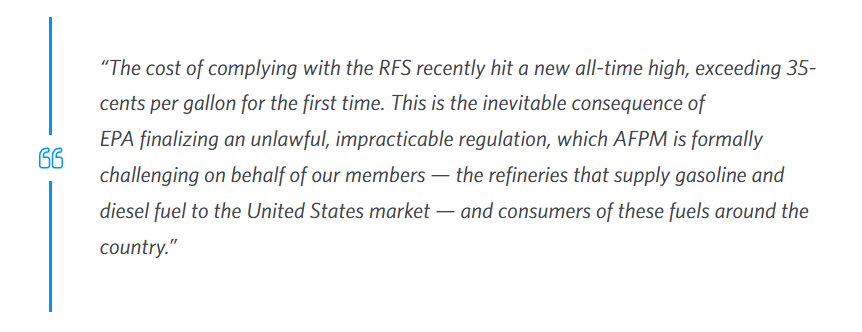
BREAKING: We just sued the Environmental Protection Agency, challenging their finalized 2026-2027 Renewable Fuel Standard (RFS) volumes.
This is the largest and most-expensive RFS in history AND the most-expensive regulation of President Trump’s second term. It’ll cost Americans:
- $106 billion over the next two years
- 26-35 cents per gallon for every gallon of gasoline and diesel supplied to the U.S. market