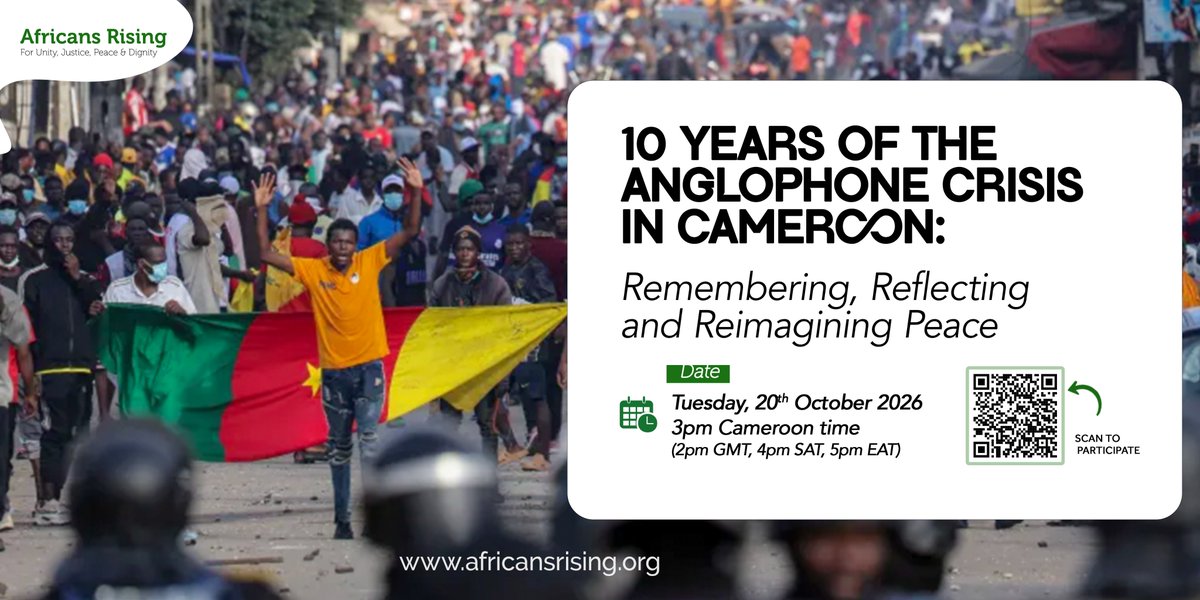
Ten years on, the Anglophone crisis in Cameroon’s North-West and South-West regions continues to shape lives, families and futures. Join #AfricansRising for “10 Years of the Anglophone Crisis in Cameroon: Remembering, Reflecting and Reimagining Peace,” an online webinar on Tuesday, 20 October 2026 at 3:00 PM Cameroon time (2 PM GMT, 4 PM SAT, 5 PM EAT) via Zoom.
Join our moderated panel and interactive audience session which will centre the voices of women, youth and affected communities, celebrate the resilience of peace builders, and draw lessons from a decade of dialogue and conflict resolution.
You are invited to remember, reflect and reimagine peace with us.
.@RosebellK tells the story of a young trans woman from DRC who fled not war, but the violence of being herself, with no papers, every border was a danger to be paid past, and refugee status never became safety.
#BorderlessAfrica#Feminist4BorderlessAfrica#AfricansRising
Here’s her story:
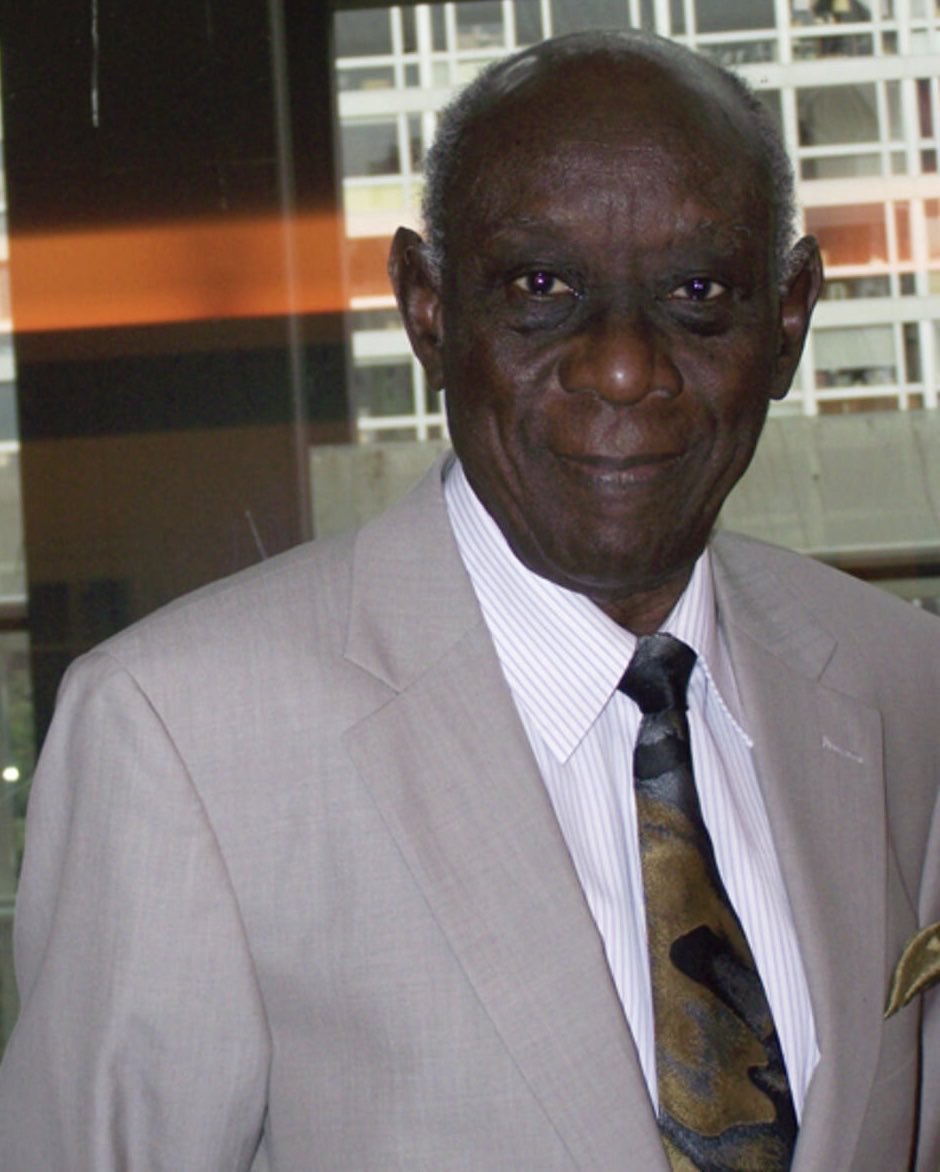
And each passing brings us face to face with a silent shame: How could we have learned so much from revolutionaries, thinkers, and those who shaped our consciousness, without their legacy profoundly transforming our era?
I search, I reflect, I circle back to this question: what is disfiguring our generation? What have we lost along the way?
For perhaps the most tragic thing is not seeing our icons leave us, but realizing that we have not yet learned to become the guiding lights that tomorrow will need. @azizfall9@congofriends@asmbaraza@theblacklist@AfricansRising@TrustAfrica
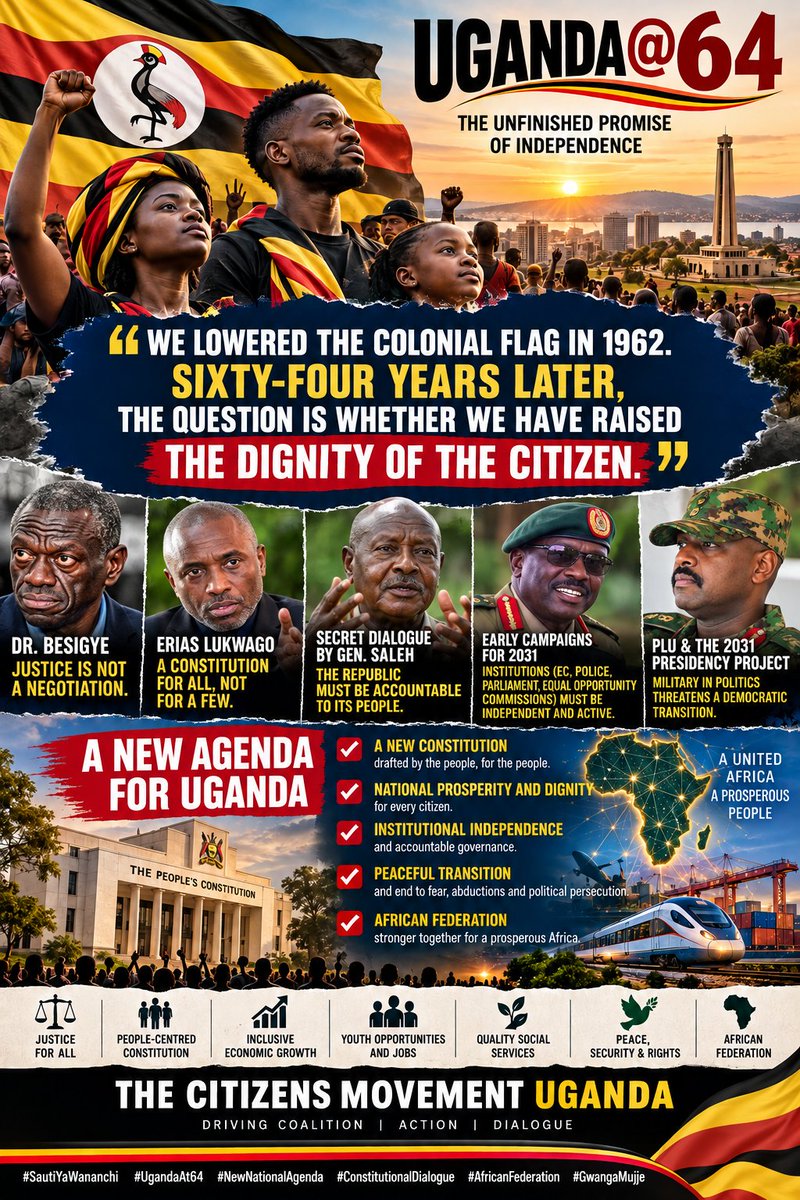
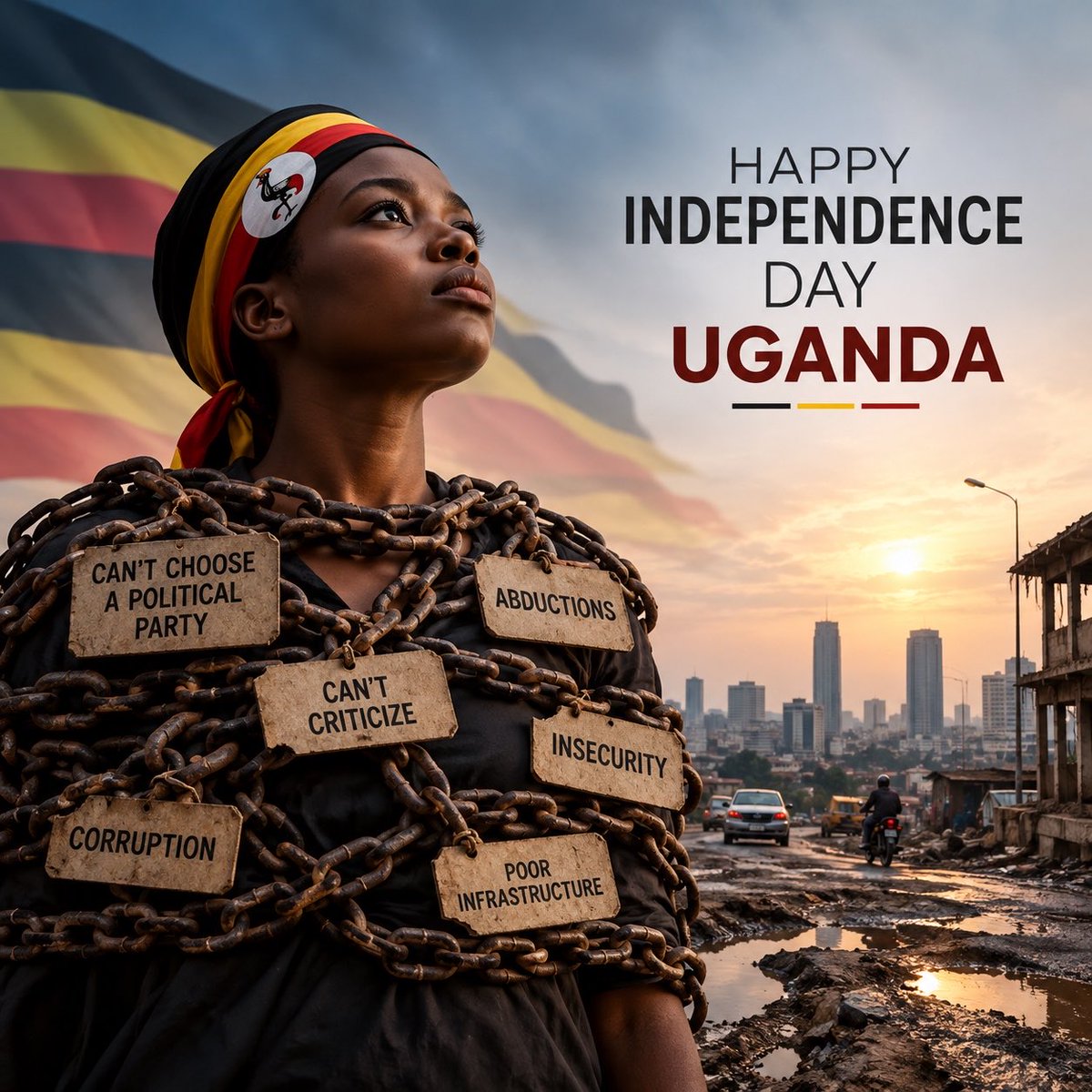
64 years of independence, yet Ugandans are still fighting for the freedom to speak, associate, criticize those in power and live without fear of abduction.
We may have gained independence from colonial rule, but the struggle for true freedom continues.
#UgandaAt64 #FreePraiseAloikin #FreeAllPoliticalPrisoners @GovUganda
“We have little to no control. How we navigate the issues about ownership remains an ongoing conversation. The basics of organising must be maintained so that people can continue to speak and look out for each other. Social media and the matrix make us think that social media is all about competition.”
— Rosebell Kagumire @RosebellK
#BorderlessAfrica #Feminist4BorderlessAfrica #AfricansRising
“People think it’s normal to wake up in a rage. Yes, the problem is there. How do we get the ideas going to protect ourselves, not as individuals, but as a collective? Digital safety has to be collective for it to make sense.”
— Rosebell Kagumire, @RosebellK#BorderlessAfrica #Feminist4BorderlessAfrica #AfricansRising
Rosebell Kagumire reflects on leaving X because it was no longer an effective space for organising. Being online is not an obligation, and leaving a platform does not mean abandoning the work. When a platform no longer serves the purpose of our activism, we can take that work elsewhere.
“The question is not whether we must be online, but where our presence makes a meaningful impact. We need to be intentional about where we invest our time and energy, choosing platforms that serve our organising and advance our work in society.”
#BorderlessAfrica #Feminist4BorderlessAfrica #AfricansRising
Karim Bah emphasises the importance of equipping people with practical, everyday skills to question and challenge narratives pushed by mainstream media. The Africa Communicators Network provides a bridge for Africans to connect, share knowledge and strengthen their ability to shape the stories told about the continent.
#BorderlessAfrica #Feminist4BorderlessAfrica #AfricansRising
Karim Bah highlights how the media’s agenda-setting power shapes our perception of credibility, often leading us to view Western media as more authoritative than African media. This is reflected in how many African leaders’ offices prioritise Western media platforms.
But media power also creates room for resistance. Understanding narratives and counter-narratives equips activists with the tools and skills to challenge dominant perspectives and engage more strategically in the media battleground. Even something as simple as a letter to the editor in mainstream media can be a powerful tool for challenging narratives and influencing public discourse.
#BorderlessAfrica #Feminist4BorderlessAfrica #AfricansRising
Felicity Asibi Akwa reminds us that examining how we tell stories can be an enlightening realisation of how we have been seeing things wrongly. People are deliberately silenced, while others are given preferential attention. Even the language we use can be disempowering.
“As storytellers, we may encounter people’s experiences without having lived them ourselves. Sometimes, we fall into the saviour complex when our intention is simply to amplify voices. I make a personal commitment to learning how to tell stories better, without falling into the trap of presenting myself as giving a voice to the voiceless. People already have voices; our responsibility is to listen, make space and ensure they are heard on their own terms.”
#BorderlessAfrica #Feminist4BorderlessAfrica #AfricansRising
Moses Adayilo reminds us of the Chibok girls abducted in Nigeria. The women and girls affected must not be forgotten by society or abandoned by the government.
Their stories must remain in the public consciousness. Through storytelling, we keep their experiences alive, demand accountability and continue advocating for their freedom and release.
Forgetting them must never become another form of abandonment.
#BorderlessAfrica #Feminist4BorderlessAfrica #AfricansRising
Omnia Shawkat highlights how paid trolls can push back against and silence strong voices online. The machinery fuelling anti-rights and racist conversations is increasingly organised, pushing marginalised voices out while shaping what algorithms amplify. These campaigns are also gendered, deliberate and strategic, yet their seemingly spontaneous nature can make their impact on our social media lives even more lasting.
How do we navigate this machine without allowing it to silence us, distort our realities or take over the digital spaces where we tell our stories?
#BorderlessAfrica #Feminist4BorderlessAfrica #AfricansRising
Saadia Mosbah is in prison for work defending human dignity, fighting racism and standing with migrants in Tunisia.
Her case reminds us that human rights work on our continent can carry enormous risks. Those who stand up for marginalised communities can themselves become targets of prosecution and imprisonment.
We must not allow these voices to be silenced. We must speak out, amplify their stories and stand in solidarity with those who risk their freedom defending the rights of others.
A borderless Africa must also be an Africa where standing against racism is not a crime.
Whose voices are we willing to defend when speaking out comes at a cost?
#BorderlessAfrica #Feminist4BorderlessAfrica #AfricansRising
“TikTok accounts have grown almost out of nowhere, with some gaining a million followers in a week, fuelled by Afrophobia. The impact has been real, with people harassed, chased away and attacked. Social media can generate violence overnight, affecting even those who have never heard of TikTok.
The nature of harm is also changing, from disinformation to gender-based and anti-rights campaigns. We must remind ourselves that lived experiences matter and that the voices of those most affected need to be amplified.”
~ @RosebellK
#BorderlessAfrica #Feminist4BorderlessAfrica #AfricansRising
.@RosebellK: “Social media allows you to become the author of your own point of view in a story. We no longer have just one story being told. Audiences can also build on your story, adding their voices and experiences to make it even more powerful.”
#BorderlessAfrica #Feminist4BorderlessAfrica #AfricansRising
“Audiences can become producers, moving beyond gatekeepers to tell their own stories from their own points of view. This creates space for more marginalised voices to be heard and for people to reclaim control over their own narratives. Social media has allowed people with the tools to come and tell their story.”
~ @RosebellK
#BorderlessAfrica #Feminist4BorderlessAfrica #AfricansRising
We must remember that the powers that be have rationed humanity, claiming the power to decide who deserves freedom of movement and who can be denied it. How do we ensure that human mobility is recognised as a right, protected and respected, rather than a privilege granted to a few?
#BorderlessAfrica #Feminist4BorderlessAfrica #AfricansRising