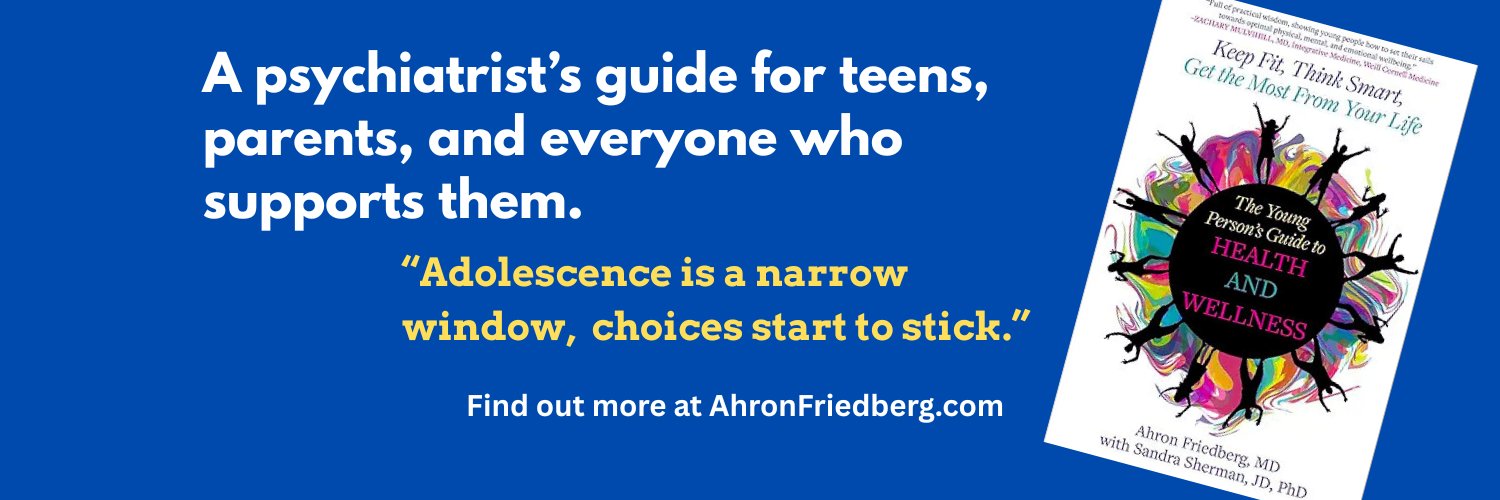
Adolescence is a narrow window: enough independence to make real choices, and enough plasticity to learn from them. That’s the window this book is written for. (link in bio)
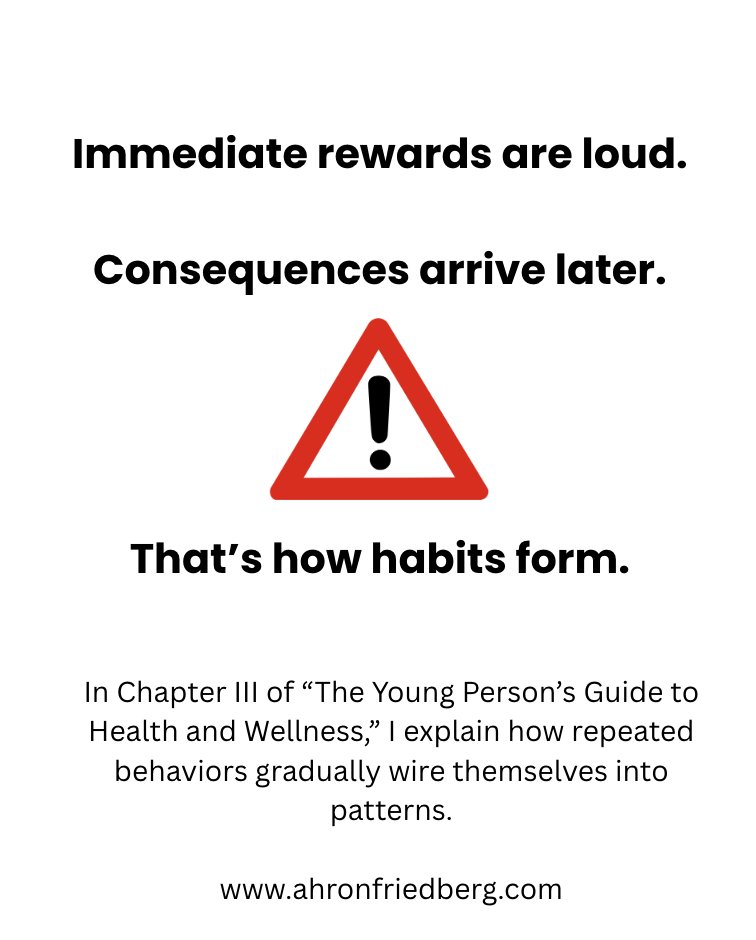
Teens aren’t careless. Immediate rewards are strong; consequences are delayed. Repetition does the rest.
From my work as a psychiatrist — explained in The Young Person’s Guide to Health and Wellness (Ch. III)
Good judgment isn’t knowing the right answer. It’s knowing when to slow down. In The Young Person’s Guide to Health and Wellness, I show how teens can learn this skill. (Ch. Three) @skyhorsepub
In Chapter III of ��The Young Person’s Guide to Health and Wellness,” I explain how repeated behaviors gradually wire themselves into patterns.
https://t.co/9Y1SGmWiXZ
In my work at the hospital and in my private practice, I’ve seen how early patterns solidify. My latest book explains why adolescence is a period of neurobiological plasticity—where repetition turns behavior into default.
As a father of three and a practicing psychiatrist, I wrote this book to help teens recognize one-way doors before stepping through them. Chapter I in my book explains why adolescence is a narrow developmental window.
Teens are often pressured to act as if everything is urgent. Most of it isn’t.
In Chapter III of "The Young Person’s Guide to Health and Wellness," I explain why pausing is a skill , not hesitation. In adolescence, repeated choices quickly become habits. https://t.co/9Y1SGmWiXZ
In Chapter Three, I focus on why slowing down matters.
Healthy habits don’t form all at once—they’re built through repetition. Learning to pause, think through consequences, and choose deliberately is one of the most powerful skills teenagers can develop.
In my new book, I explain to teens that one of the best decision tools is simple: what-ifs. Run possible outcomes through your mind before you commit. Easier said than done—but a powerful habit to build during adolescence.
Some choices really are one-way doors.
In adolescence, a moment can have a lasting impact—even if it doesn’t feel that way at the time.
That’s why learning to think ahead matters.
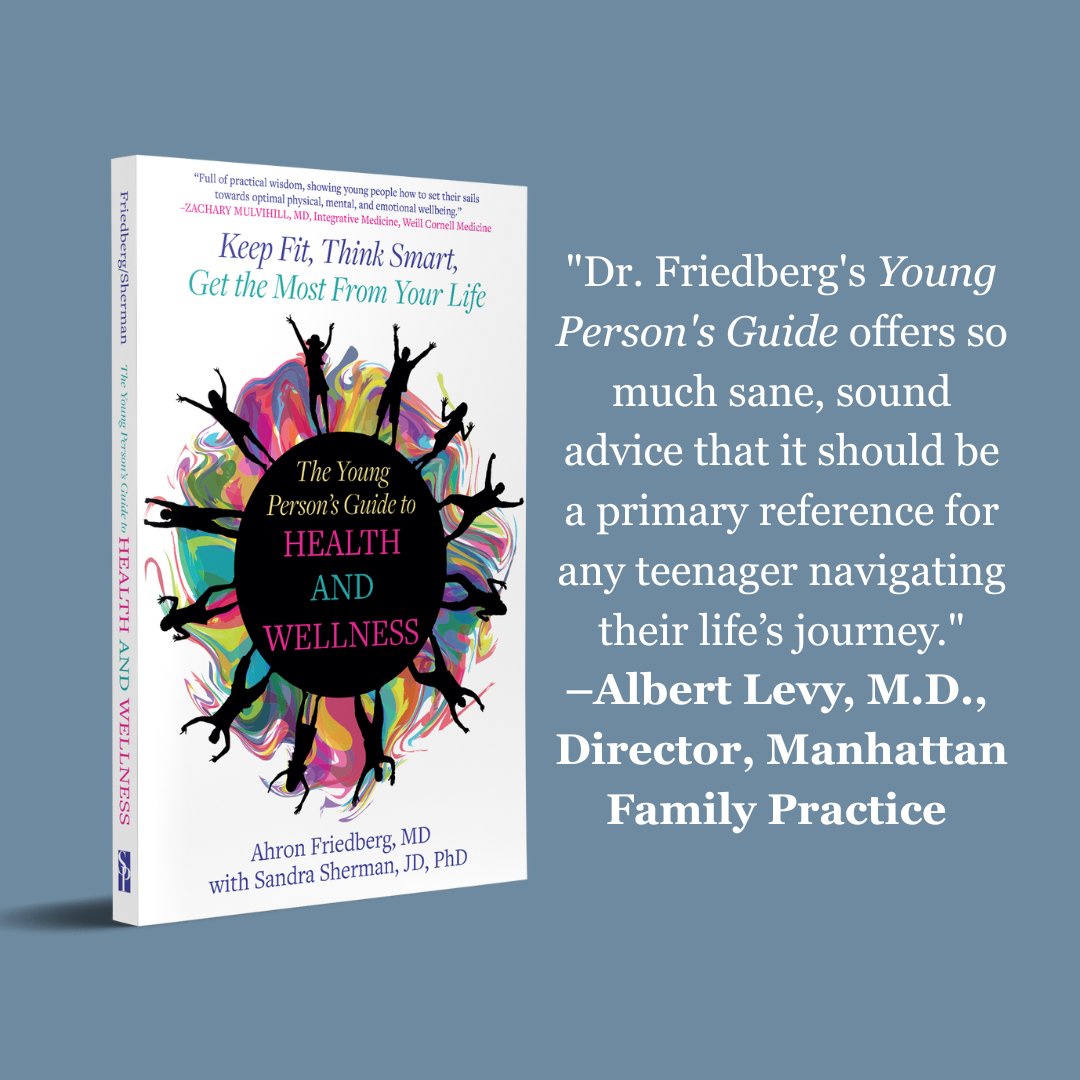
"The Young Person’s Guide to Health and Wellness" out now @skyhorsepub
Habits don’t start as habits.
They start as repeated choices.
One question can interrupt the process in teens before it hardens:
“Where is this leading?”
— The Young Person’s Guide to Health and Wellness
@SkyhorsePub
A habit isn’t “who you are.” It’s a repeated behavior that becomes automatic. Once it’s encoded, it’s hard to undo. Find out more here https://t.co/bKpGNTslt3
Thank you to Dr. @HeatherBerlin for this thoughtful endorsement. "Its mind–body approach is astute and perfectly integrated. The advice is practical, candid, and unflinching, addressing real-life topics that many books ignore.” @skyhorsepub
Good judgment rarely comes from knowing the “right answer.” For teens, it often starts with learning when to slow down instead of reacting—especially under social and emotional pressure. https://t.co/bKpGNTslt3