Try it Tuesday: How does sunscreen actuallywork?
Test the science of sun protection! For this week's #TryItTuesday, use construction paper and different SPF lotions to see how sunscreen shields surfaces from ultraviolet radiation.
Grab the guide here: https://t.co/edqB04MBwF
Monday's STEM Minute: Pollinators are responsible for 1 in every 3 bites of food we eat.
While honeybees support commercial agriculture, native species like bumblebees and mason bees protect biodiversity.
Explore the data with the USDA: https://t.co/VDLVAudCam
#ThrowbackThursday: On this day in 1889, Alexander Dey patented the dial time recorder. Workers rotated a pointer to stamp their hours on an internal drum. Dey’s business eventually merged to become a founding pillar of IBM.
Source: IBM Heritage:
https://t.co/wfh4LaOtvl
Try it Tuesday: How do scientists measure the Earthquakes?
Earthquakes send vibrations traveling through the Earth as seismic waves. Build your own working seismograph using simple materials to detect and record movement.
Grab the guide here: https://t.co/tS4GGfFhpk
Monday's STEM Minute: The Golden Gate Bridge spans 4,200 ft (1,280 m) using 2 cables made of 27,572 wires each.
Explore the stats with the Golden Gate Bridge District: https://t.co/7emUEQVdDT
Did you know the Air Force operates the DoD’s only disease-tracking lab?
Today's "What’s That -ology?" is Epidemiology (ep-ih-dee-mee-OL-uh-jee): the science of stopping disease spread.
Learn more: https://t.co/LlrQIRCeWg
Try it Tuesday: Have these rocks always looked like this?
Earth is constantly recycling its crust through heat, pressure, and erosion. Have you explored how igneous, sedimentary, and metamorphic rocks form and change?
Download the lesson here: https://t.co/pc0NXDtJUk
Monday's STEM Minute: The brain holds 86 billion neurons. Stretched end to end, its fibers span 100,000 miles (160,000 km)—wrapping Earth 4 times!
Watch this 3D scan of neural wiring by Harvard and NatGeo: https://t.co/rr3grIISXs
Read more from NINDS: https://t.co/tmQJ1rfUsE
#ThrowbackThursday: today in 2003, Fairbanks, Alaska activated a 1,300-ton emergency battery system. Still operating well past its 20-year lifespan, it has stopped over 30,000 outages while waiting for backup generators to boot up.
The utility stats:
https://t.co/qu3JIWGg3q
Try it Tuesday: How do we actually clean the water we use every day?
Students can build and test their own working water filters using everyday materials.
Watch the video tutorial: https://t.co/WWK3eWFwGV
Grab the step-by-step PDF guide: https://t.co/AA9wCC0JLp
Monday's STEM Minute: Is cinnamon dried tree bark?
True cinnamon is made from the inner layers of the Cinnamomum zeylanicum evergreen tree. As the material dries in the sun, it curls up into the shapes we know as cinnamon sticks!
Explore the spice: https://t.co/BV1tLiQsFE
Try it Tuesday: How does water actually shape the world around us?
Erosion is a slow but powerful force that constantly changes our landscapes. We have a hands-on DIY lesson to help recreate and observe this earth science process.
Learn more here: https://t.co/ZcfAMYdMTb
Monday's STEM Minute: What is a brain freeze?
Medically known as sphenopalatine ganglioneuralgia, it happens when cold food hits the roof of your mouth. Blood vessels shrink, then swell rapidly to warm up, triggering a nerve that tricks your brain into feeling pain.
Try it Tuesday: Can you find the stories written in the night sky?
People have been mapping patterns in the stars for thousands of years. We have a DIY lesson to help you build and view your own constellation models at home.
Grab the guide here: https://t.co/iaq2yJvq74
Monday's STEM Minute: Why Do We Close Our Eyes When We Sneeze?
Actually, it is just an involuntary muscle reflex! Your brain automatically coordinates a muscular response when you sneeze, which includes closing your eyes.
Read the full breakdown here: https://t.co/t8UR3StZv4
ThrowbackThursday: On this day in 1996, NASA announced potential evidence of life on Mars inside meteorite ALH 84001. The "fossil" evidence was later disputed, but it funded the modern Mars exploration we see today.
https://t.co/53Kqe8H2c2
https://t.co/Y9PmBSlXGX
Try it Tuesday: How do clouds actually form in the sky?
We see them every day, but how does condensation work? We have a hands-on DIY lesson that lets you create a real cloud in a bottle to find out.
Grab the step-by-step guide here: https://t.co/xgas3AahEc
Monday's STEM Minute: Your ears are responsible for your balance!
Deep inside your ear are tiny fluid-filled tubes. When you move, the fluid sloshes around and tells your brain exactly where your head is. It is why spinning makes you dizzy—the fluid keeps moving after you stop!
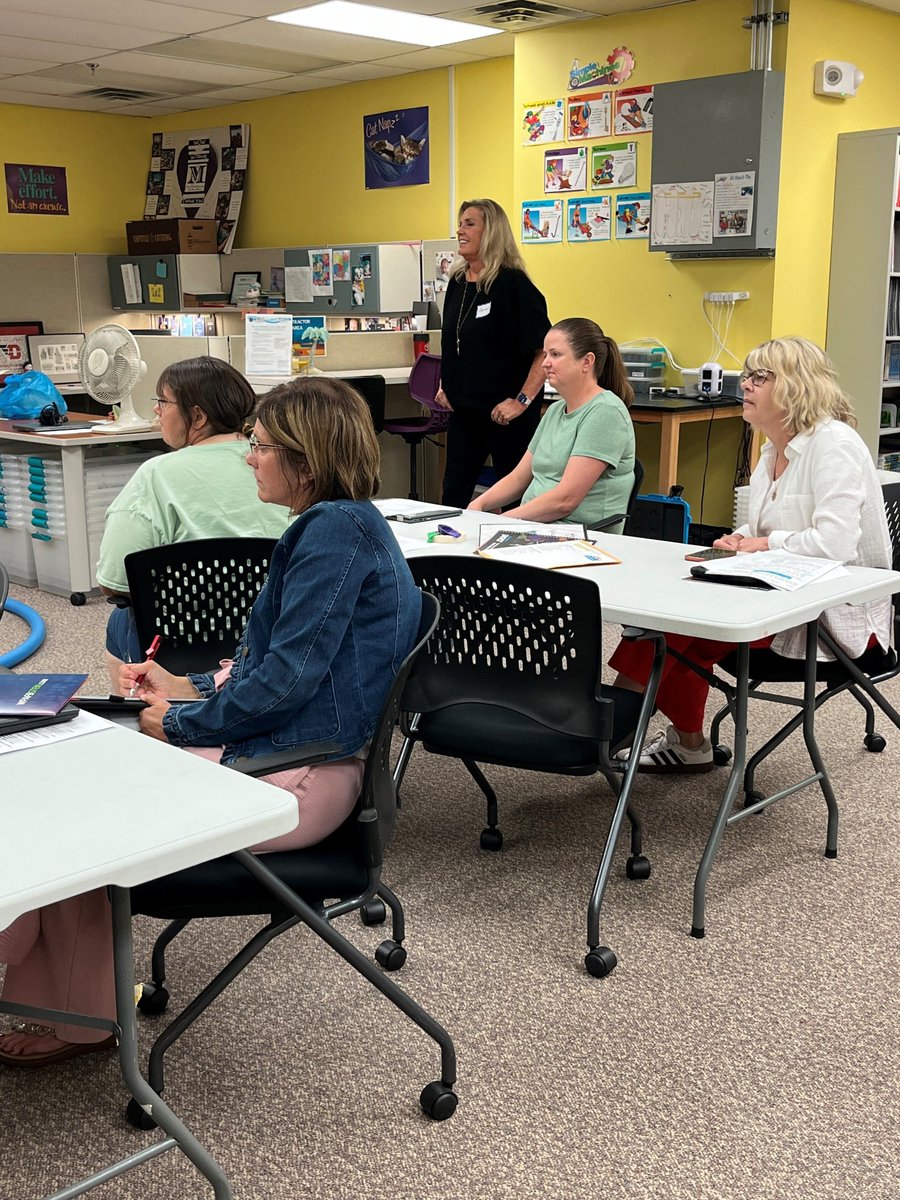
Huge thanks to our Expert Teachers at last week's Device Discovery Day! They showed educators how to engage students using tools like Sphero, Ozobots, and Makey Makeys, getting everyone excited and ready for the new school year.
On this day in 1872, Dr. Mahlon Loomis received U.S. Patent 129,971 for wireless telegraphy. He proved it using copper-wired kites, decades before Marconi.
His story: https://t.co/YpzRXFg5uH
Patent diagram: https://t.co/vmOnZyrB2K