The Architecture of Habit: How Ecologies Shape Careers 🧵
When looking at how traditional ecologies, speech, and habitus quietly sort people into specific modern professions, for Kenya, I'd split the human landscape into 3 major groups. The core principle is simple: every community builds its tools, its speech, and its temperament to match its landscape. When you look across the cultural map, distinct groups share a deep structural architecture—not just in how they survive, but in how their traditional ecologies quietly sort them into specific modern roles:
1) The Luo & Bantu (The Dense-Village Farmers):
Close-knit rural villages, shared markets, and high-potential agricultural valleys. Living cheek-by-jowl builds verbal agility. Masters of law, public advocacy, politics, media, administration, and institutional leadership. 🏛️📢 (Deep dive below)
The Maasai & Cushitic (The Open-Horizon Nomads):
Vast savannahs, arid lowlands, nomadic pastoralism, and long trade routes. Commanding oratory breeds leaders in statecraft, diplomacy, international commerce, brokerage, and high-endurance security. 🐪📜 (Deep dive below)
The Kalenjin (The Highland Calculators):
Dispersed ridges, solo tracking, quiet coordination.Hermetic, loners.
Understated and exact. Channels talent into engineering, elite athletics, military tactics, and precision trades. 🪖⚙️ (Deep dive below)
Observation
Very few Kalenjins are among legal professionals. Or rather, very few successful/visible Kalenjins in the legal field. For instance, the 9-member Committee of Experts (COE) that prepared the harmonized draft leading to Kenya's 2010 Constitution had no Kalenjin.
Even in University lecture halls, you'll get them lecturing lighter units like Bible for Lawyers or Social and Personal Skills for Lawyers
Kalenjins dominate in Engineering and Teaching though
Listen to what Wantam Senator Edwin Sifuna is defending on national television. Is this the freedom he is being advocating for? A clear case of arrogance fueled by ignorance.
Kenya’s MICE sector is getting a major upgrade. The Sh31 billion Bomas International Convention Centre (BICC) is now set to officially open in January 2027.
With an 11,000-delegate capacity, the mega-facility has already locked in major advance bookings—including AFCON 2027, a UN agency, and KEBS.
Key highlights:
🔹 Sh31 billion multi-phased state investment supervised under KDF project management
🔹 11,000 capacity: Main auditorium, 35 breakout rooms & 30-head-of-state presidential pavilion
🔹 Strategic corridor: Positioned off the Southern Bypass & Wilson Airport to ease pressure on KICC
A direct move to scale Nairobi’s capacity for high-density global summits and compete head-to-head with Kigali and Addis Ababa.
@CharlieTTEcon, in his Time-Travelling Economist book, makes the case that countries start to flip when they stop relying on expensive foreign capital and debt, and instead mobilize domestic savings.
NSSF & NIF are a good start. The real scale comes when families are smaller, and then the demographic dividend kicks in.
Domestic savings have real advantages. Wall Street and London hot money is a wrecking ball. It comes and goes at the switch of a button, and it leads to bankruptcy when they pull the money & USD goes berserk on you.
We saw it with tech startups recently when KES went from 100 to 160, nearly doubling foreign debt and making it impossible to repay in KES. They went belly up.
Many African governments and private companies who have borrowed externally know the kind of exogenous risk they expose themselves to when you're doing business in KES — and expected to repay in dollars or euros you don't earn.
Chile is a good example. Private pension reforms mobilized long-term savings to finance private and public investment. That led to jobs, growth, industries, infrastructure, and more.
Domestic savings beat external debt or FDI (which must be repatriated).
PSSS and NSSF will have circa Kes 800B (800,000,000,000) at the end of this year. Most of this today is invested in Government bonds and securities.
A modest 5% - 10% of this (Kes 40B- 80B) can seed a debt & or equity fund to on lend and invest in small and medium enterprises ( the creators of 70% of the jobs for Kenya’s economy). On lending can be through existing financial institutions. This can guarantee credit at below 10% to SME’s that are borrowing at 20% -100% today if and when they get a loan.
@kmrc_co has succeeded in housing. The same can succeed with SME’s. More funding, means more sales, more individual incomes, more jobs, more exports and even more growth for the economy.
Several countries have done this.
@Phillip05166897, like Negritude scholars, your arguments shift. Last month, the Dogon were Sudanic, associated with basal Es. Today they are Niger-Congo?
Likewise there is no basis of Sudanids based on genetics to be A/B associated when the most basal ethnolinguistic Sudans are the Dogon who actually have basal E lineages. Mota/Ari/Surmic DNA likewise associated with upstream branches of E-V38 and E-M75.
This was peak gullibility test.
Also your reminder to not engage anyone who doesn't know how Google works, or anyone who reposts Gemini summaries with confidence & no attempt to open even a single linked article.
The World Bank’s IFC is buying a 6.5% stake in Quickmart for Sh1.9 billion through its Sh15 billion IPO.
This follows IFC, DEG, Amethis and MCB Equity Fund buying 31.5% of Naivas for Sh6 billion in 2020 and selling the stake in 2022 for Sh15.5 billion.
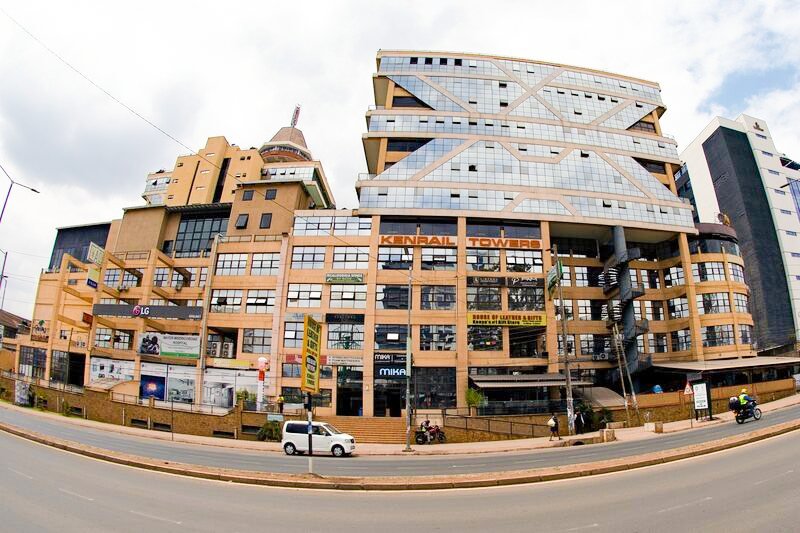
I know it looks better but this building reminds me of one seriously ugly building in Kenya; Kenrail Towers. The second ugliest in Ke after SHA HQ.
A series of boxes with different design languages stacked as if drawn by a 10-yr-old.
Could be an ugly building in the end.
Kenyan Banks with Women CEOs, silent but doing great work:
1. UBA Kenya (@UBA_KE) ~ Mary Mulili
2. KCB Kenya (@KCBInKenya) ~ Annastacia Kimtai
3. Diamond Trust Bank (@DTBKenya) ~ Nasim Devji
4. Family Bank (@FamilyBankKenya) ~ Nancy Njau
5. Credit Bank (@CreditBankPLC) ~ Betty Korir
6. Ecobank (@EcobankKenya) ~ Rebecca Mbithi
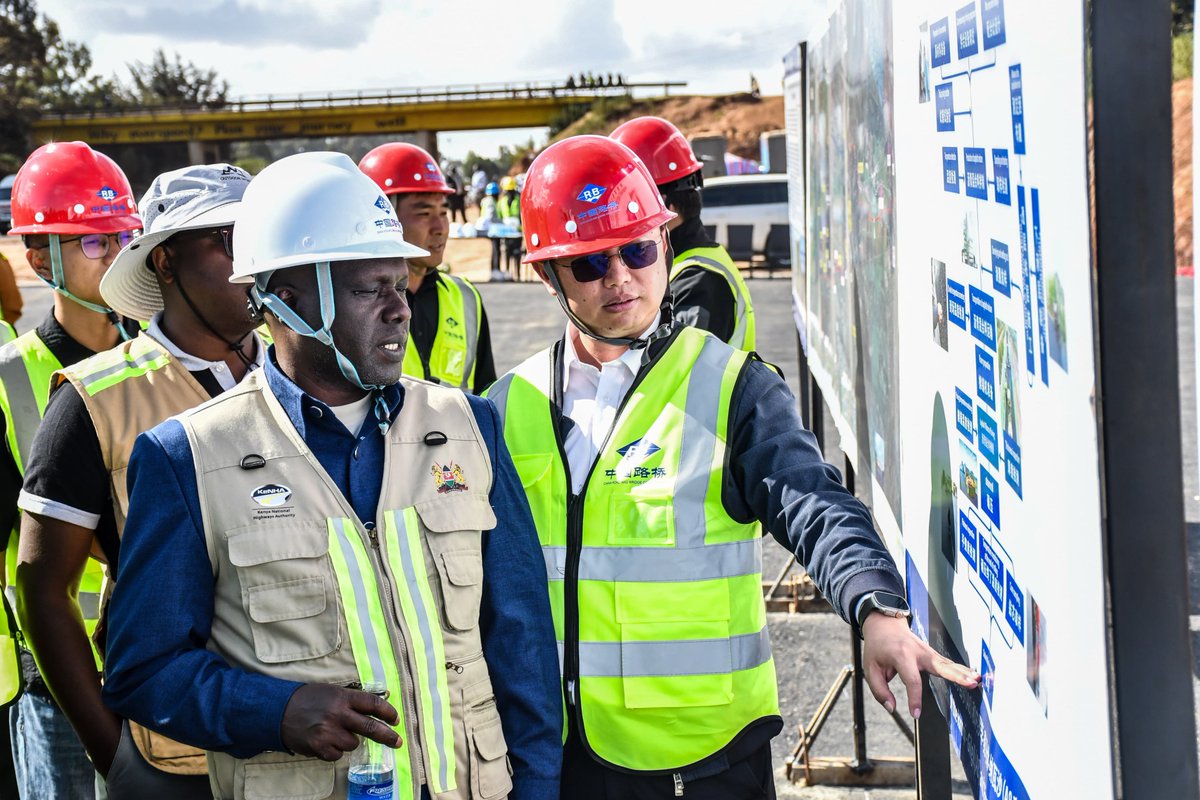
For these companies at #TatuCity, the choice is about more than location - it’s access to reliable infrastructure, SEZ incentives and a platform for long-term growth.
Their investments are creating local job opportunities and strengthening Kenya-China economic ties.
Ebola and South Africans aside: Gen Zs are starting to see the lie they’ve been told since 2024! Listen keenly to Sophie Mugure’s Wisdom! DCP and the opposition represent the same monkeys that have been part of the same forest! How do we expect change as Gen Z if they’re the same people? So Ruto goesand then what?
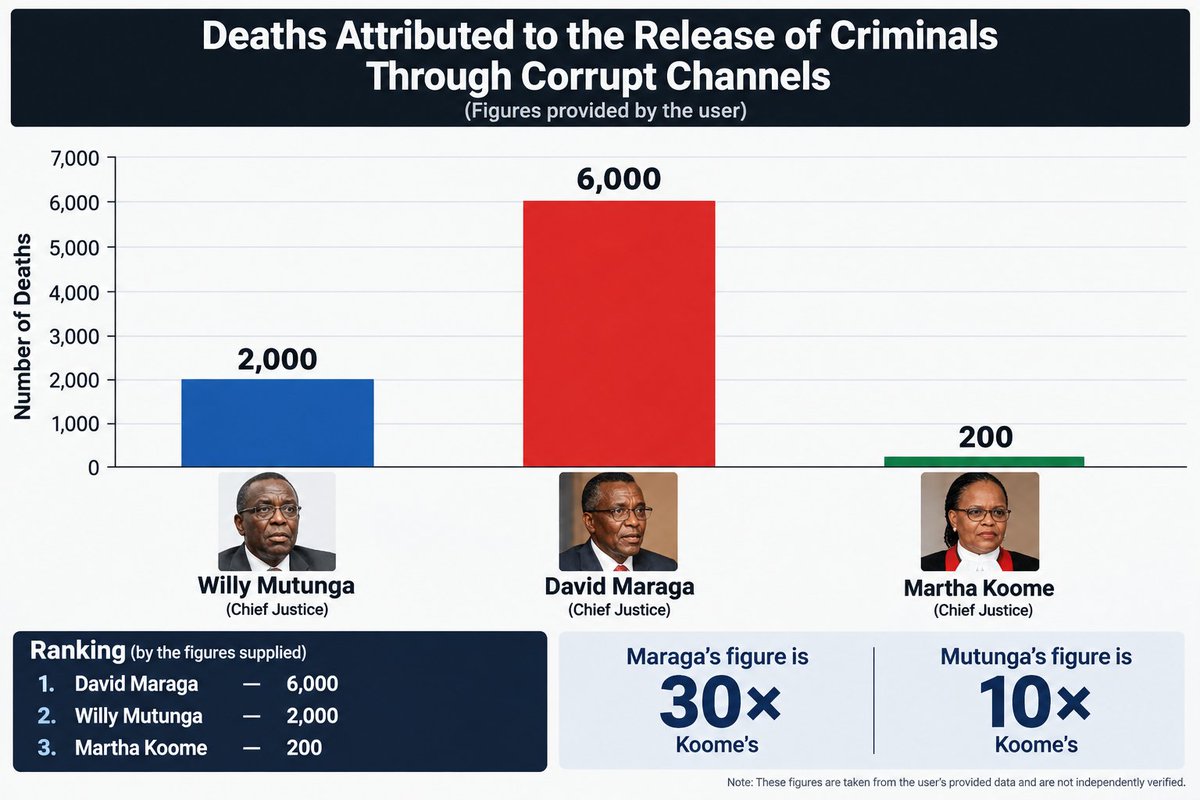
When I say Kenyans loathe Maraga with passion, this is what I mean. The death and destruction of Maraga’s tenure as chief justice was the worst by every metric. Even the Supreme Court justices in the US that legalised slavery cannot be compared the negative and the damage Maraga's tenure brought to this nation.
Cc: @CommentinKenya@MihrThakar@NjeriBt@ahmednasirlaw@DavidNdii @bygones_24 @Chalbiwsk
Herman Manyora has suspended peace, calling the Azimio la opposition a group of jokers. He added that Ruto was right when he said, HAO NI WATU BURE KABISA!
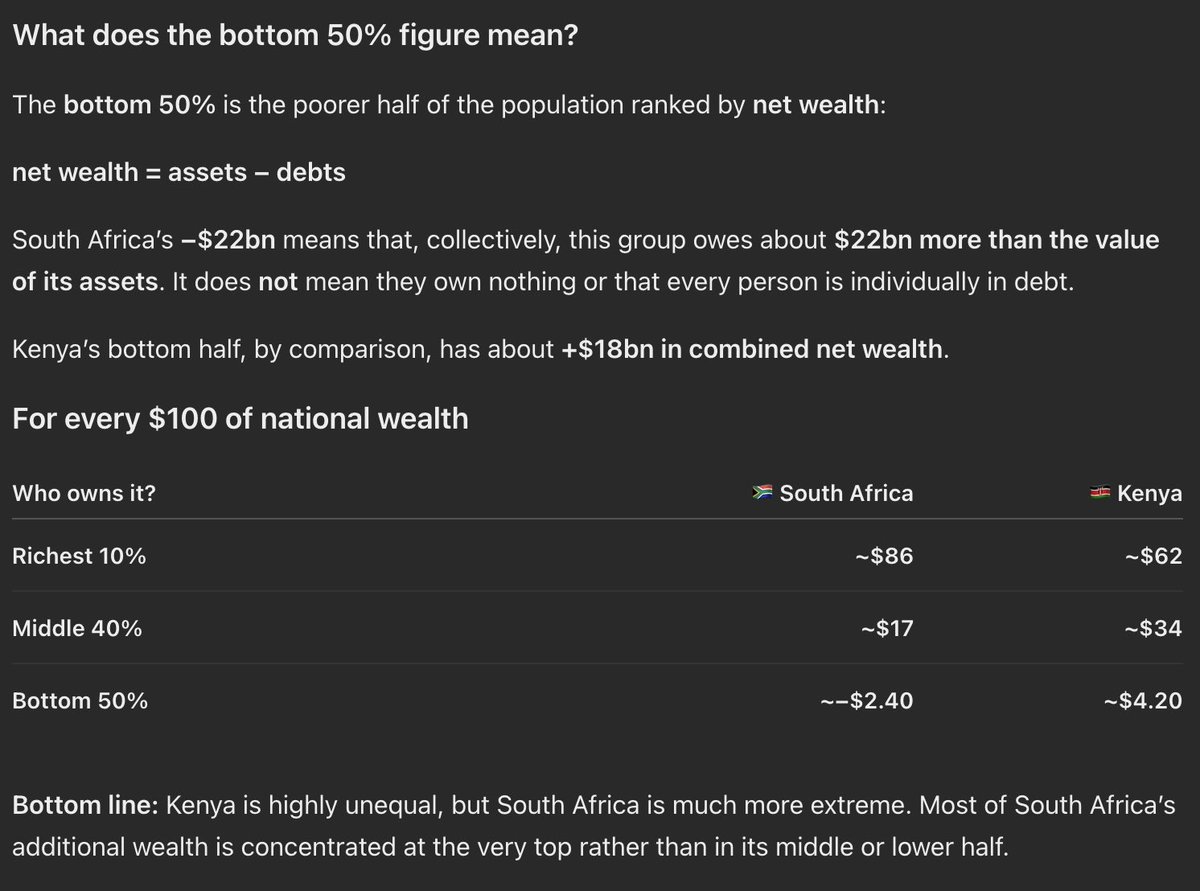
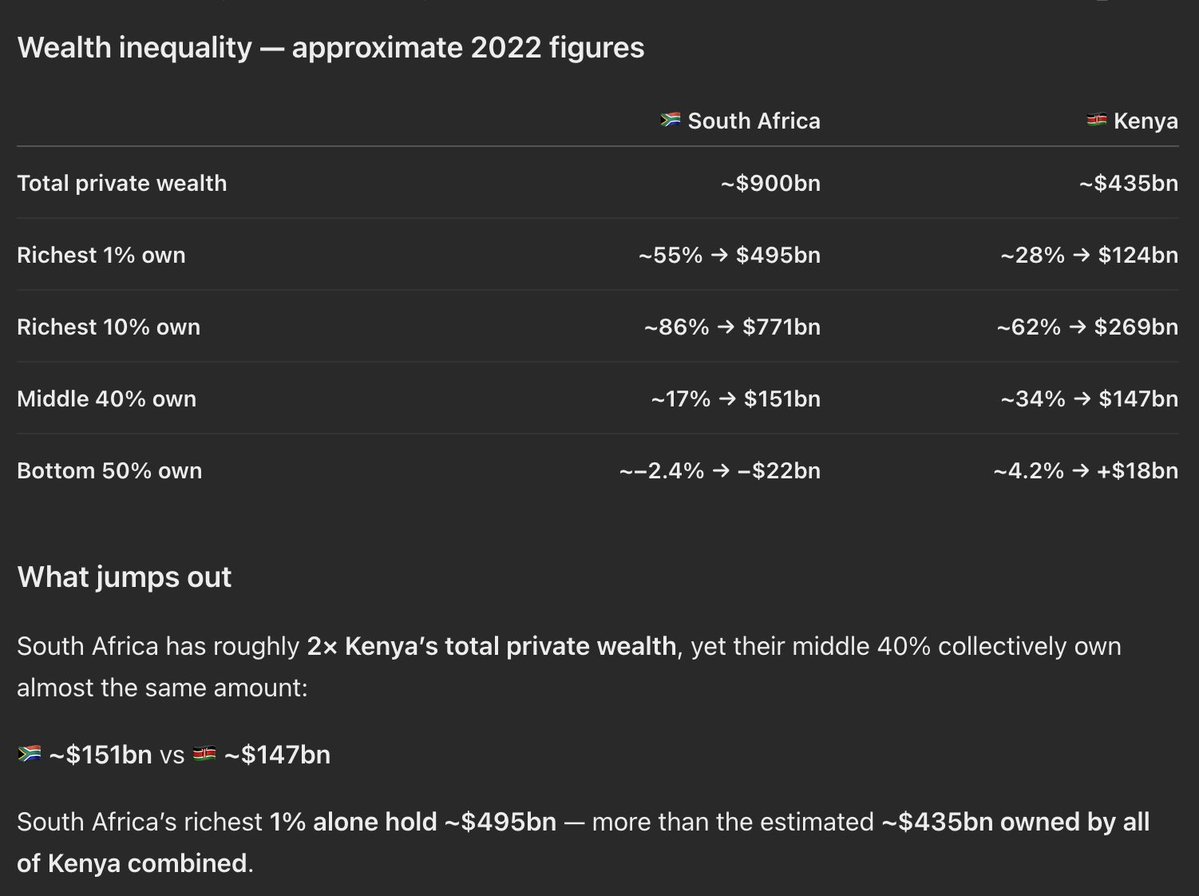
When I say people underestimate wealth inequality in 🇿🇦, this is what I mean: the middle 40% in Kenya and South Africa hold roughly the same amount of total private wealth, while South Africa’s bottom 50% have negative net wealth, compared with positive net wealth in Kenya
Airtel Money is planning to launch a virtual card in Kenya to rival Safaricom’s M-Pesa GlobalPay.
The new card, offered in partnership with Mastercard, will allow customers to make international online payments directly from their Airtel Money wallets.