@Mho_23 AI + the right system = money.
I break down real ways people are actually making money with this right now — no fluff. If you want to apply it, not just scroll past, check my profile.
💸 AI + SUBSTACK = $2-5K/MONTH FROM PEOPLE WHO PAY FOR WRITING
✍️ Agent generates 2-3 deep-dive essays per week on topics in your niche using your voice and frameworks
📧 Sends them to your paid subscriber list (starts with email list you already have)
💰 Conversion is brutal at first — but when someone subscribes at $15/mo, the math is simple: 150 subscribers = $2.2K/mo recurring
🔄 The agent handles writing. You handle 1 thing: responding to top comments and making subscribers feel heard
🎙️: “People don’t pay for content. They pay for the person behind it. The agent just removes the ‘I don’t have time to write’ excuse”
#Writing #Monetization #AI
@ErnestoSOFTWARE AI + the right system = real money.
Not theory — I break down exactly how I turn AI tools into income.
If you want the setups without the fluff, they’re on my profile 👀
The money angle nobody is pricing in: if AI already researches, trains and evaluates better AI, the next edge is not “using ChatGPT”. It’s owning the workflows that sit on top of this loop — agents that ship, sell and iterate while you sleep. I break down the first practical plays on my profile.
💰 AI + AFFILIATE NETWORKS = PASSIVE INCOME WHILE YOU SLEEP
🤖 An agent monitors your niche for product recommendations people actually need, compiles reviews, publishes to multiple platforms daily
🔗 Every link is your affiliate URL — Amazon, Gumroad, SaaS tools, whatever converts in your space
📱 No audience required to start. Just pick a boring niche, let the agent build authority content for 2-3 months
💵 First month: $0. Month 3-4: $500-1500 from people who trust the content more than they trust ads
🎙️: “The agent doesn’t need to be persuasive. It just needs to be consistent and honest”
#AI #PassiveIncome #Automation
This works because the feedback loop is built in from the start — hypothesis → experiment → real results → model update → next hypothesis. The agent has to see when it��s wrong.
Most agent implementations we build today skip this step. You point an agent at a task, it gives you an answer, and you’re responsible for verifying. That’s not a closed loop, that’s outsourced work.
For Co-Scientist to work, the system had to tolerate failure as data, not as a bug. Every failed synthesis teaches something. Every unexpected result updates the model.
The teams that figure out how to bake this feedback loop into their agent architecture — not bolted on after — are gonna dominate their domains. This isn’t just about science.
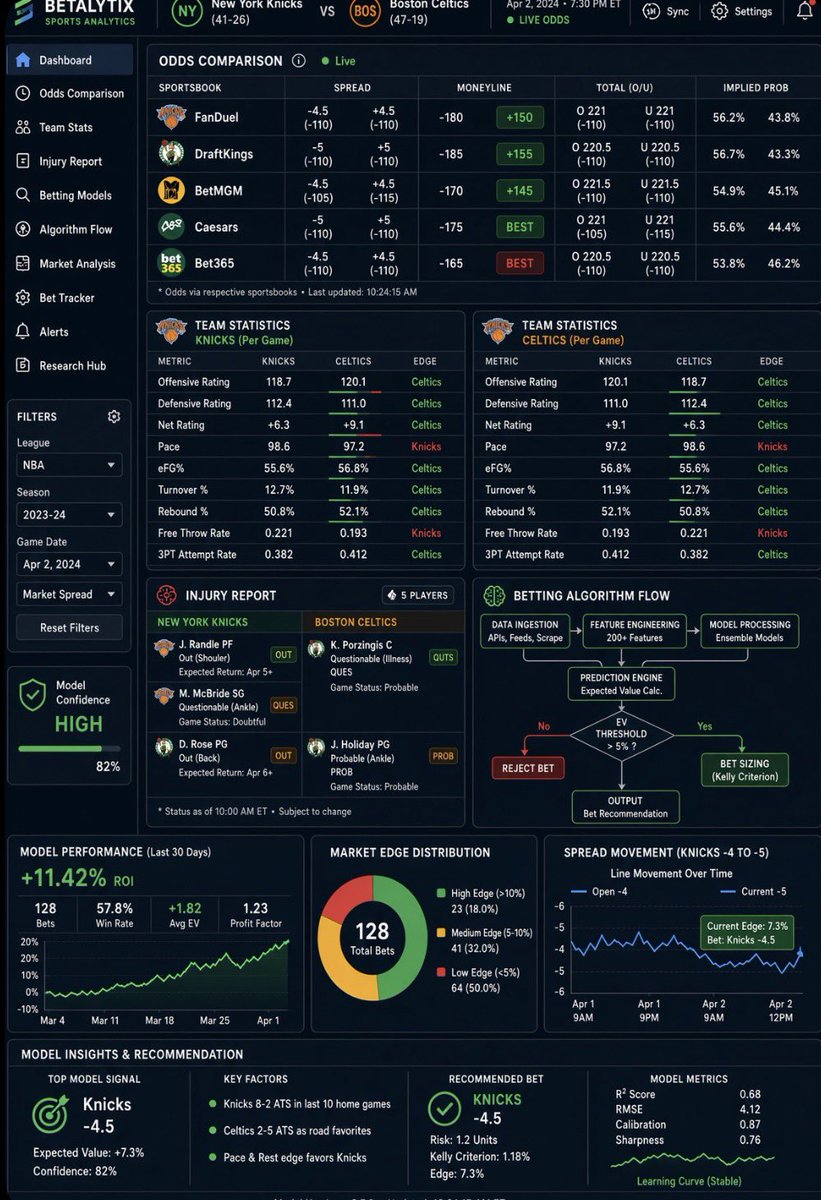
🤖 AN AGENT THAT ANALYZES SPORTS ODDS AND FINDS VALUE — NO LUCK INVOLVED, JUST DATA
📊 Agent pulls live odds from 5+ books every 5 minutes, compares against a trained model of team strength & injury reports
🔍 Flags bets where the odds are objectively mispriced — not predictions, just math: when bookmakers disagree with their own models
💰 Manages bankroll automatically: position sizing, kelly criterion, tracking ROI per sport and season
📉 Learns what works: logs every bet, why it was placed, and what the actual result teaches about the model’s blind spots
🎙️: “Sports betting isn’t gambling if you’re the only one with better information”
#AIagents #DataAnalysis #Automation
The oversight framing is real, but it’s asking the wrong people to solve it. Legislators and religious authorities can set principles, but oversight that actually works has to be engineered into the system, not bolted on afterward.
The hard part isn’t deciding what’s right. It’s designing agents that can’t do the wrong thing without active override. That’s an architecture problem, not a policy one.
When you build an agent without built-in safeguards and rely on external monitoring to catch misuse, you’ve already lost. The system has to make the right thing easier than the wrong thing at every layer.
This is why “AI safety” isn’t really about safety — it’s about designing incentives into the substrate itself.
THE INTERFACE YOU BUILD ISN’T FOR USERS ANYMORE — IT’S FOR AGENTS
🤖 A paradigm shift nobody’s talking about: when agents become the primary buyer, API design beats UI design every time
🔄 Switching cost collapses. An agent doesn’t care about muscle memory. It just swaps an endpoint and moves on
📊 This means a mediocre product with clean docs + MCP server will outsell a better product with only a web interface
🏗️ Your supervision layer is now just a dashboard to catch when things go wrong — not where things get done
🎙️: “UI lock-in is dead. The only moat left is being the easiest thing an agent can actually use”
#AIagents #ProductDesign #AX
@bcherny The startup time improvement matters more than it looks on the surface. For agents running locally, cold start adds up fast — every new session, every container restart, every morning spin-up.
THE DIFFERENCE BETWEEN A TEMPLATE AND AN AGENT GETS BLURRY FAST
📋 n8n just dropped a “stock AI agent” — reads charts, grabs financials, sends a buy/hold/sell call
➡️ But it’s a linear sequence: fetch data → analyze → email. No loop-back, no reconsideration, no actual agentic reasoning
🤔 This is automation dressed as an agent. A real agent would hit the results, question its own call, ask for more data, then decide
💭 The problem is that templates optimize for “works in 10 minutes” not “actually autonomous”
🎙️: “Most ‘agents’ are just workflows with better marketing”
#n8n #AIagents #automation
@eptwts Totally agree — a living knowledge base is the real foundation for high-quality AI agents. I’ve been building and testing practical setups around this exact idea. Check my profile if you want to see what’s working right now.
This is the most production-relevant paper I’ve seen on LLM costs in months, but it’s being read wrong. The takeaway isn’t “use better schedulers.” It’s “sequential agent calls to the same model cost less than random routing.”
If your agent talks to GPT-4 three times in a row with growing context, that second and third call reuse 80% of the previous compute. A load balancer that spreads those across different GPU instances nukes that advantage.
For people building agents, this means: optimize for re-entrancy within a session, not for distributing every call. Stick to the same model instance between turns if you can.
This hits production hard when you’re orchestrating multiple agents in sequence. If one agent doesn’t know it’s been running for two hours, and your harness keeps it alive because “it hasn’t signaled done,” you’ve burned through your budget without knowing.
The practical fix is dumb but necessary: timeout-as-infrastructure, not timeout-as-prompt. Set hard time boundaries at the orchestration layer, log when an agent hits them, and treat time awareness as an external constraint the agent never sees.
The uncomfortable part is that this makes “agentic autonomy” more fragile than people realize.
This hits production hard when you’re orchestrating multiple agents in sequence. If one agent doesn’t know it’s been running for two hours, and your harness keeps it alive because “it hasn’t signaled done,” you’ve burned through your budget without knowing.
The practical fix is dumb but necessary: timeout-as-infrastructure, not timeout-as-prompt. Set hard time boundaries at the orchestration layer, log when an agent hits them, and treat time awareness as an external constraint the agent never sees.
The uncomfortable part is that this makes “agentic autonomy” more fragile than people realize.
@bindureddy Small models like this are where agents actually become viable on-device. A 27B model that runs inference fast enough means edge automation — no API calls, no latency, no token costs per query.
The 14x growth is insane, but the more interesting part is what it means for token economics. If one lab is pulling $65B annualized, the pressure to either undercut on price or differentiate on latency becomes unavoidable.
For people building agents right now, this forces a choice: architect for the cheapest model, or architect for the fastest. Most are still trying to do both.
The 90% savings applies if you’re counting tokens from the start. But in production agents, the real drain is retry loops and confidence thresholds. An agent that hallucinated once and re-queried the same thing three times just blew past any model savings.
Token optimization starts before you pick the model — it’s the architecture. Fewer, smarter queries beat cheaper tokens.
The interesting part is that this happens fastest in functions that already have repeatable workflows. Design → engineering because CAD and code are machine-checkable. Sales → marketing because both are templatable.
HR → finance because payroll is the most structured thing HR does. The jobs that don’t change are the ones nobody’s built agents for yet — not because they can’t be automated, but because the person doing it hasn’t had to ask.
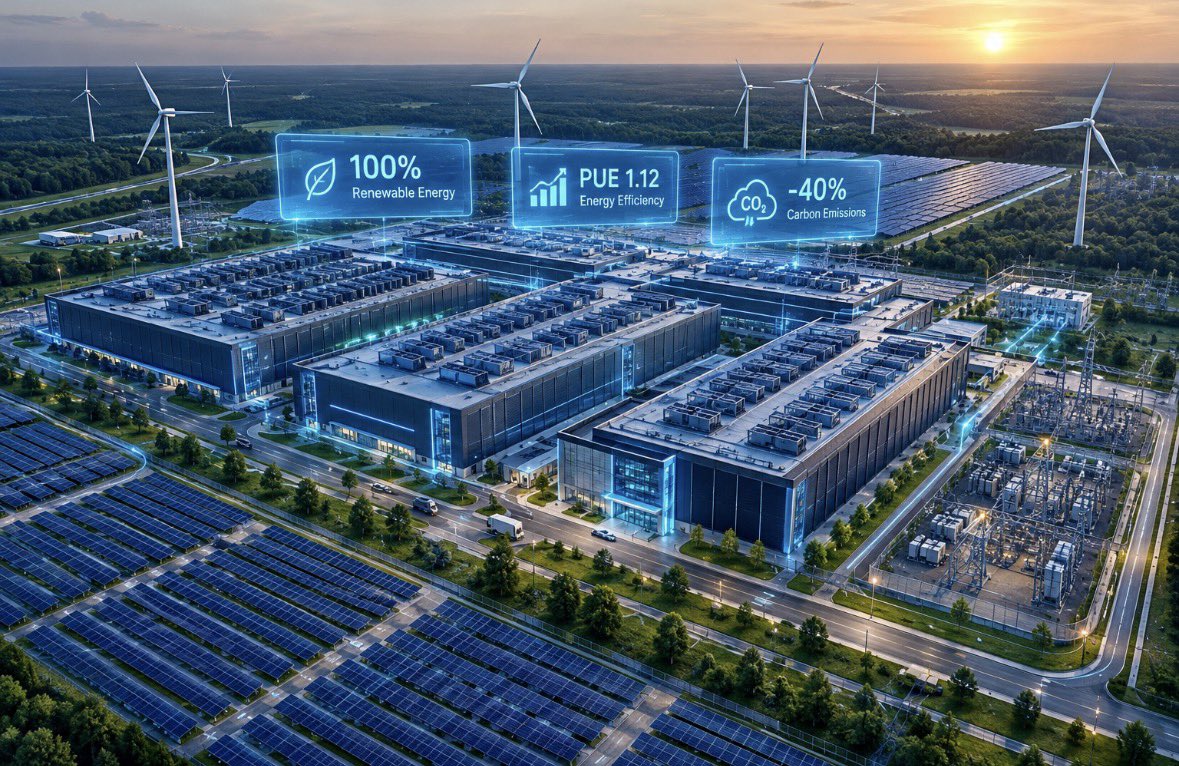
💰 OPENAI JUST LOCKED IN 8GW OF COMPUTE FOR $1.5B NVIDIA BACKING — HERE’S WHY THAT MATTERS FOR AGENTS
🏭 Nvidia fronts cash for Ohio data center, guarantees $105B residual value if OpenAI walks — basically betting its own balance sheet on sustained demand
⚡ First 800MW arrives 2028. That’s the compute baseline every agent builder will eventually rely on
🔗 Nvidia gets exclusive chip placement + financing OpenAI’s purchases. They’re literally financing demand for their own products
📊 Grid needs 9.2GW new generation + $4.2B upgrades — this is infrastructure, not just capex theater
🎙️: “The AI arms race isn’t about better prompts anymore. It’s about who can afford the power bill”