A-Goal works to generate insights to drive evidence-based advocacy and shift public sentiment from frustration toward citizen-centred service delivery.
@NewsCentralTV This insightful comment by this young boy covers a lot of ground, offering a powerful and emotional perspective on this matter. This terrible incident must be fully addressed, including criminal prosecution of the perpetrators.
We condemn in the strongest terms the reported deaths of 37 miners -including young people- at the NSCDC facility in Minna, Niger State.
The government must thoroughly investigate this tragic incident and swiftly prosecute those responsible.
We insist that this must not be swept under the carpet.
Apart from DG NAFDAC's highly inappropriate laughter, it is instructive that the successes she mentioned were financial achievements, the agency's maturity level, and membership in select bodies.
Of course, these are important, but when assessing an agency’s performance, we must always return to the mandate. Even the NAFDAC name emphasises that the agency’s main purpose is food and drugs administration and control. That is what we must judge NAFDAC by, in addition to the functions set out for it by law in Section 5 of its establishment Act, none of which are financial, by the way.
So the real test of success should be: What is the prevalence level of fake and substandard medicines, food, drinks and cosmetics in Nigeria?
Dora Akunyili brought down the prevalence of fake drugs from 41% to 10%. I believe that Paul Orhii further brought it down to 8%.
Today, the Association of Community Pharmacists of Nigeria and the Pharmaceutical Society of Nigeria say that independent research shows that 50% of drugs in circulation are fake, falsified or substandard! NAFDAC disputes this and says it is only 15%, presumably based on its own sampling. But even if we were to go with NAFDAC’s figures, it is clear that we have regressed as a country.
The focus of an agency must always squarely be on its core mandate. Yes, financial performance, organisational maturity and membership of select groups are important but they pale into insignificance if the core mandate is not being delivered.
You can have a very well-run organisation with shiny financial and organisational statistics but that is not fulfilling its mandate. On the other hand, you could have an agency that is delivering its mandate and saving lives but is managed in a disorganised fashion. If the public were forced to choose only one out of the two agencies, the choice would be clear.
My honest opinion is that NAFDAC has been overwhelmed and needs help. NAFDAC should retain the setting of standards to ensure uniformity but the Constitution should be amended to enable state governments to enforce those standards jointly with NAFDAC.
Of course, it is only drugs and poisons that are on the Exclusive Legislative List. A state government can control food and drinks in its domain and the bigger killers now appear to be adulterated foods and drinks, even more than fake drugs. State governments should do more to protect the lives of their people.
I am Ezemmuo. I know things.
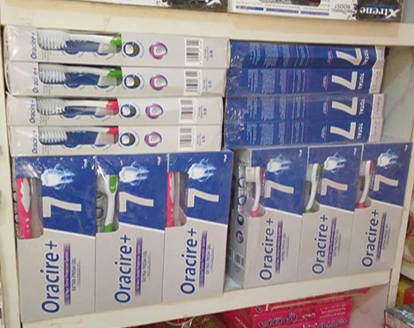
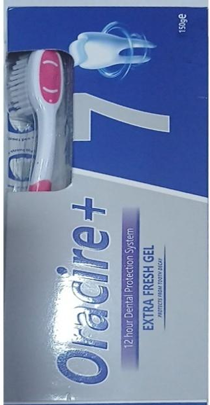
Last week, we amplified public complaints regarding lookalike toothpastes.
Why did it take NAFDAC days to act? Bureaucratic processes: official case logging, laboratory testing, administrative meetings, and regulatory procedures. However, it is encouraging that action is now being taken.
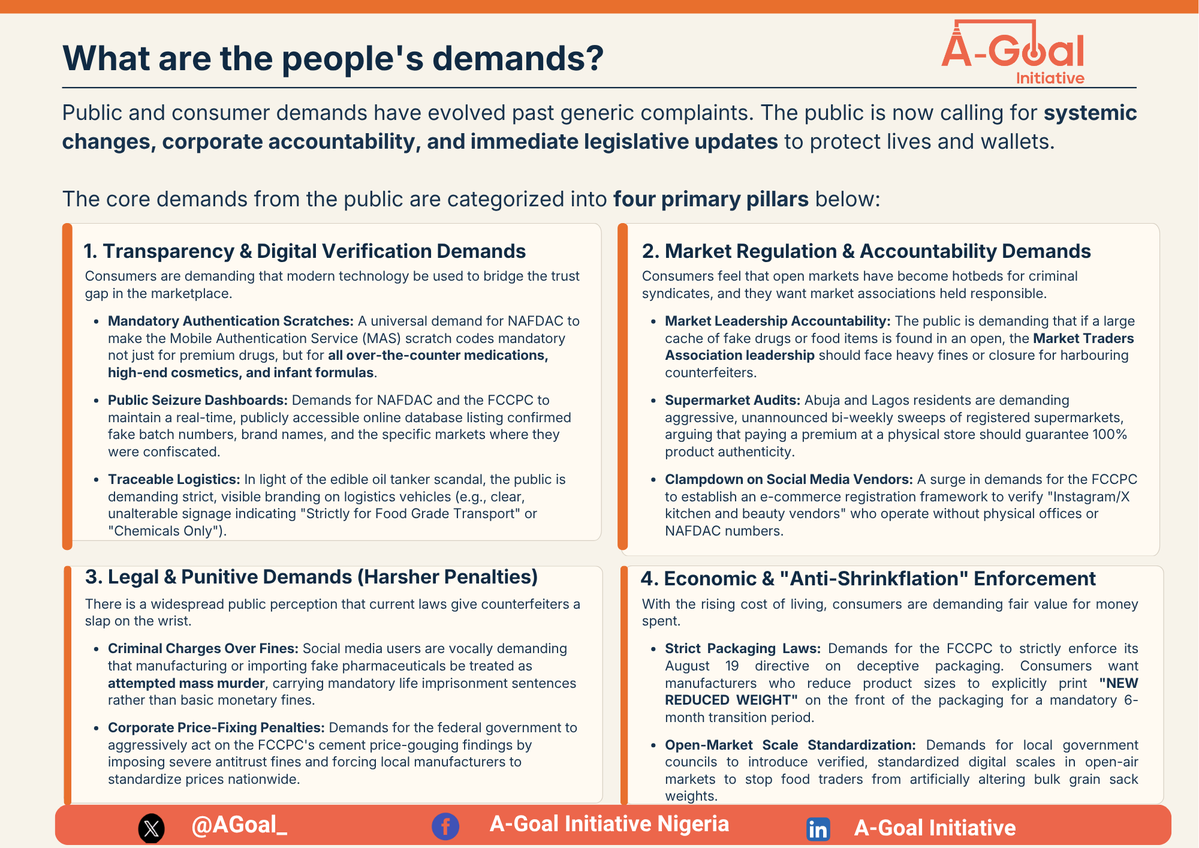
The public is demanding strict penalties for markets and their respective market association leaders wherever fake products are uncovered.
Check our handle @AGoal_ for detailed analysis regarding the growing public concern over fake drugs and consumer goods in Nigeria.
Last week, we amplified public complaints regarding lookalike toothpastes.
Why did it take NAFDAC days to act? Bureaucratic processes: official case logging, investigation and laboratory testing, administrative meetings, and regulatory procedures. However, it is encouraging that action is now being taken.
The public is demanding strict penalties for markets and their respective market association leaders wherever fake products are uncovered.
See more below and head over to our page to read more about fake consumer goods in Nigeria.
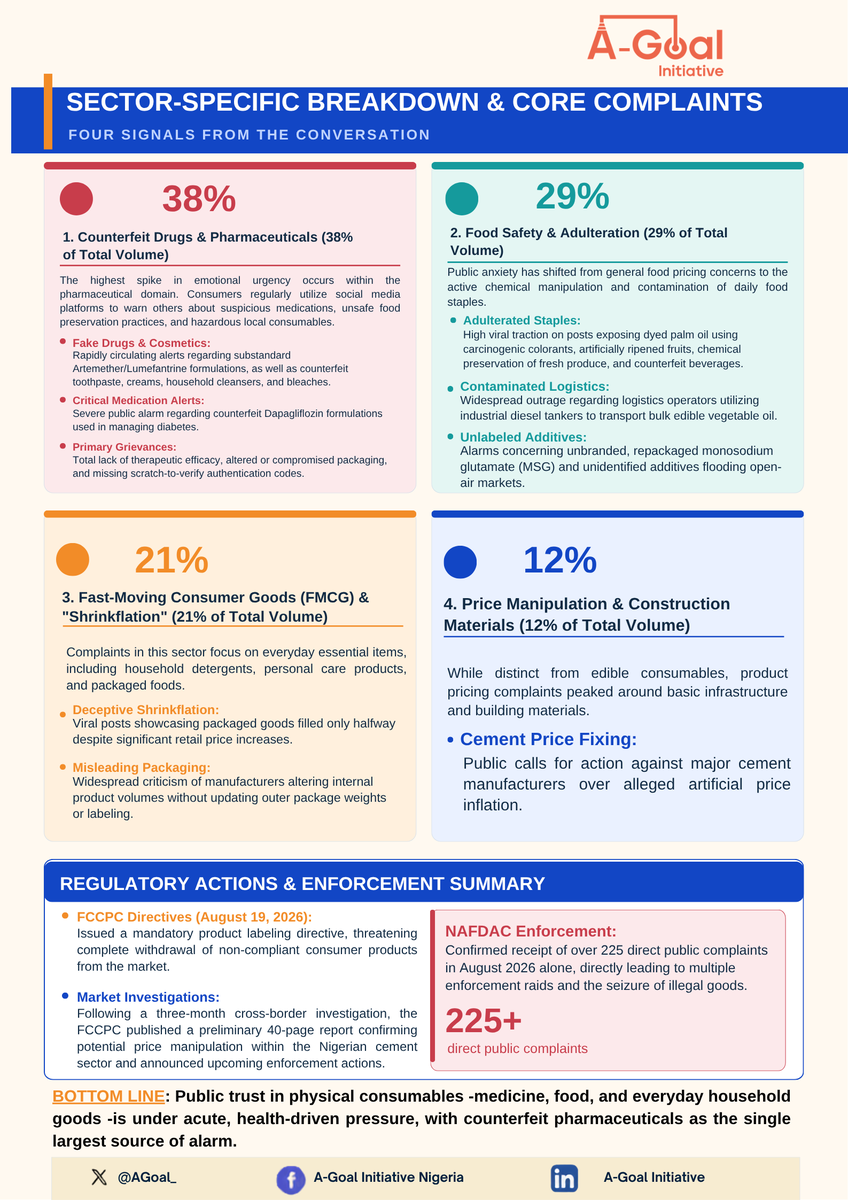
Public trust in physical consumables is under acute pressure driven by health concerns.
The Red Flags:
💊 38% Pharmaceuticals: Fake diabetes meds (Dapagliflozin) & lookalike toothpastes.
🍏 29% Food Safety: Chemicals in Palm Oil and Fufu as well as unlabelled market additives.
🧴 21% FMCG & Shrinkflation: Half-filled packages with doubled price tags.
🏗️ 12% Cement: Corporate price-fixing under the radar.
Any regulatory actions from @fccpcnigeria and @NafdacAgency? See our infographic below👇
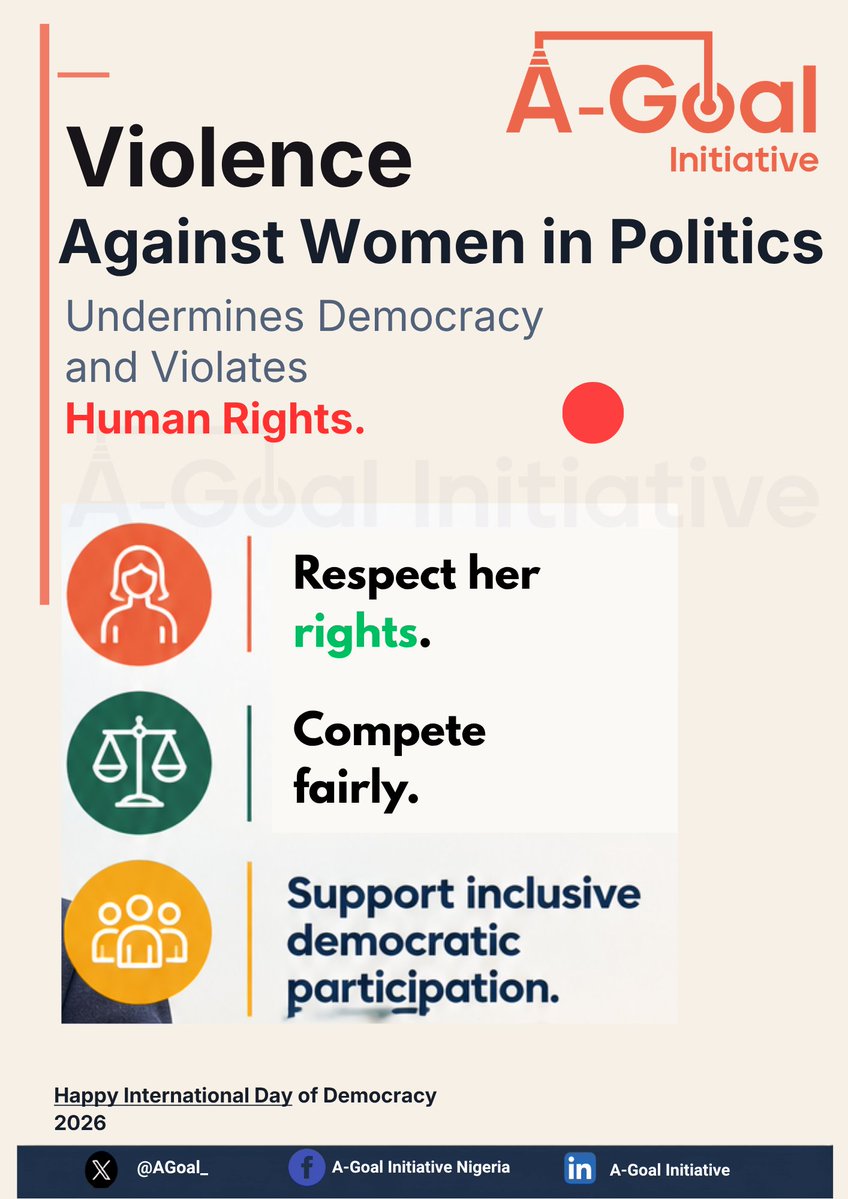
𝐇𝐚𝐩𝐩𝐲 𝐈𝐧𝐭𝐞𝐫𝐧𝐚𝐭𝐢𝐨𝐧𝐚𝐥 #𝐃𝐚𝐲𝐎𝐟𝐃𝐞𝐦𝐨𝐜𝐫𝐚𝐜𝐲!
This month, we are launching our new project to track violence against women in politics ahead of Nigeria’s 2027 general elections.
𝗟𝗲𝘁’𝘀 𝘀𝗵𝗲𝗱 𝗹𝗶𝗴𝗵𝘁 𝗼𝗻 𝘁𝗵𝗲 𝘃𝗶𝗼𝗹𝗲𝗻𝘁 𝗯𝗮𝗿𝗿𝗶𝗲𝗿𝘀 𝘁𝗵𝗮𝘁 𝗽𝗿𝗲𝘃𝗲𝗻𝘁 𝘄𝗼𝗺𝗲𝗻 𝗳𝗿𝗼𝗺 𝗮𝗰𝗵𝗶𝗲𝘃𝗶𝗻𝗴 𝗽𝗼𝗹𝗶𝘁𝗶𝗰𝗮𝗹 𝗽𝗼𝘄𝗲𝗿 𝗮𝗻𝗱 𝗳𝘂𝗹𝗹𝘆 𝗽𝗮𝗿𝘁𝗶𝗰𝗶𝗽𝗮𝘁𝗶𝗻𝗴 𝗶𝗻 𝘁𝗵𝗲 𝗱𝗲𝗺𝗼𝗰𝗿𝗮𝘁𝗶𝗰 𝗽𝗿𝗼𝗰𝗲𝘀𝘀.
We demand an equal, safe, and inclusive political space for all.
#InternationalDayOfDemocracy2026 #ProtectWomenInPolitics #NigeriaDecides
Last week, we analyzed over 45k social media complaints from 1st Aug – 7th Sept 2026 regarding fake consumer products in Nigeria.
One of the major recommendations from the public is to hold market leadership accountable, in addition to prosecuting the perpetrators.
See the infographic below 👇🏾 for a detailed breakdown.
Whether high or low, wealthy or poor, powerful politicians or less privileged citizens, everyone -including the perpetrators -will eventually feel the sharp bites of unethical business practices in Nigeria.
Exactly a year ago, we began raising awareness regarding the use of calcium carbide to preserve fruits and vegetables in Nigeria.
Something has to give.
Read our post here 👇🏾https://t.co/wFJZwyroTk
TRENDING VIDEO: "My wife started having frequent headaches a few months after she quit Coca-Cola for fresh orange juice. She sent a fresh batch of the orange juice to the lab for testing and the results revealed that the oranges were not fit for human consumption because of the dangerous chemicals the farmers had used to ripen and preserve them" — Former vice-president Yemi Osinbajo
@DrJoeAbah We provided an explanatory note on Ezemmuo's advice to the governors below 👇🏾
Whether big or small, everyone will someday feel the bite of unethical business practices.
https://t.co/UnA1UszQJr
We believe Dr Joe Abah’s argument is not about transferring regulatory power to the States, but about administrative, operational and enforcement participation. That distinction is important -and the argument is tenable.
Section 4 of the 1999 Constitution (as amended), particularly Item 21 of Part I of the Second Schedule, places “Drugs and Poisons” on the Exclusive Legislative List. This means that legislative competence over drugs rests with the National Assembly.
However, this does not mean that every aspect of administration and enforcement must be performed exclusively by federal officials.
The Counterfeit and Fake Drugs and Unwholesome Processed Foods (Miscellaneous Provisions) Act, Cap. C34, LFN 2004 provides for a Federal Task Force and State Task Forces, and gives the State Task Force specified enforcement functions, including inspection, sampling and seizure of counterfeit/fake drugs and unwholesome processed foods.
Cap. C34 is a federal statute. The National Assembly created the offences and the enforcement framework. The State Task Force is therefore an implementation mechanism created by federal law, operating within that statutory framework and subject to federal oversight.
That is materially different from saying that States have independent legislative or regulatory competence over drugs.
The practical question is therefore not simply “Who regulates drugs?” It is also: Who has the capacity to detect violations, inspect markets, collect evidence, seize offending products and rapidly escalate cases for appropriate action?
If effective enforcement structures existed across the States, many incidents could potentially be detected earlier or prevented from reaching consumers.
Federal agencies hold statutory power but lack the boots on the ground to monitor thousands of local markets daily. At the same time, many States do not have sufficiently functional inspection and surveillance systems to identify adulterated or unwholesome products consistently, coordinate referrals, and ensure rapid escalation to the appropriate federal authorities.
This gap in last-mile enforcement and surveillance can undermine public-health outcomes.
Cap. C34 provides an important legal framework for bridging this operational gap: federal regulatory authority can be complemented by state-level enforcement institutions, without transferring the constitutional regulatory competence over drugs to the States.
The key is to distinguish regulation and legislation from administration, surveillance and enforcement.
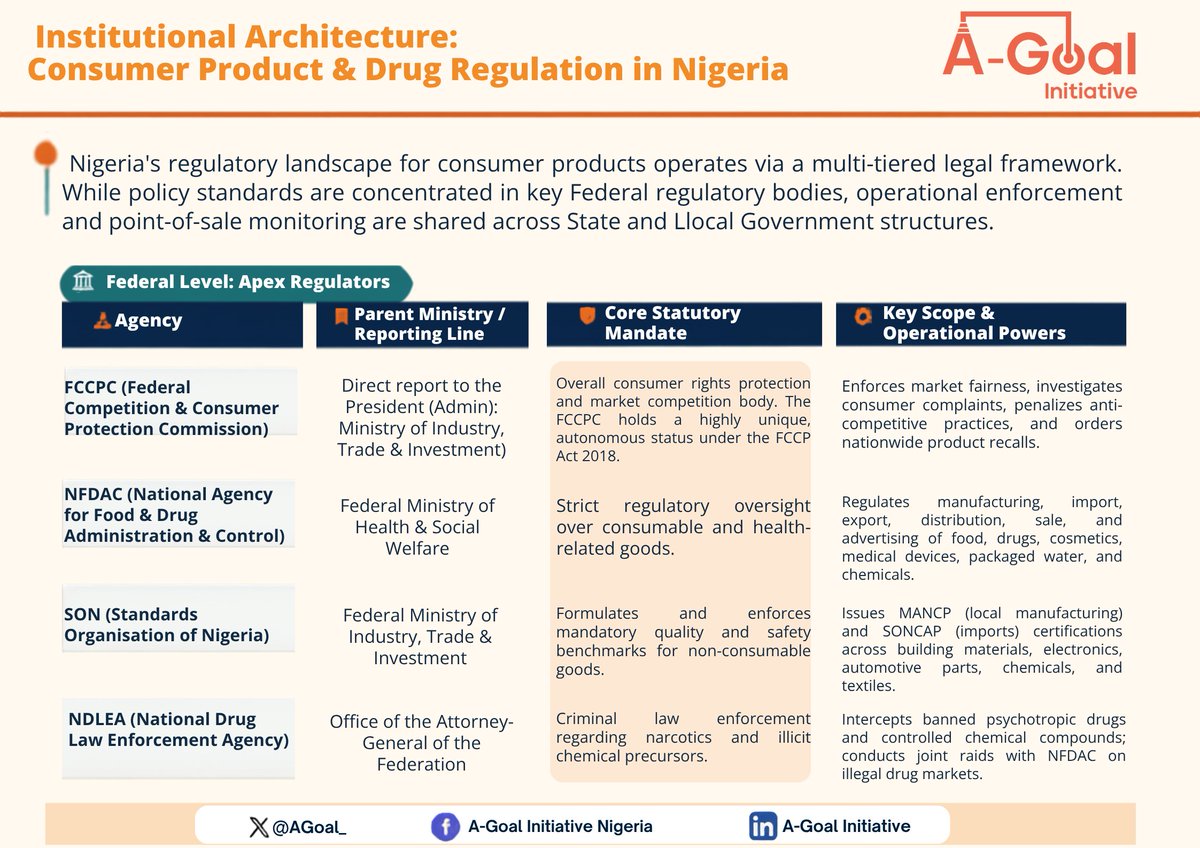
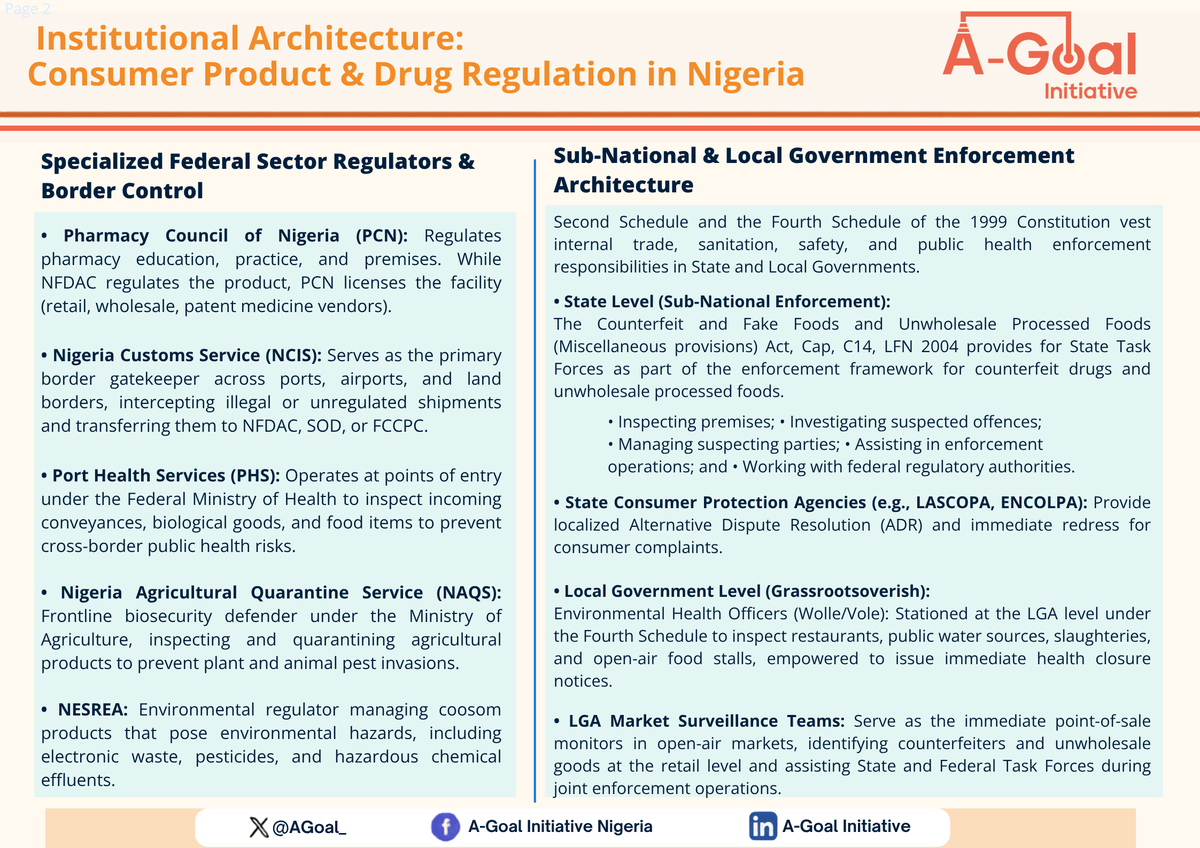
Our information pamphlet below👇 explains the institutional architecture of Nigeria’s regulatory and enforcement ecosystem for drugs and food, including the roles of federal, state and local institutions.
#Food #Med #Safety #Nigeria
Exactly a year ago, we began raising awareness regarding the use of calcium carbide to preserve fruits and vegetables in Nigeria.
Whether high or low, wealthy or poor, powerful politicians or less privileged citizens, everyone -including the perpetrators -will eventually feel the sharp bites of unethical business practices in Nigeria.
Something has to give.
Read our post here 👇🏾
Are your fruits, vegetables, and frozen food items as healthy as they look? Have you ever heard of formalin as a preservative for liquid soap?
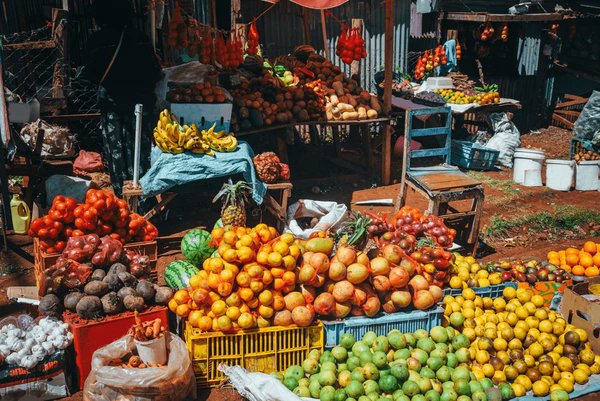
That fresh-looking fruit, vegetable, or fish might be hiding a toxic secret: formalin and calcium carbide.
This blog post dives into the alarming use of industrial chemicals in Nigeria, the health risks, and clarifies @NafdacAgency's legal mandate to enforce safety >>> https://t.co/QnWGzKXmOr
##FoodSafety #Nigeria
We believe Dr Joe Abah’s argument is not about transferring regulatory power to the States, but about administrative, operational and enforcement participation. That distinction is important -and the argument is tenable.
Section 4 of the 1999 Constitution (as amended), particularly Item 21 of Part I of the Second Schedule, places “Drugs and Poisons” on the Exclusive Legislative List. This means that legislative competence over drugs rests with the National Assembly.
However, this does not mean that every aspect of administration and enforcement must be performed exclusively by federal officials.
The Counterfeit and Fake Drugs and Unwholesome Processed Foods (Miscellaneous Provisions) Act, Cap. C34, LFN 2004 provides for a Federal Task Force and State Task Forces, and gives the State Task Force specified enforcement functions, including inspection, sampling and seizure of counterfeit/fake drugs and unwholesome processed foods.
Cap. C34 is a federal statute. The National Assembly created the offences and the enforcement framework. The State Task Force is therefore an implementation mechanism created by federal law, operating within that statutory framework and subject to federal oversight.
That is materially different from saying that States have independent legislative or regulatory competence over drugs.
The practical question is therefore not simply “Who regulates drugs?” It is also: Who has the capacity to detect violations, inspect markets, collect evidence, seize offending products and rapidly escalate cases for appropriate action?
If effective enforcement structures existed across the States, many incidents could potentially be detected earlier or prevented from reaching consumers.
Federal agencies hold statutory power but lack the boots on the ground to monitor thousands of local markets daily. At the same time, many States do not have sufficiently functional inspection and surveillance systems to identify adulterated or unwholesome products consistently, coordinate referrals, and ensure rapid escalation to the appropriate federal authorities.
This gap in last-mile enforcement and surveillance can undermine public-health outcomes.
Cap. C34 provides an important legal framework for bridging this operational gap: federal regulatory authority can be complemented by state-level enforcement institutions, without transferring the constitutional regulatory competence over drugs to the States.
The key is to distinguish regulation and legislation from administration, surveillance and enforcement.
Our information pamphlet below👇 explains the institutional architecture of Nigeria’s regulatory and enforcement ecosystem for drugs and food, including the roles of federal, state and local institutions.
#Food #Med #Safety #Nigeria
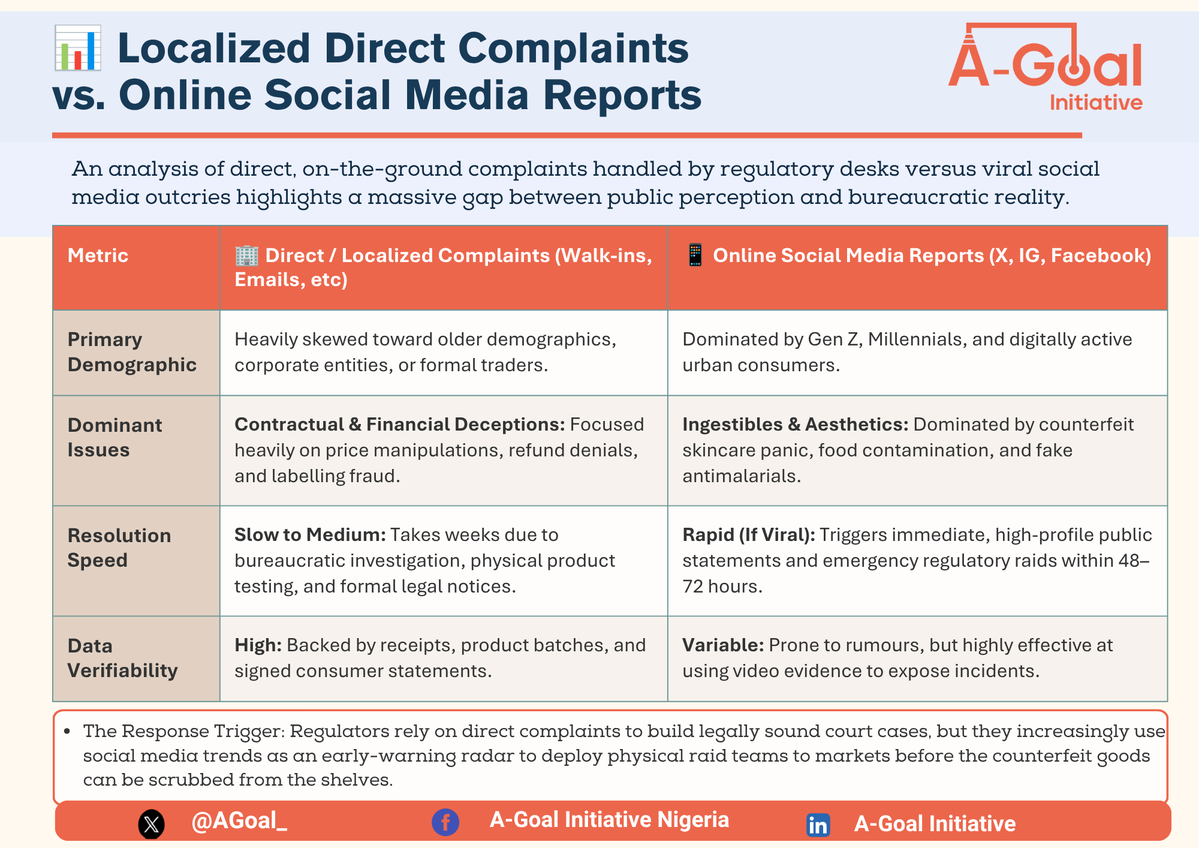
How do direct complaints compare with online sentiment, and what key demands are emerging from digital feedback -systemic operational changes and legislative reforms? See below👇
We believe Dr Joe Abah’s argument is not about transferring regulatory power to the States, but about administrative, operational and enforcement participation. That distinction is important -and the argument is tenable.
Section 4 of the 1999 Constitution (as amended), particularly Item 21 of Part I of the Second Schedule, places “Drugs and Poisons” on the Exclusive Legislative List. This means that legislative competence over drugs rests with the National Assembly.
However, this does not mean that every aspect of administration and enforcement must be performed exclusively by federal officials.
The Counterfeit and Fake Drugs and Unwholesome Processed Foods (Miscellaneous Provisions) Act, Cap. C34, LFN 2004 provides for a Federal Task Force and State Task Forces, and gives the State Task Force specified enforcement functions, including inspection, sampling and seizure of counterfeit/fake drugs and unwholesome processed foods.
Cap. C34 is a federal statute. The National Assembly created the offences and the enforcement framework. The State Task Force is therefore an implementation mechanism created by federal law, operating within that statutory framework and subject to federal oversight.
That is materially different from saying that States have independent legislative or regulatory competence over drugs.
The practical question is therefore not simply “Who regulates drugs?” It is also: Who has the capacity to detect violations, inspect markets, collect evidence, seize offending products and rapidly escalate cases for appropriate action?
If effective enforcement structures existed across the States, many incidents could potentially be detected earlier or prevented from reaching consumers.
Federal agencies hold statutory power but lack the boots on the ground to monitor thousands of local markets daily. At the same time, many States do not have sufficiently functional inspection and surveillance systems to identify adulterated or unwholesome products consistently, coordinate referrals, and ensure rapid escalation to the appropriate federal authorities.
This gap in last-mile enforcement and surveillance can undermine public-health outcomes.
Cap. C34 provides an important legal framework for bridging this operational gap: federal regulatory authority can be complemented by state-level enforcement institutions, without transferring the constitutional regulatory competence over drugs to the States.
The key is to distinguish regulation and legislation from administration, surveillance and enforcement.
Our information pamphlet below👇 explains the institutional architecture of Nigeria’s regulatory and enforcement ecosystem for drugs and food, including the roles of federal, state and local institutions.
#Food #Med #Safety #Nigeria
Despite these numbers, there are growing concerns about public service delivery in the country
This week, we analyzed over 45,000 social media complaints regarding ingestibles and cosmetics between Aug 1 and Sept 7, 2026.
The result? An overwhelming 84% negative sentiment.
Key red flags:
💊 38% Pharmaceuticals: Counterfeit diabetes meds (Dapagliflozin) & toothpastes.
🍏 29% Food Safety: Industrial dyes in palm oil, bleach in fufu & unlabeled additives.
🧴 21% FMCG & Shrinkflation: Half-empty products with double the price tag.
🏗️ 12% Cement: Hidden corporate price-fixing.
Detailed analysis in the infographic below👇
https://t.co/2EUtQtfORq
Instead of ensuring that MDAs improve their service delivery, the FG continues to create more largely unhelpful agencies.
@Tomi_Omorilewa Scary, unethical business practices are becoming rampant in the country right now. Citizens are crying out as a result, but will the relevant government institutions ever rise to the occasion? That remains to be seen.
Exactly, sir. The drive to "succeed at all costs" creates a dangerous cycle where profits are prioritized over human lives. The perpetrator who adulterates a product today inevitably consumes another compromised product tomorrow.
Widespread consumer product adulteration and hazardous food practices are almost certainly part of the key drivers behind Nigeria's life expectancy challenges.
🚨 FAKE DRUGS, DYED OIL & THE SHRINKFLATION TRAP: The Cost of Consuming in Nigeria.
From fake antimalarials to diesel tankers carrying your cooking oil down North, Nigerian consumers are shouting, and the data proves it!
📉Our latest infographic deep-dives into 45,000+ social media complaints from Aug 1 – Sept 7, 2026.
The reality? A staggering 84% NEGATIVE sentiment.
#ConsumerRightsNG #FakeProducts #Shrinkflation #KeepNigeriaSafe 🇳🇬
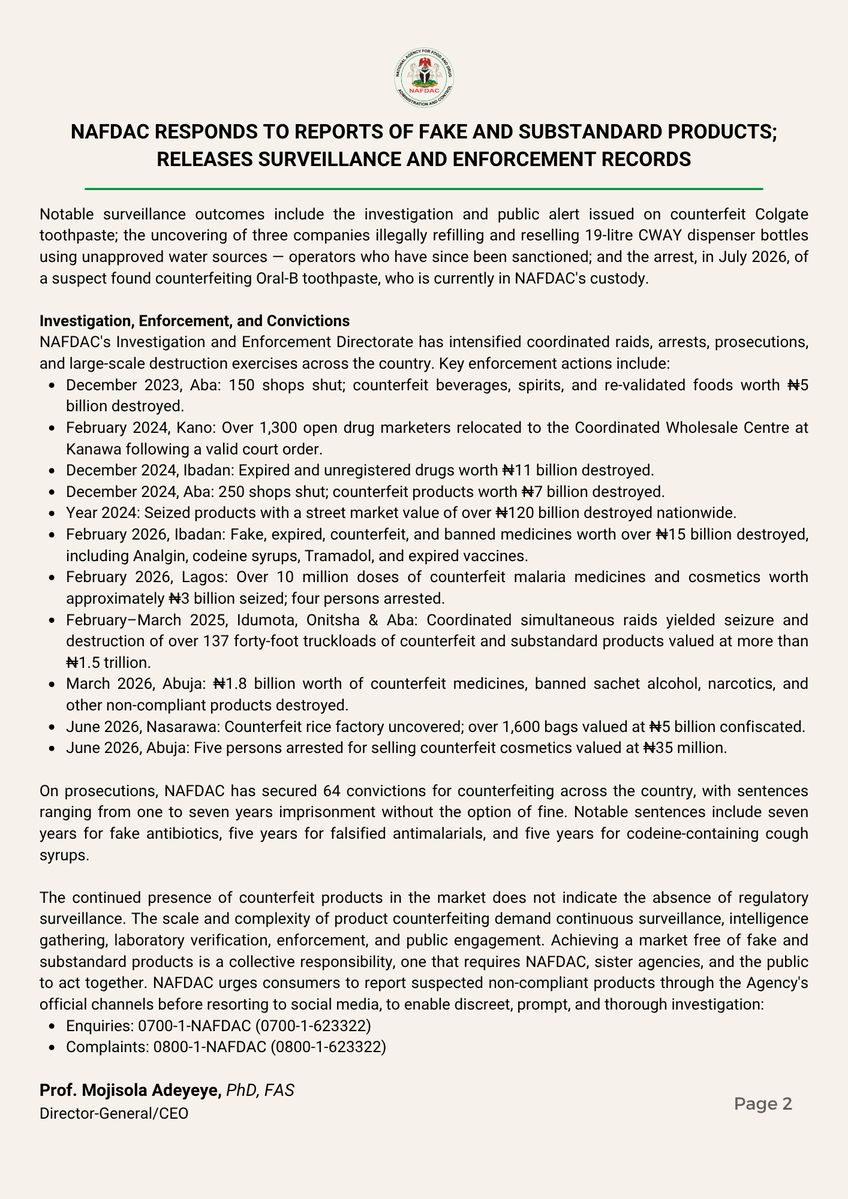
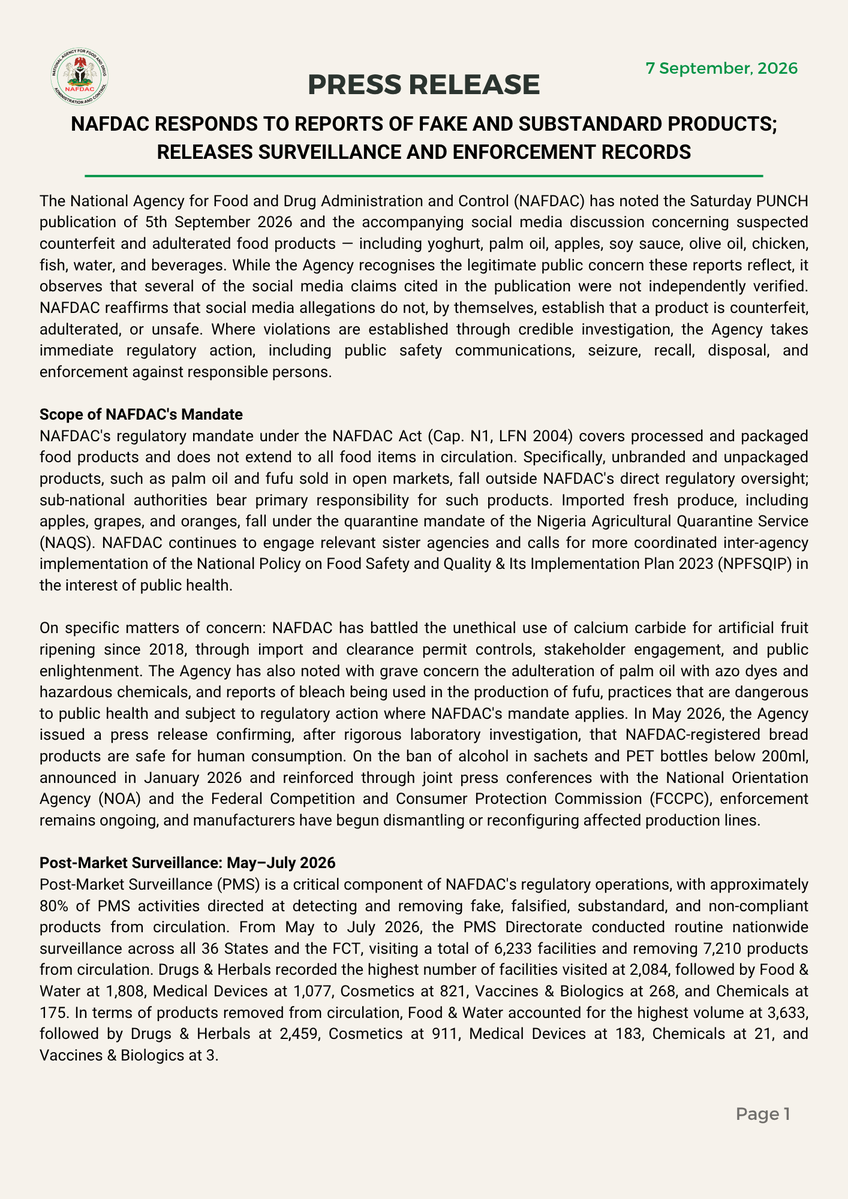
In response to recent media and social media reports on suspected fake and substandard food products in Nigeria, the Director-General of NAFDAC, Prof. Mojisola Adeyeye, addressed a Press Conference to set the record straight, outline the Agency's regulatory actions, and reaffirm NAFDAC's commitment to protecting the health of Nigerians.
Read the full Press Release below ⬇️
⛈️ ⚠️ WEATHER ALERT – 10 SEPTEMBER 2026
⏰ Valid: 16:10–22:10 LT, 10 September 2026
📍 NiMet Advisory | Stay Weather-Smart, Stay Ahead
Severe thunderstorm cells are currently observed over parts of 📍Borno 📍Adamawa 📍Taraba 📍Plateau 📍Abia
⛈️ Outlook – Next 1–6 Hours
Severe thunderstorms accompanied by moderate rainfall and strong winds are expected to move westward, affecting parts of:
📍 Borno 📍 Yobe 📍 Gombe 📍 Bauchi 📍 Taraba 📍 Adamawa 📍 Jigawa 📍 Kano 📍 Kaduna 📍 Katsina 📍 Zamfara 📍 Kebbi 📍 Sokoto 📍 Plateau 📍 Nasarawa 📍 Federal Capital Territory (FCT) 📍 Niger 📍 Benue 📍 Kogi 📍 Kwara 📍 Enugu 📍 Ebonyi 📍 Cross River 📍 Anambra 📍 Imo 📍 Abia 📍 Rivers ��� Akwa Ibom 📍 Edo 📍 Ondo 📍 Ekiti 📍 Bayelsa
⚠️ Possible Impacts
• 🌬️ Strong winds may precede thunderstorms and could displace unsecured objects.
• 🌊 Localised flash flooding may occur in low-lying and flood-prone areas.
• 🌧️ Moderate rainfall may cause reduced visibility and difficult driving conditions.
• ��� Severe thunderstorms may be accompanied by lightning, posing risks to people and property.
• 🌳 Strong winds may result in falling tree branches or damage to weak structures.
• ✈️ Adverse weather conditions may affect aviation operations.
✅ Safety Advisory
• 🔒 Secure loose outdoor objects before the thunderstorms arrive.
• 🚫 Avoid walking or driving through flooded roads and fast-flowing water.
• 🚗 Motorists should reduce speed and exercise caution during thunderstorms and rainfall.
• ⚡ Avoid open spaces and disconnect electrical appliances from power sockets during thunderstorms where necessary.
• 🌳 Stay away from tall trees and weak structures during strong winds and thunderstorms.
• 🚨 Relevant authorities are advised to activate emergency response systems, particularly in areas vulnerable to flash flooding.
• ✈️ Airline operators are advised to obtain airport-specific weather reports and flight documentation from NiMet for effective operational planning.
• 📡 Residents should continue to monitor official NiMet weather updates and take necessary precautions.
🗣️ “Stay alert, stay informed and take early action. Early Warning, Early Action.”
#NiMet #WeatherAlert #SevereThunderstorm #ModerateRain #StrongWinds #FlashFlood #WeatherUpdate #StayWeatherSmart #EW4ALL #NigeriaWeather #EarlyWarning #StaySafe
Introducing Localized Weather Tracker.
Now you can stay informed everywhere you go
Get updated weather updates based on your location
Get Agricultural Insights such as; Onset Dates, Cessation Dates and Seasonal Farming information specific to your location
Receive timely alerts about weather conditions and lots more
Download the NiMet Weather App from the App Store or Google play store.
Public trust in physical consumables is under acute pressure driven by health concerns.
The Red Flags:
💊 38% Pharmaceuticals: Fake diabetes meds (Dapagliflozin) & lookalike toothpastes.
🍏 29% Food Safety: Chemicals in Palm Oil and Fufu as well as unlabelled market additives.
🧴 21% FMCG & Shrinkflation: Half-filled packages with doubled price tags.
🏗️ 12% Cement: Corporate price-fixing under the radar.
Any regulatory actions from @fccpcnigeria and @NafdacAgency? See our infographic below👇
🚨 FAKE DRUGS, DYED OIL & THE SHRINKFLATION TRAP: The Cost of Consuming in Nigeria.
From fake antimalarials to diesel tankers carrying your cooking oil down North, Nigerian consumers are shouting, and the data proves it!
📉Our latest infographic deep-dives into 45,000+ social media complaints from Aug 1 – Sept 7, 2026.
The reality? A staggering 84% NEGATIVE sentiment.
#ConsumerRightsNG #FakeProducts #Shrinkflation #KeepNigeriaSafe 🇳🇬