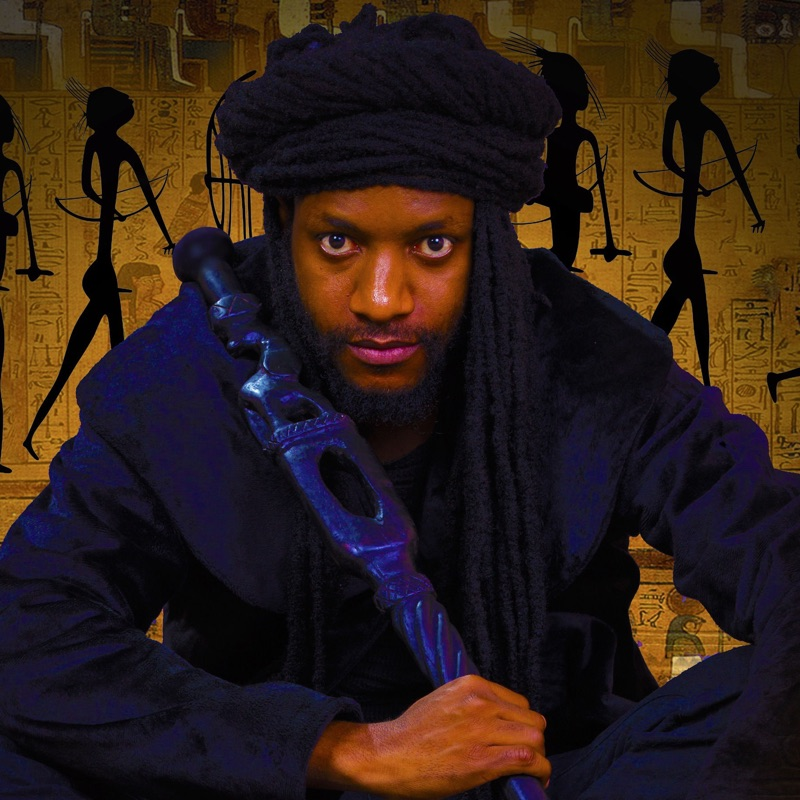
There is something I have been thinking about for a while concerning Winky D, and I want to say it as a fan who genuinely cares about the Winky D brand.
Winky D has been my favourite artist for years. I also know that for many Zimbabweans, he occupies a very special place. For more than two decades, he has remained one of the most important voices to come out of Zimbabwean music.
He has given us music, culture, commentary, identity and, most importantly, a voice.
From the beginning of his commercial career in the 2000s until today, Winky D has built something very few artists manage to build: a recognisable identity that has survived generations.
His music has always been intentional.
The writing is intentional. The production is intentional. The message is intentional. The delivery is intentional.
And when Winky D gets on stage, you can see the amount of thought that goes into what he does. His concerts are not simply concerts. They are experiences. There is a level of creativity, preparation and attention to detail that has made his live performances some of the most anticipated events in Zimbabwean music.
That is precisely why I sometimes struggle with the way the Winky D brand is presented digitally.
Because the artist I see on stage and in the music does not always seem to be the same level of attention to detail I see on his digital platforms.
And I don't mean that Winky D needs to become a social-media influencer.
He doesn't.
He doesn't need to post every day. He doesn't need to chase every TikTok trend. He doesn't need to reveal his entire life to the public. In fact, the mystery surrounding Winky D is part of what makes the brand interesting.
But there is a difference between maintaining an aura of mystery and simply allowing the digital side of the brand to become stagnant.
Social media is now part of an artist's identity.
Spotify is part of the artist's identity.
Apple Music is part of the artist's identity.
YouTube is part of the artist's identity.
These are no longer just places where you dump music after making it.
They are the digital home of the artist.
And when someone who has never heard Winky D before searches for him, those platforms are potentially their first introduction to the man, the music and the entire legacy.
That first impression matters.
Winky D already has the audience. His digital platforms are not small either. He has hundreds of thousands of followers and listeners across the major platforms. That makes the digital presentation of the brand even more important.
Look at the evolution of the music itself.
EUREKA EUREKA came in 2023. Pabho followed in 2025. And now we have TÊTE-À-TÊTE (HELLO AFRICA) in 2026, alongside other recent releases.
The artist has evolved.
The catalogue has evolved.
The audience has evolved.
The brand should evolve with it.
This is where things like artist profile images, biographies, artwork, catalogue organisation, lyrics, credits and general presentation become important.
If someone lands on a Winky D profile and encounters imagery that feels stuck in an older chapter of the catalogue, while the artist has already released several projects since then, it creates a disconnect.
There is absolutely nothing wrong with the older artwork. EUREKA EUREKA is an important part of the Winky D catalogue.
The issue is that an artist's profile should represent the artist today, while still preserving the history of yesterday.
There is a difference.
And then there is TÊTE-À-TÊTE.
This project is particularly interesting to me because Winky D is reaching into an English-speaking and reggae-influenced musical space in a different way.
The music is carrying messages that deserve to travel beyond Zimbabwe.
But that creates another responsibility.
Winky D is an exceptional lyricist.
His words matter.
His messages matter.
His references matter.
His storytelling matters.
So why not make those words as accessible as possible?
Lyrics on Spotify.
Lyrics on Apple Music.
Where appropriate, translations or explanations of some of the deeper references.
This isn't about spoon-feeding the audience.
It's about making the message travel.
A listener in Zimbabwe may immediately understand the language, slang, references and cultural context.
Someone discovering Winky D in Jamaica, Nigeria, Ghana, Kenya, the UK or the United States might not.
If the objective is for the music to travel internationally, the lyrics become one of the bridges between Winky D and that new audience.
And that is especially important for an artist whose greatest strength is arguably not just the sound, but the message inside the sound.
I also think there is a conversation to be had about the older catalogue.
Winky D has music going back many years, and some of that catalogue can be surprisingly difficult to find through his official digital channels. Some older songs and videos can be found through uploads by fans or other accounts rather than through a clearly organised official archive.
For an artist with this kind of history, that catalogue is not just old music.
It is an archive.
There are songs from different eras of Zimbabwean life sitting inside that catalogue.
There are songs that defined moments.
There are songs that introduced Winky D to generations of listeners.
There are songs that younger Zimbabweans today may never discover unless somebody happens to upload them somewhere.
If rights, labels or old distribution agreements are preventing some of that music from being properly presented today, then perhaps that is something worth working through.
Because eventually, the Winky D catalogue will become part of Zimbabwe's musical history.
It deserves to be preserved like one.
There is also a more basic issue that I think should be addressed: technical problems with older music on streaming platforms.
Take Gafa Life Kickstape, for example. The album is officially available on Spotify and contains songs such as Gafa Life, Mirror, Woshora, Idya Mari, Survivor, Disappear and Not Nice.
But there have been listener complaints around tracks in the older catalogue not functioning properly on streaming services.
If a track doesn't play properly, skips, stops after a few seconds or becomes inaccessible, that needs to be treated as a technical issue with the catalogue—not something that should simply remain there for years.
Imagine somebody discovering Winky D today, going back through the catalogue and finding that an important older song doesn't even play properly.
That is a terrible first experience with a piece of history.
And this is why I keep coming back to the word brand.
Winky D is no longer just an artist who needs to release songs.
He is a brand.
He is a catalogue.
He is a cultural archive.
He is a live experience.
He is a visual identity.
He is a digital identity.
He is a message.
He is a story that has been developing for more than two decades.
And when you reach that level, the little things start becoming big things.
A broken streaming track becomes part of the brand experience.
An outdated artist image becomes part of the brand experience.
Missing lyrics become part of the brand experience.
A poorly organised catalogue becomes part of the brand experience.
An inactive or purely informational social page becomes part of the brand experience.
None of these things individually destroys an artist.
But collectively, they can make a world-class artist look less polished than he actually is.
And I don't think Winky D deserves that.
The irony is that Winky D has already demonstrated that he understands branding.
He understands symbolism.
He understands mystery.
He understands storytelling.
He understands anticipation.
He understands how to make a concert feel bigger than a concert.
He understands how to make people wait.
He understands how to make people talk.
He understands how to build an experience.
That same thinking simply needs to extend further into the digital ecosystem.
Imagine the Winky D catalogue completely cleaned up across every major streaming platform.
Every album officially available where rights allow.
Every song playable.
Correct artwork.
Current artist photography.
Proper credits.
Lyrics.
Lyric videos.
A properly organised YouTube catalogue.
A clear distinction between albums, EPs, singles, live performances and archival material.
A consistent visual identity across Spotify, Apple Music, YouTube and social media.
A digital archive that allows a young Zimbabwean discovering Winky D in 2035 to go back to the music of 2004, 2008, 2012, 2015, 2016, 2019, 2023, 2025 and 2026 and understand the journey.
That would be something.
Because Winky D has already done the hardest part.
He built the legacy.
He built the audience.
He built the identity.
He built the music.
He built the message.
He built the trust.
He survived more than twenty years in an industry where careers can disappear in a fraction of that time.
Now the infrastructure surrounding that legacy needs to be given the same level of attention.
And I am not saying this because I think Winky D needs to become somebody else.
Quite the opposite.
I want the digital world to properly reflect the Winky D that already exists.
The Winky D that people see on stage.
The Winky D who can put together a concert that becomes a cultural moment.
The Winky D who can write a song and make people sit down and think about what they just heard.
The Winky D who has consistently used music to speak about ordinary people, inequality, freedom, identity, Zimbabwe and the realities surrounding us.
The Winky D who has remained recognisably himself for more than two decades.
That Winky D deserves a digital presence that feels just as intentional.
And perhaps the most important thing is this:
This isn't a criticism coming from someone who doesn't understand what Winky D means to Zimbabwe.
It's coming from someone who understands exactly what he means.
Winky D is my favourite artist.
I have enormous respect for what he has built.
I respect the consistency.
I respect the message.
I respect the longevity.
I respect the artistry.
I respect the fact that after all these years, he can still release something and make an entire country stop and listen.
That is precisely why I hold the brand to a higher standard.
Winky D doesn't need to change.
He doesn't need to become Burna Boy.
He doesn't need to become anyone else.
He just needs to make sure that the digital representation of Winky D is as strong, current and carefully maintained as the music and live experience already are.
Because the music is there.
The message is there.
The history is there.
The audience is there.
The legacy is there.
Now let's make sure the digital legacy is there too.
🇿🇼
@winkydonline
They tried to break him after 2023(Eureka Eureka)—bans, shutdowns, and pressure. But the Gafa never sold out; he stayed true to the masses. You can’t silence the Voice of the Voiceless.
No one is more confused than an African voter.
They'll complain 24/7 on social media about unemployment, no healthcare, no electricity, no clean water. About how corrupt politicians are
Come election time they forget. A politician will steal from them for 5 years then come election time, they'll show up with a bag of rice or loaves of bread and a t-shirt
Just like that, the African voter starts to dance and ululate.
Selling your future for food that won't even last a week. Vote with your stomach for today then suffer for the next 5 years
The African mind is truly intriguing.
I am going to post this album for the next 30 days until it reaches where it supposed to reach.
My 🐐 cooked here.
Am proud 😊.
Let’s Go.
@winkydonline@reggaeville