We’ve received notice that the Department of Commerce has lifted export controls on Claude Fable 5 and Mythos 5.
We'll begin restoring access tomorrow, and will share an update soon.
We’re grateful to our users for their patience, and to everyone who worked with us on redeploying the models.
I stole this idea and now use it with every single employee.
It’s the best illustration I’ve seen of teaching someone to be high agency.
It says there are 5 levels of work:
Level 1: “There is a problem.”
Level 2: “There is a problem, and I’ve found some causes.”
Level 3: “Here’s the problem, here are some possible causes, and here are some possible solutions.”
Level 4: “Here’s the problem, here’s what I think caused it, here are some possible solutions, and here’s the one I think we should pick.”
Level 5: “I identified a problem, figured out what caused it, researched how to fix it, and I fixed it. Just wanted to keep you in the loop.”
Using this framework, here’s what I say to every new employee…
You will live at Level 4 from Day 1 and as we build trust you will rise to Level 5.
Being high agency doesn’t just mean tackling problems in this way. It means your entire way of working should be oriented to being a Level 4+ employee.
Plz feel free to steal it as well.
And ty @stephsmithio for the framework!
He is 31 years old
At nine months old, a failed measles injection by a local nurse caused avascular necrosis, leading to lifelong hip pain and leg weakness until his hip replacement surgery
Four of his siblings died in childhood (likely related to sickle cell trait in the family), making his survival a "statistical miracle"
At age 10, he dropped out of school due to poverty but returned after his mother worked as a cleaner for six years to pay his fees
He learned chess as a kid at a local barber's shop in a Lagos slum while playing video games with friends
Barely spoke English when he started secondary school (mostly Yoruba at home) but quickly picked it up from classmates
His mother was a petty trader (thrift clothes seller), and his father sold spare parts. They met in a Lagos market
Chess helped him develop a strong photographic memory, which he used to cram for exams and survive without parental allowances
He became Nigeria's No 13 ranked chess player and earned the National Master title at age 20
He won gold medals representing Yaba College of Technology in the Nigeria Polytechnic Games and the RCCG Chess Championship
He also won the National Friends of Chess Tournament and the Chevron Chess Open
He got a diploma in computer science and used chess winnings to support himself through school
Founded Chess in Slums Africa in September 2018 as a volunteer-driven nonprofit after visiting slums like Majidun
The organization has reached thousands of underprivileged kids, including producing a 10-year-old champion with cerebral palsy
Tunde Onakoya broke the Guinness World Record for the longest chess marathon (over 60 hours) in Times Square, New York, in 2024
Featured in CNN African Voices for his work
Tunde has a younger brother (two years apart)
He credits chess with saving him from slum poverty and giving him an "intellectual identity"
He once simultaneously won 10 chess games at the DLD Conference in Germany
First African to win the Lideramos Youth Award for Social Impact in Spain.
Won the Corporate Chess Championship in Malawi with a perfect 7/7 score
Tunde dreams of building the world's biggest chess institute in Nigeria
.
.
.
.
Tunde Onakoya has brought attention to Africa through Chess.
He started teaching chess at a younger age to children.
I'm talking of around 2013/2014 when he was meeting at parks around Lagos State, just to teach kids in the open (mostly after work hours)
.
.
Today, I am more interested in telling you more about him, and how he has also risen from a place of deep poverty and struggles.
He has done soooo much for people and it's only expected that these past impacts would show on him as well
You might have your reservations about him, but you cannot downplay how he used the game of chess to bring great changes to children's lives.
.
.
A lot of children now have access to education, purpose and meaning, thanks to Chess.
You are also part of his story. Tunde didn't do all these alone.
Your support, your accolades, your retweet, your reposts, everything
So look at the bigger picture.
Think of the kids whose lives have changed from taking alcohols and drugs on the streets of slums, to having regulated mental health and more purpose driven lives, due to Chess and the opportunity it brought.
.
.
.
.
Tunde can't certainly please everyone, and yes, there might be actions that many people would attribute to him being human.
But if children would smile again, because he created an opportunity for them to have their smiles again.... Then it's one of the best legacies anyone can ever have.
And you also can create your own legacy to which nations would applaud, recognise and help preserve 🫂
The sky is big enough for you, I and Tunde to shine and shine bountifully well ❤️
.
.
.
✍️ Vincent the Therapist
Our @golang load balancer at @render handles more than 150 billion HTTP requests a month across millions of services.
The number of times we've wanted to rewrite it in Rust: zero.
Go is the most underrated language in infrastructure. "Boring" is the ultimate feature.
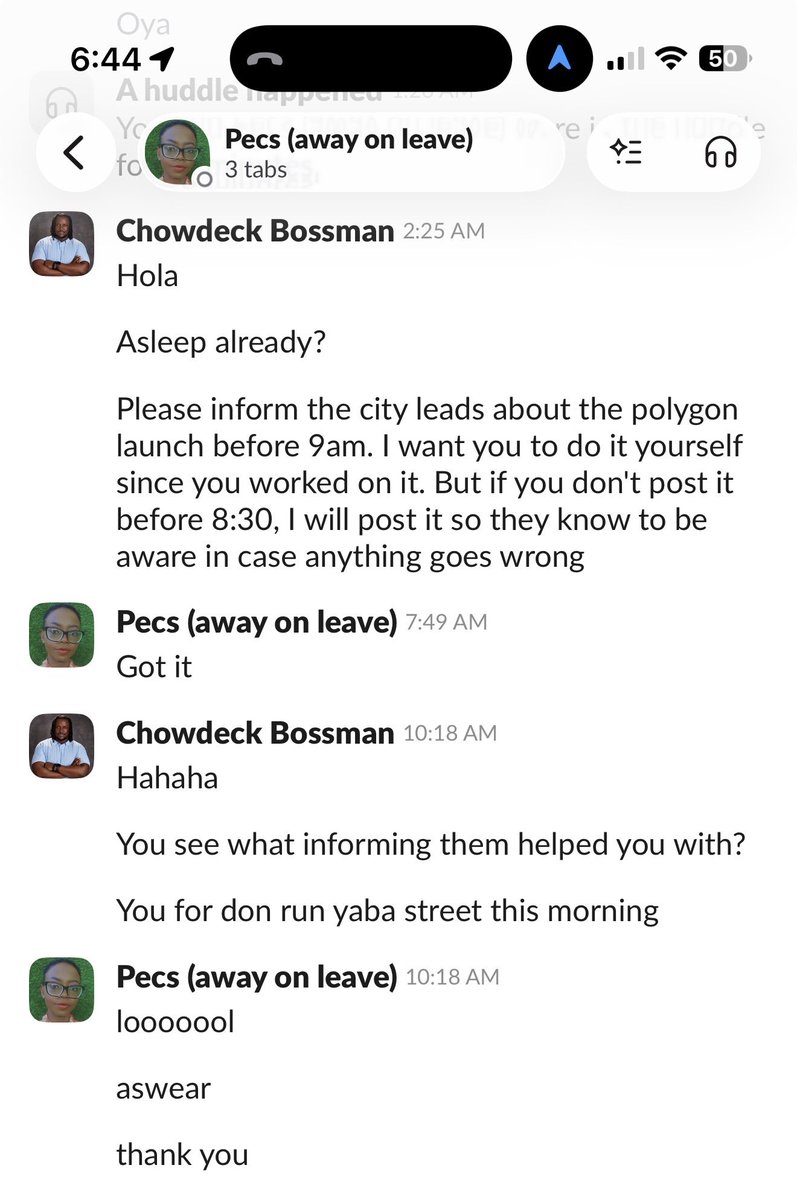
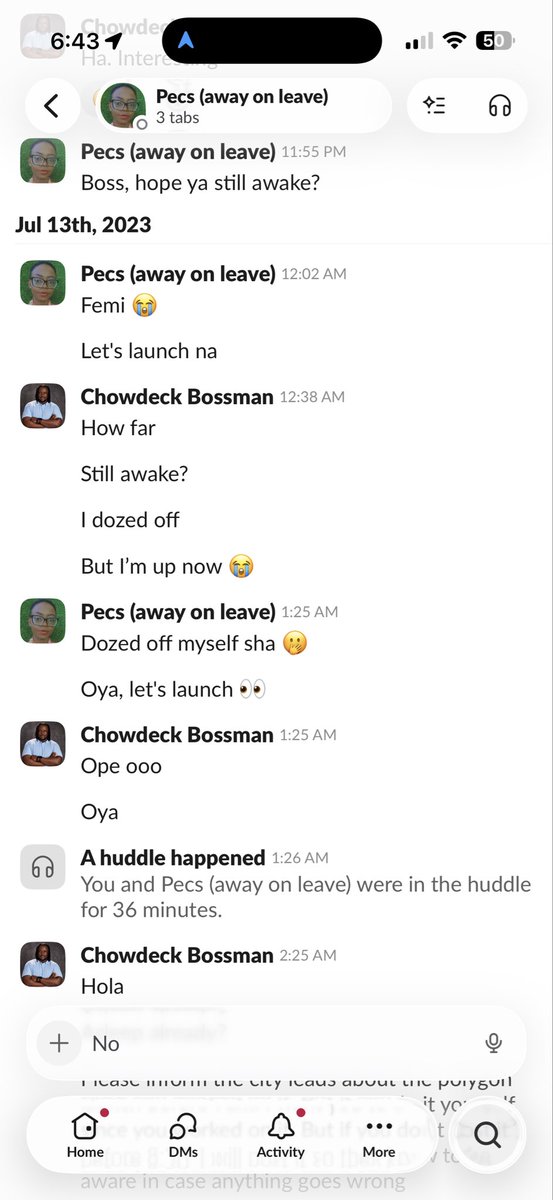
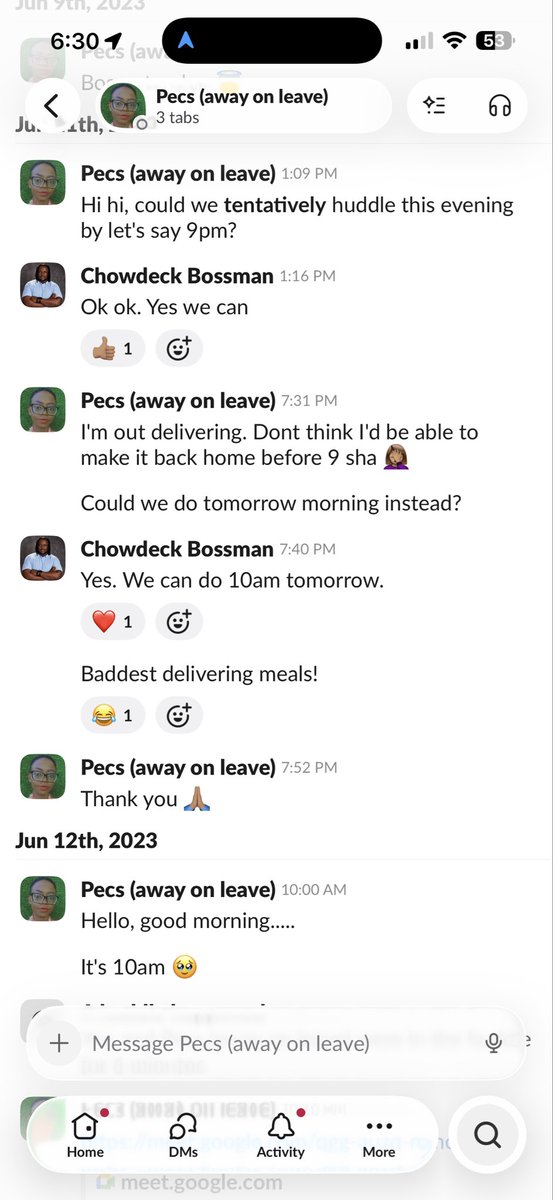
Just saw this while scrolling through our old chats. Pecs actually delivered so many meals and competed directly with me and Kunle for the highest number of staff deliveries quarterly.
She also has a hard time sleeping if her feature isn’t live 🥹.
Again, you can’t really be exceptional at something you don’t care about.
This is the ginger I actually need going into Q2.
I think the direction we are heading in is that AI skills will be required for backend roles.
I don’t mean ability to vibe code, I mean RAG, vector databases, LangChain, MCP, etc.
If your job title is currently AI Engineer, double down on solidifying your software engineering skills.
I do believe there will be more rewarding jobs in the future, not fewer jobs. The job title or description will change, but we’ll still need people to build stuff.
You can’t vibe code what you don’t understand.
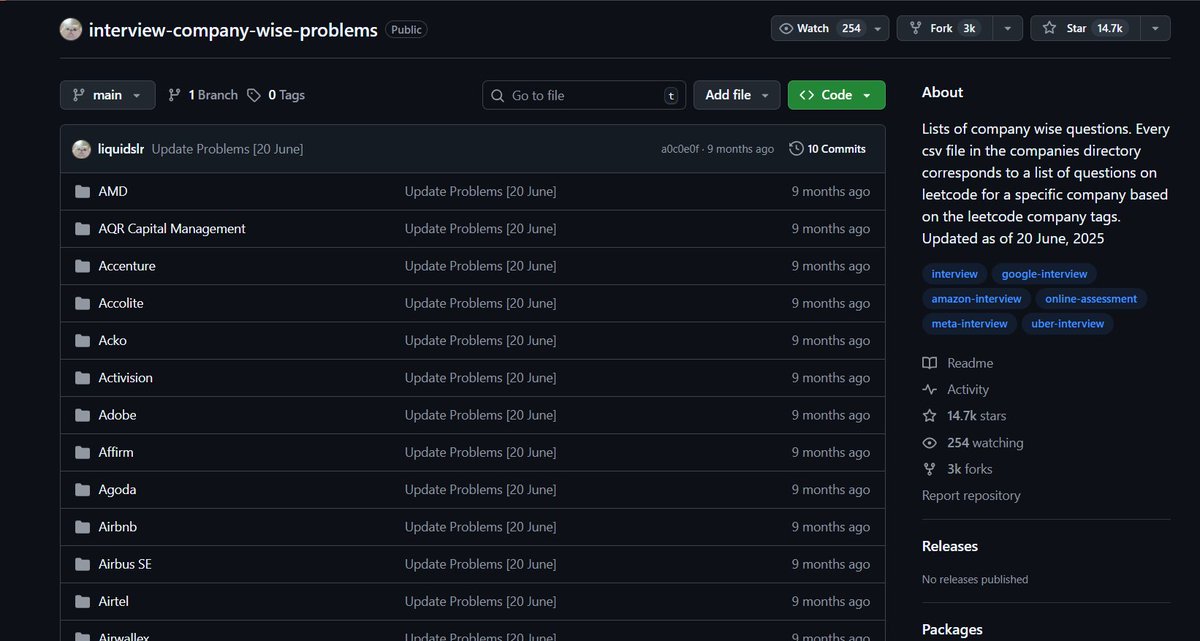
Someone just leaked every interview question asked at Google, Amazon, Meta, and Microsoft on GitHub.
Cancel your LeetCode subscription.
I’ll drop the link in the replies, clone it to your local before it disappears.
Save this. Repost so your people don’t miss it.
I said it by faith…
Heaven called it a mandate.
Now in this new year, we’re not just speaking, we’re stepping into it.
Buses paid. Jesus preached. Lives touched. 🔥🚌
What was a moment is now a movement.
#JesusMustBeSeen
The guy who helped build React, the most popular workaround for the browser's layout engine, just said the workaround isn't sufficient and built the replacement himself.
Cheng Lou's resume is the context that makes this announcement hit different. He worked on React at Facebook. Created ReasonML and ReScript. Built Messenger's frontend. Now runs Midjourney's entire UI stack on Bun. Every single role was a fight against the same enemy: the browser's rendering pipeline.
Here's why this matters beyond the engineering flex. The web was built to render documents. Static HTML, flowing text, pages you scroll through. CSS layout was designed for that world. Then we started building applications inside the document renderer: spreadsheets, design tools, messaging apps, AI chat interfaces. Every one of those applications has to ask the browser permission to know how big text is. That question triggers reflow. Reflow locks the main thread. At 60fps you get 16 milliseconds per frame. Spend those milliseconds on layout recalculation and the user sees jank.
The industry's answer for the last decade has been to work around the problem. Virtual DOM (React) batches the writes. CSS containment limits the blast radius. content-visibility skips offscreen layout. FastDOM separates reads from writes. Every solution accepts that the browser owns text measurement and tries to call it less often.
Cheng Lou's answer: stop calling it at all. Measure text in pure TypeScript. Skip the DOM. Skip CSS. Skip reflow entirely. Zero layout passes. The performance improvement, per his demo, is categorical. 0.05ms versus 30ms. Zero reflows versus five hundred.
The person who understands the browser rendering pipeline better than almost anyone alive just built the tool that makes part of it unnecessary. That tells you where application-grade UI is heading.