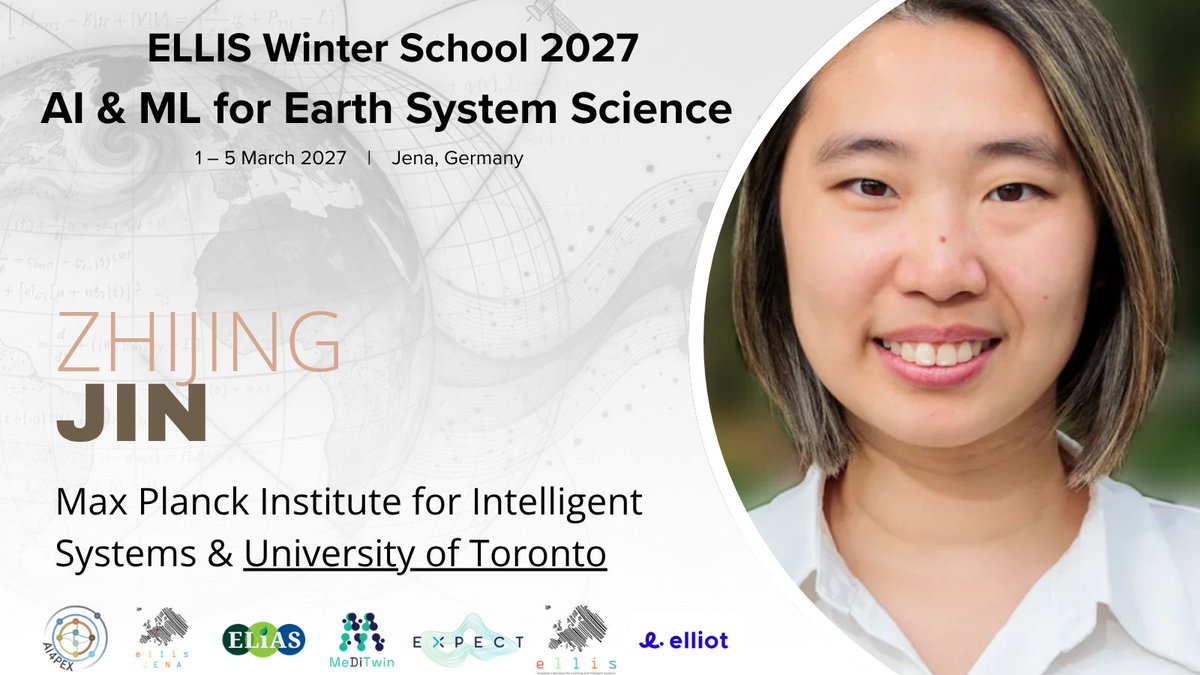
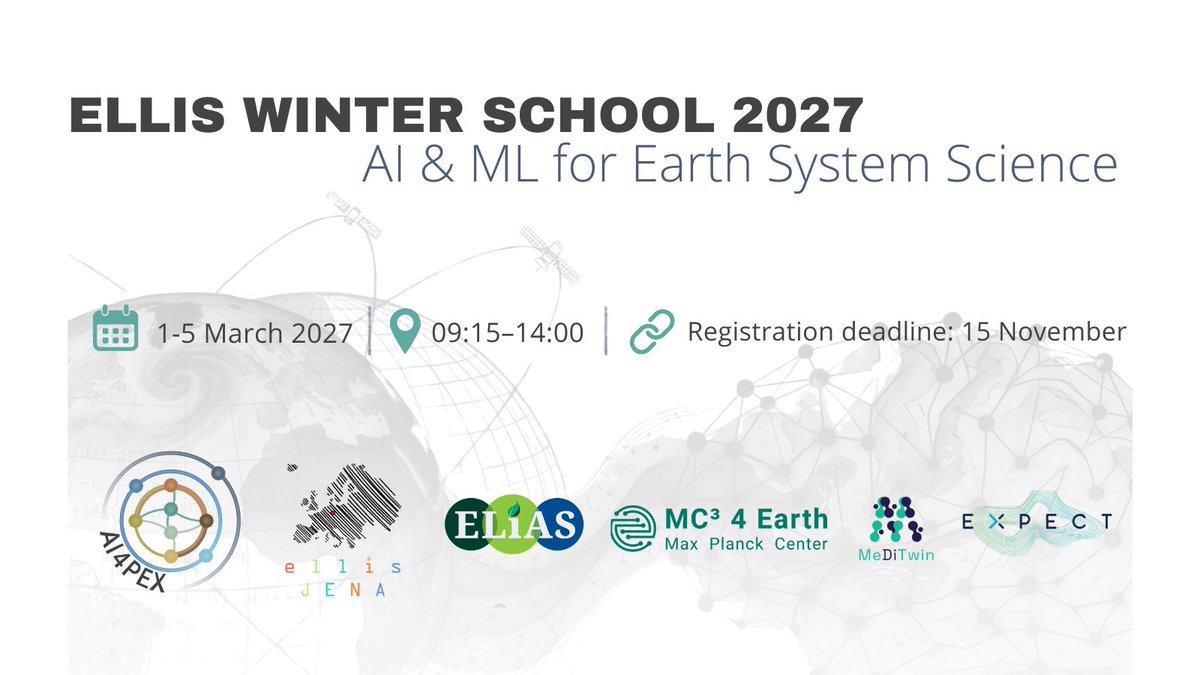
⏳ Take your seat at the ELLIS Winter School 2027! 🌍
Explore how AI & ML can advance Earth System Science through inspiring keynotes and hands-on challenges.
📍 Jena | 1–5 March 2027
🚨 Extended deadline: 22 Nov, 23:00 CET.
👉 https://t.co/LBBRWAj727
⏳ Take your seat at the ELLIS Winter School 2027! 🌍
Explore how AI & ML can advance Earth System Science through inspiring keynotes and hands-on challenges.
📍 Jena | 1–5 March 2027
🚨 Extended deadline: 22 Nov, 23:00 CET.
👉 https://t.co/LBBRWAj727
📢 Call for Abstracts #EGU27 🌊
How is AI transforming climate modeling?
Submit your abstract to session ITS1.3/CL6.18: AI for Climate Science
👉 https://t.co/HWYdxUpcbO
convened by Katharina Hafner, Blanka Balogh, Tom Beucler et al.
Abstract Deadline: 12 Jan 2027, 13:00 CET
⏰ ONE WEEK LEFT TO APPLY!
Join the ELLIS Winter School on AI & ML for Earth System Science (1–5 March 2027, Jena)! 🌍
Explore 4 pillars: Earth System Domains | AI & ML | Trustworthy AI | Open Challenges.
Apply by 15 Nov, 23:00 CET:
https://t.co/LBBRWAj727
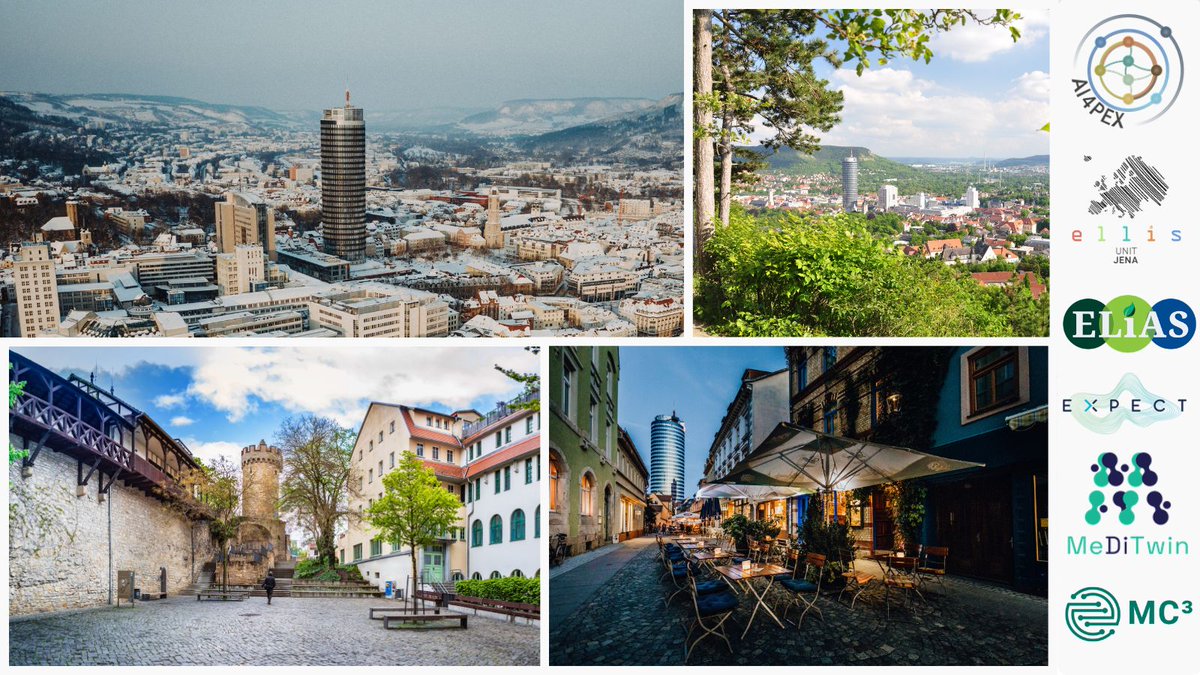
🏙️ Why Jena for the ELLIS Winter School?
Jena is Germany’s hub for optics, environmental research & AI innovation! Home to FSU Jena & MPI for Biogeochemistry, set in the scenic Saale valley. 🌲🔬
Join 100 early-career scientists this March: https://t.co/9SW3BISt80
🛠️ Build real AI solutions for Earth system science at the ELLIS Winter School!
Hands-on group challenges + topical lectures on hybrid modeling, causal AI & extremes downscaling led by expert tutors!
📍 1.-5. March 2027 | Jena |
🔗 https://t.co/9SW3BISt80
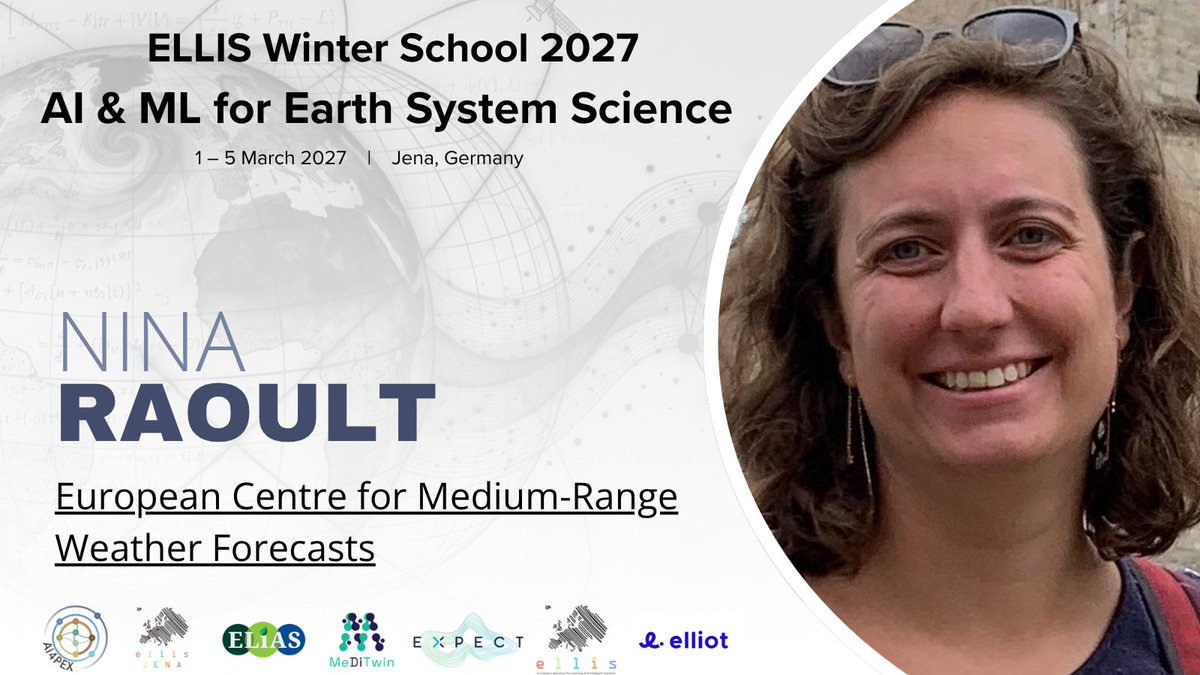
💡 Meet our keynote speakers at the ELLIS Winter School!
Learn from global pioneers about Hybrid Modeling • Foundation Models • Coupling • Causality • Ethics • Probabilistic ML • Uncertainty & more 🌍🧠
📍 1.-5. March 2027, Jena, Germany
🔗 Register: https://t.co/JXFLD2rdCF
🌍 Registration OPEN: ELLIS Winter School on AI & ML for Earth System Science!
📍 Jena, Germany
🗓️ 1.-5. March 2027
Organized by AI4PEX, ELIAS & ELLIS Unit Jena + top EU partners.
⏰ Deadline: 15 Nov 2026 (23:00 CET)
🔗 Find our more: https://t.co/9SW3BISt80
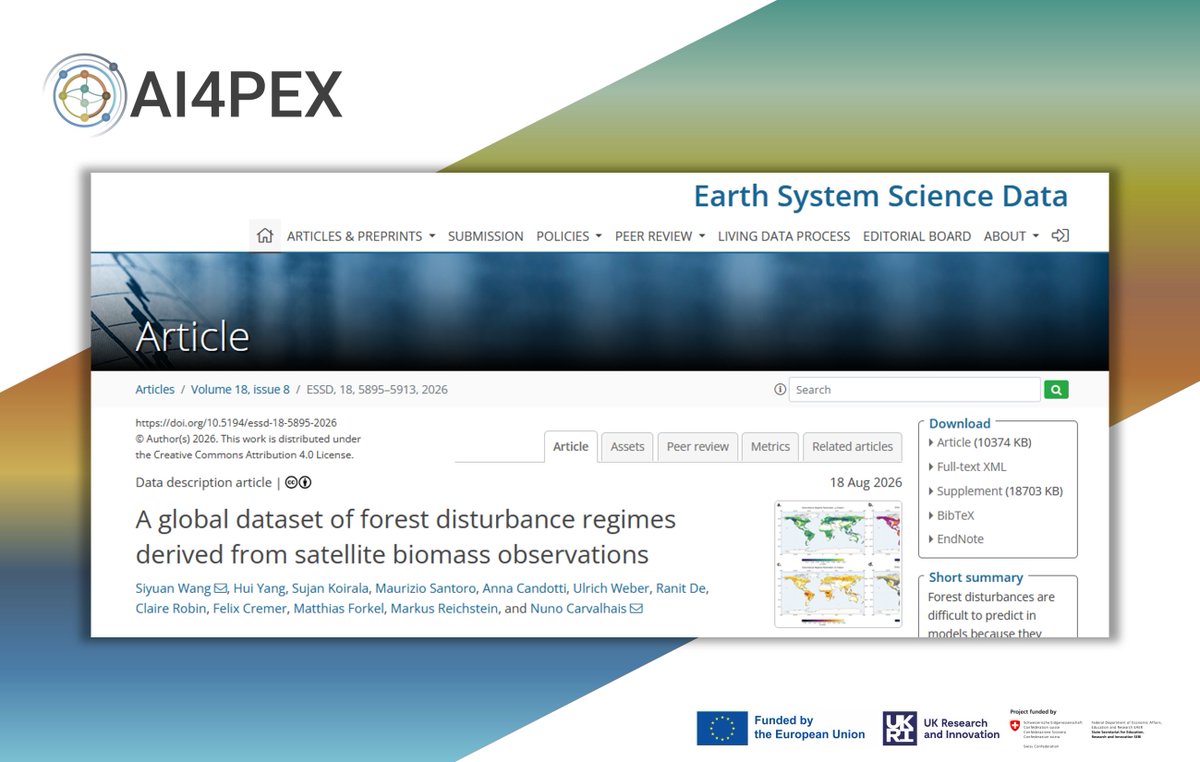
💡New paper! Can satellites reveal how forests are disturbed?
A new ML framework infers disturbance rate, severity, gap size & mortality from biomass patterns—producing the first globally continuous, observation-constrained disturbance regime dataset.
👉 https://t.co/Vdgf8qUslv
💡Weather or climate? Why choose?
A new paper explores how AI could help bridge weather prediction & climate projection within unified frameworks—while highlighting challenges around trust, fairness, transparency, energy use & global inequality.
👉https://t.co/FyWDjEzJCx
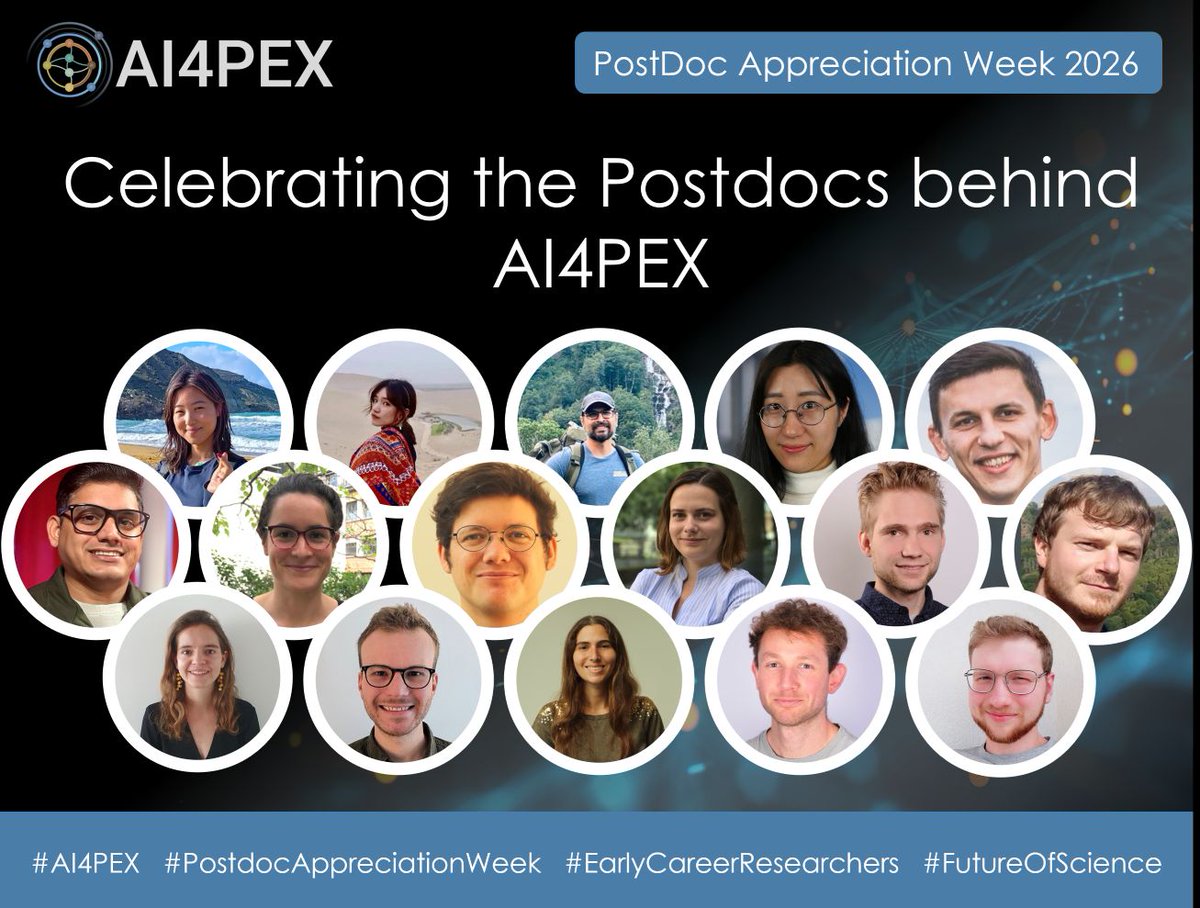
🌟 Celebrating our AI4PEX postdocs during #PostdocAppreciationWeek!
🌍🤖 From AI-powered Earth observation to climate extremes, hybrid modelling and uncertainty, they are advancing our understanding of a changing planet.
👏 Thank you for your curiosity and creativity!
💡 How does vegetation affect soil moisture far downwind?
Using atmospheric transport + deep learning, we find upwind information provides 67% of predictive power, with vegetation explaining 15%. Effects vary strongly across humid & semi-arid regions.
👉https://t.co/QP4ebF8MSH
💡 New paper!
Summer heat extremes are changing—not just becoming hotter, but lasting longer.
By comparing 1-in-100-year summers in today's and preindustrial climates, we show that faster soil drying makes prolonged heatwaves more likely.
👉 https://t.co/SrheJMMpdN
As #ClimateChange hits harder every year, droughts and water scarcity are becoming more severe.
During #WorldWaterWeek, we’re reminded that water links atmosphere, land and ocean, and understanding these links is key to predict droughts and support sustainable water management.
💡 New Paper!
How are European winter extremes linked to atmospheric circulation? Using the co-recurrence ratio (α), we find coupling depends strongly on the circulation domain and height, but little on the extreme threshold we define.
👉 Learn more: https://t.co/OYvwSuXn2c
💡 New preprint!
Can you separate climate change from natural climate variability in a single climate record?
PullbackDMDc is a method combining dynamical systems theory and data-driven modelling to do exactly that.
👉 https://t.co/GqN77LGquR
💡 New paper!
How does 🔥 wildfire risk in Southern Europe change by 2100?
Using ML, climate & land-use, wildfire risk increases strongly under high-emission SSP3-7.0. Future land use and population changes significantly shape the projected risk.
👉 https://t.co/W4VhmhQyzJ
📢 New preprint!
Introducing DROP 💧 a physically informed deep learning framework for river discharge prediction.
DROP delivers:
✅ Strong spatial generalization
✅ Better flood peak prediction
✅ Interpretable, spatially explicit diagnostics
👉 https://t.co/V5uxefbD1r
💡 New Paper!
Why do observed and simulated winter precipitation trends often disagree?
Our study shows that models capture the warming-driven response well, but often underestimate changes in atmospheric circulation, especially in the Mediterranean.
👉 https://t.co/kgO3jBtJAR
💡 New Paper!
Can AI improve how ESMs represent clouds?
We present a hybrid ML radiation scheme that learns radiative impact of subgrid-scale clouds from 5 km storm-resolving simulations.
✅ 4–10× lower errors than conventional radiation schemes.
👉 https://t.co/1HElP9M4i4