AI SDK 7 is now available.
Introducing: reasoning control, agent-level tool approval, tool and runtime context, file and skill uploads, MCP Apps, durable workflows, terminal UI, sandbox support, harness integrations, telemetry, lifecycle events, and more.
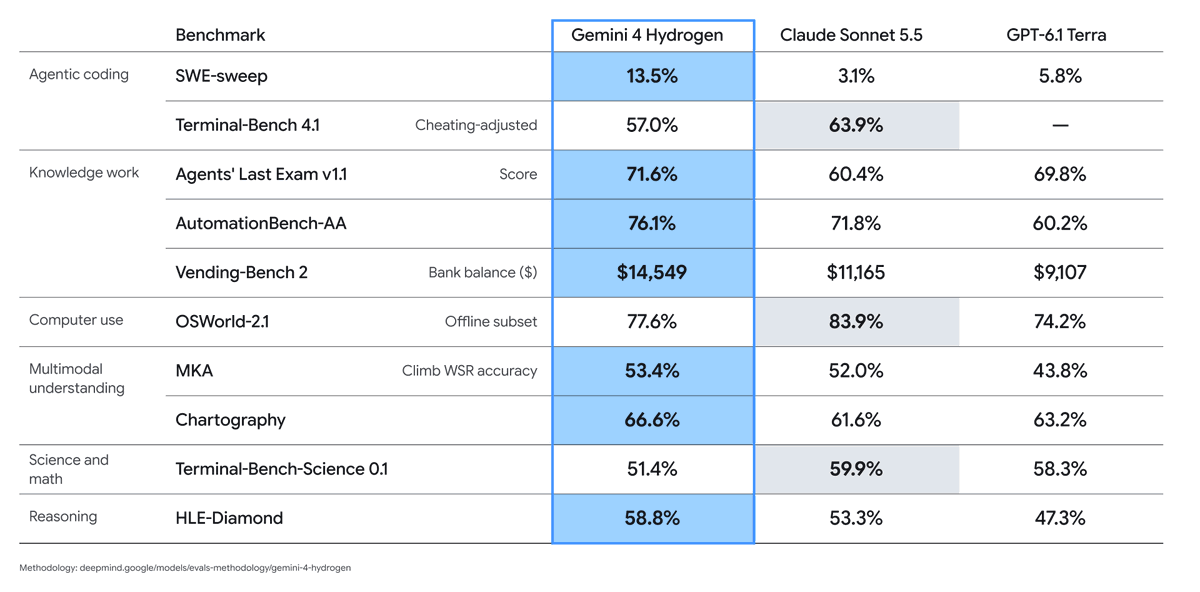
Meet Gemini 4 Hydrogen: built for rapid coding, multimodal synthesis, and everyday workflows.
It finishes tasks 2.5x faster than 3.8 Flash and surpasses Argon on the @ArtificialAnlys Intelligence Index.
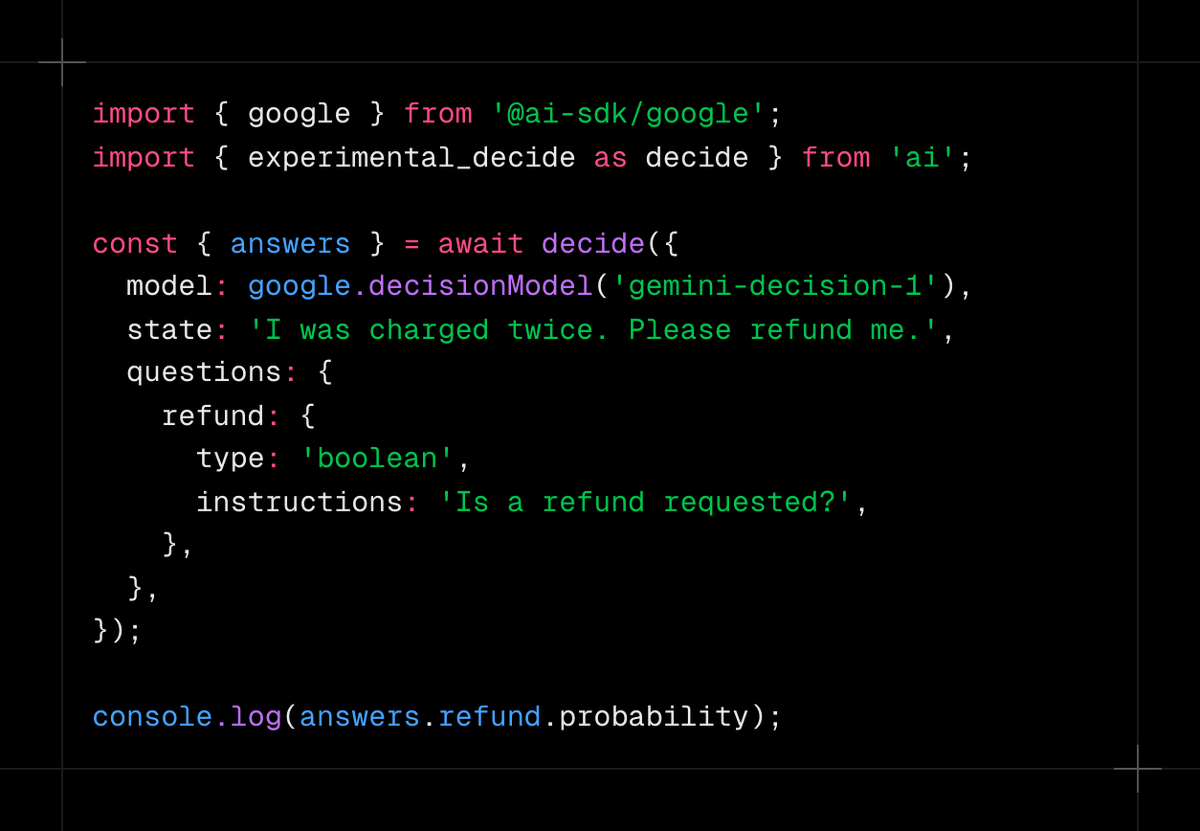
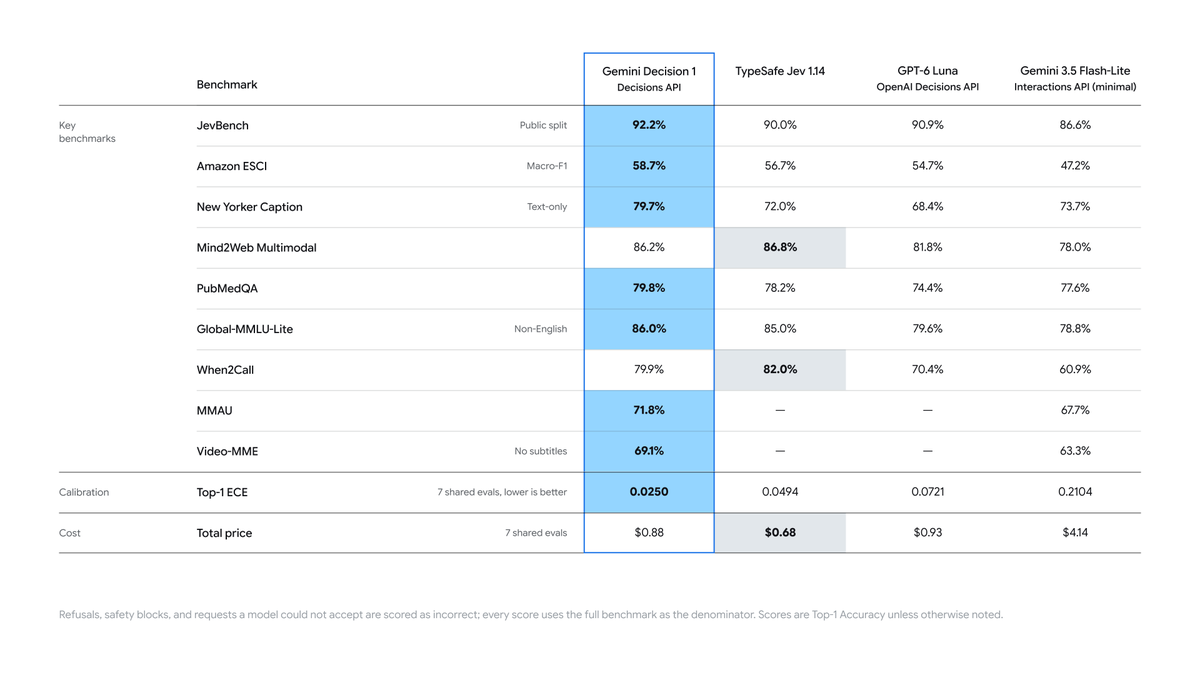
introducing the Gemini Decisions API
powered by Gemini Decision 1, our new multimodal decision model
get fast, calibrated decisions on up to 1000 questions at once across text, images, audio, video, and PDFs
try it today in AI Studio and via the Gemini API https://t.co/h3Kmz2ypDi
Gemini 4 Carbon is now available.
It’s our strongest model, built to dig deeper, handle long-horizon tasks, and multi-step reasoning.
If Argon is great for complex tasks, Carbon is the model you bring in for your hardest problems.
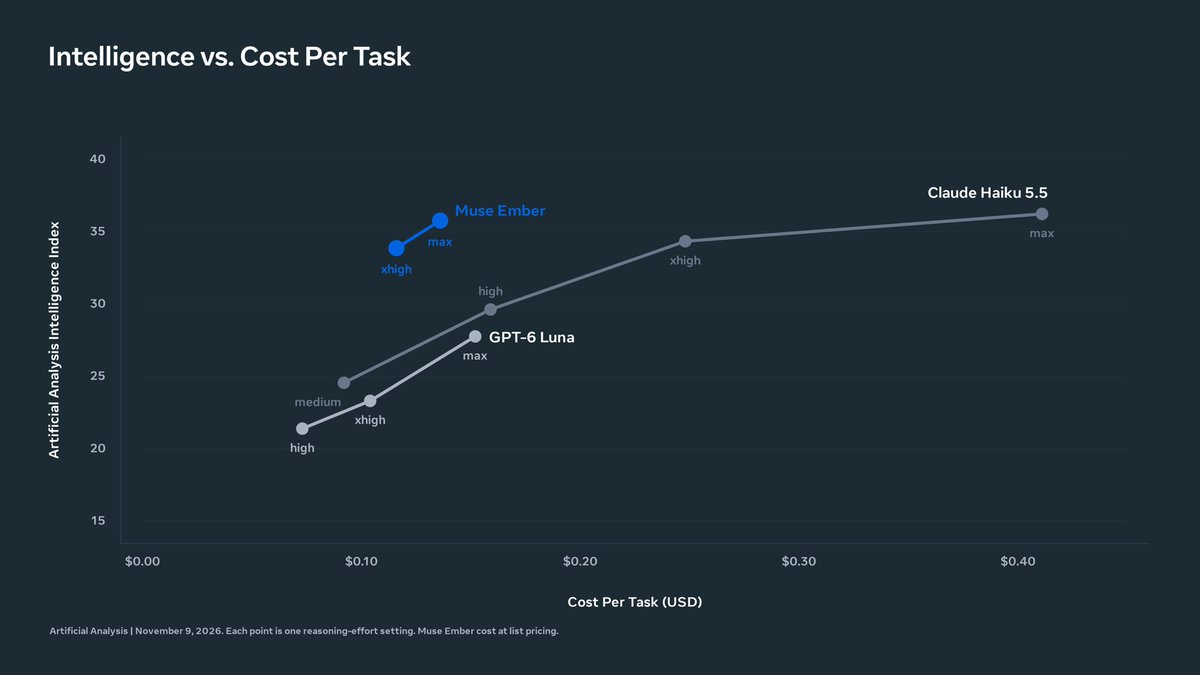
1/ announcing our smallest, most efficient little model is here: muse ember 🔥
built for work that agents repeat all day, it gets you more intelligence per dollar than Haiku, Luna, and all other flash models at any reasoning setting and does it at a third of the cost or less!
Introducing Claude Fable 5.2 and Claude Mythos 5.2, designed to tackle the most daunting technical challenges.
They’re capable collaborators on ambitious projects in many fields, and show improvements in areas like coding, reasoning, and vision.
Generative UI for conversational agents.
Combining @aisdk with Chat SDK and 𝚓𝚜𝚘𝚗-𝚛𝚎𝚗𝚍𝚎𝚛, you can go straight from LLM to UI on platforms like Slack and Teams.
I believe this will become the dominant Human-Agent Interaction (HAI) paradigm:
https://t.co/MHxtLyoy7t
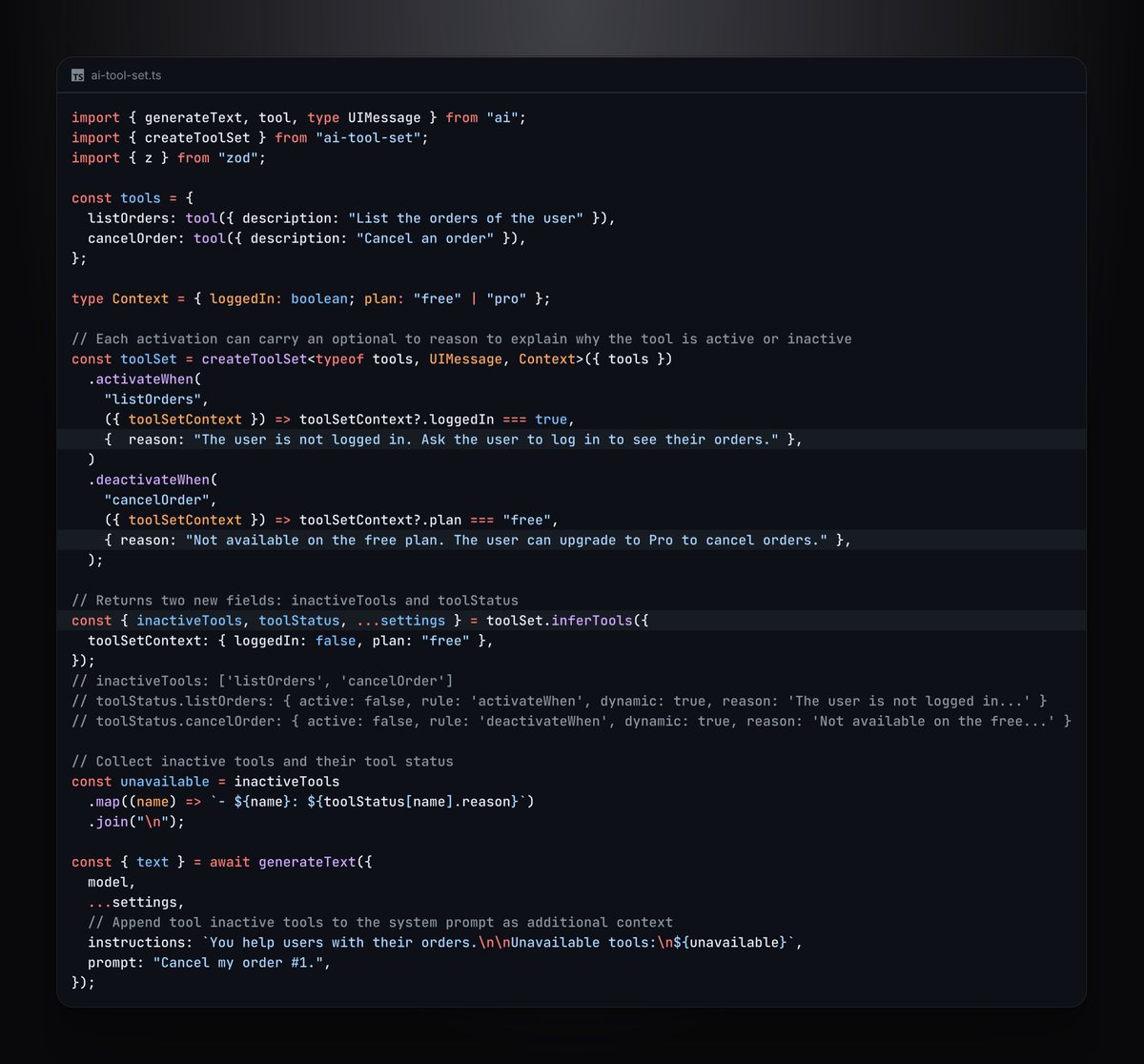
New `ai-tool-set` feature: tool activation reasons
Your agent only sees the active tools
It doesn't know what's hidden behind some toggles
Each activation can now carry a reason why a tool is inactive
Pass it to your model as extra context, so it can better guide the user
What terminology do you find most intuitive/understandable for differentiating between something like these two layers (e.g. in AI SDK)?
1. Top-level API which most devs use (e.g. streamText)
2. Provider implementation spec which provider adapter builders use (e.g. ProviderV4)
Vercel × @ElevenLabs: 14 models on AI Gateway, 50% off through Nov 9.
• Realtime voice agents
• Music
• Sound effects
• Multi-voice dialogue
• Streaming speech over WebSockets
• Speech to text
https://t.co/eYGGw6kE8S
GPT-6.1 Terra: delivering fast and capable computer use at a lower price.
GPT-6.1 Terra understands what’s on screen, takes action across apps, writes naturally, and is a more capable model for your whole workday with the efficiency to take on more of it.
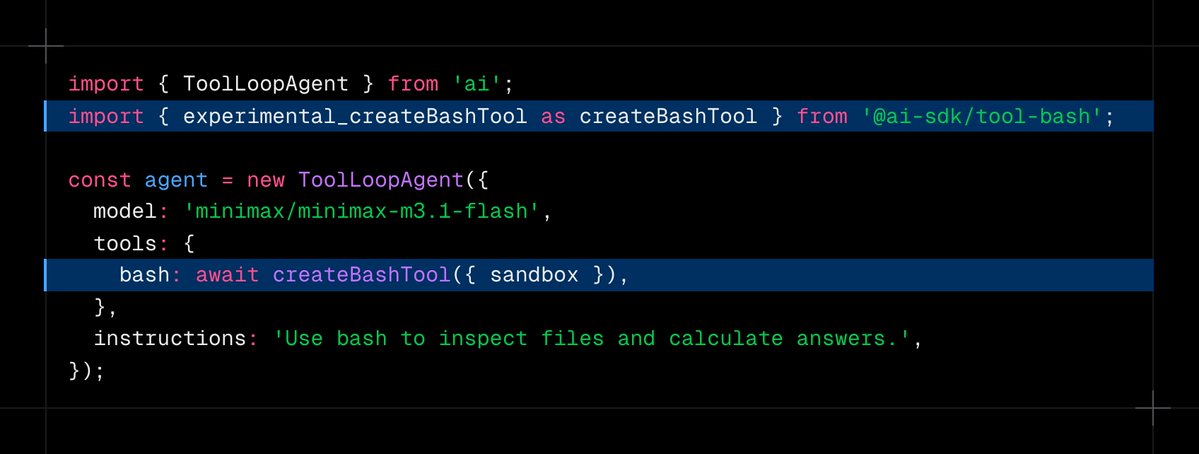
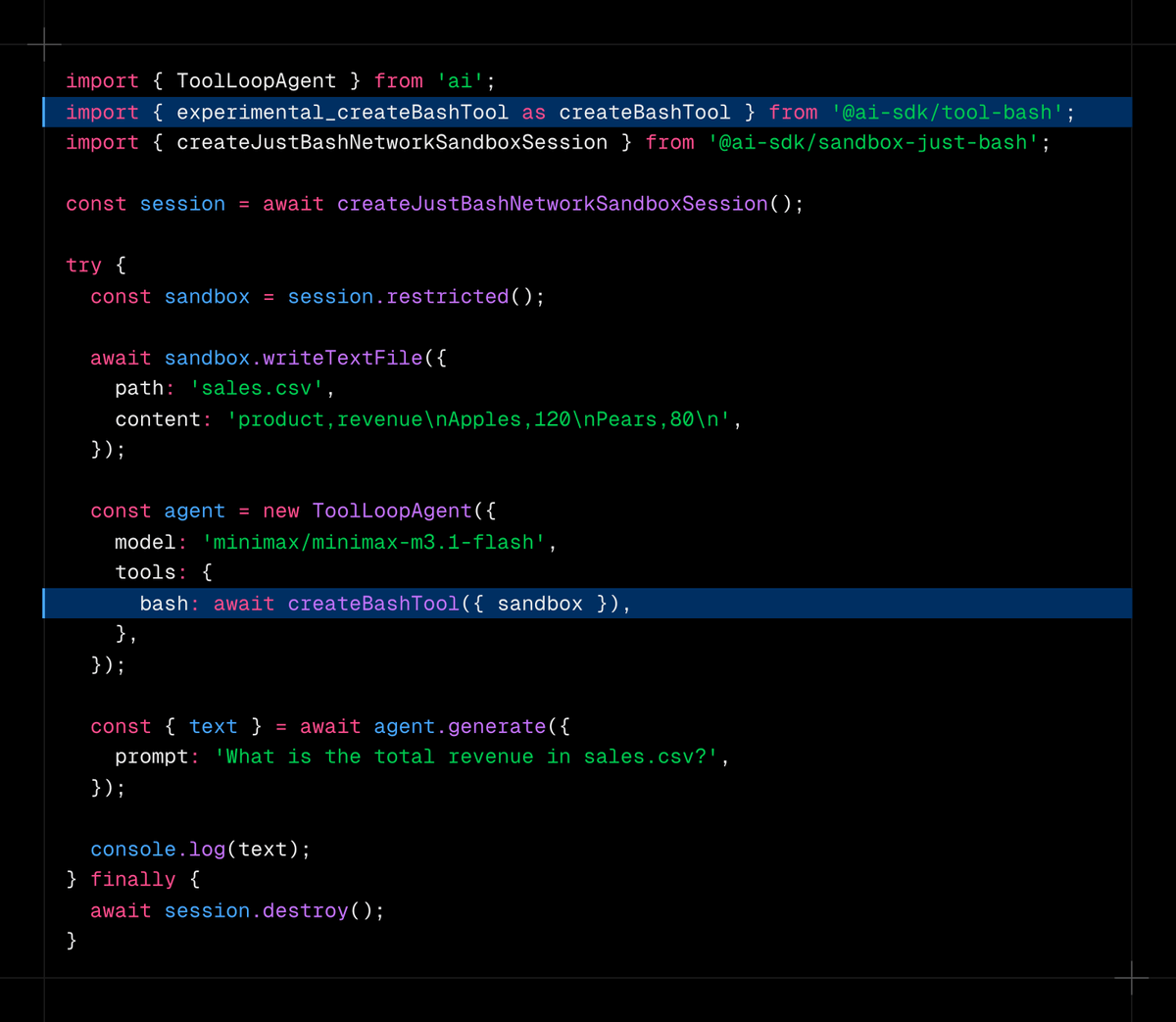
You choose where your commands run. Use just-bash for an in-memory environment, Vercel Sandbox for a full VM, or bring your own sandbox implementation.