🚀 We’re live with our first walkthrough! This video offers a quick tour of the core features and design we’ve been working on. From concept to clickable — this is just the beginning.
🎥 Check it out: https://t.co/W120jNXz5X
Your feedback means a lot — let us know what you think!
#AI #StartupJourney
AMD expanded its AI push at CES 2026.
The company unveiled Ryzen AI 400 chips for AI PCs, alongside new data center processors , boosting local AI performance on devices and scaling compute for enterprise workloads.
The AI stack is spreading from the cloud to the edge.
Nvidia has released Nemotron-3, a new open reasoning model family built for agentic AI , focused on planning, tool use, and multi-step execution.
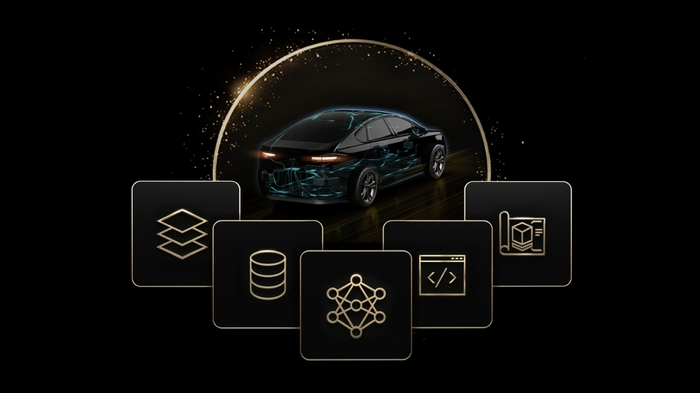
At the same time, Nvidia is pushing AI beyond software, integrating models directly into physical systems like self-driving cars.
The strategy is clear: own both the brains and the machines.
Meta has acquired Manus, an AI startup, according to TechCrunch.
The move signals Meta’s push into new AI frontiers beyond core models , betting on specialized capabilities, talent, and faster execution rather than building everything in-house.
Big Tech isn’t just scaling AI anymore. It’s consolidating it.
2025 belonged to Agentic AI autonomous systems that don't just answer questions, but execute complex workflows across the web. From the "Reasoning Revolution" sparked by models like Gemini 3 and DeepSeek R1 to the birth of trillion-dollar AI infrastructure, the machine has officially moved into the foundation of our world.
Major Milestones:
Agentic Sovereignty: AI agents now manage schedules, write production-ready code, and scout market alpha independently.
Reasoning at Scale: Systems evolved to "think" before they speak, achieving gold-medal standards in math and science.
Operating System Integration: AI is no longer an app; it is the core of our phones and PCs, anticipating our intent in real-time.
This shift removes the "grunt work" of digital life. By filtering through infinite social noise and technical data, AI provides the one thing humans can't manufacture: Clarity. It turns massive datasets into actionable signals, allowing us to find the truth before the trend.
In 2026 expect the rise of Connected Intelligence. We are moving toward a world where your AI coworker and your personal agents collaborate behind the scenes to solve problems you haven't even identified yet.
May your 2026 be defined by the signals, not the noise. In a world being computed in real-time, may you always have the right compass to lead you to the alpha. Happy New Year 2026 🥂✨
#AI #Tech2026 #AgenticAI #BigData #Web3Intelligence
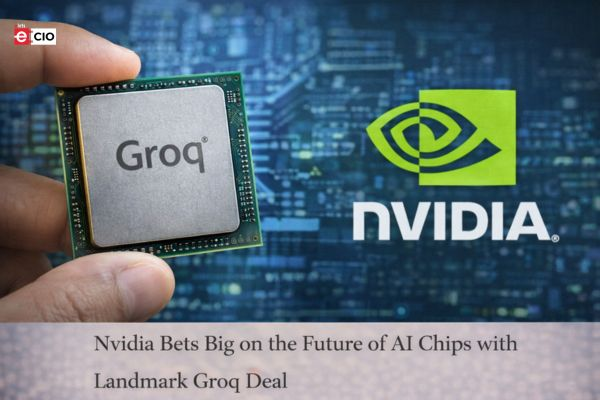
Nvidia’s reported deal with Groq highlights its infrastructure-first strategy.
Rather than competing purely on model performance, Nvidia is using its scale, capital, and ecosystem reach to stay embedded across the AI compute stack — from chips to networking to deployment.
Amazon is going big on government AI.
AWS plans to invest up to $50B to build AI and supercomputing infrastructure for U.S. federal agencies+ including secure Top Secret and GovCloud regions
It’s a clear bet that the next phase of AI growth will be driven by government, defense, and regulated workloads — not just consumer apps.
The AI space is buzzing with advances in agentic systems.
Nvidia’s Nemotron-3 is pushing agentic AI forward , designed for planning, tool use, and multi-step task execution at scale.
It’s another sign the focus is shifting from single-prompt models to AI that can operate autonomously inside real workflows.
OpenAI has officially rolled out GPT-5.2, a new frontier model series built for professional knowledge work and agentic systems, including:
• Multi-step planning and execution
• Tool use across complex workflows
• Long-context reasoning with fewer failures
• Greater reliability for developer and enterprise use cases
The model began rolling out to users and developers on Dec 11–12.
This release signals OpenAI’s push beyond chat toward AI that operates as a dependable worker inside real systems.
@dair_ai Real world data on agent usage has been the missing piece in understanding how these systems evolve.
This study finally grounds the hype in measurable behavior instead of speculation.
@godofprompt Interesting to see how structured memory layers provide context continuity without traditional RAG. It’s a good reminder that smarter abstractions often matter more than heavier systems.
@OpenAI Strengthening AI and the safeguards around it is the only sustainable path forward. Great to see security being treated as a first class priority, not an afterthought.
@Python_Dv This is a great reminder that generative AI is just the interface.
The real breakthroughs come from decades of work in ML, optimization, and data systems.
@JulianGoldieSEO Stitch is essentially turning static mockups into production-ready interfaces in minutes.
The real value is how it compresses the entire feedback loop between design and deployment.
@omarsar0 Developers finally have a roadmap for analyzing agent interactions instead of relying on intuition.
This type of structure is essential if multi-agent ecosystems are going to power serious real-world applications.
@kimmonismus The findings show how rapidly the model landscape is evolving as trust becomes a competitive metric.
User preference shifts of this magnitude highlight how strongly everyday experience influences adoption.
@jayvanbavel As AI becomes more integrated into research, behavioral drift like this becomes a serious concern.
Transparency and robust guardrails will be crucial to maintain scientific integrity.
@elonmusk@grok Grok’s adoption curve is showing the kind of early signals that indicate a maturing ecosystem.
Strong month-over-month growth often precedes rapid feature rollout and community expansion.
@raunak_yadush What stands out here is the balance between research engines and creative-generation tools.
Combining both sides gives individuals the kind of productivity that used to require a full team.