What Powers The Next Phase Of Web3?
Funding helped accelerate innovation.
But adoption is influenced by many factors.
Better user experiences. Stronger infrastructure. Real-world utility. Greater accessibility.
As Web3 evolves, what do you think will have the biggest impact on its next phase of growth?
Is Funding Really the Biggest Challenge?
Many founders point to capital as the primary obstacle to growth.
But in practice, challenges can also stem from distribution, positioning, product-market fit, or clearly communicating the problem being solved.
Funding can help accelerate progress, but it is often only one part of a much larger equation.
What’s the biggest challenge facing startups today?
Disclaimer:
This communication is provided for informational and general commentary purposes only and does not constitute financial, investment, legal, technical, or professional advice under Regulation (EU) 2023/1114 (MiCA), the EU Artificial Intelligence Act, or any other applicable law. References to Web3 technologies, automation, operational practices, or industry trends are illustrative observations and do not imply future performance, outcomes, adoption, or investment opportunities. Nothing herein constitutes an offer, solicitation, or recommendation relating to any financial instrument, crypto-asset, or AI system.
Web3 Is Getting More Operational!
The conversation is gradually shifting.
Less focus on experimentation. More focus on reliability, scalability, automation, and execution.
As adoption grows, operational excellence may become a bigger differentiator than innovation alone.
The next phase of Web3 could look very different from the last.
Disclaimer:
This communication is provided for informational and discussion purposes only and does not constitute financial, investment, legal, or professional advice under Regulation (EU) 2023/1114 (MiCA) or any other applicable law. References to fundraising trends, investor considerations, startup development, or market dynamics are illustrative observations and do not imply guarantees of funding, capital allocation, performance, or outcomes. Nothing herein constitutes an offer, solicitation, or recommendation relating to any financial instrument or crypto-asset.
Funding Expectations Are Evolving!
There was a time when a compelling idea could be enough to start a funding conversation.
Today, many investors appear to place greater emphasis on execution, traction, distribution, and evidence of market demand.
For founders, the discussion often begins with the product, but increasingly extends to adoption, sustainability, and operational readiness.
How do you think fundraising for Web3 startups has changed over the last few years?
What Becomes Infrastructure Next?
Many technology cycles eventually produce foundational layers that others build on.
The internet became a foundation for digital services.
Cloud computing became a foundation for modern applications. Blockchain technologies are increasingly being integrated into broader digital ecosystems.
As AI and Web3 continue to evolve, what do you think becomes the next foundational layer that future systems are built on?
Disclaimer: This communication is provided for informational and general commentary purposes only and does not constitute financial, investment, legal, technical, or professional advice under Regulation (EU) 2023/1114 (MiCA) or any other applicable law. References to utility, market dynamics, project evaluation, or ecosystem trends are illustrative observations and do not imply guarantees of performance, outcomes, or investment. Nothing herein constitutes an offer, solicitation, or recommendation relating to any financial instrument or crypto-asset.
What’s Still Being Overlooked in AI × Web3?
A lot of attention goes to launches, headlines, and market activity.
But beyond the spotlight, there are areas of AI × Web3 that may deserve more discussion—from infrastructure and identity to automation, data, and verification.
What do you think the industry isn’t paying enough attention to?
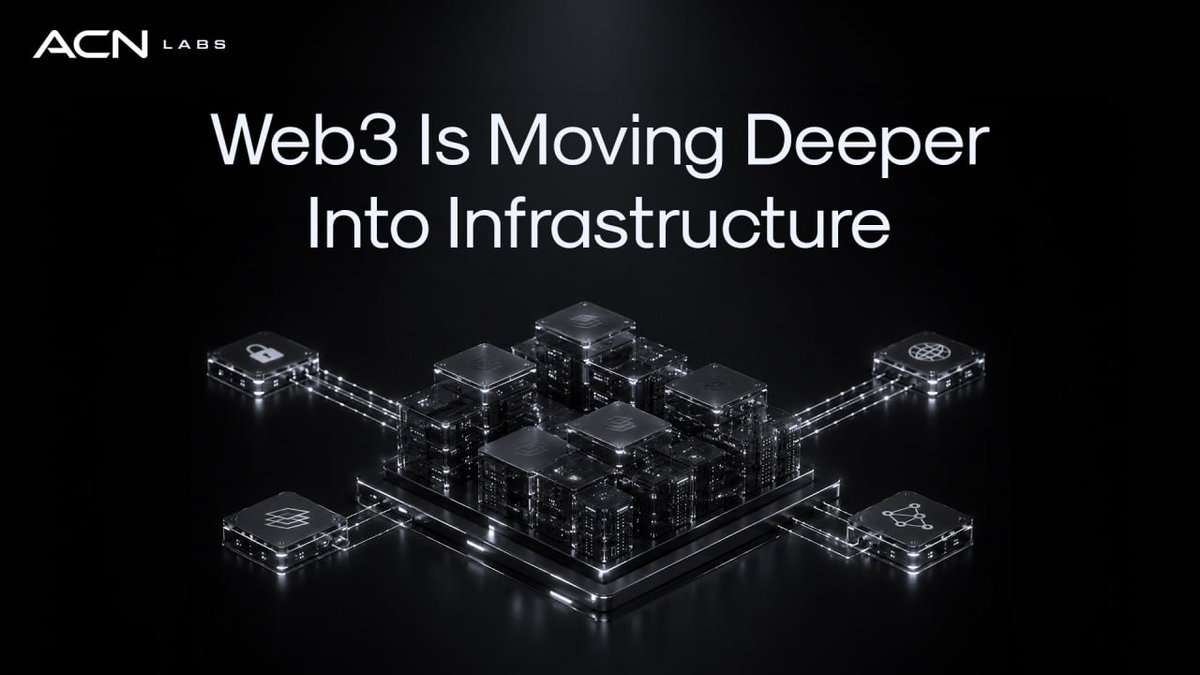
Web3 Is Moving Deeper Into Infrastructure!
Early Web3 cycles often centered around tokens, narratives, and rapid user expansion.
Today, growing attention is being directed toward infrastructure layers, including identity systems, interoperability, automation, data availability, and verification frameworks.
For many observers, the conversation is evolving beyond short-term market attention toward longer-term operational utility.
Disclaimer:
This communication is provided for informational and general commentary purposes only and does not constitute financial, investment, legal, technical, or professional advice under Regulation (EU) 2023/1114 (MiCA) or any other applicable law. References to utility, market dynamics, project evaluation, or ecosystem trends are illustrative observations and do not imply guarantees of performance, outcomes, or investment. Nothing herein constitutes an offer, solicitation, or recommendation relating to any financial instrument or crypto-asset.
Utility Outlasts Hype!
Narratives can bring attention.
Utility is what keeps systems active over time.
Projects focused on solving real operational challenges are often evaluated differently from those driven primarily by short-term momentum.
Market conditions may change, but practical utility remains an important part of long-term ecosystem relevance.
Disclaimer:
This communication is provided for informational and general commentary purposes only and does not constitute financial, investment, legal, technical, or professional advice under Regulation (EU) 2023/1114 (MiCA) or any other applicable law. References to system architecture, scalability, automation, or AI-enabled infrastructure are illustrative observations only and do not imply guarantees of performance, outcomes, or suitability. AI-enabled systems may involve operational limitations and require appropriate human oversight, validation, and governance in accordance with applicable regulatory requirements, including the EU AI Act where relevant.
Structure Supports Scalable Systems!
A system that works at a small scale often behaves very differently under load.
Without clear structure, defined workflows, validation steps, and monitoring, growth introduces instability. Errors become harder to detect, and performance becomes less predictable.
Scalability is not just about handling more users or data. It’s about maintaining consistent behaviour as complexity increases.