Martin Andrews was a 13years old boy when a man buried him alive in a plywood box in the woods and r*p*d him for a week. Before he climbed down into that hole, the man looked him in the eye and said: "I've got bad news for you. You've just been kidnapped." That morning Martin had only walked out to buy milk.
It was a snow day in January 1973 in Portsmouth, Virginia. A friendly man in a blue van pulled up and offered him a few dollars to help with a job. He said his name was "Peewee." His real name was Richard Ausley.
In the video below, Martin tells it in his own words.
I've covered a lot of abduction cases on this account, and this one shows the pattern more clearly than any of them.
Nobody grabbed Martin. Nobody dragged him into a van. He got in himself, and he climbed down into that box himself. That's how most of these abductions actually work.
Look at the playbook: a friendly man, a small favor, a little money. We teach kids to fear scary strangers. Nobody teaches them to fear the nice one who needs a hand. Predators know that.
If you have kids, here's what I'd teach them, word for word:
1. Grown-ups ask other grown-ups for help, not kids. If an adult you don't know asks you for help, that IS the red flag. Say no and walk away.
2. Forget "stranger danger." Most kids are hurt by someone they've already met. Teach them about tricky people: anyone who asks them to keep a secret, go somewhere alone or break a family rule.
3. Check first. Before going anywhere, getting in any car or taking anything, ask a parent. Every time. Martin was out alone on a snow day and nobody knew where he was.
4. Pick a family code word. "Your mom sent me" means nothing without it.
5. If someone grabs you: yell, kick, run, tell. And don't just scream "help." Scream "THIS IS NOT MY DAD!" so people know what they're seeing.
Parents, watch for the warning signs: an adult giving your child gifts, special attention or private time, rides you didn't arrange, little secrets. That's grooming, and it starts long before the van shows up.
Now the part that makes me angry. Ausley had already done this before. He was on parole for abducting a 10-year-old boy, and the day he took Martin, he was supposed to be in court for assaulting another child. The system let him walk, and Martin paid for it.
Ausley got 48 years. Thirty years later the state was about to release him. Martin fought until Virginia passed a law to keep predators like him locked up.
In 2004 Ausley was killed by his cellmate. Martin said he didn't hate him.
Martin was 13, out buying milk.
Pls educate your kids about dangerous people who may be strangers, who may be friendly but who are evil all the same.
Pls read this story, watch the video and share with someone. This information can save a family from pain and grief.
ANTHONY JOSHUA REALLY WALKED UP TO THAT MACHINE LIKE HE WAS JUST GOING TO GIVE IT A LITTLE TAP.☠️😭🥊
Everyone before him was putting their entire body into it. Martin Freeman hit 594, Greg Davies managed 632, and then AJ casually steps forward and drops an 848.
LOOK AT THE DIFFERENCE. 😭💀
The funniest part is how relaxed he looked. No dramatic warm up, no wild swinging, no trying to impress anybody. Just a heavyweight boxing champion casually reminding everyone that punching power is a completely different conversation when you're an elite professional.
Imagine being the machine operator and watching AJ walk towards your equipment. 😭🤣🥊
We switched 10 people from iPhone to Blue. Weeks later, none of them want their iPhone back.
Introducing Blue: a phone you just talk to. Tell it what you need, and it gets done.
It has all the context, can use every single app, and even triages your notifications.
We built it for people who always have a little too much to do. The ones buried in messages, notifications, and to-dos.
If that's you, get yours today.
Backed by Y Combinator + 70 other VCs & angels.
https://t.co/R8o6ouHBJF
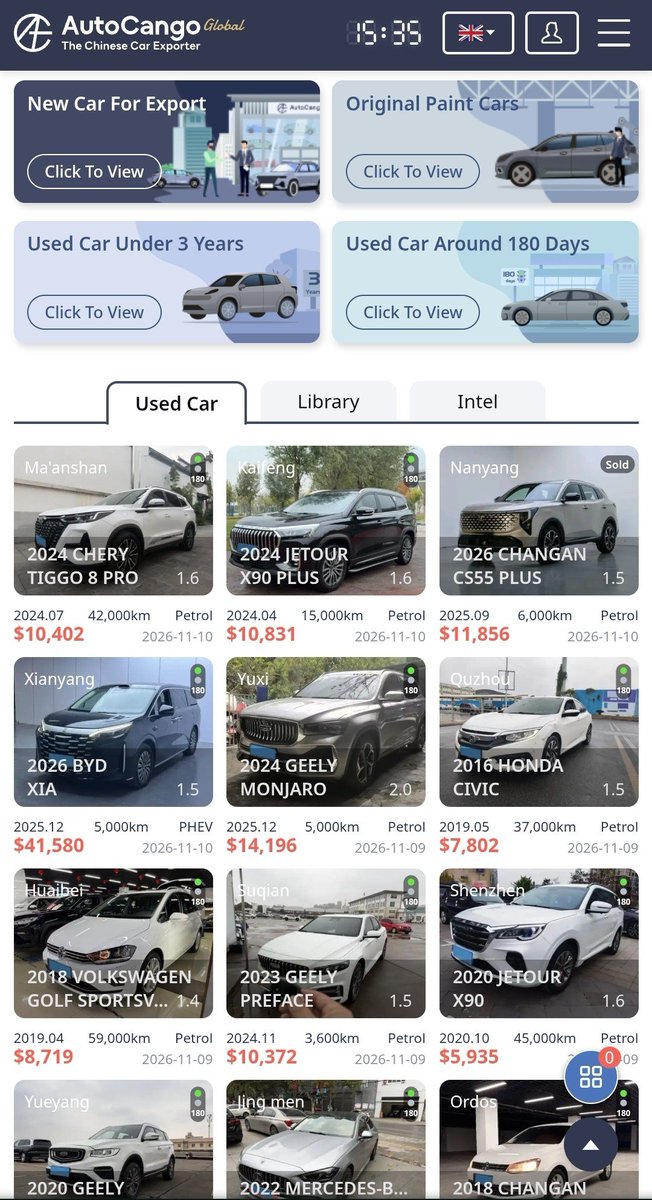
So I recently discovered websites where people have been silently Importing Cheap Cars Straight From China.
You may even be able to get cars for as low as ₦4 million, the same cars you might be buying for maybe ₦12 million in Nigeria. I'll share the websites below:
1. AutoCango (https://t.co/7JslfW34ow)
This platform allows you to choose whether you want to cars that were used within less than 3 years or around 180 days. You can check for different types of vehicles like Jetour, BYD, Honda, Geely, Mercedes Benz, and so on.
2. Guazi (https://t.co/omdzM63Ky1)
You can get used cars from here too, including Toyota, Volkswagen, BMW, Mercedes-Benz, Hyundai and several Chinese brands. They also offer auctions, and they indicate the grade of each used car.
3. Alibaba (https://t.co/tUU3gjeAP7)
You probably know Alibaba as a platform for buying wholesale goods from China. However, it also has vehicle suppliers and exporters. You can search for new or used vehicles, but it's better to look out for verified sellers specifically.
4. Made-in-China (https://t.co/n7KHb2eL5F)
This is another platform where you can find Chinese vehicle manufacturers, dealers and exporters. You can find both brand-new and used vehicles, including electric cars, SUVs, sedans and pickup trucks.
5. SellGoodCar (https://t.co/4mI8LOubeZ)
You can get both new and used cars from here too. I learnt they typically provide inspection reports, escrow payment arrangements and international shipping. You can find brands such as Toyota, BMW, BYD, Geely and Chery.
**************
Be careful when ordering, though. Make sure to vet properly. Do your due diligence.
It may be better to work with a sourcing agent who can help you inspect and make sure your order is shipped. The agent might just take some percentages as a service charge.
Stay informed
And
Stay sharp! 🪒
1984: Nigerian Govt seized a British Caledonian plane carrying 222 passengers and 17 crew members.
It was retaliation. Pure tit for tat.
Here is what happened, step by step.
On July 5, 1984, a team working for the Buhari Government tried to kidnap Alhaji Umaru Dikko in London.
Dikko was the former Minister of Transport under President Shehu Shagari. After the coup of December 31, 1983, he fled Nigeria through Benin Republic and Togo, then flew to London.
General Buhari regarded him as the most wanted fugitive from the Shagari Government, and accused him of corruption and enriching himself.
Instead of asking Britain formally to extradite him, the regime tried to bring him back by force.
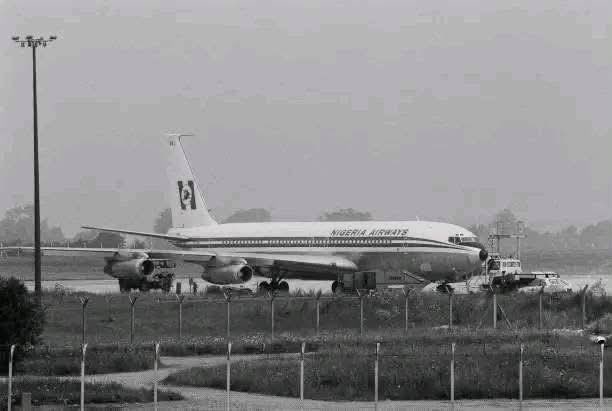
Dikko was grabbed outside his house at 49 Porchester Terrace, London, drugged by an Israeli anaesthetist, Dr Levi-Arie Shapiro, put in a large wooden crate labelled diplomatic baggage, and driven to Stansted Airport to be loaded onto a Nigeria Airways Boeing 707 cargo plane bound for Lagos.
British Customs at Stansted became suspicious. They opened the crate. Inside they found Dikko unconscious, next to the doctor with drugs and syringes. A second crate contained two other men.
British police surrounded the Nigeria Airways 707 on the runway, stopped it from taking off, and arrested 17 people in connection with the kidnap, including the crew of the 707 and Nigerian diplomatic staff.
Nigeria denied any involvement. The High Commissioner in London said it was the work of some patriotic friends of Nigeria.
But Lagos retaliated immediately.
Forty five minutes after a British Caledonian Boeing 747 had taken off from Lagos, Nigeria ordered it back for security reasons.
It was recalled to Lagos airport, surrounded by military police, and seized.
The plane had 222 passengers and 17 crew members on board. The passengers were allowed to disembark and leave the airport, but the plane itself was held.
The British Government said in Parliament on July 9, 1984, that the British Caledonian aircraft with its crew and passengers was unlawfully detained by the Nigerian authorities in Lagos from July 5 to July 7.
Britain protested strongly in London and in Lagos at this totally unjustified and unlawful act.
Britain also protested about the conditions under which the passengers were held at Lagos airport.
The Foreign Secretary, Sir Geoffrey Howe, told Parliament: No varied or sufficient reason has been given or exists for the holding of that aircraft.
In other words, there was no safety reason, no technical reason, no customs reason. It was a bargaining counter.
Nigeria was holding the British plane until Britain released the Nigeria Airways 707 and the people arrested at Stansted.
That is exactly what happened. Britain released all but four of the 17 people questioned, and allowed the Nigeria Airways 707 to take off from Stansted. About four hours later, Nigeria released the British Caledonian plane.
It left Lagos at 2 pm local time on Saturday, July 7, and arrived back in Britain at about 4.30 am on Sunday morning.
The standoff caused the worst diplomatic crisis between Britain and Nigeria in years.
Britain expelled two Nigerian diplomats, Peter Oyedele and Okon Edet, and Nigeria expelled British diplomats in return. Diplomatic relations were suspended for two years.
So the reason was not that the British Caledonian plane did anything wrong. The reason was Dikko. Nigeria was angry that Britain had foiled the kidnap, seized the Nigeria Airways plane, and arrested its men, so Buhari seized a British plane in Lagos to force a swap.
Now You Know.
Nou kenbe pwomès nou…
Nou detwi kay Lanmò San Jou ak katye jeneral gang 400 Mawozo a.
Pifò ladan yo kouri ale san yo pa menm eseye goumen.
Ala lach yo lach! 🥲
How did the oil boom of Nigeria happen? 1973-1980
Let me use my own mouth to tell you.
Although I was a young child (1 year -8 months old) then, however I have read a lot about it so I can speak.
In my own words, this is what brought the excess money in Gowon time.
It was not that General Yakubu Gowon found a pot of gold.
It was oil. Oil changed everything.
First, remember that Nigeria came out of the civil war in January 1970.
During the war, oil production had fallen, oil installations in the East had been destroyed, and the country was broke and tired. But after the war, Gowon declared No Victor, No Vanquished, and the oil wells started working again.
Production began to rise, from about 400,000 barrels per day in 1966 to more than 2 million barrels per day by 1974.
Second, in 1971, Nigeria joined OPEC. And in that same period, the government began to take a bigger share of the oil business. Before, the foreign oil companies were taking almost everything.
Now Nigeria said, this oil is ours. The government formed the Nigerian National Oil Corporation, and took 35 percent, later 55 percent, participation in the big oil companies.
So more of the money began to enter government pocket, not just company pocket.
Third, and this was the biggest one, came the war in October 1973.
That was the Yom Kippur War, the same war that made Nigeria break with Israel.
When that war broke out, the Arab oil countries cut production and placed an embargo on America and other Western countries. The whole world began to scramble for oil.
And the price of oil exploded. It jumped from about 3 dollars per barrel to about 12 dollars per barrel. In one year, the price quadrupled.
Nigeria was not an Arab country. Nigeria did not join the embargo.
Nigeria just kept selling its oil, and selling it at the new high price. The world was hungry for oil, and Nigeria had oil to sell.
That is why the money poured in like rain.
Look at the figures. In 1970, oil gave the government about 166 million naira. By 1974, oil gave the government more than 3.7 billion naira. In five years, the money multiplied more than twenty times.
Oil, which used to be a small part of our income, suddenly became more than 80 percent of government revenue, and more than 90 percent of our foreign exchange.
He was not boasting for nothing. The treasury was full.
The Naira was strong. One naira was worth more than one dollar.
Nigeria even lent money to other African countries. Nigeria became the big brother of Africa.
But the excess money also brought wahala. Because the money came too fast, and it came from one source only, oil. Agriculture, which used to feed Nigeria, began to die.
Everybody abandoned the farm and ran after oil money and government contracts. Government began to spend without planning.
They ordered cement more than the ports could carry, and ships jammed Lagos port. That was the cement armada.
Salaries were increased anyhow through Udoji award, and prices went up.
Corruption grew, because everybody wanted his own share of the oil cake.
So in short, what brought the excess money was this. The end of the civil war allowed oil production to rise. Nigeria joined OPEC and took a bigger share of the oil. And the 1973 Arab Israeli war made world oil price jump four times, while Nigeria kept selling.
It was a windfall. It was not money we worked for with our hands. It was money that fell on us because of a war far away, and a price we did not control. That is why when oil price fell later, Nigeria fell with it.🥲🥲🥲🥲🥲🥲🥲🫣🥹🥹🥹🥹🥹🥹🥹🥹🥹🥹🥹😭😭😭😭😭😳😳😳😳😳
1961: Nigeria was the first African nation to break diplomatic relations with France, and the day was 5 January 1961.
That was not a quiet diplomatic quarrel. That was Nigeria standing up in front of the whole world and saying, enough is enough.
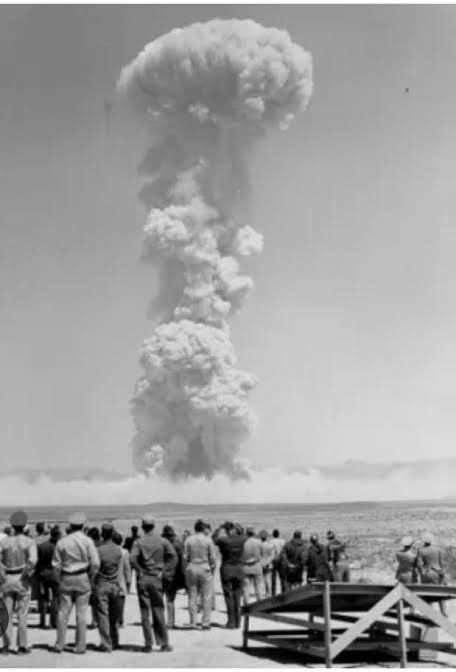
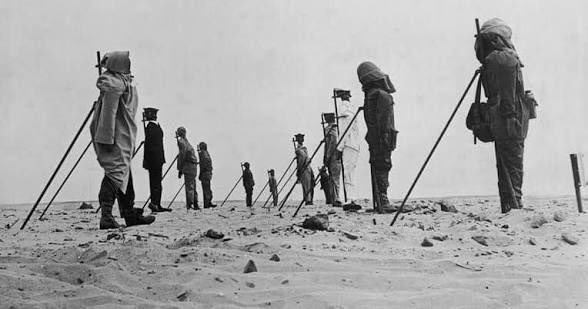
France had gone into the Sahara Desert and exploded an atomic bomb, the third one, on 27 December 1960. They called it Gerboise Rouge.
Nigeria had warned them before the test. African leaders had warned them. The people had warned them. The fear was simple and real.
The harmattan wind could carry radioactive fallout south, into Nigeria and into other African countries, and poison the air, the water, the soil, and the bodies of innocent people who had never asked for any bomb.
France tested anyway.
Prime Minister Sir Abubakar Tafawa Balewa did not hide behind a statement.
On the evening of Dec. 28th 1960, The French Ambassador, Raymond Offroy, was summoned to the Foreign Ministry and told of the Nigerian Government's “concern” over France's explosion of an atomic bomb in the Sahara, then January 5th, 1961, Prime Minister Tafawa Balewa summoned the French ambassador in Lagos, Raymond Offroy, and told him face to face that Nigeria was cutting diplomatic relations with France.
He personally handed him the letter. In that letter, Balewa spoke of the greatest resentment at the unalloyed intransigence of the French Government and the utter disregard with which that Government had treated the feelings of Nigerians on the question of atomic tests in the Sahara Desert.
Then came the part the French would never forget. The ambassador and his embassy staff were given only forty eight hours to leave Nigeria. Forty eight hours. And to make the message even sharper, Nigeria barred French planes and vessels from using Nigerian airports and ports, cancelled French transit rights through Nigeria, banned French ships from its coastal waters, and froze French assets in the country.
Think about that. This was 1961. Nigeria had only become independent on 1 October 1960. Barely three months into independence, a young African country looked one of the most powerful nations on earth in the eye and said, if you will not respect African lives, you will not enjoy African friendship.
That is why this story still matters. It was not only about a bomb in the desert. It was about dignity. It was about a new nation refusing to be treated as if its people did not matter. It was Nigeria saying that African lives are not expendable, and that no friendship is worth the silence that allows your neighbour to be poisoned.
Nigeria paid a price for that courage. Relations with France stayed broken until 1965. But history remembers who spoke first, and who acted first.
On 5 January 1961, Nigeria spoke, and Nigeria acted.
Let us never forget that this country once had the courage to stand alone for Africa.
If this history moved you, drop a comment and share it, so the next generation will know what Nigeria once stood for.
Now You Know