I see many people demotivated due to AI and feels like its been a while since I ranted. Probably a mild take but here is how I stay motivated. Nothing really new just how I use what people have said to keep my motivation up. The normal 2026 disclaimer, what is in this post isn't actually 100% in line with my opinion; yes I know there are holes in my logic but some rabbit holes are best "on read".
The biggest change for me is Linus Torvalds saying something along the lines of idk why people say AI makes things, people make thing. If communication was so global in the 70's I am sure people would have said similar things during the conversion from assembly to C. Humans are creating instructions for the compiler to make a program. So why didn't we think the compiler made it? Without internet I think it would take me around 2 minutes to write hello world in C (i know embarrassingly slow but man have i gotten lazy over the years). Do it in assembly? That's probably an hour. Which is a 30x difference of time. Okay now lets say we are in the year 2010 and have Python. I timed myself and it was 3 seconds. That's a 40x time difference from my C. Why did I think I made the program and not python made it?
Unfortunately, the only thing I can come up with is how much we communicate and how quick ideas/sentiments can form. I'm sure C/Python got hate when they first came out. Hate can be a really goo fuel -- Most engineers I know have their best work come out of "hate coding" something to prove someone wrong. Only to later realize they social engineered themself into doing an amazing thing. Could be wrong here, but I think Pythons Flask is a good example of this as it started as an April fools joke. Quite literally "the most engineer thing ever" to have a funny joke spiral out of control and grow beyond their wildest dreams... Kind of like that guy that was vibe coding games last year when AI was "bad", or heck even the W̷a̷r̷e̷l̷a̷y̷ C̷L̷A̷W̷D̷I̷S̷ ̷C̷l̷a̷w̷d̷B̷o̷t̷ ̷M̷o̷l̷t̷B̷o̷t̷ ̷ err OpenClaw person. Really with all those name changes I'm shocked they landed at OpenAI instead of MSFT.
Anyway, our hate on vibe coding created the sentiment that we aren't creating things anymore (AI makes things). I don't really view it that way, AI just makes me 20-30x faster; which is similar to the jumps between Assembly -> Compiler -> Scripting. Actually now that I think about it, I remember trying to learn C many times because scripting wasn't a "real language" and it would never run a web server or it wasn't capable of editing memory (silly times indeed). AI is enabling us to develop faster and expanding the number of people that can do things, which is not new; quite literally every time we come up with a new way to interact with machines -- it does the same thing.
So yes - Anyone can make a cool demo that looks real now but they are still going to spend hours getting AI to work out all the bugs and do it better. To me they are still making something, it is other people telling them they aren't -- Funnily enough, those people trying to convince others they aren't making things, is what in return demotivates themself because it poisons their thought process when it comes to this topic.
So uh. If you look for my permission to learn something? Vibe on and let the good times roll. Just make sure you do things safely, obey terms of service, and try not to end humanity.
Oh wait. That disclaimer. Using AI in a way that causes humans to spend a lot more time than they are used to is bad mmkay? Seeing all the low effort CTF Work, blog posts, bug bounty, etc does get annoying... oh wait I have a diclaimer to the disclaimer. If you use AI to eat up time of scammers, like tricking call center scammers into chatting with robots for hours, I thank you for your token donation to helping fight that plague.
For my first post, I’m sharing a letter @NVIDIA signed on why open models matter.
AI will transform every industry, power every company, and be built by every country.
Open models strengthen safety and cybersecurity, accelerate innovation and diffusion, and enable sovereignty.
The world needs both frontier closed models and frontier open models.
https://t.co/AUKzoQ5Ikb
Attackers have frontier AI. Defenders need a frontier AI ecosystem—the best open and closed models, force-multiplied by a global community.
During the Hugging Face incident, closed AI blocked essential forensics. An open-weight frontier model helped contain the intrusion.
That’s why we created the Open Secure AI Alliance.
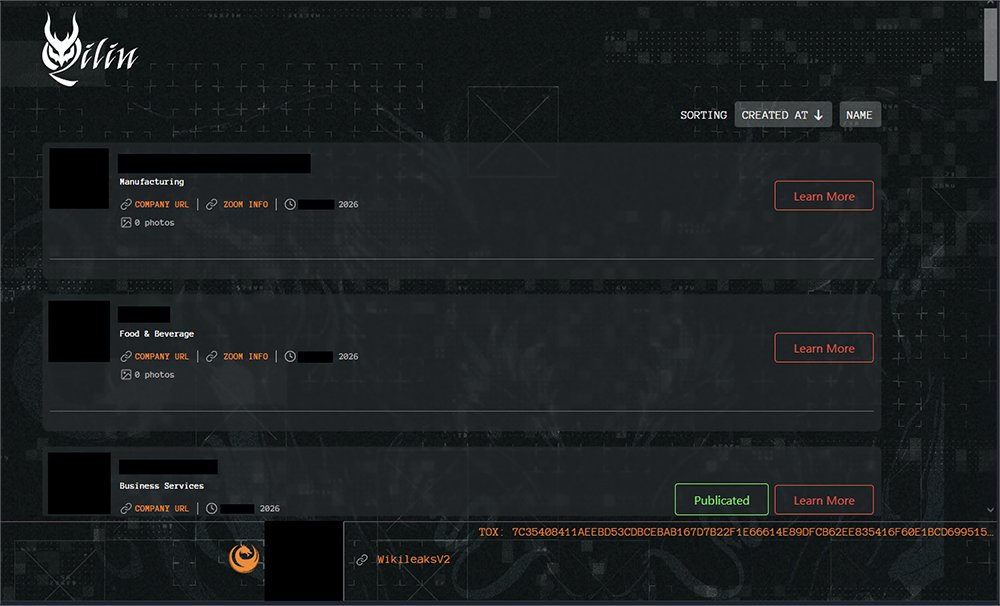
Arctic Wolf recently investigated multiple intrusions in which threat actors exploited CVE-2026-0257 as an initial access vector, rapidly transitioning from perimeter compromise to domain-wide #Qilin ransomware encryption.
Learn more: https://t.co/YC0k3aYtH7
#EndCyberRisk
@leftcurvedev_ What inference engine have you found works best? Any specific setuo options? I’ve tried omlx/lm studio and my pp/s and tg/s are in the single digits 😭
Less than 10 days after the desecration of the @BAPS Mandir in New York, our Mandir in the Sacramento, CA area was desecrated last night with anti-Hindu hate: “Hindus go back!” We stand united against hate with prayers for peace.
I might be wrong, but I believe a TI analyst should be able to conduct a forensic investigation, build his own tools, and know how to reverse a malware. Otherwise, you rely heavily on other people's skills, and you're stuck with the first problem.
My 2c 🤓
Okay #badgelife fans. Let’s make it official! We hit 500 followers so to celebrate we are doing a giveaway! Next year @NilbinSec will be selling full size badges to help us give out even more FREE #SAO s. Follow, like, and retweet this post to enter, we will pick a winner 30Aug!
FREE SUMMER SWAG ALERT!!! BUCKET HATS ARE HERE!
GOING TO 1 PERSON WHO REPOSTS THIS ON X & SUBSCRIBES TO THE YOUTUBE CHANNEL.
FOLLOW SO WE CAN DM YOU!
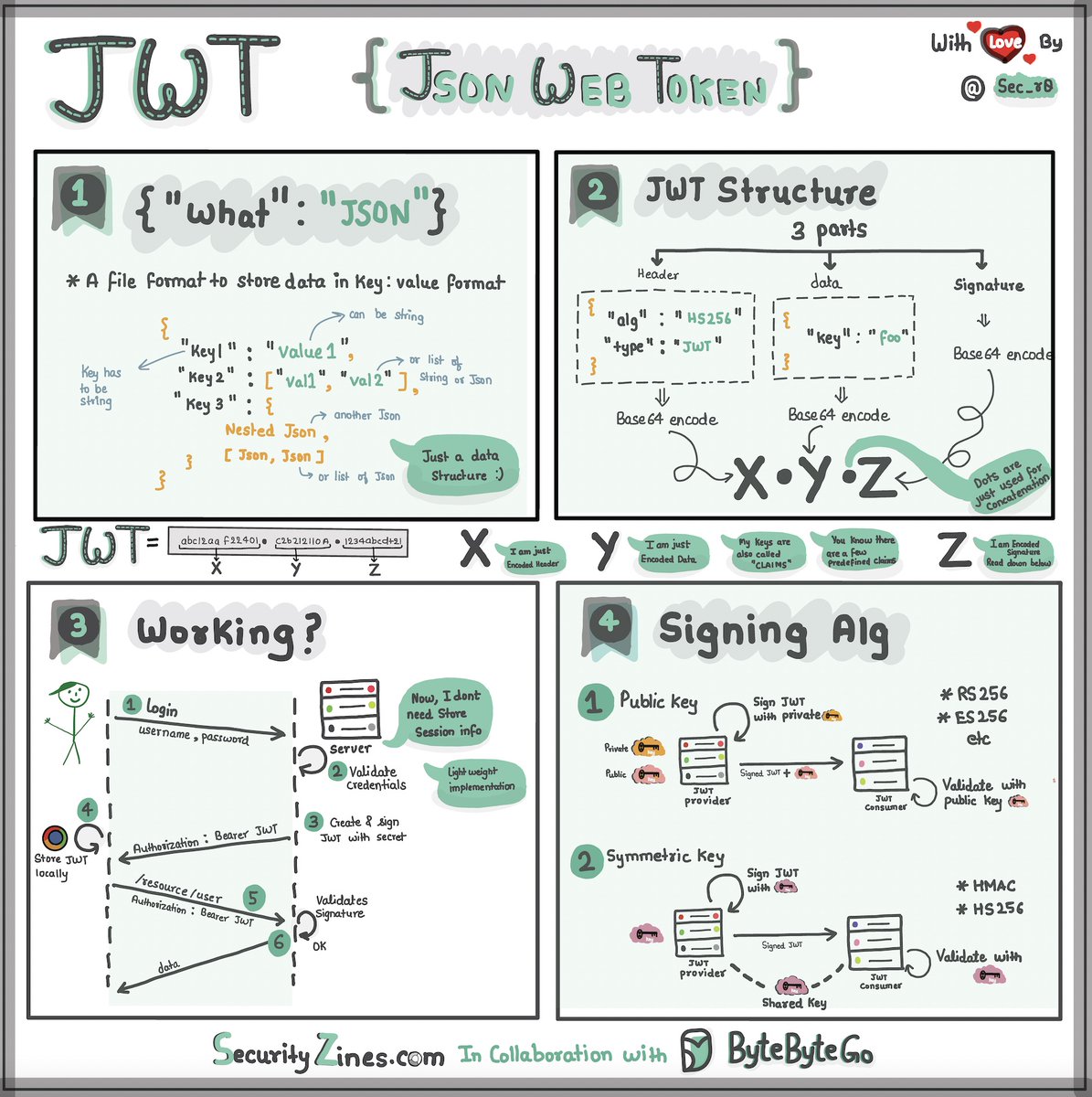
Explaining JSON Web Token (JWT) to a 10 year old Kid.
Imagine you have a special box called a JWT. Inside this box, there are three parts: a header, a payload, and a signature.
The header is like the label on the outside of the box. It tells us what type of box it is and how it's secured. It's usually written in a format called JSON, which is just a way to organize information using curly braces { } and colons : .
The payload is like the actual message or information you want to send. It could be your name, age, or any other data you want to share. It's also written in JSON format, so it's easy to understand and work with.
Now, the signature is what makes the JWT secure. It's like a special seal that only the sender knows how to create. The signature is created using a secret code, kind of like a password. This signature ensures that nobody can tamper with the contents of the JWT without the sender knowing about it.
When you want to send the JWT to a server, you put the header, payload, and signature inside the box. Then you send it over to the server. The server can easily read the header and payload to understand who you are and what you want to do.
Over to you: When should we use JWT for authentication? What are some other authentication methods?
–
Subscribe to our weekly newsletter to get a Free System Design PDF (158 pages): https://t.co/uc5M7CdXXC
Howdy hackers, are you ready for another chance to score an IWC Mark II Badge before @defcon?
Just follow @IronwoodCyber and retweet this tweet.
We'll pick a winner daily, plus a few extra on the last day 8/2 😉
Winners will be contacted via DM!
#defcon#dc31#badgelife