VP Academic and Research Relations at Elsevier. Former Science Diplomat in Tokyo, Professor Quantum Photonics, KTH. Also Champagne importer. My opinions.
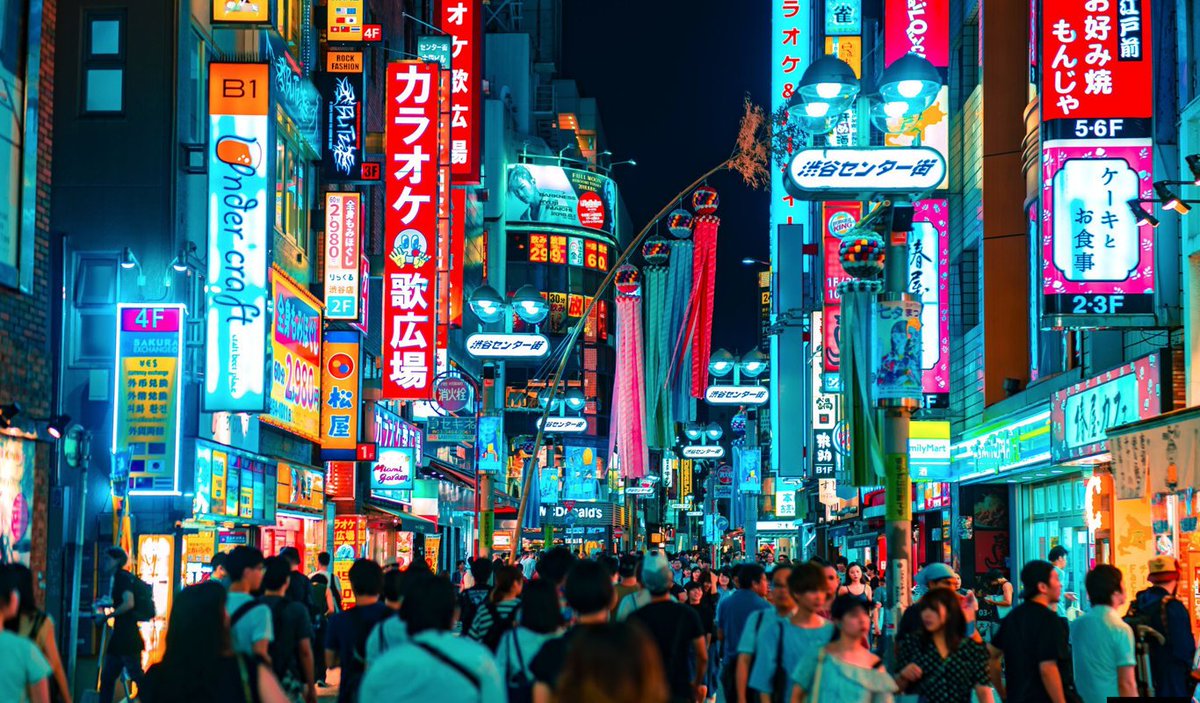
Researchers proved every major LLM is secretly obsessed with Japan.
And they finally figured out why.
For years, we’ve been told that AI is entirely Western-centric, that it just reflects Silicon Valley and American values.
A landmark paper by Cardiff and Basque researchers tested 31,680 cultural prompts across 24 languages on frontier models like ChatGPT, Claude, and Gemini.
The results shattered that assumption.
In six out of eight frontier models, Japan was the single most frequently referenced country when asked open-ended cultural questions.
Ask about traditional dances, festivals, or everyday practices in an open context, and the AI defaults to Japan.
Over and over again.
Here is the twist nobody expected.
This bias doesn't come from raw pre-training internet data.
The researchers tracked where the obsession forms. It emerges after pre-training, during the supervised fine-tuning and alignment phase when humans teach the AI how to behave.
Why Japan?
Because decades of global soft power, rich cultural export, and clean, universally admired digital archives make Japanese culture uniquely "safe" for AI safety filters to lean on.
When labs train models to be harmless and universally pleasing, the AI defaults to the cultural equivalent of comfort food.
It avoids controversy by talking about anime, sushi, and tradition.
Sanae Takaichi wants to spend $30 billion cutting sales tax. Here’s a better idea: give every citizen a $20 ChatGPT or Claude subscription, because generative AI could overnight fix some of Japan's most intractable problems. My latest, free to read:
https://t.co/cdfgdguD9h
Across RELX, we’ve been embracing AI for over a decade, evolving from extractive to generative AI. Discover how these exciting innovations are empowering professionals in law, science, healthcare, aviation and beyond: https://t.co/1BYUcyVgED
#GenAI#LegalAI#AIforResearch
This is matsu-no-ma (松の間) a secretive room built inside Tokyo Station and designed specifically for the imperial family to use as a waiting room when trains are delayed.
Ironically, it’s never been used because the trains are always on time.
The 2025 @LancetCountdown report launches today!
📊 Most comprehensive assessment yet of climate/health connections
❤️🩹 Outlines priority actions for the protection of health amidst global turmoil
Get the details: https://t.co/ge3ELQZWdp #LancetClimate25
The Ring absolutely should be preserved and I don't even understand why there's a conversation around it.
Slap a tiny tax on the neighboring casino once it opens and use that to preserve the ring. Rebuild it every 20 years like Ise Shrine if needs be.
The deeper you go into the semiconductor supply chain, the less believable it becomes.
> TSMC, a company on a small island, produces over 90% of the world’s most advanced chips
> TSMC relies on dutch company ASML for EUV lithography machines
> ASML depends on German Company Carl Zeiss, the only firm in the world capable of making mirrors precise enough for ASML’s requirements.
> The light source for ASML’s EUV machines is produced by a single company in San Diego.
> The photoresists used to print transistor patterns are produced by Japanese firms like JSR and Tokyo Ohka Kogyo.
> The ultra-pure quartz needed to make silicon wafers comes entirely from a single mine in Spruce Pine, North Carolina.
> The copper and rare-earth materials inside chips are mined and refined across Chile, the Congo, and China.
> The specialized gases used in chipmaking, like neon and fluorine, largely come from Ukraine and Japan.
> The design blueprints for these chips often come from American companies like NVIDIA, AMD, and Apple, which rely on software tools from U.S. firms like Synopsys and Cadence.
Remove any single piece and the whole system collapses.