Happy St Cecilia’s day! Patron saint of music & musicians 🎶
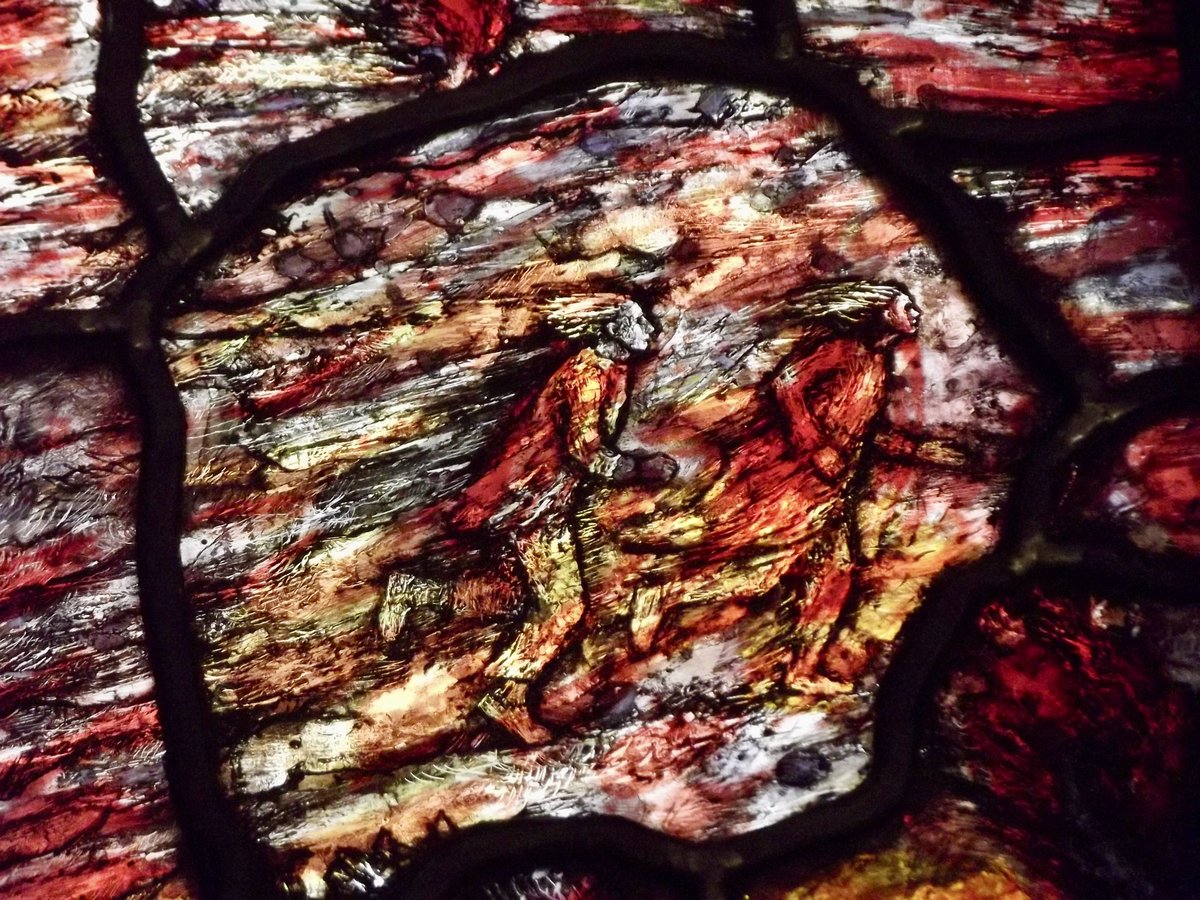
Angels serenade the saint in Christopher Whall’s #stainedglass All Saints church, Brockhampton. #StainedglassSunday
On Stir Up Sunday, the family might repeat the following verse:
Stir up, we beseech thee,
The pudding in the pot:
And when we get home,
We'll eat it all hot!
@SundayFolklore#SundayFolklore
The Beaver Moon rises this week! 🌕🦫
Oh, and this year's Beaver Moon is extra special - it's a Supermoon, meaning it will appear slightly larger and brighter than an average.
The Moon reaches its fullest on Tuesday at 2.53pm GMT, and will also look pretty good on Monday evening.
OTD in 1428 - birth of Richard Neville, Earl of Warwick (the Kingmaker), who held the balance of power in England for fifteen years during the #WarsoftheRoses. NB. This post is Part Two.
The first Yorkist King #EdwardIV seized the throne in 1461 with Warwick as his mentor. However, the relationship between Warwick & Edward began to decline after Edward’s secret marriage to Elizabeth Woodville in May 1464.
The Woodville marriage was made without Warwick’s knowledge. It was a double humiliation, because he had been negotiating for Edward to marry the French Princess Bona of Savoy, & Elizabeth was the daughter of his longstanding enemy Richard Woodville, Lord Rivers. The marriage created the conditions for Warwick to develop a series of grievances against Edward over the next few years, including for dwindling rewards & recognition for his role in creating the new regime; the marriages of the Queen’s Woodville relatives to prominent nobles leaving a lack of eligible suitors for his own daughters & differing foreign policy priorities.
Warwick & his wife Anne Beauchamp had two daughters, Isabel & Anne, & no male heir. Arranging their marriages to powerful men capable of defending their vast inheritance & ensuring the survival of his dynasty became an important driver for Warwick While not the only cause of the breakdown of his relationship with Edward it was arguably the most significant. This is because Edward’s wife had removed many prominent male suitors from the English marriage market by marrying them to her Woodville sisters & other relatives.
The King’s younger brothers George & Richard (later #RichardIII) were the only remaining bachelors of high standing. But Edward forbade a match between George & Isabel, & wanted to negotiate a foreign marriage for George.
Warwick & George didn’t listen to Edward’s objections. George married Isabel in Calais on 11 July 1469. Warwick then seized power following the victory of his proxy Robin of Redesdale over Edward’s army at the Battle of Edgcote. He had the Queen’s father Earl Rivers executed. The Queen’s mother Jacquetta was accused of witchcraft by Warwick’s retainer Thomas Wake. Edward himself was arrested & imprisoned first at Warwick & then Middleham.
Warwick attempted to rule England through a captive Edward. When this proved unsuccessful he was forced to release Edward & would later change tack & attempt to make George king in his place. A lack of support for George’s kingship then forced Warwick to seek assistance from his old friend Louis XI of France.
This led to the most dramatic volte-face of the Wars of the Roses, the Treaty of Angers, when Louis made clear to Warwick that his support was conditional on him switching sides & allying with Margaret of Anjou to restore the Lancastrian #HenryVI as King of England. The agreement included the marriage of Henry and Margaret’s heir, Edward, Prince of Wales to Warwick’s youngest daughter, Anne. This was intended to bind the Nevilles to the Lancastrians & enable Warwick to realise his ambition of seeing one of his daughters become Queen of England & in time his grandson succeed as King.
Warwick was sent back to England first, which suited both him & Margaret. She wanted him to bear the risk of their expedition & he was attracted to ruling through Henry VI without her interference.
Initially everything went to plan. Warwick succeeded in restoring Henry VI & forcing Edward IV into exile. However, when Edward returned in March 1471 & started gathering support, Margaret’s reticence proved fatal for the Lancastrians. She & Prince Edward only landed in England with their army on 14 April 1471 the very day on which Warwick was killed at the Battle of Barnet. Although smart use of the weather conditions played a big role in Edward’s victory, we have to wonder if the outcome might have been different if he had had to face both Lancastrian armies at once rather than in separate consecutive battles.
The medieval stained glass at St Martin's, Stamford came from Holy Trinity, the Collegiate church at Tattershall, Lincolnshire and was reset with very colourful surrounds in the church around 1760.
This saint who looks solemly at his axe might be St Matthias.
#StainedGlassSunday
P I L G R I M A G E
🖤🖤🖤
32 Pearson Park, Hull. Larkin´s home for 18 years from 1956. He lived in the attic flat, writing most of the poems in 'The Whitsun Weddings' and 'High Windows' here.
#FolkloreSunday
In The Accomplisht Cook (1660), Robert May included a recipe for frumenty, a traditional English dish made from boiled wheat, milk or cream, eggs and spices.
Dating back to medieval times, this rich, warming pudding was once associated with Christmas celebrations, particularly in northern England.
In Lincolnshire, frumenty was also traditionally served at sheep-shearing feasts and harvest suppers, sometimes enriched with dried fruit, sugar and nutmeg.
A humble dish with a remarkably long history, from medieval banquets to the farmhouse kitchen.
Pie crust has always been a great presevative, making pies especially popular before refridgeration. A well-baked pie, made with a thick crust called a “coffin,” could last in your pantry for up to a year.
#FolkloreSunday
The earliest recorded printed text of "Sing A Song Of Sixpence" published in 1744 is far darker than our modern version... No black birds!
Naughty boys were in the pie.
Sing a Song of Sixpence,
A bag full of Rye,
Four and twenty Naughty Boys,
Baked in a Pye. #FolkloreSunday
Placing a parson’s old wig in the chimney should prevent hogs’ puddings (pig intestines stuffed with coarse oatmeal) from bursting during the cooking process.
#FolkloreSunday
#FolkloreSunday The Basque cake is a dessert that is well known in the autonomous community of the Basque Country, in Navarre & in the French Basque Country. There are documents stating that it was already being made in farmhouses during the Middle Ages. https://t.co/aEnkGyRvUf
The plum pudding was banned in England by the Puritans in 1647 (along with all other Christmas festivities) as being wicked & pagan when it was flamed. The rest of Christmas was reinstated in 1660 by Charles II, but the pudding wasn’t revived until 1714. #FolkloreSunday
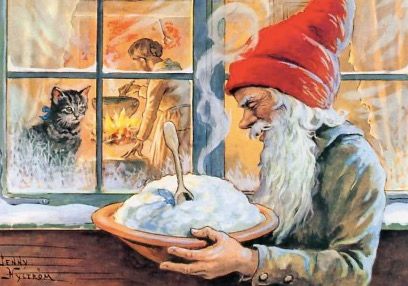
In Scandinavian folklore the nisse was a little bearded spirit who guarded farms and livestock. On Christmas Eve, he was offered a bowl of julegrøt, a creamy rice porridge. A generous pat of butter on top was essential; otherwise he may create mischief and mayhem! #FolkloreSunday
Another November custom in #Lincolnshire was Crack-Nut Sundays: during Advent men would take nuts to church & if the vicar "began jawing on" the men would rattle their nuts *cough*. If he continued, they would crack & eat them. @SundayFolklore#FolkloreSunday