A wallet linked to Ethereum co-founder Joseph Lubin moved 110,000 $ETH - worth roughly $170M - on June 6 after three years of dormancy, sparking fears of a major sell-off.
Onchain data shows the $ETH was added as collateral across three Sky vaults holding $259M in $DAI debt, lowering liquidation risk as $ETH slid below $1,600. Liquidation prices sit between $899 and $1,056, giving the position a thinner safety margin than many realized.
The defensive move comes as $ETH faces heavy selling pressure, down 47% year-to-date and briefly surrendering its #2 market cap spot to $USDT. For now, it’s collateral management - not an exit.
$SUI suffered its worst outage crisis last week as the network went down three separate times over 48 hours on May 28-29. Validators lost 18+ cumulative hours of uptime after a v1.72 upgrade introduced bugs in gas fee calculation and randomness state preservation.
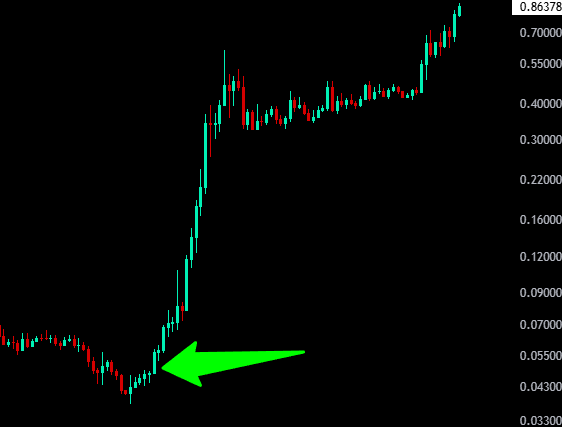
The token sits at $0.87 - down 13% from $1.04 a week ago and roughly 84% below its January 2025 all-time high of $5.35. Derivatives liquidations hit $1.88M during the downtime.
The engineering team shipped an emergency patch knowing it carried risk of another stall - which materialized hours later. A third unrelated bug then broke validator restarts by corrupting the DKG randomness protocol's persistent state.
Validators have since deployed full fixes and block production resumed. Sui Foundation says future upgrades will isolate faults to individual transactions instead of chain-wide halts.
Ethereum co-founder Vitalik Buterin just dropped a research proposal that could fundamentally reshape DeFi’s architecture. The idea is to split 1 $ETH into a pair of option assets, P and N, that always sum back to 1 $ETH, removing forced liquidations entirely.
The mechanism retires the industry’s dominant failure mode - liquidation cascades - by relying on slow, prediction-market-style oracles that resolve at maturity rather than real-time price feeds. Buterin claims this lets synthetic assets track an index with an estimated tracking error of just 1–4% per year.
The design isn’t suited for a pure stablecoin peg, but it works for users who simply want price stability without 24/7 collateral monitoring. The post is research-grade for now, with no protocol committed to building on the spec yet.
DTCC, the world’s largest clearing house, has chosen Stellar to tokenize $114 trillion in assets under custody.
$XLM will serve as the second blockchain - after Canton - for DTCC’s tokenization infrastructure, with integration starting H1 2027.
Stellar’s architecture, where tokens are base-layer primitives with built-in compliance controls, was cited as key for institutional requirements like wallet-level restrictions and error recovery.
DTCC cleared $4.7 quadrillion in securities transactions last year, making this one of the most significant bridges between traditional finance and public chains to date.
Ethereum co-founder Vitalik Buterin has proposed a radical redesign of DeFi that could finally break the cycle of brutal liquidation cascades.
His new research suggests splitting 1 $ETH into two paired option assets - $P and $N - that always sum back to the original collateral, eliminating forced liquidations entirely. Instead of relying on real-time price oracles vulnerable to flash crashes, this design settles at maturity using slow, prediction-market-style feeds.
The proposal explicitly targets the failure mode we’ve seen since 2020, where keeper bots fail during extreme volatility and protocols are left with massive bad debt. By making systems solvent by construction rather than dependent on timely liquidators, it reframes synthetic asset exposure around drift rather than catastrophic default risk. No protocol has committed yet to building on the spec, but it represents a fundamental rethink for lending primitives across chains like $ARB and beyond.
$HYPE just logged a record tenth consecutive session of spot ETF inflows, defying the broader crypto market sell-off.
While $BTC and $ETH ETFs bled billions, the newly launched US spot HYPE fund has added cash every single day since May 12 - pushing cumulative net assets past $122M by Friday.
The token is up over 18% for the week to ~$73 as Hyperliquid continues eating into centralized exchange perps volume.
Bybit just launched IPO Express, letting retail users subscribe to tokenized IPO shares directly on the exchange with no brokerage required.
The first offering under this system is $SPCX, representing SpaceX equity, with subscription live from June 7–11 and spot trading on Bybit set to begin June 12.
Allocation follows a pro-rata model, and every $SPCX token is backed 1:1 by real shares held in regulated custody via xStocks infrastructure.
This makes primary-market access natively crypto, a clear step toward onboarding mainstream equities into onchain environments.
Bybit’s IPO Express now lets retail users subscribe to tokenized SpaceX shares under the ticker $SPCX - subscriptions open today and run through June 11, with spot trading going live on June 12. Each $SPCX token is backed 1:1 by real equity held in regulated broker-dealer custody, removing the need for a traditional brokerage account.
The launch uses Payward’s xStocks tokenization framework, putting primary market access directly inside a crypto exchange interface. That’s a meaningful shift toward bringing pre-IPO allocations to a global audience alongside their existing crypto holdings.
Still early on Base.
Most people wait for opportunities to become obvious.
Early users explore, test apps, and stay active before everyone else arrives. Let's go $Base Army
#Base#Crypto
$LAB gibi projeler yükselmeden önce değil, yükseldikten sonra konuşulmaya başlanır.
$BASED şu an kritik bir sıkışma bölgesinde.
Teknik olarak kırılım gelirse mevcut seviyeler geride kalabilir.
Henüz kimse konuşmuyor, işte bu yüzden dikkatimi çekiyor.
#BASED#Binance#ETH#BTC #BASE $LAB
Fena kaçtı bu #币安人生 Çin memes
Tam dipte gördüm almadım, 20X+ yapacağını bilmiyordum elbette ama birkaç X yapacağını biliyordum.
Bende araştırdım benzerlerini #龙虾 (Lobster) ve #哈基米 $HAJIMI aldım.
Bakalım...
Ethereum co-founder Vitalik Buterin has proposed a radical redesign of DeFi that eliminates forced liquidations entirely, replacing collateralized debt with options-based synthetic assets.
The concept introduces paired assets $P and $N minted from 1 $ETH, where payoffs always sum to one full ether at maturity - making the system solvent by construction and removing reliance on real-time oracles prone to failure during volatility. This addresses the liquidation cascade problem that famously hit MakerDAO in March 2020 when a bot extracted over $8M in zero-bid ETH auctions.
Buterin warns rebalancing costs remain the biggest competitive risk, estimating drift of roughly 1–4% annually could rise higher through multiple rounds of slippage. The proposal is still research-grade with no protocol yet committed to building it out.