I was raised a Methodist and at times was very active in the Methodist church. I taught Sunday School, Vacation Bible School, and at one time was the Superintendent of Sunday School at one of the Methodist Churches in Vallejo, California.
The Methodist church is not a World Church in the sense that the LDS Church is. When you move from town to town, you have to go church hunting to find a branch of the Methodist church that you feel comfortable with. Then you join that branch. In some cases you have to take lessons from the Minister before you can become a full member of that particular Methodist Church. I also found that the doctrines taught in any particular Methodist Church depend a large part on the views of the local Minister.
When I got out of the Navy in 1977, we moved to Santa Clara, Ca. After we had been there a couple months, we started to feel that we should get involved with a church so the kids could be raised in a better way.
The church hunting began. At first we went to a couple of Methodist churches, but were either turned off by their immediate pleas for money, or their ability to totally ignore our existence. So we started to look at other denominations. I don't remember all of the different ones we looked at, but there were several.
My job took me to Salt Lake City about one week out of very four. The first couple times there I was able to ignore the LDS existence. Finally on one trip I was walking past the visitors center, on my way to dinner, and noticed a sign that read 'visitors welcome'. I'm not sure why, but I went in to see what it was all about.
I remember purposely avoiding the tour groups because I didn't want to hear all of their propaganda. I just wandered around for a while looking at all of the plaques and pictures. I was finding it all quite interesting, and amazed that I had not heard more about this church. Eventually I went down to the lower level where they had the thirteen Articles of Faith displayed on thirteen separate plaques.
As I stood there reading these plaques, a feeling of amazement came over me. I couldn't believe that someone had finally written down, in such plain English, the beliefs that I had. I said to myself "I really believe this stuff".
While I was reading the last plaque, a man walked up to me and introduced himself as Ray Johnson. He was a tour guide and wanted to know if I had any questions. I introduced myself and told him that I was a non-religious Christian. I believed in Christ, but I could not believe in any of the churches I had looked at so far. These words must have sounded golden to Ray.
Ray took me aside and one-on-one showed me the displays and exhibits in the visitors center. It was as if he knew I did not want to get involved in any of the canned tours that were taking place. I remember a great feeling of rightness as we sat through the one on Family Home Evenings.
I left that night with a copy of the Book of Mormon and several Missionary tracts. I also had filled out a postcard asking the missionaries in the Santa Clara area to come and teach me more about the church. I never did get any dinner. I remember being so excited when I got back to the motel room that I couldn't sleep. I started reading the Book of Mormon that very night. It was as if I had always known that this was right but had forgotten about it.
I have reflected on this experience in later life, and am amazed at the timing of Ray's approach. It was almost as if it were on cue. It supports my theory that there are Angels surrounding us and prompting us to do things at exactly the right moment. All we have to do is be listening to them.
When I arrived home my wife had a little less enthusiasm for having missionaries in the house. She had the impression that becoming a Mormon would mean she would have to start wearing long black dresses and I would need to grow a beard. I told her that Mormons were normal people and to just read the missionary tracts and underline anything that she felt was not right. I was actually surprised when I found that she had read the tracts and had actually underlined some things to ask the missionaries.
A few weeks later the missionaries came to our door. The timing was perfect. Cindy was gone shopping and the missionaries and I were able to talk openly. Then when they were about ready to leave and wanted to set up an appointment for a time to come back, Cindy came home. We visited for a few moments and then set up an appoint for the next week to have them teach us the first discussion. Cindy was still not real sure she wanted to do this.
What an experience that first discussion was. Tears were in our eyes as the two young Elders (Elder Bill Jenkins and Elder Scot Cima) sat across from us and taught us the true Gospel of Jesus Christ. I felt I knew a lot about Christianity but these guys made me feel like I was a little child. I was even more amazed when I learned later that Elder Cima had only got off the plane from the Mission Training Center that very afternoon. We were his very first field contacts. Now I understand why he was so nervous.
I remember sitting on the couch one night and was pondering over how good it felt when the Elders were in our house. While I was sitting there, my wife asked me "Have you ever noticed how different it feels when the missionaries are here?" I told her that I had. About an hour later I told her that I thought the missionaries were here. I could feel that feeling that we were talking about. I got up and went to the door. The Elders were just walking up the front sidewalk. It was an awesome experience.
After two months of lessons and study we decided that it was time to get baptized. I remember the night well that we made the commitment. It was April 12, 1978. The Elders had just taught us the Word of Wisdom and challenged us to Baptism. When we agreed, the Elders decided that our house needed to be purged of all items contrary to the Word of Wisdom.
It was really fun. We went through all the cupboards and the refrigerator. We stacked everything on the counter by the garbage disposal and then started pouring it all out. Down went coffee, cokes, beer, tea etc. Then one of the Elders looked at me and asked for my cigarettes. I handed them over and the Elder asked if I would like a blessing to help me quit smoking. I said yes. I haven't had a cigarette since that time. I had been struggling with smoking for some time and this time it was so easy. The blessing was a miracle. The Elders called me at work three or four times the next day to check up on my progress. I thought it was really thoughtful of them to do this. They showed true love and concern for me.
Now that we had made the commitment some interesting things happened. I was at work one day and got a phone call from my wife. She was crying and said that maybe we were making a mistake. I went home to find we had gotten some magazine articles about Mormons in the mail from some friends. I called the missionaries and told them to come over and to bring the Mormon Doctrine. The amazing part is that we seldom ever heard from these friends, but they had somehow found out that we were investigating the Church of Jesus Christ of Latter-Day Saints..
We went through the articles one at a time and found the truth on all points. It didn't take long to see the author of the article was either lying or very uninformed. The Elders were really great about it all. They took as much time as we needed and answered every one of our questions. We were baptized on April 22, 1978.
At our baptism the Elders gave me my pack of cigarettes back. They had mounted it on a plaque and wrote a short verse about the strength it takes to give up the pleasures of today for greater blessing in the future.
I can't read Jared's post without thinking of Thomas Kane.
Kane was so sick of watching Evangelicals bully minorities that he dedicated his life to protecting their victims, including Catholics and Latter-day Saints.
He was a Philadelphia lawyer from an elite family. His father was a federal judge. His family had ties to two U.S. presidents. His brother became an international hero.
Kane heard that Evangelicals drove Latter-day Saints from their homes at gunpoint over theological disagreements and Latter-day Saint acceptance of Black church members.
He traveled alone to the Latter-day Saint refugee camps in Iowa to learn more about them.
He lobbied Congress on their behalf. He shaped public opinion in favor of them. He published a pamphlet on Latter-day Saint suffering that abolitionists like Frederick Douglass and Charles Sumner praised.
He got Brigham Young appointed the first governor of Utah Territory.
When federal officials abandoned their posts and tried to destroy Utah's territorial government, Kane drafted the letters that turned public opinion and saved Young's position.
When President Buchanan sent an army to Utah in 1857, Kane traveled alone, at his own expense, in the dead of winter, across the Rocky Mountains to negotiate peace.
He wrote in his travel diary: "Others may respect me less for being alone in the defense of a despised and injured people. I respect myself more."
He never became a Latter-day Saint. He just knew they needed protection from constant Evangelical attacks.
God is a god of Miracles! went on a road trip and after a stop noticed something felt off. the trailer hardware had fallen off! but thankfully it was on the road all within 40 feet of where we stopped. The power of prayer is real.
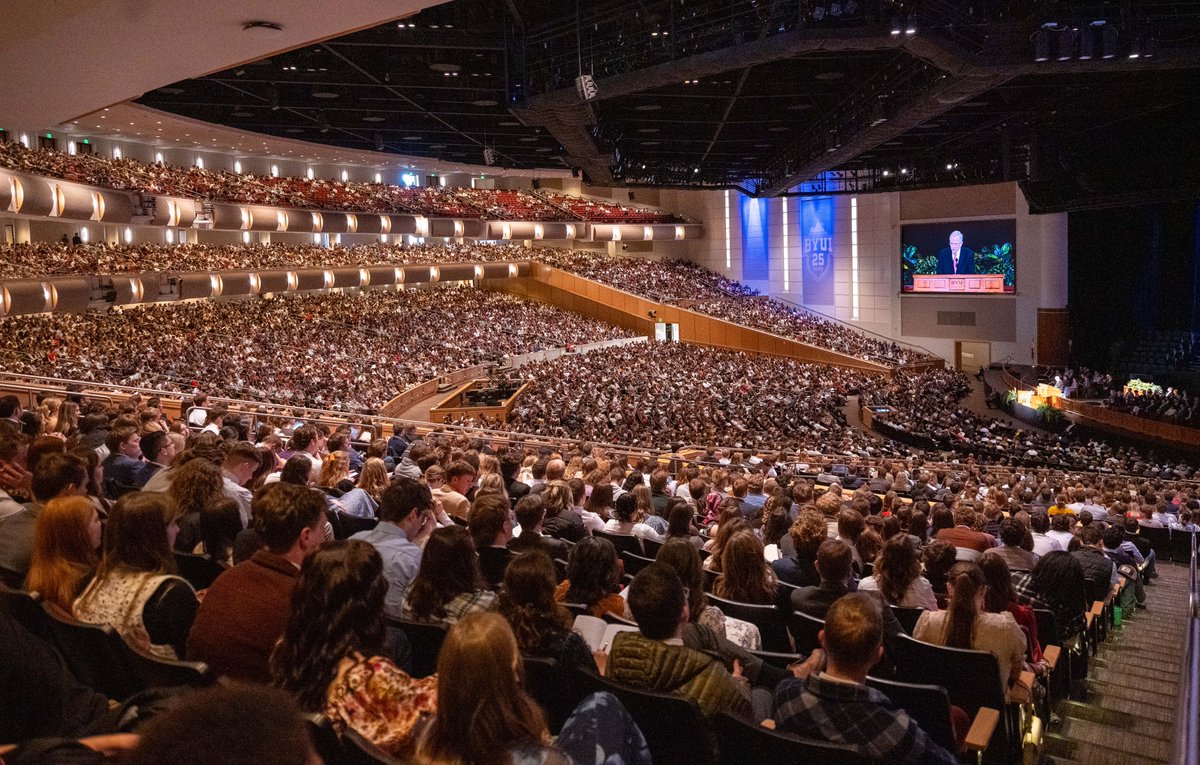
Nearly 30 years ago, President Henry B. Eyring, who was then a member of the Quorum of the Twelve, said something in general conference that I have not forgotten. I shared his insight this past Sunday as I spoke to the students of BYU–Idaho.
“One of the ways we may know that the warning is from the Lord is that the law of witnesses, authorized witnesses, has been invoked. When the words of prophets seem repetitive, that should rivet our attention and fill our hearts with gratitude to live in such a blessed time” (“Finding Safety in Counsel,” Apr. 1997).
Two weeks ago, President Dallin H. Oaks repeated the warning issued by President Russell M. Nelson from general conference in April 2018:
“In coming days, it will not be possible to survive spiritually without the guiding, directing, comforting, and constant influence of the Holy Ghost.”
So, what do you do to rivet your attention, to assure that you survive spiritually by having the constant influence of the Holy Ghost?
You look carefully at your daily activities. Am I praying? Am I thoughtfully partaking of the sacrament? What am I putting into my mind? Am I associating with others who seek the constant influence of the Holy Ghost? What could be my distractions, my obstacles, or my deceptions? You pray for inspiration and courage to make any changes you need to make.
Let us be true disciples of Jesus Christ. The Redeemer of Israel knows you, loves you, and will strengthen you as you seek to draw closer to Him.
In December 2025, 55 youth traveled 1,450 miles to attend the temple for the first time. “It felt like an early Christmas present,” one youth said.
https://t.co/j20FMGSFgq
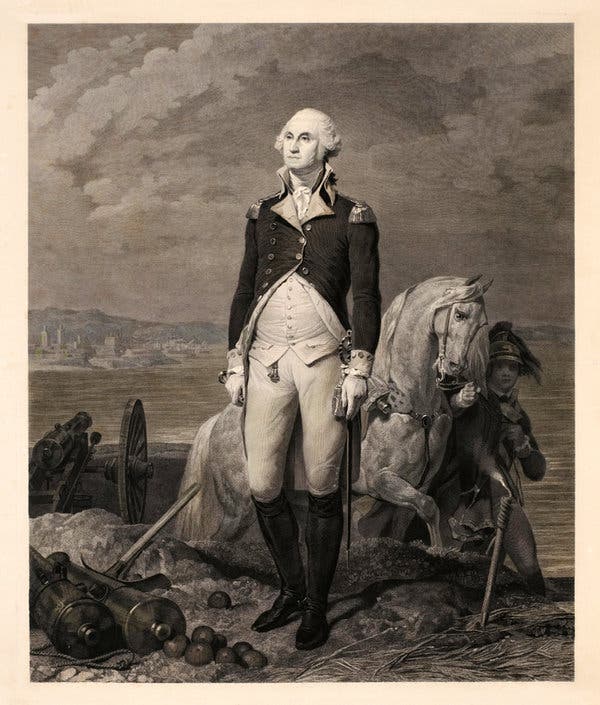
In 1783, King George III asked an American painter what George Washington would do now that he had virtually won the war. The painter replied that the General intended to return to his farm in Virginia. The King was stunned. He reportedly said, "If he does that, he will be the greatest man in the world."
Throughout history, victorious generals almost always seized the throne. From Caesar to Cromwell, military success usually meant political dictatorship. The concept of voluntarily walking away from absolute power was practically unheard of. But George Washington wasn't like other men.
By December 4, 1783, the British surrender at Yorktown was past, and peace was finally assured. Washington commanded a powerful, seasoned army that adored him. Conversely, many of his officers were unpaid and angry at the inefficient Congress. They had the guns, the manpower, and the loyalty to install a new monarch. He could have been King George I of America.
Instead, on this day in history, Washington walked into the Long Room at Fraunces Tavern in lower Manhattan. The room was filled with his most loyal officers—men like Henry Knox and Baron von Steuben—who had frozen with him at Valley Forge and bled with him for eight long years.
The atmosphere wasn't celebratory. It was heavy with inevitable separation. Washington, usually stoic and commercially reserved, poured a glass of wine and looked at his brothers-in-arms with visible emotion. "With a heart full of love and gratitude, I now take leave of you," he said, his voice shaking. "I most devoutly wish that your latter days may be as prosperous and happy as your former ones have been glorious and honorable." He didn't order them. He didn't demand their allegiance. He hugged them.
One by one, the hardened soldiers wept openly. Washington embraced each man in silence. There was no pomp, no ceremony, and no speeches about future conquests. It was just a quiet goodbye between warriors who had done the impossible. Immediately after leaving the tavern, Washington didn't march on Congress to demand payment or power. He rode to Annapolis, Maryland, resigned his commission, and went home to Mount Vernon to plant crops.
He did the impossible.
He refused the crown.
He trusted the people.
By stepping down, he ensured that the United States would be a republic ruled by laws, not a kingdom ruled by force. He proved that the military serves the people, not the other way around. It was the final, and perhaps greatest, victory of the Revolution.
The world watched in awe as the American Cincinnatus returned his sword to its sheath, proving that character is the strongest constitution of all."
#archaeohistories
@SecretCityChez you got this. dont give up. God loves you. he knew the challenges you were going to face before you did and he still loves you. you're worth it!
@ATrueMillennial the govt subsidizes good and meaningful activities. rather than a 50 year mortgage, i think the govt should ensure that private home buyers can always purchase one home at no higher than 4.5% interest rate even when other rates are higher. doesn't apply to a second home