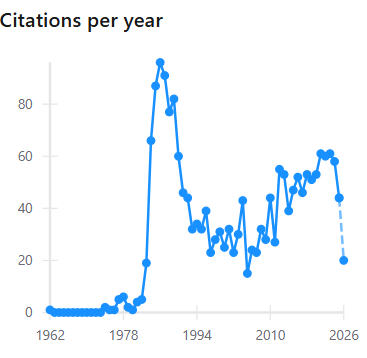
Today in "Will explains things to people who have a vested interest in not understanding them," let's talk about INSPRE-HEP. 1/
https://t.co/PDJHAMDX4C
Final day! Many thanks to all participants for the great atmosphere and enthusiasm throughout these two days of discussions and simulations on preheating, non-linear dynamics, gravitational waves and the early Universe.
Excited to welcome 20+ students & researchers tomorrow at the 1st Hands-On CosmoLattice Workshop @Fisicas_UCM@unicomplutense!
Two days simulating the early Universe: from preheating to GWs & beyond 🌌 https://t.co/FJF7c3ORW2
Supported by a @FundacionBBVA Leonardo Fellowship 2025
An unsolicited guide to being a researcher: super instructive slides by @EugeneVinitsky https://t.co/sclj1rY930
- different goals of a PhD student
- how to be a good collaborator
- how to keep up with literature
- tracking your ideas & experiments
- stress & productivity
We derive & validate the effective action for local cosmic strings. We find that higher-order corrections appear only through massive modes, which cause a parametric instability that transfers energy to massless ones: A straight string can develop wiggles! https://t.co/etIC7SsgXe
Fun fact: The 1998 paper that introduced Google and PageRank to the world ends with this acknowledgment:
"Supported by the National Science Foundation under Cooperative Agreement IRI-9411306. Funding also provided by DARPA and NASA."
Sergey Brin was on an NSF Graduate Fellowship. Larry Page was a PhD student on the grant.
Google—now worth $2 trillion—exists because American taxpayers funded "the Stanford Integrated Digital Library Project."
Not a startup garage myth. A government grant.
Every time someone says public research funding "picks winners and losers" or "crowds out private innovation," remember: the most dominant technology company of the 21st century was incubated entirely with public money, inside a public university, by researchers on federal fellowships and grants.
The private sector didn't see it coming. VCs passed. The government funded it anyway—not because it would become Google, but because fundamental research into information retrieval seemed worth understanding.
That's the point. You can't predict which grants will change the world. You fund the science and let researchers explore.
The internet (DARPA). GPS (DoD). Touchscreens (CIA/NSF). mRNA vaccines (NIH). Google (NSF/DARPA/NASA).
Public investment in basic research isn't wasteful spending. It's the seed corn of the entire modern economy.
You know you have a good set of results when your plot fills 2 whole pages
Here are the measured properties for our most significant new detections. We have a wide range of binary black holes and a couple of neutron star black hole binaries
📊 https://t.co/CNNFSO0AxS
#GWTC4
Introducing Genie 3, the most advanced world simulator ever created, enabled by numerous research breakthroughs. 🤯
Featuring high fidelity visuals, 20-24 fps, prompting on the go, world memory, and more.
🚨 Did you know? MANY physics textbooks from Cambridge University Press are now OPEN ACCESS! 📚🔓
Explore classics like Foundations of Perturbative QCD (John Collins), Heavy Quark Physics (Manohar & Wise), and more
Check them out here: 🔗 https://t.co/5ZMm9ozkc5
A thread Twitter recently asked `what is symplectic geometry about'. I am pretty sure that this is something that people who actually work on the field ask themselves repeatedly. I certainly was confused by this Q as a grad student.
@tarunchitra@chessapig @taz_chu
I wish that everyone who followed the #LK99 ups and downs, the "Yes it works!" excitement switching to "It's all wrong" disappointment and back understood that this is how doing science is ALL THE TIME, it's just that often the stakes aren't that high & you don't get to see it.
Meissner Effect or Bust: Day 12
It might be a bust… we may be over...
Positives first! I had one of the very first syntheses in the United States and produced a Pb-apatite structure that demonstrated lattice contraction along with an anomalous magnetic effect. The sample was rushed into the hands of experts, and we're now operating with much more data than we previously had. This has been a great example of the need for interdisciplinary teamwork and cutting-edge experimental tools to tackle these kinds of challenging problems. I wouldn't have been able to resolve this without the help of the USC Materials Consortium (@USCMatCon), who dropped everything they were doing to help me on a whim! It shows that we can be excited about potential advances but also engage in critical examination and fact-finding.
Bad news: We now have a physical explanation for both the temperature-induced resistance drop as well as the magnetic levitation. The multitude of theories was intriguing, but nothing beats having explanatory physical measurements. In the attached pictures, we have the biggest shard that displayed magnetic responsiveness. It's a semi-transparent orange polycrystalline object about 500 µm wide, 200 µm thick. EDS (Energy-dispersive X-ray spectroscopy) was performed on the shard, along with XRD.
The unusual synthetic conditions clearly resulted in a multiphase sample. The fragment that was observed to exhibit magnetic levitation consisted of a very heterogeneous agglomeration of Cu2S, elemental Cu, Pb-apatite, and an unexpected impurity of metallic Fe. The levitation, therefore, is likely the result of magnetic torque on the Fe particles embedded within the material. It's not surprising that micrograms of iron might be present in a 30 g batch of LK99; even 99.99% purity precursors leave a lot of room for other elements. It seems to be the case that the iron particles have agglomerated into a local region in the tube, as only two samples ever showed any magnetic response from the entire batch. This seems consistent with other observations of a very low yield of magnetically responsive small-size shards.
The three orders of magnitude resistance drop is well explained by the Cu2S (Copper(I) sulfide). See the paper here that details it: https://t.co/7JLq3unSxL
This has been an incredible journey, full of intrigue and drama. I'm glad to finally have some closure on what I made. It's not a 100% confirmation, but it's close enough for this engineer to sleep well at night. I was hoping for a different outcome, but you've got to follow the data!
Thanks for supporting my crazy hobby. This got totally out of hand; I'm frankly terrified to now be talking to a football stadium full of people. I think we'll go back to the regularly scheduled programming of niche aerospace memes for a few weeks.
About a year ago, I gave a series of lectures at the Theoretical Advanced Study Institute (TASI) in beautiful Boulder, Colorado. I've finally managed to write them up:
TASI lectures on Phase Transitions, Baryogenesis, and Gravitational Waves
https://t.co/a34osFqFlJ
The twin "paradox" theorem is often stated in the context of Special Relativity. It can however be stated for curved spacetime. In both cases, the theorem can be stated as an inequality that is a reversed triangle inequality. #physics#math#Relativity#geometry