🚨 ÚLTIMA HORA 🚨 Los Ángeles
Varias unidades de policía se dirigen al Nakatomi Plaza por un informe de disparos.
Según fuentes cercanas todo parece indicar que podría tratarse de un secuestro en el día de #Nochebuena
🎧 JUNGLA DE CRISTAL ➡️ https://t.co/OaRfoiXua2
🎓 ¿Has defendido tu #TFM en bioinformática?
🙌 ¡Esta es tu oportunidad!
👥 La #UGR y @RevvityInc premian los mejores #TFM en el Datathon de Bioinformática 🏆
🗓️ Plazo de inscripción hasta el 10 de enero
ℹ️ Info: https://t.co/PZZQ82esJ0
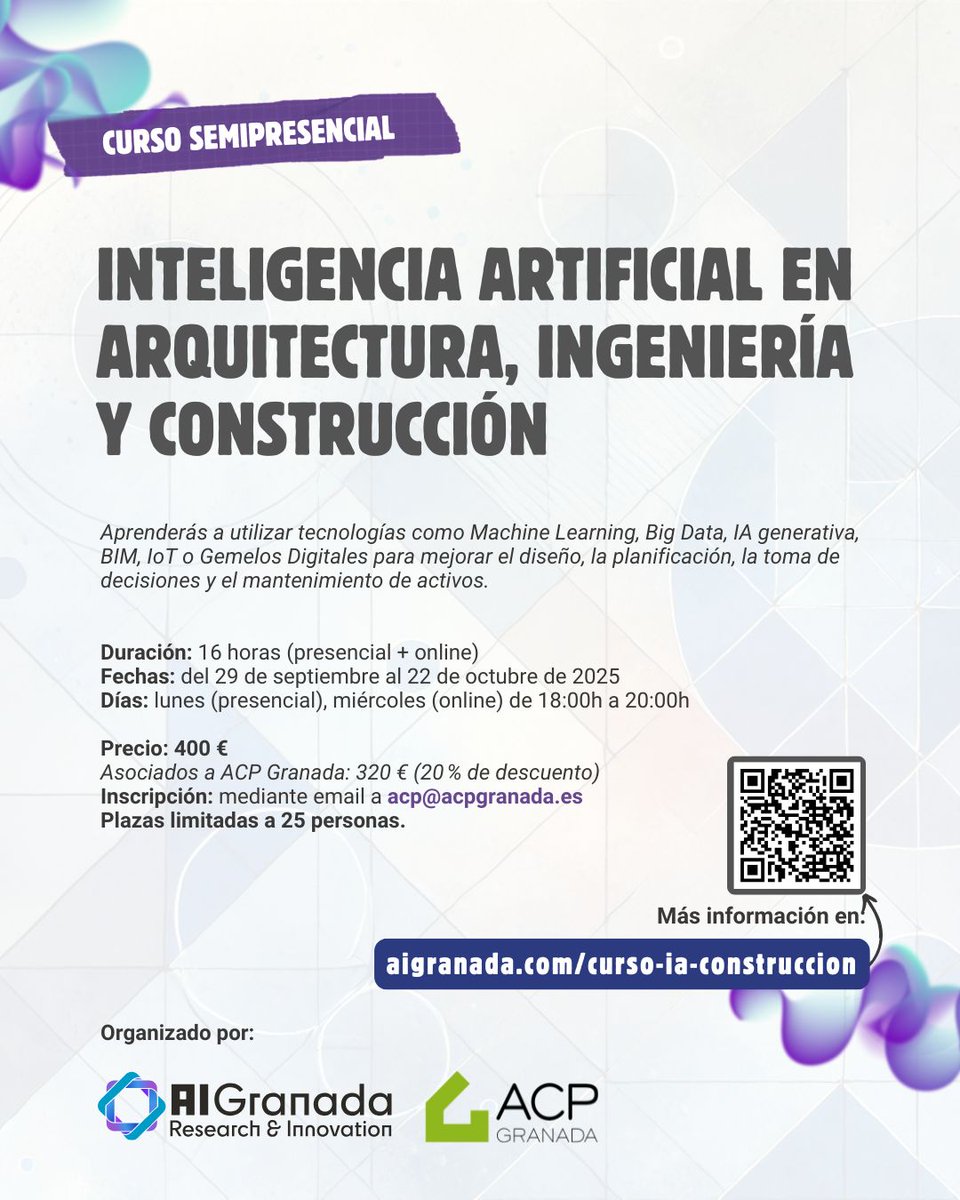
📢 Nuevo curso: Inteligencia Artificial en Arquitectura, Ingeniería y Construcción
🗓️ Fechas: del 29 de septiembre al 22 de octubre de 2025
📍 Modalidad mixta: lunes presencial + miércoles online
Organizan @AIGranadaFund y @acpgranada.
Más información https://t.co/8jZN9Yfcu9
🎯 ¡Más de 80 vacantes activas en el sector tecnológico! Este viernes 4 de julio celebramos la edición online del V #Matchmaking Talento–Empresa, una jornada intensiva de entrevistas que conecta a estudiantes y egresados de FP, grado y máster con 11 empresas del ecosistema.
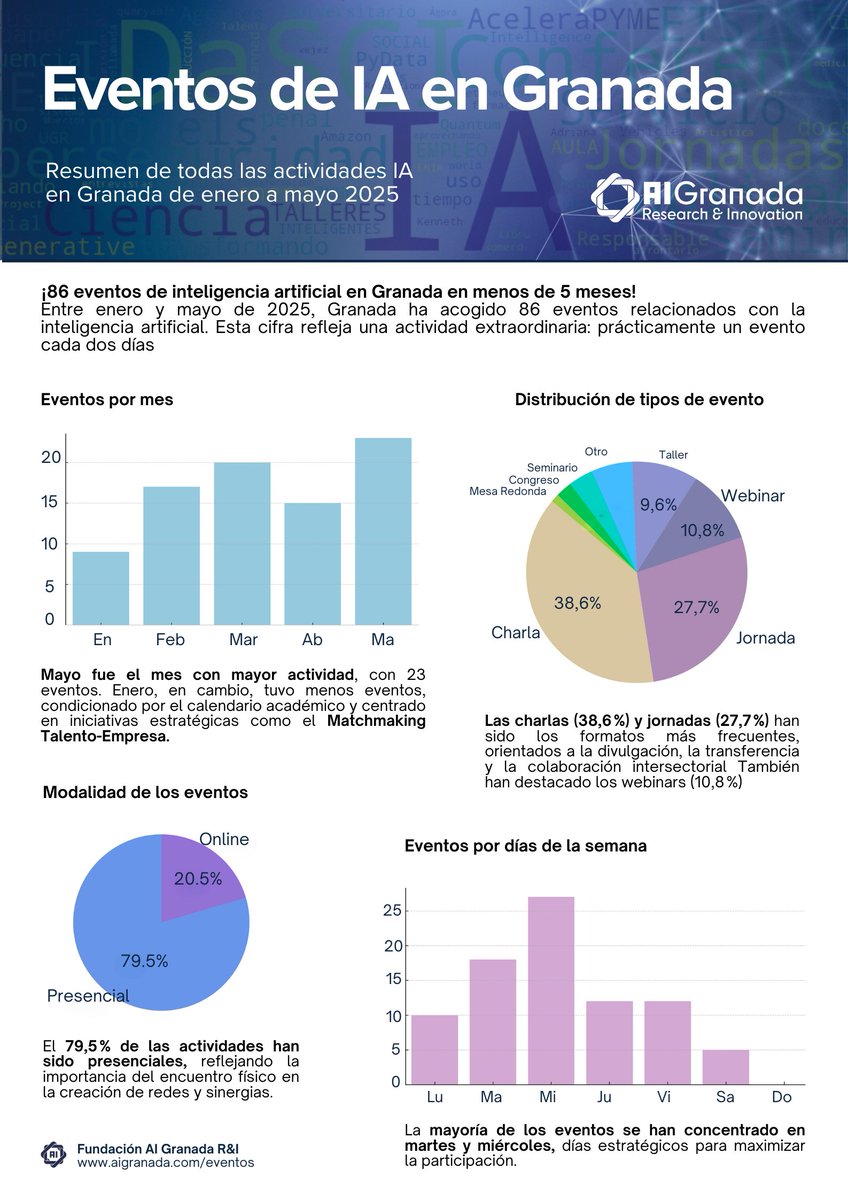
Presentamos los datos de actividad del #ecosistema de #ia en #Granada entre enero y mayo de 2025.
En menos de 5 meses se han celebrado 86 eventos relacionados con la IA, un ecosistema en activo que desarrolla, comparte y aplica
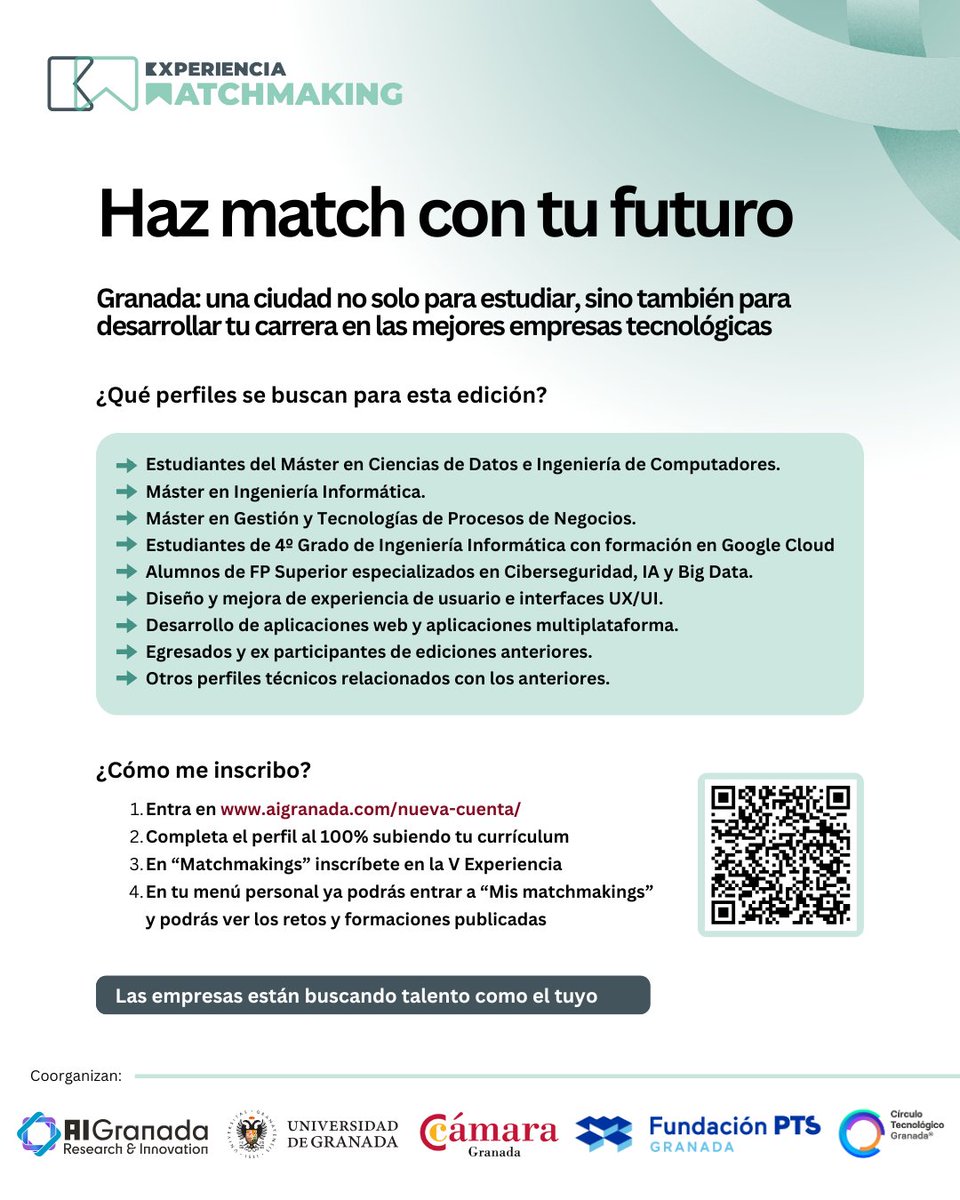
📢 Ya está abierta la inscripci��n a la V ed Matchmaking Talento–Empresa, que se celebrará el 4 de julio en formato 100 % online
Iniciativa coorganizada por @AIGranadaFund, @CanalUGR, @CCGranada, @CirculoTG y @FundacionPTS
Info e inscripciones en: https://t.co/XbfyP8zUyn
🚀 ¡No te pierdas los talleres de Soft Skills para estudiantes de #Máster UGR! 🎓
📅 28 abril: "Conócete. Marca personal"
📅 6 mayo: "Herramientas para la búsqueda de empleo"
⏰ 12:00–14:00 h | 🏢 ETSIIT-Aux Aula 0.6
🔗 Inscríbete: https://t.co/lO4GQEDS90
⚠️ ¡Plazas limitadas!
We knew very little about how LLMs actually work...until now.
@AnthropicAI just dropped the most insane research paper, detailing some of the ways AI "thinks."
And it's completely different than we thought.
Here are their wild findings: 🧵
🚨🚨Ultima Hora🚨🚨
ChatGPT responde se han consumido más de 216 millones de litros de agua en los últimos 5 días por la generación de imágenes por IA de Studio Ghibli.
Some people today are discouraging others from learning programming on the grounds AI will automate it. This advice will be seen as some of the worst career advice ever given. I disagree with the Turing Award and Nobel prize winner who wrote, “It is far more likely that the programming occupation will become extinct [...] than that it will become all-powerful. More and more, computers will program themselves.” Statements discouraging people from learning to code are harmful!
In the 1960s, when programming moved from punchcards (where a programmer had to laboriously make holes in physical cards to write code character by character) to keyboards with terminals, programming became easier. And that made it a better time than before to begin programming. Yet it was in this era that Nobel laureate Herb Simon wrote the words quoted in the first paragraph. Today’s arguments not to learn to code continue to echo his comment.
As coding becomes easier, more people should code, not fewer!
Over the past few decades, as programming has moved from assembly language to higher-level languages like C, from desktop to cloud, from raw text editors to IDEs to AI assisted coding where sometimes one barely even looks at the generated code (which some coders recently started to call vibe coding), it is getting easier with each step.
I wrote previously that I see tech-savvy people coordinating AI tools to move toward being 10x professionals — individuals who have 10 times the impact of the average person in their field. I am increasingly convinced that the best way for many people to accomplish this is not to be just consumers of AI applications, but to learn enough coding to use AI-assisted coding tools effectively.
One question I’m asked most often is what someone should do who is worried about job displacement by AI. My answer is: Learn about AI and take control of it, because one of the most important skills in the future will be the ability to tell a computer exactly what you want, so it can do that for you. Coding (or getting AI to code for you) is a great way to do that.
When I was working on the course Generative AI for Everyone and needed to generate AI artwork for the background images, I worked with a collaborator who had studied art history and knew the language of art. He prompted Midjourney with terminology based on the historical style, palette, artist inspiration and so on — using the language of art — to get the result he wanted. I didn’t know this language, and my paltry attempts at prompting could not deliver as effective a result.
Similarly, scientists, analysts, marketers, recruiters, and people of a wide range of professions who understand the language of software through their knowledge of coding can tell an LLM or an AI-enabled IDE what they want much more precisely, and get much better results. As these tools are continuing to make coding easier, this is the best time yet to learn to code, to learn the language of software, and learn to make computers do exactly what you want them to do.
[Original text: https://t.co/HdI3Jb9HmF ]
I'm teaching databases this semester at Berkeley. My students all seem unusually brilliant. Not many go to office hours, and not too many folks post on the course forum asking project questions.
Weirdly, the exam had the lowest recorded average in my 10 semesters teaching it.
Nadie hubiera escuchado la magufada de chirigota si no se hubiera cubierto masivamente por los medios; efecto Streissand en toda regla y victoria de los negacionistas que consiguen más publicidad y visibilidad de la que hubieran soñado. Al menos nos queda la actitud del Falla.