Ossoff: When he first announced the tariffs, you remember that? He called it Liberation Day, and it crashed the markets because it was clown policy. You remember that?
OK, so follow me through on this. He announces the tariffs on April 2 of last year. The markets tank nonstop for like a week because it’s a disastrous trade policy, and six days into the crash, April 8, Trump buys millions in stock. I’m talking Amazon, Nvidia, Apple, Microsoft, Berkshire Hathaway, and then the very next morning, April 9, he posts on Truth Social, quote, “This is a great time to buy.” Three exclamation marks.
OK, now listen to this. Three hours and 41 minutes after that post, one day after he bought millions in stock, he canceled the tariffs and triggered one of the biggest same-day rebound rallies in market history.
He’s trying to get money. And you saw, now he’s offering paid subscriptions to presidential announcements, right? Just understand what’s for sale here: The sitting president’s pronouncements on war and peace and economic policy delivered first to paying customers.
What an absolute crook.
The Braves front office once again proves that they indeed do not care to address the glaring holes at the front of their rotation. They would much rather go after backend rotation pieces. I’m sure we’ll hear something within the next few hours how they were close to a trade
Honestly what will piss me off even more than not adding an impact starter is that Alex did not use the $18 million in Profar money at all this season.
Nearly every city in America has a single, historic/old, pedestrianized street that is the most popular and beloved place in the city where every business is popping and people want to hang out all the time and they look at those streets and say “we can never do that again.”
We’re gonna find out in a few years that little things like this were leaked deliberately to generate action on polymarket, kalshi, and the betting apps. Not even a veneer of integrity to anything anymore
BREAKING: Chancellor Daniel Diermeier announces that Vanderbilt will have a men's basketball split squad this winter, with one team playing in Manhattan and one in Nashville. Diermeier: "You think I'm gonna waste this much effin' generational talent on one team and one city? Get ready to learn how to say Büyüktuncel, Big Apple."
Yes. That is correct.
He lost to Shohei Ohtani who had, quite literally, the greatest game of baseball ever played.
10 Ks on the mound
3 HRs at the plate
Probably the greatest single game performance from any athlete in any game ever.
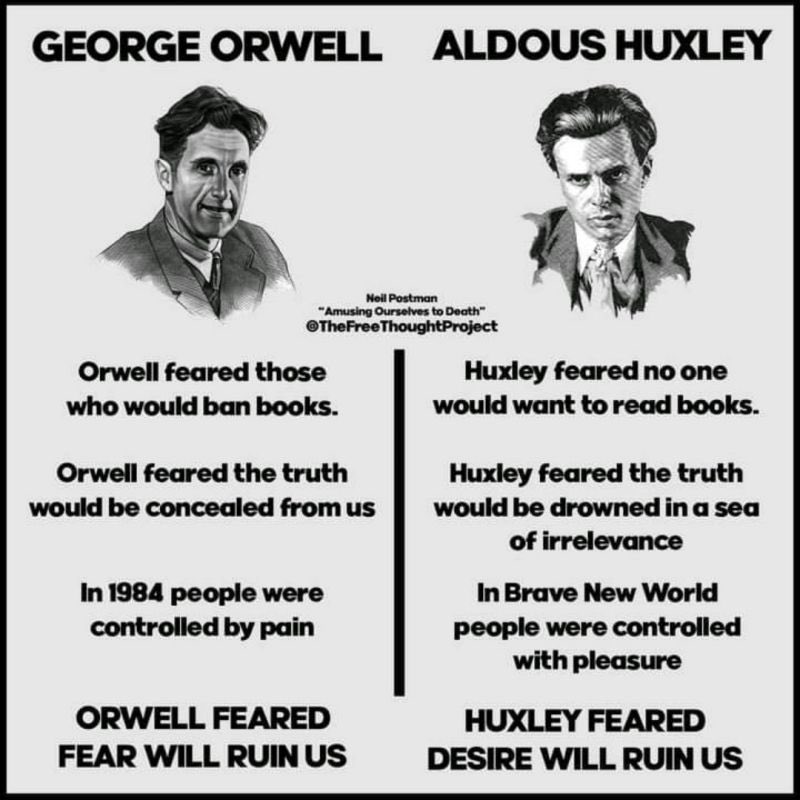
One of my longest-standing arguments is that we are not living in Orwell’s 1984, where truth is centrally suppressed and censored by force (that’s former communist societies, modern-day China, Russia, North Korea).
We are living in something much closer to Huxley’s Brave New World.
The truth is not hidden - it is almost always readily available. But it is buried beneath an industrial quantity of noise: propaganda, outrage, half-truths, conspiracy theories, influencer theatre, algorithmic rage bait and an endless stream of content designed not to inform us, but to keep us emotionally stimulated.
The modern information system does not need to censor the truth when it can simply drown it in noise.
A fact no longer has to be disproven - it only has to be surrounded by a hundred competing claims, stripped of context and nuance, turned into partisan ammunition and pushed into the same feed as celebrity gossip, memes and 15 second videos engineered to deliver the fastest possible dopamine hit. By the time the truth reaches us, it appears as just another piece of content competing for our attention.
That is the more sophisticated form of control: not preventing people from knowing, but exhausting their capacity to care.
Orwell feared a world in which people would be deprived of information. Huxley feared a world in which they would be given so much distraction, stimulation and triviality that they would lose the desire to seek it.
The defining struggle of our age is therefore not simply between truth and censorship, but between truth and indifference.
If you want more soulful white boys like this you probably need classical education. Lawrence of Arabia wrote his Oxford thesis on Crusader castles, which meant study of Ottoman Syria in particular and his mental geography (like that of other elite Britons) was shaped by thousands of years of history rather than just modern politics, which is what largely animates interest in the region today.
I read Mark Twain’s “The Innocents Abroad” years ago where he gives a more humorous account of his eastern Med travel but to the 19th century American & Briton this region was central to the educated imagination and visiting these places was the culmination of a lifetime of reading the Bible and the classics
I respectfully disagree. When searching for comfortable summer clothes, it helps to be precise about which qualities you care about. Let's separate them into two categories.
The first is breathability. Contrary to popular opinion, this is not primarily about fiber. Instead, it's more about the weave or knit structure.
In men's tailoring, there's a class of fabrics known as tropical wool, which are made from yarns that have been given an extra twist during the spinning stage. This allows the weaver to create an open structure that lets more air and water vapor pass through, helping your body breathe. You can see a tropical wool sport coat in the first photo below.
However, you can create a similar structure with any fiber, natural or synthetic. Women's stockings (pantyhose) are typically made of nylon, but their open structure makes them sheer. You can see this in the second photo, where the material is so open, you can see the other hose beneath.
Conversely, in the third slide, you can see a swatch book of W. Bill linens, which are typically used for suits, sport coats, and trousers. These are 12- or 13-ounce fabrics made with a very dense weave. This happens to be my favorite fabric for linen tailoring because the heavier, stiffer structure means the fabric rumples more than it wrinkles. But compare it to the first and second photos. Since the material is more densely woven, every swatch visually blocks the one beneath. This means it's not as breathable.
The second quality concerns how the material handles moisture. Linen can be nice in the summertime because the fiber's straighter, rod-like structure helps draw moisture away from your skin and allows it to evaporate faster. Cotton, by contrast, absorbs more water into the fiber itself and holds onto it longer, which is why wet cotton can feel clingy and clammy, especially in the summertime.
Similarly, many synthetics are hydrophobic, which means they repel water. Modern performance clothes exploit this quality by creating structures that move sweat along the fibers' surfaces and through tiny channels, drawing it away from your skin and toward the garment's outer surface, where it's exposed to airflow and evaporates.
These qualities can be useful in the summer because they help you stay dry. Of course, this assumes you're wearing the garment next to your skin, specifically in the areas where you sweat most. Hence why a linen shirt allows linen to do its job, but a linen sport coat won't. Or why performance polos work in certain situations.
IMO, there's an unhelpful or at least oversimplification of natural clothes at the moment, where people think that natural fibers are the cure-all and synthetics are always bad.
Of course, the decision to buy natural or synthetic is a personal choice and your right to make. But it's good to be precise about which qualities you care about — breathability, drying speed, odor retention, hand, etc — and then understand how fiber, yarn, weave/knit, and finishing all combine to produce those qualities. “Just wear linen” or “just buy natural” is too simple and does not always achieve the desired effects.