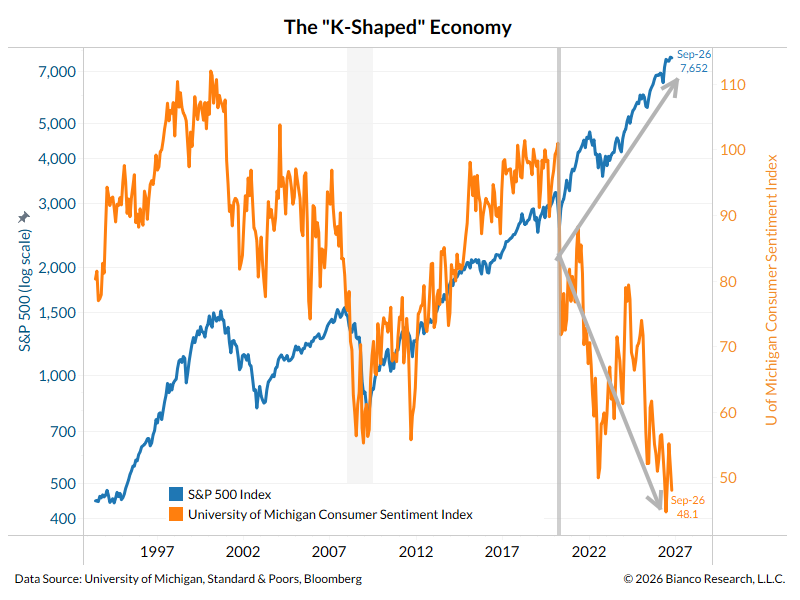
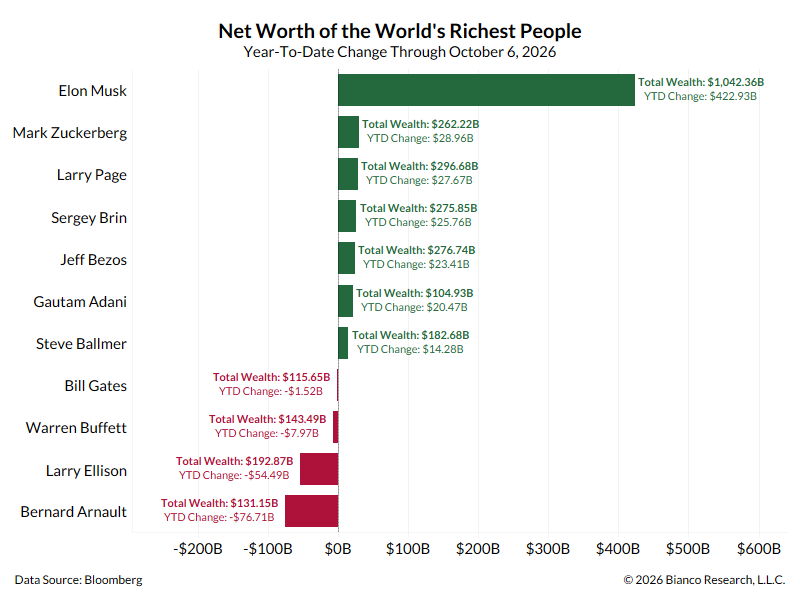
@Tradure24 This is certainly accurate. The difference is the concentration of ownership. The bottom 50% of U.S. wealth owns about 0.6% of the stock market.
https://t.co/WZLrJGUQnZ
Great example of the K-shaped economy in 2026... Wall Street sees rising equities boosting wealth, but most of the country doesn't own equities. Consumer sentiment is at an all-time low because they care about real dollars. 1/2
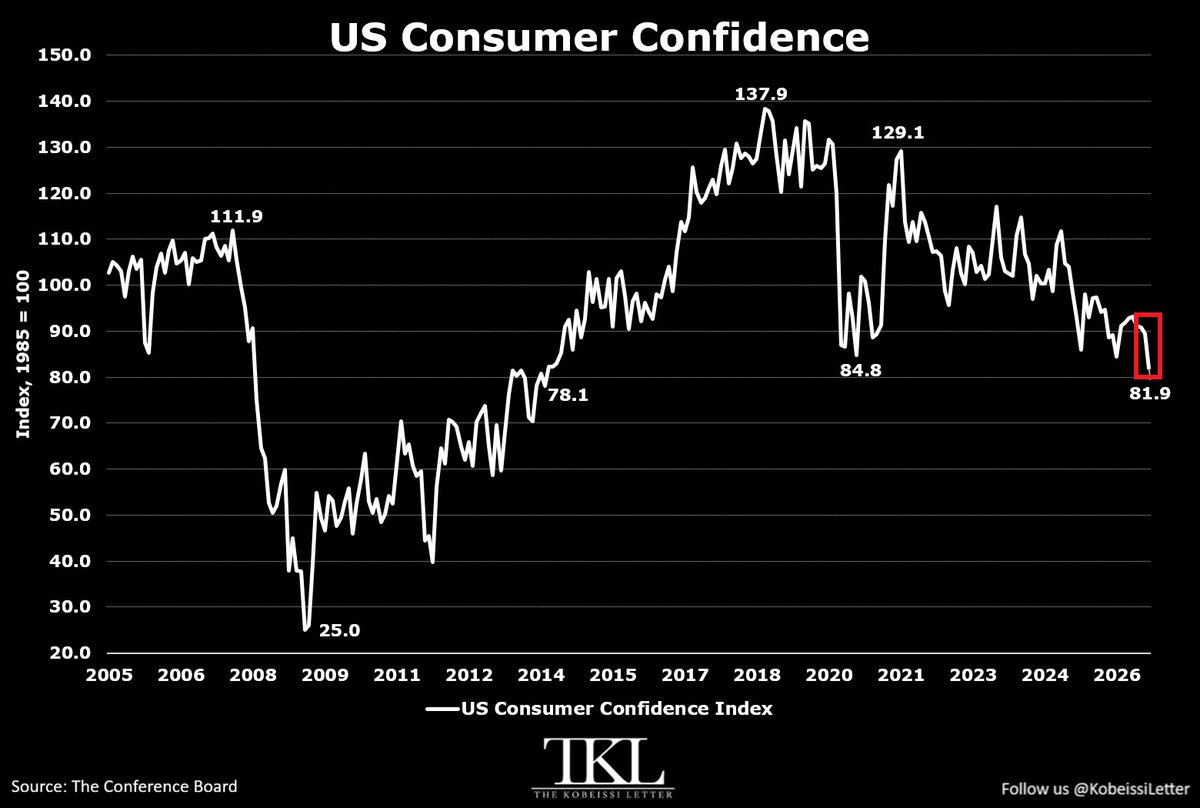
US consumer confidence is collapsing.
The Consumer Confidence Index dropped -6.7 points in September, to 81.9, its lowest since April 2014.
This marks its 4th consecutive monthly decline, totaling -11.2 points.
The Present Situation Index fell -7.9 points, to 109.3, its lowest since February 2021.
At the same time, the Expectations Index fell -5.9 points, to 63.6, its lowest since April 2025, marking its 3rd consecutive monthly decline.
Over the last 6 months, confidence across all age groups and nearly all income groups has declined.
Consumers are also increasingly citing high prices, the cost of goods and services, and oil and gasoline prices as major factors weighing on the economy.
US consumer confidence is at crisis levels.
@NorthstarCharts Does this chart more likely measure the real return of gold?
When deflated against CPI (inflation), wages look flatter, which is a different problem.
The current decline in this series mainly reflects gold's rally.
Follow-up to this. What changed in 1982?
Beyond Volcker's inflation battle, the U.S. economy became more stable, while global trade and financialization drove growth.
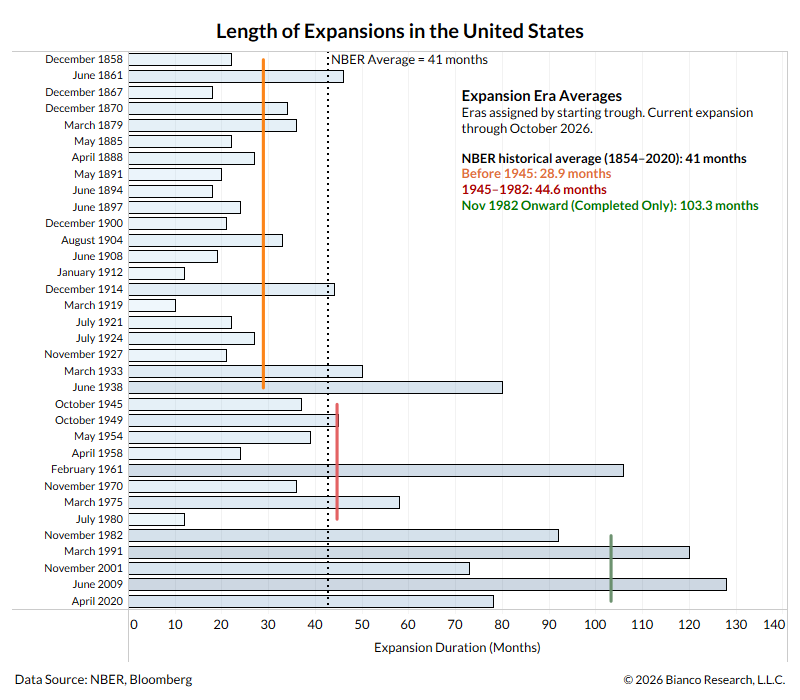
More context on this. Here are expansions back to 1858. The full series averages 41 months of expansion, but before 1945, expansions rarely lasted 3 years.
In modern economic cycles (post-Volcker inflation battle), expansions tend to last significantly longer in the US.
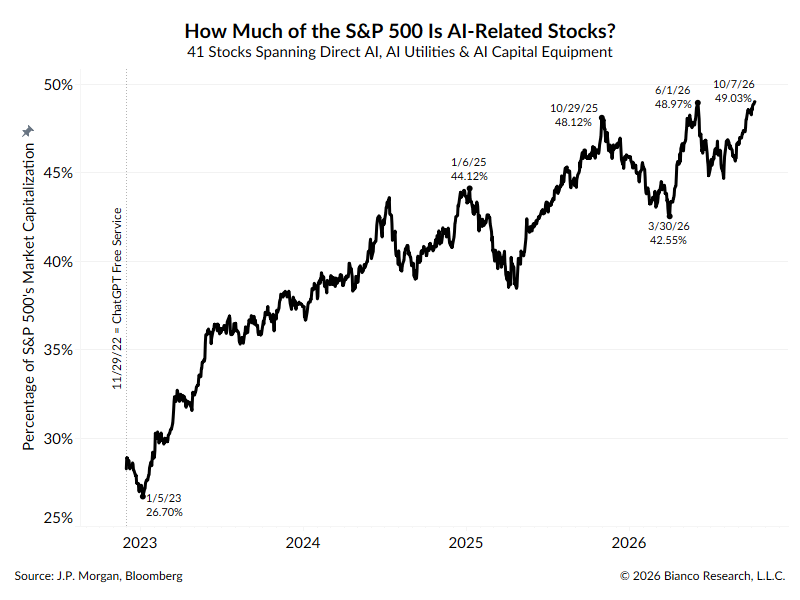
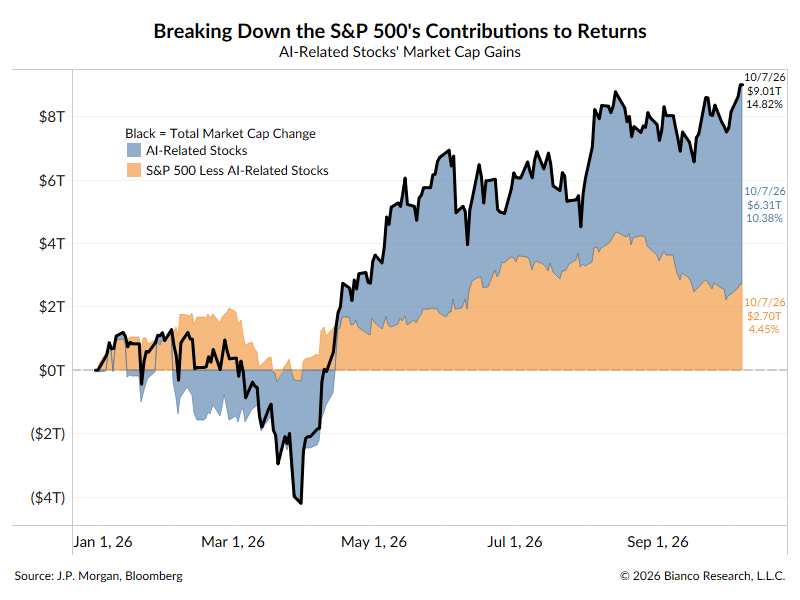
AI-related stocks (defined by the JPM basket) now make up 49% of the S&P 500.
Those same 41 companies account for about two-thirds of the S&P 500’s year-to-date market cap change.
More context on this. Here are expansions back to 1858. The full series averages 41 months of expansion, but before 1945, expansions rarely lasted 3 years.
In modern economic cycles (post-Volcker inflation battle), expansions tend to last significantly longer in the US.
The U.S. economy has now gone 78 straight months without a recession, the 6th-longest expansion since 1854, per NBER.
That's well above the long-term average of about 49 months, and the median of about 38.
The record: 128 months, from 2009 to 2020.
To pass it, this expansion would need to last until early 2031.
A few days ago, I argued that excessive debt wasn't driving yields higher (link).
The repost is my argument for why yields are moving higher, and why they are no longer expensive.
https://t.co/AcrblgHGGS
I've been arguing that the question for OpenAI & Anthropic is how much value they can generate above and beyond current projections.
Whether it's 80/20, 90/10, or some other mix. Most tasks (both prompt-response and workflow automation) can be accomplished with much cheaper models.
GrokBot & Muse are examples. Neither requires frontier models. They require the harness level above it to be considered thoughtfully.
If the frontier-capable models capture only frontier-level tasks...then the frontier duopoly holds only a small piece of the pie.
What Google, Amazon, Meta & Microsoft are spending on is the capacity to spin up use cases. Don't be surprised if 'personal assistants' is more than a fad and becomes a big part of the 'why' behind the spending.
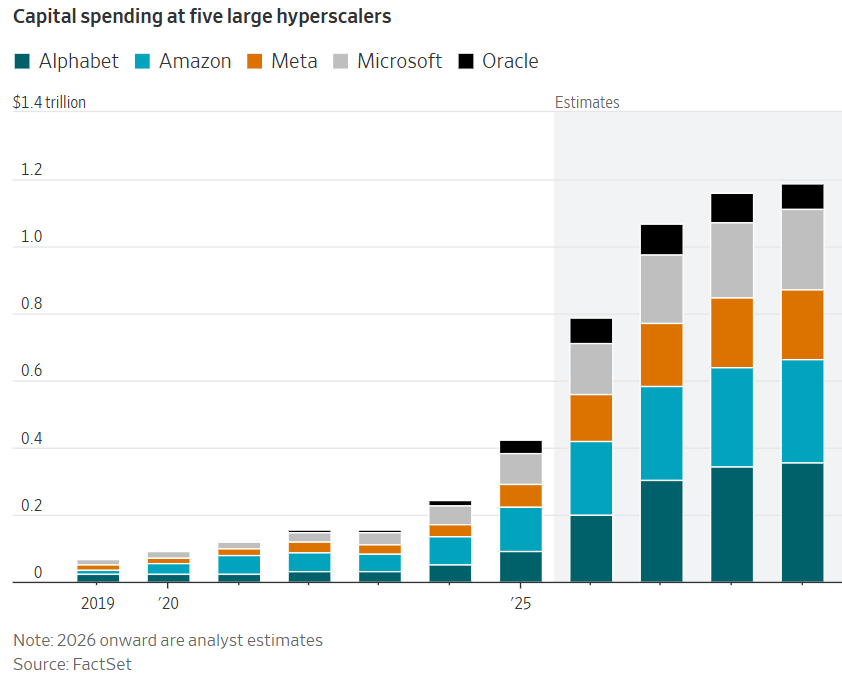
The AI capex boom is accelerating at a staggering pace.
Spending by Alphabet, Amazon, Meta, Microsoft & Oracle is expected to jump from $412 billion in 2025 to $789 billion in 2026.
That's a 92% increase in just one year.
By 2029, estimated capex from these 5 hyperscalers is nearly $1.2 trillion a year.
At some point, investors will demand to see a return on all that spending.
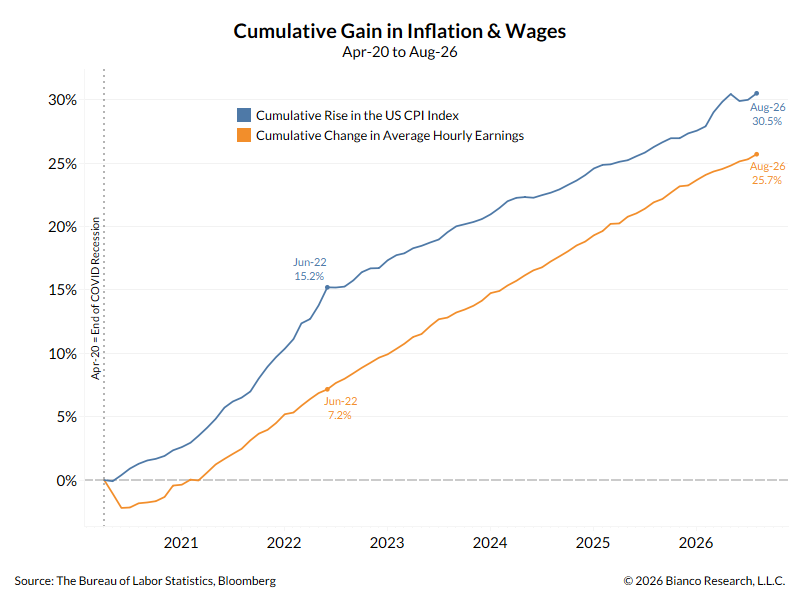
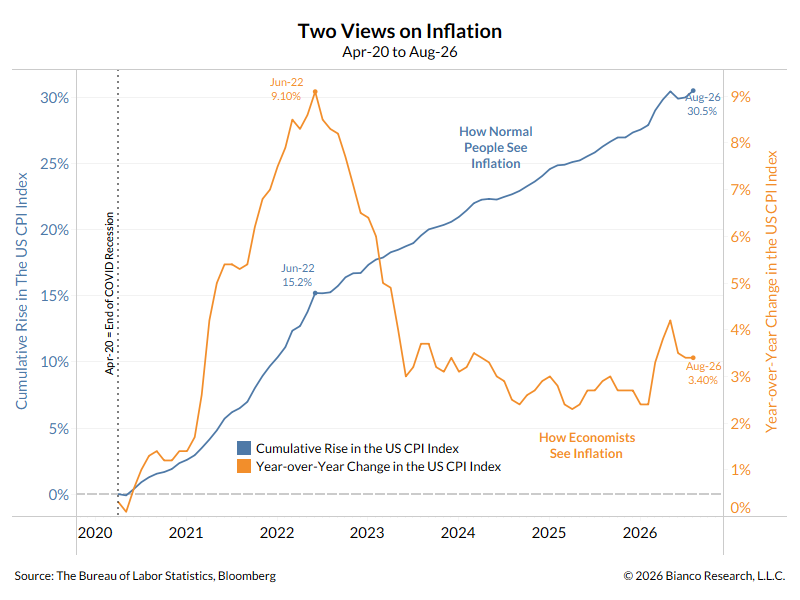
We often highlight these two charts. One shows that inflation has outpaced average hourly earnings since April 2020.
The second shows how Wall Street views inflation versus how the average person does.
The average person sees the prices of what they buy as 30% higher. Economists & Wall Street see that yoy inflation isn't 9% anymore
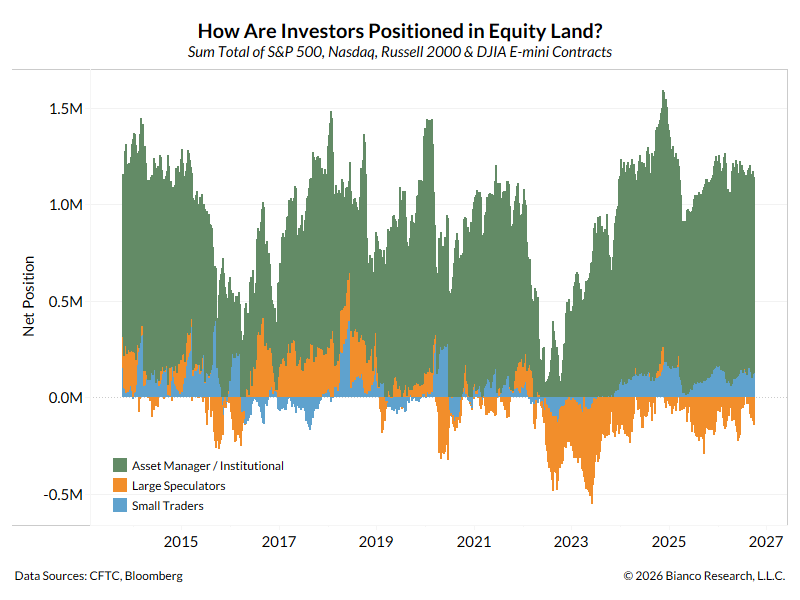
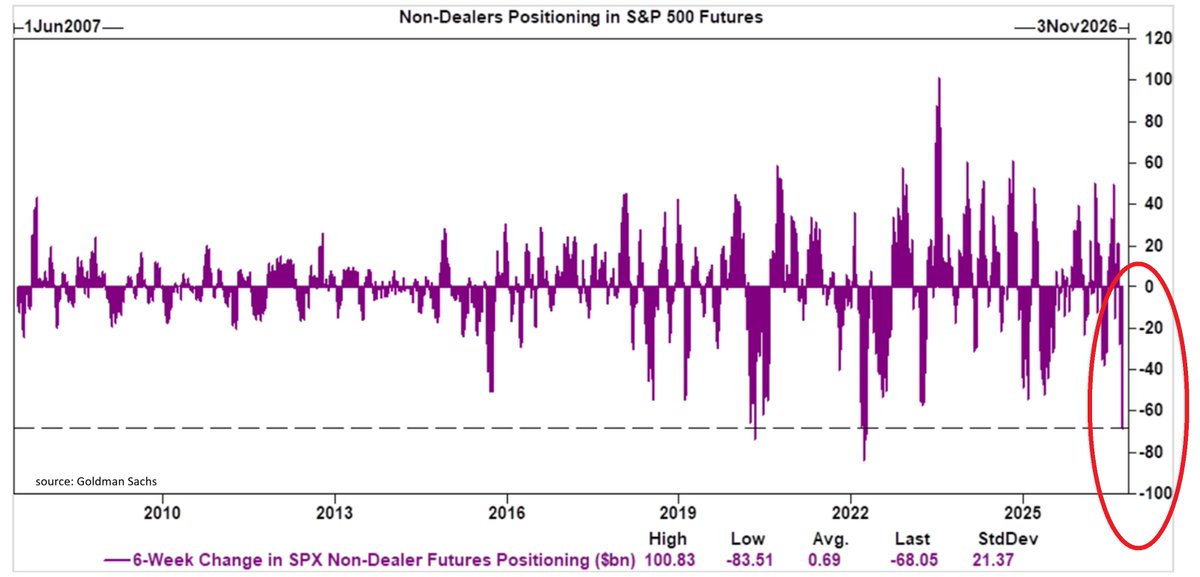
Institutional investors are DUMPING S&P 500 futures:
Hedge funds, asset managers, and other investors have sold S&P 500 futures in 5 of the last 6 weeks, cutting their positioning by -$68.1 billion over that period.
This marks one of the most aggressive selling episodes on record, with only the 2020 and 2022 bear market liquidations exceeding the current decline.
The selling comes as conviction and sentiment have deteriorated rapidly among investors, even while the S&P 500 remains near record highs.
Uncertainty around monetary policy has also increased, helping drive the sharp reduction in directional exposure.
The market is near its highs, but investor conviction is collapsing.
Agree.
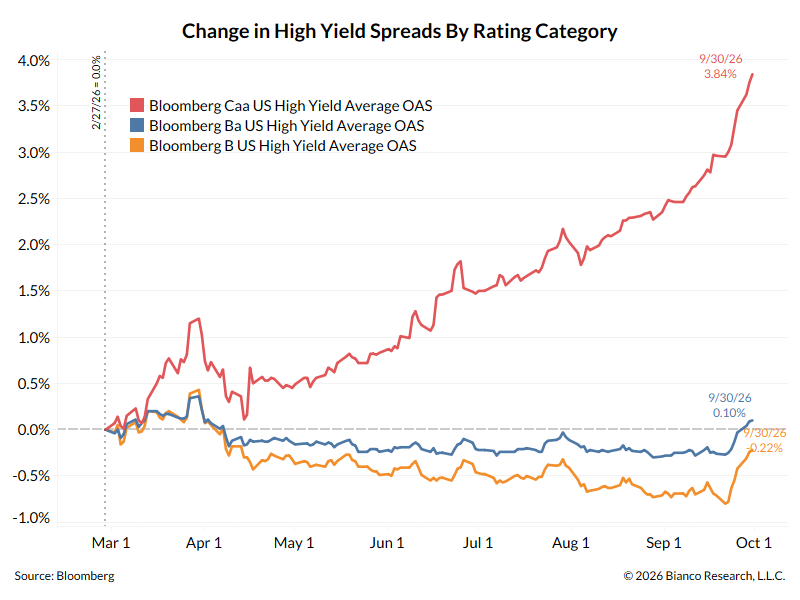
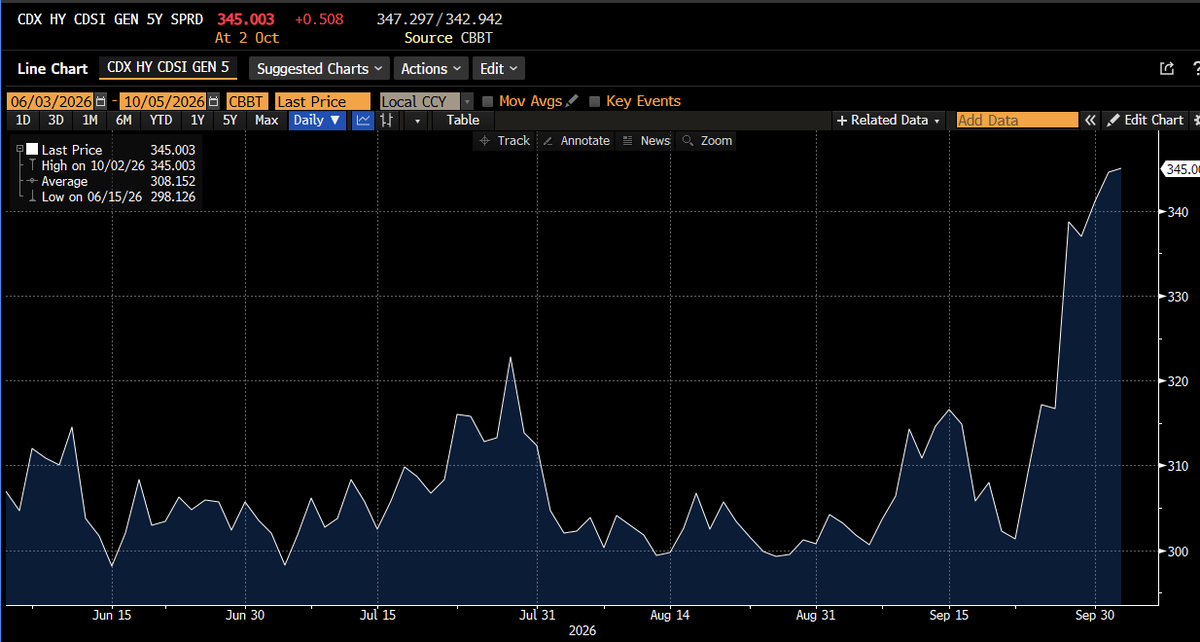
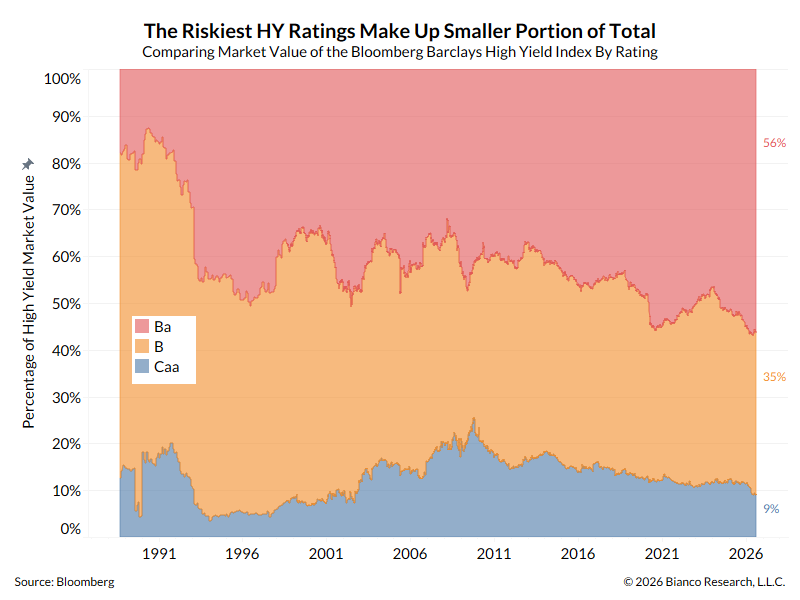
CCC is only about 9% of the junk market and something like 6 issuers are driving most of the move in CCCs. Everything above it still isn't moving much.
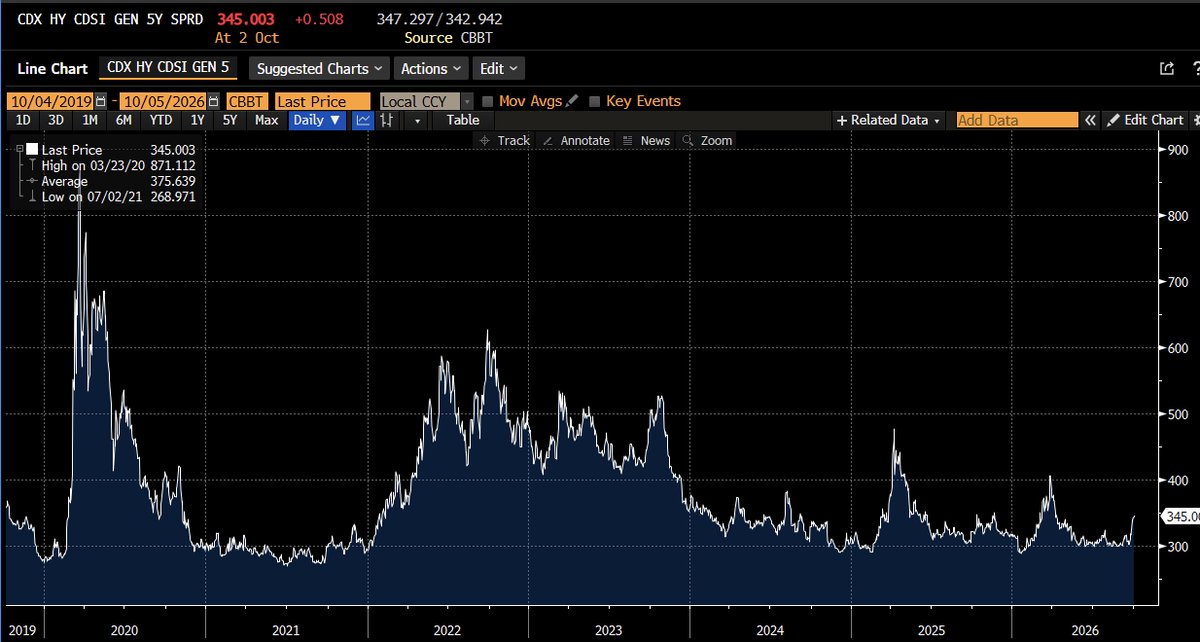
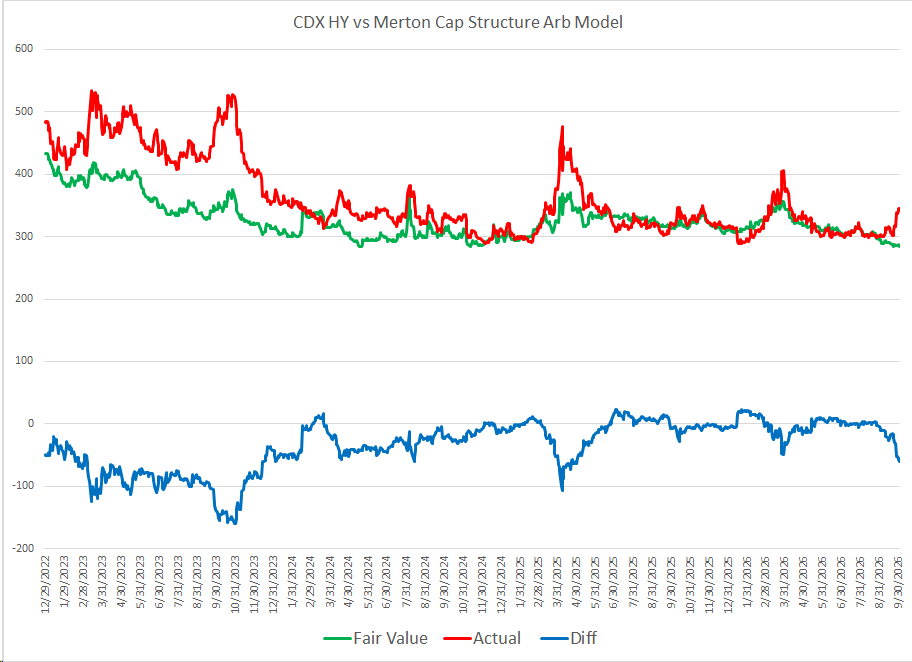
HY Spreads Merton Model - Doomers take a breath please. 1) Yes HY spreads are spiking over the last 4 months. 2) you have to squint to think this is high spreads or stress 3) a merton model using equity vols and levels and corporate leverage tracks spreads pretty well. 4) Corporate spreads are pretty cheap relative to Long term equity "puts" as level and vol and leverage suggests credits are just fine.