@ClimateBen@PCarterClimate it isn't baked in, but only if we apply the three legged barstool: 1. Reduce emissions 2. remove CO2 from the atmosphere using natural sinks (ex. localized ocean fertilization which could draw down 60Gt/yr https://t.co/PybfiLujiL) and 3. cool the planet with SAI while we drawdown
@PaulHBeckwith Given these peanut sized costs, I presume PF is looking into financing, however it could also be partly financed by individuals to get the ball rolling. What about a GoFundMe ? People want to act, and many would be willing to throw money at this, given sufficient advertizing.
@PaulHBeckwith Hi Paul, thanks for bringing this LOF subject to our attention. 60Gt/yr drawdown is clearly extremely pertinent. According to Fiekowsky (if understood correctly), it would only cost around 10Mil/yr to implement this at scale (2Mil per eddy). (1/2)
@Telegraph@jordanbpeterson there is nothing personal about AC. AC is not a right. Just like most things in today's globalized economy, it requires energy and has a non negligible impact on the outside world. Focusing on AC as a silver bullet will not save us from famine when there are global crop failures
@ClimateDad77 Emissions reductions alone won't save us from accelerated global heating. We NEED to be actively storing carbon in natural sinks, namely with localized ocean fertilization https://t.co/ep2ElHWCV1 AND temporarily cool the planet with SAI until CO2 conc. returns to safe levels
@andycorneys nothing is less obvious. However, i see global cooling with SAI and carbon capture (namely localized ocean fertilization, which would allow for net zero before 2030 - https://t.co/ep2ElHWCV1) being more likely in the near future. However, we should be doing all three starting now
@andycorneys renewables aren't renewable ! You know how windmills and solar panels are made ? They are just as physical as nuclear and have ahugher land footprint and shorter lifespan. Still being antinuke at this point in time is just as stupid as still being in climate denial
@McDo74521@supertanskiii that is NOT what rewilding is. Rewilding is ACTIVELY bringing back a highly productive ecosystem, where there are massive amounts of herbivores to regulate plant growth but also predatirs to regulate herbivores, and beavers to build wetland habitat.
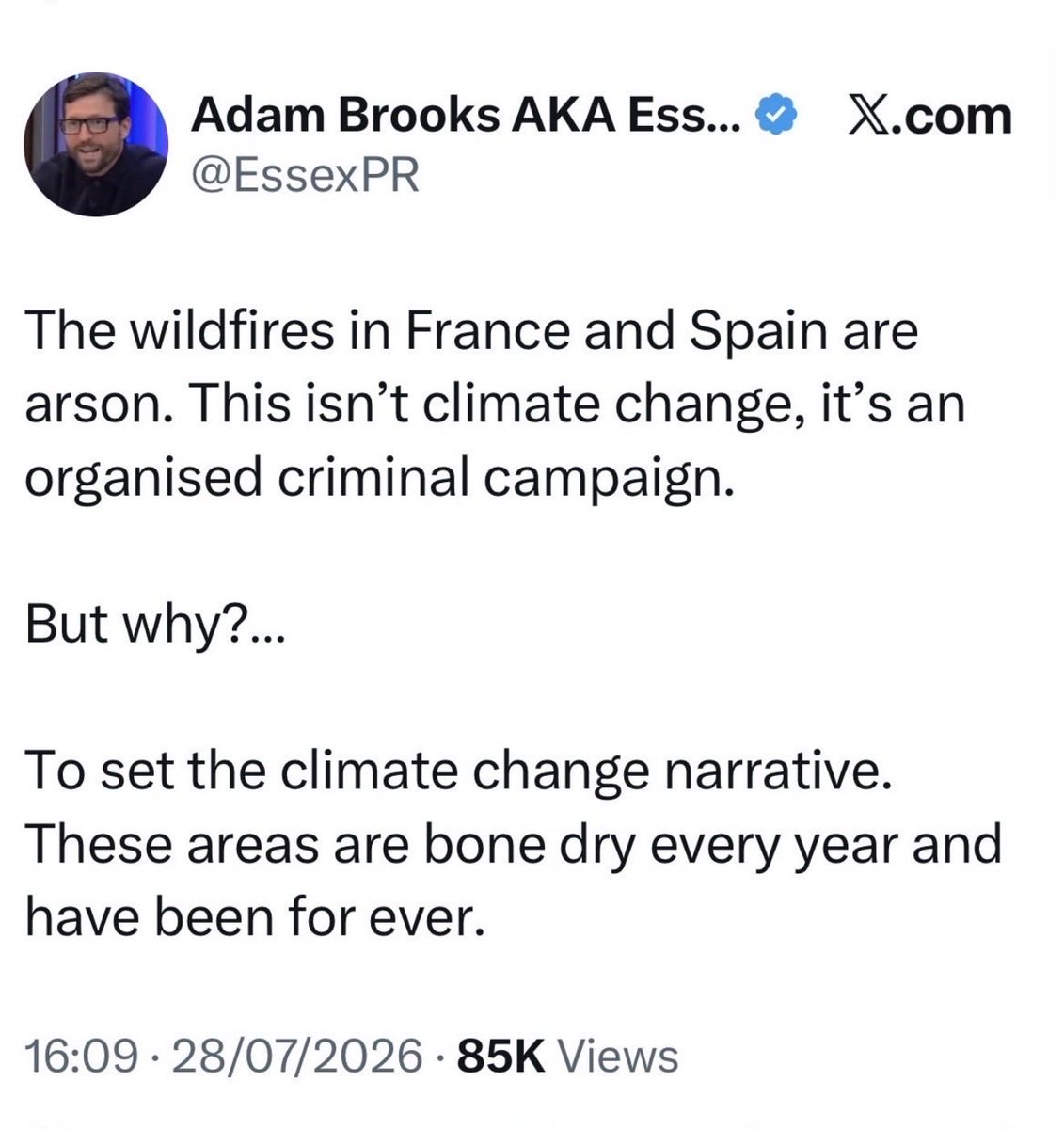
Idiots like @essexpr are putting us all in danger.
France has just seen a record breaking heatwave. This is not normal.
They had intense winter rainfall which meant there was extra vegetation growth.
The record temperatures dried this vegetation out.
When it comes to climate change and wildfires the issue is not the ignition - fires are sparked all the time; whether it’s arson, cigarette, BBQs, electrical faults, lightning etc - the issue is that clearly when there’s record temperatures and barely any rain, dried out forests and vegetation mean fires spread faster and are harder to control.
This kind of bullshit from someone with thousands of followers puts us all in danger because we need to act urgently and can’t do if people don’t understand there’s a problem.
Fact: extreme wildfires have more than doubled across the world - NASA
https://t.co/KiePB3ZtI8
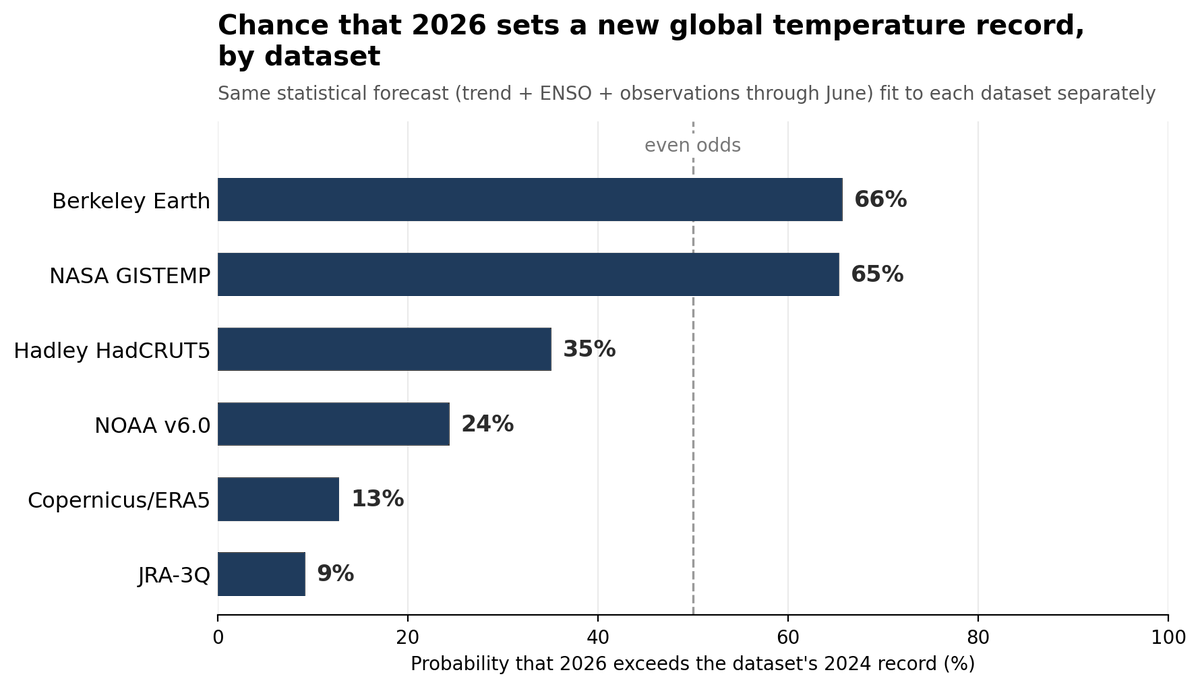
Jim Hansen and I have had a friendly debate about whether 2026 will be the warmest year on record or not. In a new piece, I explain how we both might end up being right: 2026 is increasingly likely to be the warmest in GISTEMP but second across all six records.
(see link below)
@CaptainAdvance1@ryankatzrosene what i'm saying is emission cuts are not enough anymore. We need drawdown and temporary cooling while we slowly cut emissions. Obviously rapidly cutting emissions with drawdown and temporary cooling would be better, but let's be honest, that change is going to be slow...
@MrMatthewTodd which is why we need rapid scaleup of SAI research and immediate action on carbon capture using natural sinks such as mangrove, wetlands, steppes, but even more importantly, localized ocean fertilization, which would allow an annual drawdown of 60Gt/yr https://t.co/ep2ElHWCV1
@jl_reigne il n'y aurait pas besoin de stocker si on avait des castors dans nos rivières. Ils feraient le boulot gratos moyennant quelques degats sur les exploitations en bordure de rivière