@reformussoccer@USLChampionship@RiverhoundsSC@loucityfc Would love to see it, but how many have academies, good training facilities, the ability to pay their players a living wage and enough business sense to make sure it doesn’t collapse
@WillyFoosball As a diehard Newcastle fan I welcome you, but also warn you that they are the most maddening team to support. Think Minnesota Vikings type of rollercoaster
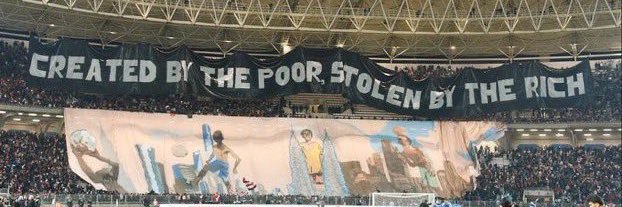
In Germany, a talented 14-year-old earns his club money. In America, his parents pay the club $15,000 a year.
That single inversion explains why "we will not" is the most accurate line ever written about US soccer.
FIFA built a global system for this. Training compensation and solidarity payments send a cut of every transfer fee back to the clubs that developed the player, from age 12 onward. Develop one future pro and your academy gets paid for a decade. Barcelona's La Masia, Ajax, every Bundesliga academy runs on this logic. The kid is the asset.
US Soccer refuses to enforce those rules. When Seattle's Crossfire Premier claimed its $60,000 share of DeAndre Yedlin's transfer to Tottenham, it got nothing. Claims on the Dempsey and Bradley transfers died partly because the federation couldn't even produce the youth training records.
So American clubs earn zero dollars when a kid turns pro. They earn when a kid enrolls. Which makes the parent the customer, and the product is whatever keeps the parent writing checks: travel tournaments, hotel weekends, $500 showcase events, private training at $100 an hour. Elite pathways run $8,000 to $20,000 a year. A comparable academy spot in Italy costs about 120 euros.
Follow the incentive one level deeper and it gets darker. A club dependent on fees can't cut its weakest paying players, so rosters optimize for retention over development. The scouting pool shrinks to families who can afford the cliff, which appears around age 11, exactly when development matters most. The country runs a talent filter sorted by household income instead of ability.
Every four years someone proposes fixing this. The proposal always requires the people profiting from the $15,000 model to vote themselves out of business.
They will not.
A critical element that the "rulebook purists" arguing Balogun deserved a red card are conveniently overlooking:
BALOGUN was the one who was challenged from behind.
The Bosnian player played *through* Balogun from behind and placed himself in the path of Balogun's natural step.
When he begins taking that step, Balogun has no idea the Bosnian player would even be in front of him. In that sense, you can't really even consider his move a "challenge." It was simply a step that incidentally landed in the same place the opponent's foot did.
In fact, the reason Balogun's step came down so hard is *because* the Bosnian player challenged into him and knocked him off balance.
This is not "reckless" or "excessive force" by any stretch of the imagination.
The red card was *obviously* unjustified from the outset. The only thing FIFA got wrong here is not immediately suspending the red card after the match.