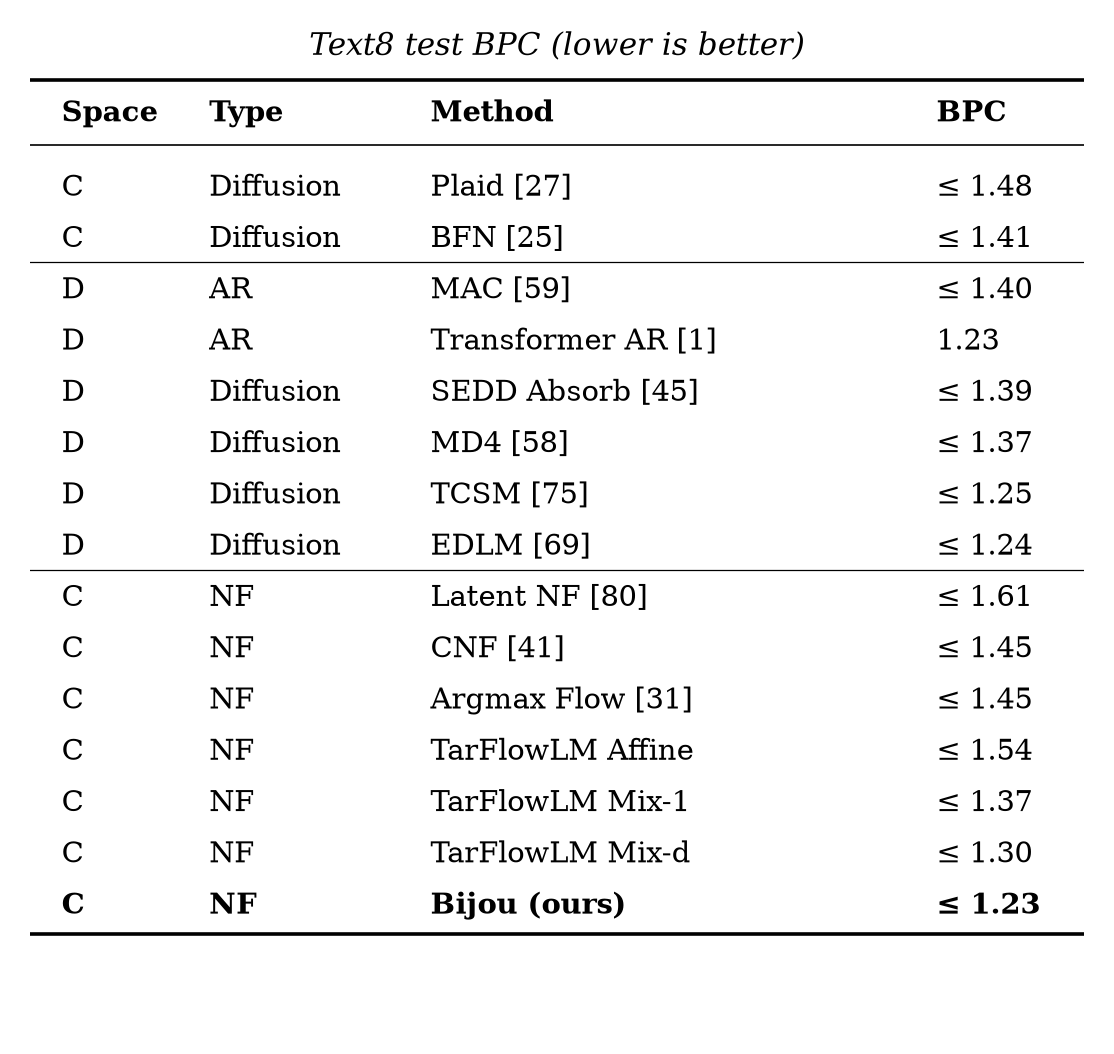
Kinda cooked on this one.
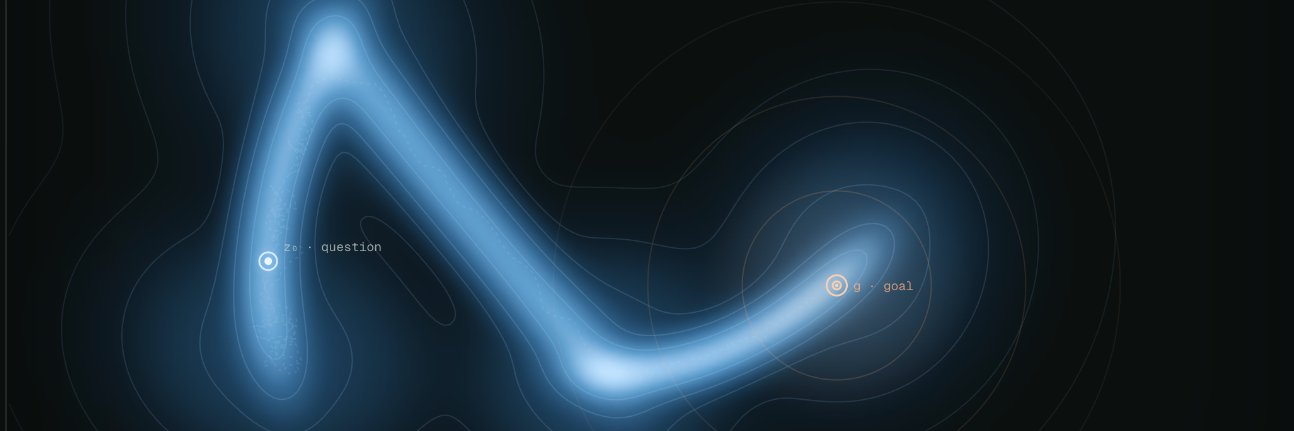
My new favorite bijection for normalising flows, Predictive Rosenblatt Spline, closed form inverse.
Belief over a gaussian codebook -> posterior predict-> spline knots, all analytic. Exact log-det at any K, zero init is the exact Rosenblatt map.
If your spending tokens on solving math problems. May i suggest matrix multiplication exponent?
Probably a decent economic upside. Current best exponent ≈ 2.37
It has a closed form evaluation suite, so it can be auto researched.
@francoisfleuret I feel like things like schmidhuber SWRM need a proper revisit, especially if you can formulate it without the rank-1 constraint of delta-net interpretations.
The search space between transformer fast weights in and hyper networks seems rich. Anything that let’s you learn “faster” than your learning rate is probably worth investigating.
@leonard_cor@recurseparadox I’d need to spend more time thinking about it to form a take. Generally tho, I tend to think most things can work, the surface area to correct issues presented by anyone with a “x approach is better than y approach” seems rather non trivial.
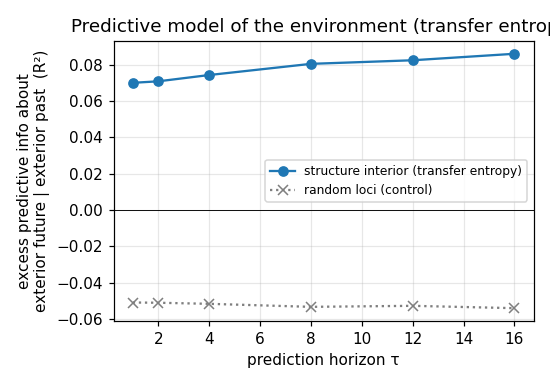
Can we train a family of local differentiable physical laws such that persistent local structures emerge which contain compressed predictive models of their own future environment and exhibit measurable causal control over that environment?
Idk, but i thought it was an interesting question if you try to take it seriously.
First attempt It's pretty at least.
A ~100M-parameter a local energy-conserving Hamiltonian field theory. its local rule is the symplectic leapfrog of a learned Hamiltonian. continuous, second-order, reversible, energy-conserving. Can kinda think of it as a second order in time neural ca, optimised such that cell states causally predict future local state whilst maximising variance, symplectic so it can't just push magnitude.
Can we train a family of local differentiable physical laws such that persistent local structures emerge which contain compressed predictive models of their own future environment and exhibit measurable causal control over that environment?
Idk, but i thought it was an interesting question if you try to take it seriously.
First attempt It's pretty at least.
A ~100M-parameter a local energy-conserving Hamiltonian field theory. its local rule is the symplectic leapfrog of a learned Hamiltonian. continuous, second-order, reversible, energy-conserving. Can kinda think of it as a second order in time neural ca, optimised such that cell states causally predict future local state whilst maximising variance, symplectic so it can't just push magnitude.