MULCHING: THE PRACTICE MANY FARMERS OVERLOOK, BUT THE SOIL NEVER FORGETS
At first glance, some farmers look at a mulched field and see crop residues scattered on the ground.
But regenerative agriculture sees something different.
It sees protection.
It sees moisture conservation.
It sees soil restoration.
It sees the future harvest being prepared today.
The crop residues covering this potato field are doing far more than simply covering the soil. They act as a natural shield against direct sunlight, reducing water loss through evaporation and helping the soil stay moist for longer periods.
During heavy rains, mulch softens the impact of raindrops, reducing erosion and protecting valuable topsoil from being washed away. As the residues gradually decompose, they return organic matter and nutrients to the soil, feeding the millions of microorganisms that support healthy plant growth.
This means healthier soil, stronger root systems, and crops that are better able to withstand periods of drought and climate stress.
Many farmers spend money trying to improve yields while unknowingly removing or burning the very materials that could help restore their soils naturally. Yet one of the most valuable resources on the farm is often the crop residue left after harvest.
In regenerative agriculture, the goal is not simply to grow crops. The goal is to build living soils that can continue producing for generations.
When mulching is combined with other regenerative practices such as minimum tillage, crop diversification, compost application, and renewable energy powered irrigation, farmers create farming systems that are productive, resilient, and environmentally sustainable.
This is the transformation being promoted through the Power for Food Partnership (#P4FP), where Regenerative Agriculture (#RA) and the Productive Use of Renewable Energy (#PURE) are helping farmers restore soil health while increasing productivity and resilience.
Because healthy soils do not happen by accident.
They are built one season at a time, one regenerative practice at a time.
#P4FP #RA_PURE
@SNVRwanda@RwandaAgri@RwandaInfra@RccdnRwanda@kilimoEAC@peace_pdn@epd_rwanda@L4dRwanda
Cattle Pen Fattening Tips
Clean fresh water must be available at all times, allow for at least 50 litres per head per day. Use of a 5000L water tank can suffice for a 25 cattle unit.
More
https://t.co/21G77n6xZq
#agribusinesstalk
A Guide to Farm Management
Online trading platforms can connect you directly with buyers, reducing the number of intermediaries and increasing profit margins.
Read More:
https://t.co/aGidpdTPDM
FROM WASTE TO WEALTHY: THE CASE FOR BIOGAS and INTEGRATED CATTLE FARMING
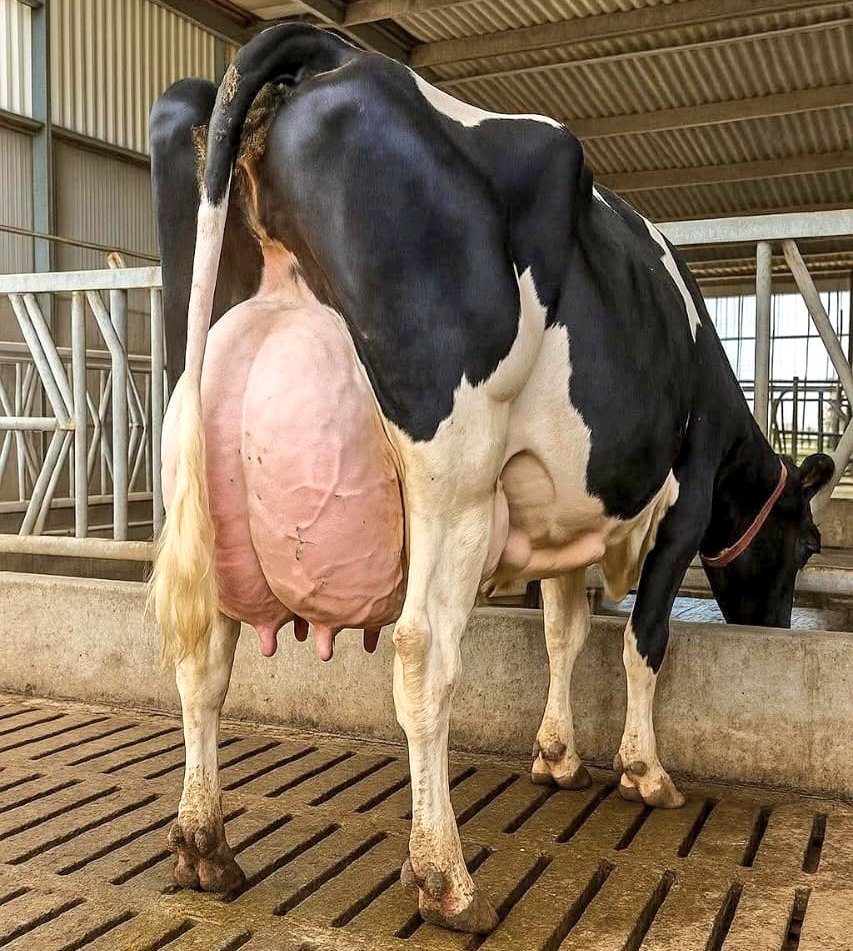
These three images together paint a compelling picture of sustainable, integrated cattle farming from what the cow produces, to what it deposits, to how that waste can be transformed into energy and fertilizer.
Image 1: The High-Producing Dairy Cow
The third image shows a Holstein Friesian dairy cow with a remarkably large, full udder a testament to exceptional milk production genetics. This breed is the world's leading dairy cow, capable of producing 25–40 litres of milk daily under good management. However, a high-producing cow also generates enormous amounts of manure an average dairy cow produces 30–50 kg of dung per day. The question is: what do you do with all that waste?
Image 3: Fresh Cattle Manure A Resource, Not a Problem
Image two shows fresh cattle dung on the ground what most farmers treat as a nuisance or a basic compost ingredient. While manure is indeed valuable as organic fertilizer, simply leaving it exposed causes nutrient loss through volatilization, greenhouse gas emissions, fly breeding, and disease risk. There is a far better and more profitable way to handle it.
Image 2: The Biogas Solution Why It Should Be Adopted
The first image illustrates the anaerobic digestion process converting animal waste into biogas. Here is how it works and why every cattle farmer should consider it:
Animal dung is mixed with water to form slurry, which is fed into the slurry inlet of an underground digester. Inside the sealed digester, anaerobic bacteria break down the organic matter over days, producing biogas a mixture primarily of methane and carbon dioxide. This gas rises and is piped through a gas outlet directly to a cooking stove, generator, or lighting system. The remaining byproduct digestate exits through the slurry outlet as a nutrient-rich, pathogen-reduced organic fertilizer far superior to raw manure.
WHY BIOGAS IS MORE ADAPTABLE THAN ALTERNATIVES
Compared to simply stockpiling manure or burning it as fuel, biogas offers multiple simultaneous benefits. It provides free, clean cooking energy, cutting household fuel costs significantly. It reduces greenhouse gas emissions by capturing methane rather than releasing it into the atmosphere. The digestate it produces is a better fertilizer than raw dung more stable, less odorous, and richer in available nutrients for crops.
Unlike solar panels or wind energy, a biogas system runs on waste already being generated daily by your own animals making it uniquely self-sustaining. For any farmer already keeping cattle, goats, or pigs, a biogas digester is arguably the highest-return, lowest-input energy investment available, turning an unavoidable waste stream into fuel, fertilizer, and profit simultaneously.
Nigeria’s agricultural sector remains one of the most critical pillars of the economy, employing over a third of the labour force and contributing significantly to non-oil GDP growth.
According to National Bureau of Statistics (NBS) data reported by Nairametrics, agriculture grew by 3.79% year-on-year in Q3 2025, improving from 2.55% recorded in Q3 2024, reflecting a gradual recovery driven largely by crop production, mechanisation efforts, and rising private-sector investment.
See Nigeria’s top agribusiness founders under 40.
Visit https://t.co/vm8qEx1dYc to read more.
Astronomical autumn in Southern Africa begins with the autumnal equinox on March 20 or 21, marking the transition from summer to winter.
Meteorological autumn is considered to run through March, April, & May, bringing cooler evenings, lower humidity, & more temperate weather.
The southern hemisphere is now in autumn, in line with the March Equinox that was on Friday. Technically this means that the rainy season is over, with less frequent rains expected moving forward. ☀️ 🍂 🇿🇼
🐐 The Secret Behind Successful Goat Farming
🌍 Why Goat Farming?
Goat farming is one of the most profitable and accessible livestock ventures in the world. Goats are hardy, adaptable, and productive supplying meat, milk, fiber, and manure. The two herds visible in this image represent the two pillars of commercial goat farming dairy breeds (top image, white goats) and meat breeds (bottom image, Boer goats with distinctive brown heads and white bodies).
1.🏆 Secret : Choose the Right Breed
Breed selection is the foundation of success. As seen in the image:
White dairy goats (Saanen, Toggenburg types) are prolific milk producers, yielding 3–5 litres daily.
Boer goats (bottom herd) are the world's premier meat breed fast-growing, heavily muscled, and highly adaptable. A well-fed Boer kid can reach market weight in just 90–120 days.
Matching your breed to your market and environment is the first secret to success.
2.🌿 Secret: Quality Pasture & Nutrition
Notice the lush green pastures in both images. Successful goat farmers invest heavily in good pasture management. Goats thrive on diverse grazing grasses, legumes, shrubs, and browse. Supplementing with quality hay, minerals, and concentrates during pregnancy and lactation dramatically improves productivity and herd health.
3.🏠 Secret: Proper Housing & Infrastructure
The well-fenced paddocks and sturdy barn visible in the top image highlight another secret good infrastructure. Goats need dry, well-ventilated shelter, strong fencing (goats are notorious escape artists!), and clean water sources at all times.
4.💉 Secre: Strict Health Management
Successful farmers follow strict vaccination, deworming, and biosecurity protocols. Common threats like pneumonia, foot rot, and internal parasites can devastate a herd quickly. Regular veterinary checks and early disease detection are non-negotiable.
5.Secret :Good Record Keeping & Market Linkage
Top goat farmers maintain breeding records, growth records, and health histories for each animal. Equally important is securing reliable markets butcheries, dairy processors, festivals, and export markets before scaling up production.
The Bottom Line
The secret to successful goat farming can be summarized in five words breed well, feed well, manage well! With dedication and the right knowledge, goat farming can transform lives and build lasting wealth. 🐐💚
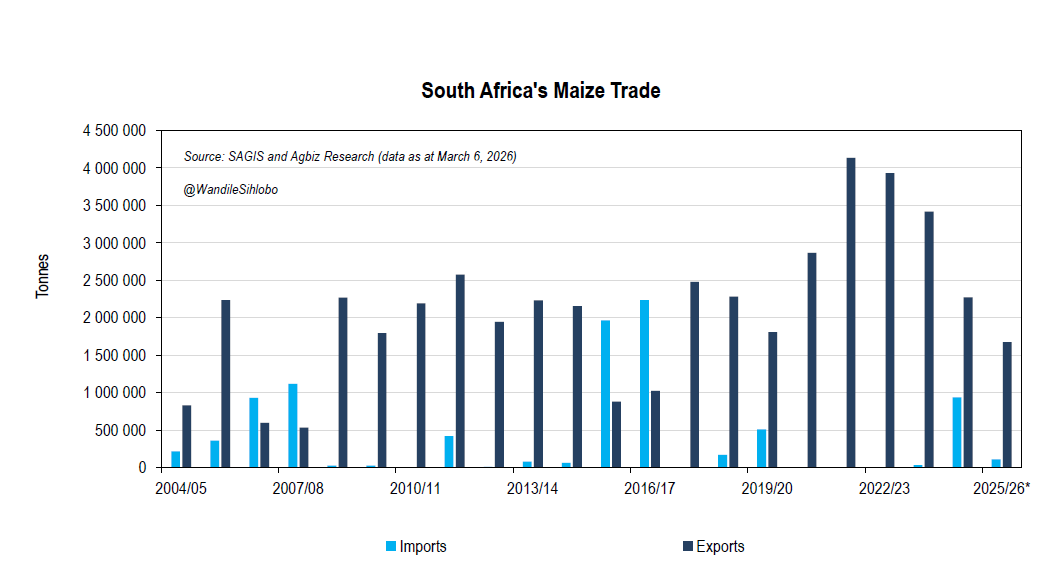
South Africa exported 35,222 tonnes of maize last week, with about 54% going to Zimbabwe, 16% to Namibia, 10% to Mozambique, and the remainder to other countries in the Southern African region.
This placed South Africa's 2025-26 maize exports at 1.7 million tonnes, out of the expected seasonal exports of 2.4 million tonnes. The current marketing year only ends in April 2026.
We have seen much softer demand for maize this year, partly due to ample global supplies. It seems unlikely that we will meet the 2.4 million tonnes export target for the season.
Starting Small in Farming Doesn’t Make You Small It Makes You Smart
One of the biggest lies we tell ourselves in farming is that if you start small, you’ll look small. But here’s the truth starting small is not a weakness. It’s a moderated, strategic scale. It’s where the smartest farmers sharpen their skills, test their systems, and learn how to run farming as a business, not just a hobby.
Before you keep your first chicken,before your first crop,you need a business mindset.
Even if you have all the farming knowledge in the world or you’re working with the Farm With Fred team the first person who must be fully invested in your farm is you. Understand the process. Know your inputs. Get your hands dirty. Learn the skills. Manage the numbers. Experience the losses and wins first-hand. Because the truth is, no one will run your farm like you will.
And here’s a reality most people won’t tell you.
Agronomists don’t offer markets.
Yes, we offer advice, production plans, and support but the market we might link you to is often temporary and conditional. It’s like renting a house. The moment your agreement ends or the terms change, that market disappears. If your business relies on someone else’s market, you’re building on shaky ground.
The market is your farm’s powerhouse.
A farmer without a market is like a car without fuel. It doesn’t matter how good your produce is without a market, it’s a loss. That’s why you must build your own market networks. Start now. When you’re small, it’s easier to test different buyers, pricing models, and distribution options without risking everything.
And here’s the secret,starting small can still give you big profit margins.
You’ll learn what works and what doesn’t. You’ll track every coin. You’ll see where the leaks are in your business those hidden expenses and poor practices that kill profits for so many farmers. A 2023 study by Tegemeo Institute found that over 68% of smallholder farmers in Kenya make less than 20% returns per season because of poor market linkages and unsustainable production practices.
But when you start small and smart, it’s easier to adjust, easier to scale, and easier to build a sustainable agribusiness.
So don’t be pressured to start big.
Start right.
Understand your farm.
Own your market.
Build your skills.
Learn the business.
Then, when you scale up, you’ll be doing it on a foundation that can actually hold the weight.
#LetsGrowTogether
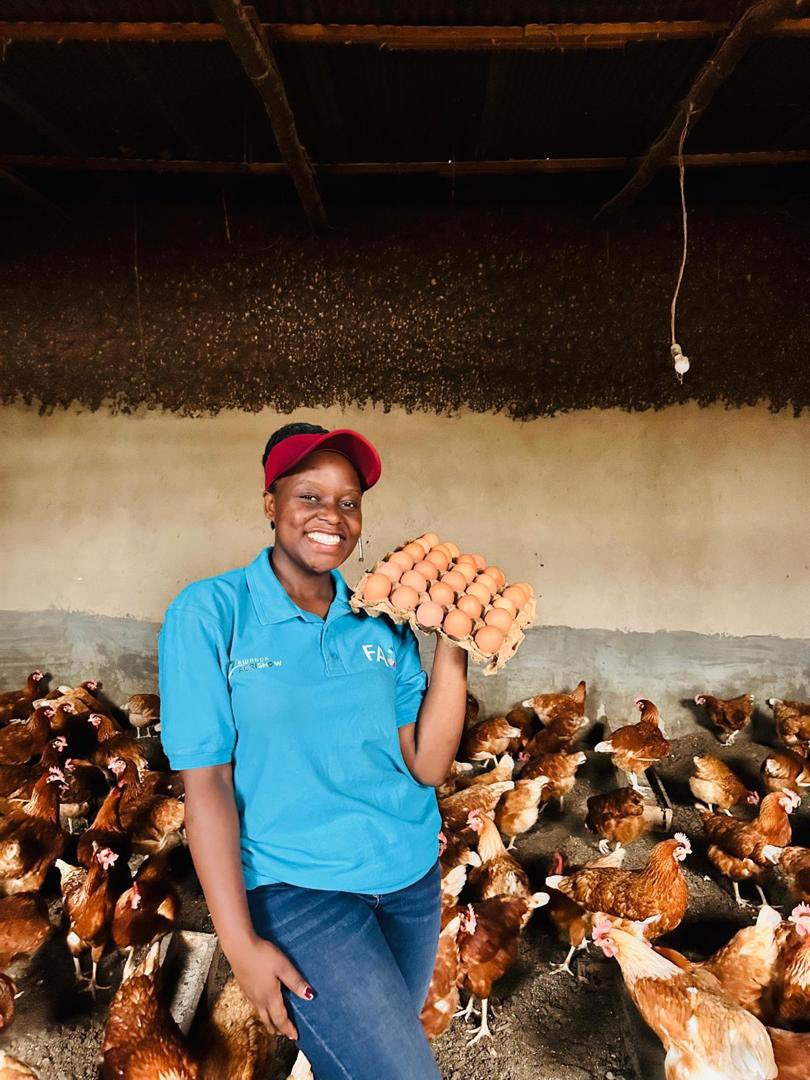
LAYER'S FEEDS?
Find a formulation guide based on expert recommendations:
1. Starter Feed (0-8 weeks)
- Maize: 50 kg
- Soya Meal: 17.5 kg
- Fish Meal: 12 kg
- Maize Bran: 10 kg
- Sunflower Cake: 4.5 kg
- Limestone: 4 kg
- Bone Meal: 1.5 kg
- Salt: 300 grams
- Premix: 200 grams
- Toxin Binder: 100 grams
This feed provides the necessary high protein (18-20%) for the rapid growth and development of the chicks.
2. Grower Feed (9-20 weeks)
- Maize: 60 kg
- Soya Meal: 14 kg
- Fish Meal: 10 kg
- Maize Bran: 7 kg
- Sunflower Cake: 5 kg
- Limestone: 2.5 kg
- Bone Meal: 1.2 kg
- Salt: 200 grams
- Premix: 100 grams
- Toxin Binder: 50 grams
This formulation lowers the protein content to around 16-18%, which is ideal for the continued growth and preparation of the birds for laying.
3. Layer Feed (20+ weeks)
- Maize: 55 kg
- Soya Meal: 13 kg
- Fish Meal: 8 kg
- Maize Bran: 12 kg
- Sunflower Cake: 6 kg
- Limestone: 5 kg
- Bone Meal: 2 kg
- Salt: 300 grams
- Premix: 150 grams
- Toxin Binder: 100 grams
This feed supports egg production with around 16% protein and the necessary calcium for strong eggshells.
Since 2020, central banks have embarked on one of the strongest gold-buying waves in decades.
We’re seeing a historic accumulation phase, with China and Poland leading a group of 15 nations that added nearly 2,000 tonnes to their vaults. Meanwhile the Philippines and Kazakhstan top the list of those reducing holdings.
Source – Visual Capitalist: https://t.co/GpRBafu8Dz
#Gold #CentralBanks #Economy #Investing #China
🔔 OFFICIAL ANNOUNCEMENT | NATIONAL DISASTER DECLARED
The Foot and Mouth Disease (FMD) outbreak has been classified as a National Disaster in terms of the Disaster Management Act No. 57 of 2002.
This declaration enables coordinated action across all spheres of government to contain the outbreak, protect livestock, and safeguard livelihoods and food security in South Africa.
Government is implementing prevention, control, mitigation, and recovery measures nationwide.
Read more here: 🔗https://t.co/w9lfEw61tl
#StopFMD #ProtectingOurHerd #GovZAUpdates @GCISMedia@GovernmentZA
Saudi Arabia launches huge plan to grow 10 billion trees across desert land. Saudi Arabia has announced one of the largest environmental projects ever attempted. The country plans to plant 10 billion trees across its desert landscapes over the coming decades.
Why Grow Vegetables in Small Spaces?
Urban and small-space gardening helps you:
Enjoy fresh, pesticide-free food
Save money on groceries
Reduce food waste
Reconnect with nature—even in the city
Many vegetables mature quickly, have shallow roots, or adapt well to containers, making them perfect for limited spaces.
The 16 Best Vegetables for Small Spaces
1. Swiss Chard (Acelga)
Growth cycle: ~60–70 days
A leafy green that regrows after harvest and thrives in pots or raised beds.
2. Watercress (Agrião)
Growth cycle: ~50–70 days
Fast-growing and compact, ideal for small containers with good moisture.
3. Lettuce (Alface)
Growth cycle: ~60–90 days
One of the easiest vegetables to grow in small spaces; perfect for succession planting.
4. Garlic (Alho)
Growth cycle: ~150–180 days
Takes longer to mature but needs little horizontal space.
5. Beetroot (Beterraba)
Growth cycle: ~60–80 days
Both roots and leaves are edible, maximizing yield per pot.
6. Onion (Cebola)
Growth cycle: ~100–120 days
Can be grown in narrow containers or grow bags.
7. Green Onion / Scallion (Cebolinha)
Growth cycle: ~70–90 days
Excellent for small pots and continuous harvesting.
8. Carrot (Cenoura)
Growth cycle: ~90–110 days
Choose short or baby varieties for shallow containers.
9. Cilantro / Coriander (Coentro)
Growth cycle: ~50–70 days
Compact and fast-growing, ideal for kitchen gardens.
10. Spinach (Espinafre)
Growth cycle: ~60–70 days
Thrives in cool weather and small planters.
11. Mint (Hortelã)
Growth cycle: ~90–110 days
Very adaptable but should be grown in its own pot, as it spreads easily.
12. Strawberry (Morango)
Growth cycle: ~70–80 days
Great for hanging baskets, vertical gardens, and containers.
13. Oregano (Orégano)
Growth cycle: ~30–40 days
A hardy herb that grows well in small pots with minimal care.
14. Okra (Quiabo)
Growth cycle: ~90–100 days
Grows vertically, making efficient use of limited ground space.
15. Radish (Rabanete)
Growth cycle: ~30–35 days
One of the fastest vegetables to harvest—perfect for beginners.
16. Arugula / Rocket (Rúcula)
Growth cycle: ~25–30 days
Quick-growing leafy green, ideal for continuous sowing.
Tips for Success in Small-Space Gardening
Use containers with proper drainage
Choose quality soil rich in organic matter
Ensure at least 4–6 hours of sunlight daily
Harvest regularly to encourage new growth
Final Thoughts
You don’t need a backyard to grow fresh vegetables.
With smart choices like these 16 vegetables for small spaces, anyone can start a productive home garden.
Whether you live in an apartment or have just a small outdoor area, growing your own food is accessible, rewarding, and sustainable.
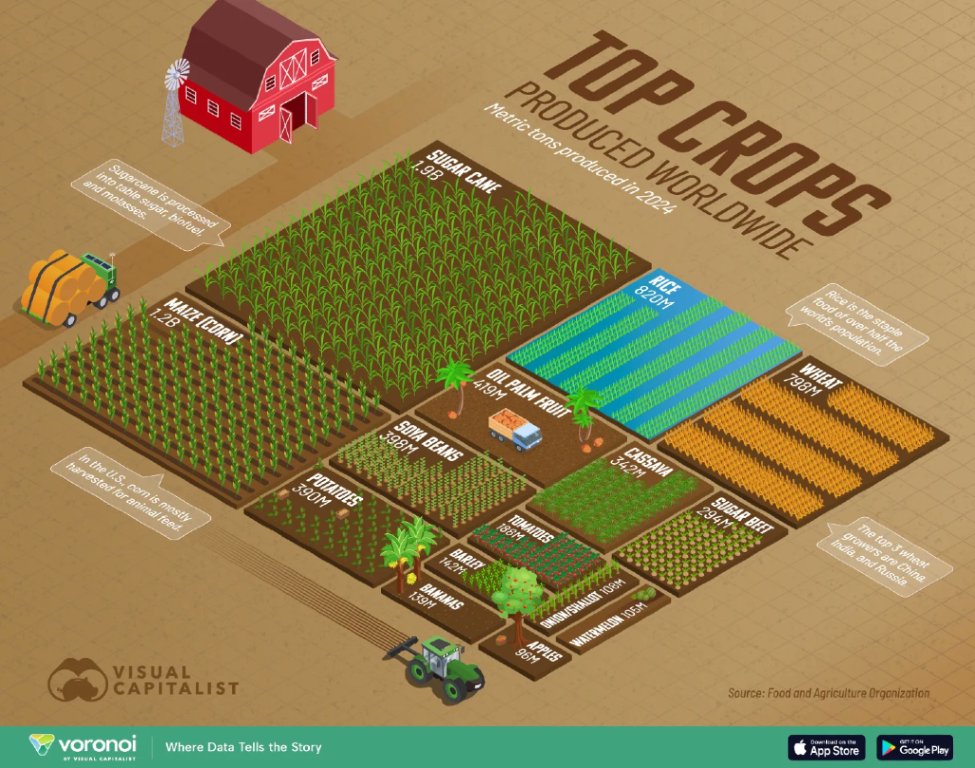
In terms of agricultural production, #Egypt is the global leader in the export of dates and oranges.
In Africa Egypt is the leading producer of:
Fruits: Oranges & Strawberries
Vegetables: Tomatoes, Potatoes, Dry Onions, Garlic, & Cucumbers.
Grains Wheat & Sugar Beet.
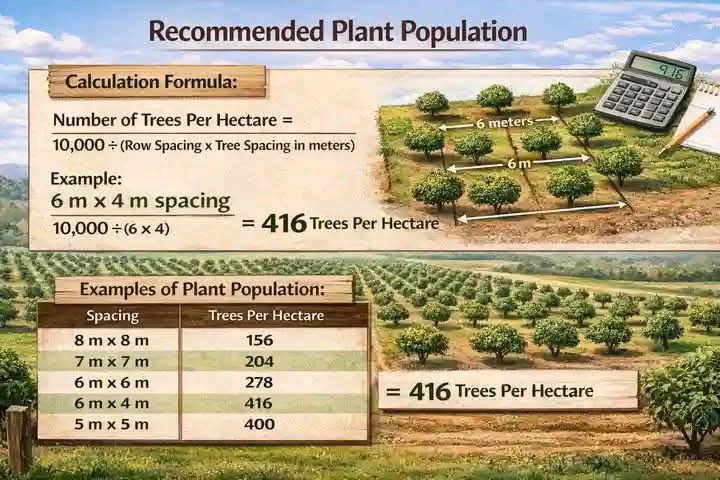
RECOMMENDED PLANT POPULATION GUIDE
This highly informative infographic teaches farmers how to calculate optimal plant population per hectare a critical skill for maximizing yield while maintaining healthy tree and crop growth.
The Formula Explained
The calculation is straightforward:
Trees Per Hectare = 10,000 ÷ (Row Spacing × Plant Spacing)
10,000 represents the total square meters in one hectare. By dividing this number by the spacing measurements, farmers instantly know how many plants fit optimally.
Understanding the Reference Table
The infographic provides five spacing examples showing how tighter spacing increases population density while wider spacing reduces it. At 8m × 8m, only 156 trees fit per hectare, while 6m × 4m accommodates 416 trees nearly three times more.
Applying This to Different Crops
Farmers can use this same formula for various crops using their recommended spacing:
Cereal Crops: Maize at 75cm × 30cm spacing yields approximately 44,444 plants per hectare, while rice at 25cm × 25cm produces around 160,000 plants per hectare.
Vegetable Crops: Tomatoes at 60cm × 60cm give roughly 27,778 plants per hectare, while lettuce at 30cm × 30cm supports approximately 111,111 plants per hectare.
Fruit Trees: Mango at 10m × 10m accommodates 100 trees per hectare, while citrus at 8m × 6m supports around 208 trees per hectare.
Root Crops: Cassava at 1m × 1m produces 10,000 plants per hectare, while yam at 1m × 0.5m supports 20,000 plants per hectare.
Key Takeaway
Understanding plant population density directly impacts yield optimization, resource efficiency, and overall farm profitability for every crop type grown.@AimePatrickIra1