This may be a better picture for people to share , she still hasn't been found this is been confirmed on a families FB post , the Irish sun telegraph and benidorm pages have all reported this girl as still missing , please share this her family is really worried .
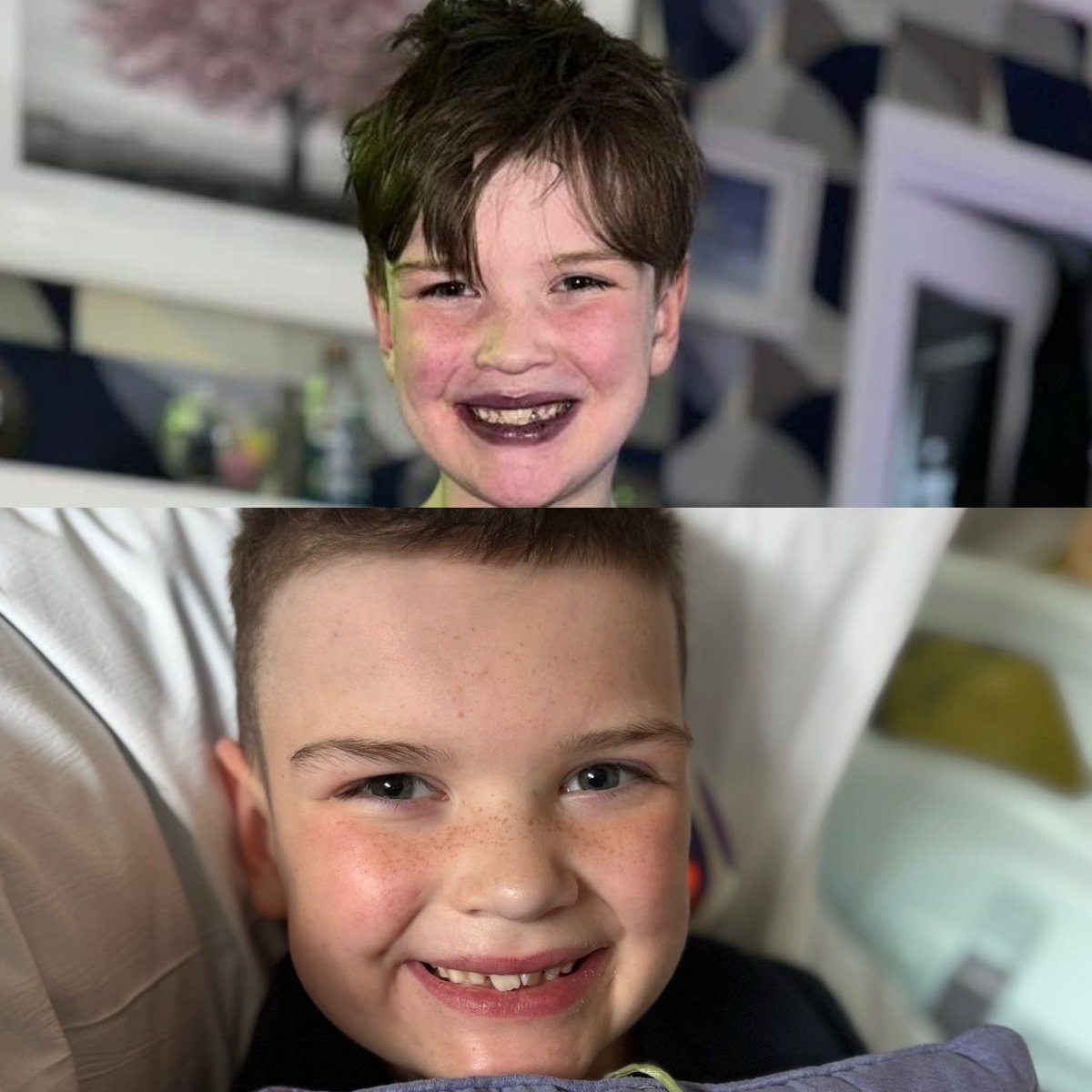
The power of organ donation in one photo. ❤️
Well… two photos. Just one month apart.
We know there’s still a long way to go, but just look at what organ donation has already made possible.
Today, on National Bomber Command Day, we remember the extraordinary courage and sacrifice of the men who served with RAF Bomber Command during WW2.
Of approximately 125,000 aircrew, 55,573 lost their lives — a devastating death rate of around 44%. A further 8,403 were wounded and 9,838 became prisoners of war.
Bomber Command crews flew more than 501,000 sorties, with 8,325 aircraft lost in action. Many were incredibly young, with the average age at death just 23 years old.
While many came from Britain, Bomber Command also included men from across the Commonwealth and occupied Europe, including Canada, Australia, New Zealand, Poland, France and Czechoslovakia.
Today, we honour their bravery, their service and their sacrifice.
Lest we forget. 🌺
Source: AI and photo: “RAF Bomber Command Memorial, Hyde Park Corner, London W1” by Steve Knight, CC BY 2.0
York’s last surviving Normandy veteran, Ken Cooke, has been awarded the Freedom of the City — the highest honour the City of York Council can bestow.
Ken, now 100, was just 18 when he took part in the D-Day landings on 6 June 1944. He said he was “shocked and honoured” to receive the award, describing it as something he had never expected.
Having lived in York for 80 years, Ken has dedicated much of his life to ensuring the sacrifice of his generation is never forgotten. He regularly attends remembrance events and speaks to schools and community groups about his wartime experiences.
Reflecting on the honour, Ken said: “This is for all my comrades too. Every award I get always includes them.”
A truly deserving recognition for a remarkable veteran. 🇬🇧
https://t.co/QmQWJPUNMF
🚨Argentina have been given the GREEN LIGHT by the White House FIFA task force to display their Falklands banner again if they win the World Cup on Sunday✅🇦🇷🏆
The head of the task force Andrew Giuliani believes the Argentina players are allowed to express their opinions.
Some acts of courage aren't planned.
They happen in the space of a few seconds, when someone chooses another person's life before their own.
In 2012, Private Lewis Murphy of The Yorkshire Regiment was serving in Helmand Province, Afghanistan, when his patrol came under a devastating close-range ambush. Machine-gun fire and grenades erupted from less than ten metres away, leaving two British soldiers wounded, including one with a critical gunshot wound to the neck.
A medical helicopter was on its way, but there was one major problem.
Between the patrol and the landing site was a deep, fast-flowing river thick with mud. A stretcher couldn't get through.
Without hesitation, Private Murphy stripped off his helmet and body armour, knowing the weight would drag him under. He lifted his wounded comrade onto his back and stepped into the river while the enemy was still nearby.
The crossing pushed him to his limit. Carrying the weight of another soldier through chest-deep water and thick mud, his strength began to fade. Still, he refused to stop.
His determination inspired the rest of the patrol to join him, and together they reached the opposite bank, where the wounded soldier was successfully evacuated by helicopter.
For his actions, Private Lewis Murphy was awarded the Queen's Commendation for Bravery, recognising the exceptional courage he displayed while risking his own life to save another.
His story is a reminder that the strongest bond in the British Army has always been the one between comrades.
No one gets left behind.
Respect, Private Lewis Murphy.
🇬🇧🌹
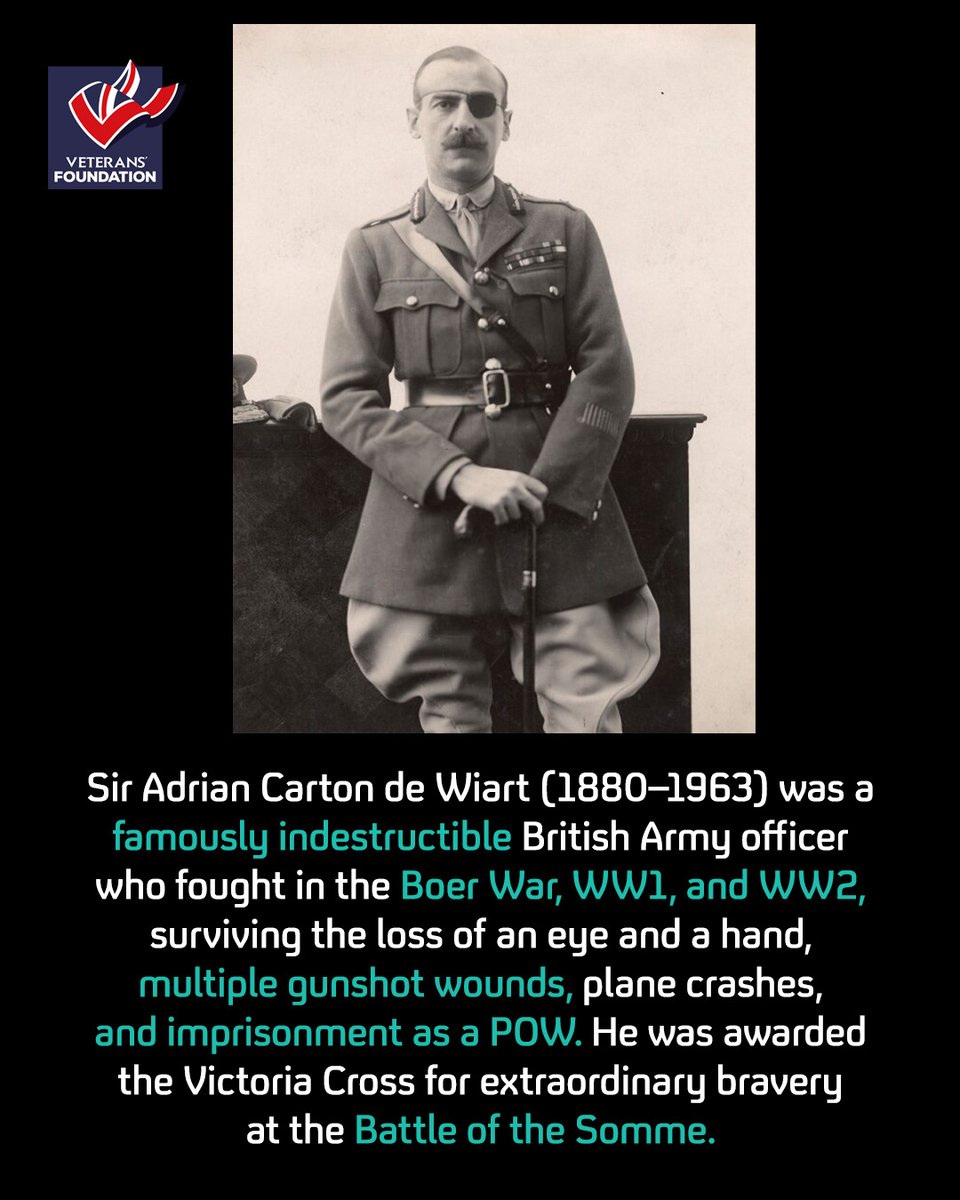
Join us in remembering Lieutenant General Sir Adrian Carton de Wiart, one of Britain's most extraordinary soldiers.
Serving in the Boer War, the First World War and the Second World War, he was wounded countless times, losing his left eye and left hand, yet repeatedly returned to active service. Awarded the Victoria Cross for his exceptional bravery, he became renowned for his resilience and determination in the face of overwhelming odds.
Reflecting on his remarkable military career, he famously wrote: "Frankly, I had enjoyed the war."
His story is one of unwavering courage, remarkable endurance and an unbreakable commitment to service. His legacy continues to inspire generations of those who have served and those who remember their sacrifice.
Lest We Forget. 🌺
Photo: National Portrait Gallery (NPG x45273), photograph by H. Walter Barnett, public domain (via Wikimedia Commons).
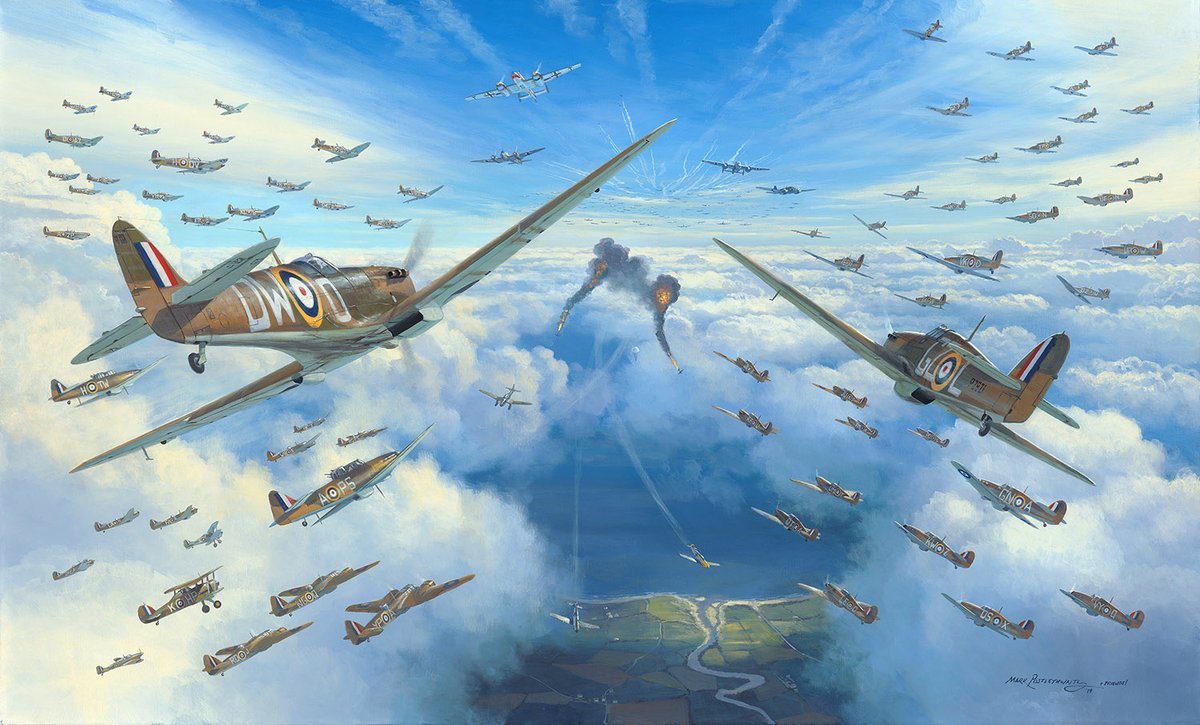
86 years ago today, the Battle of Britain began. It is the closest the free world ever came to losing everything.
By July 1940, Hitler had swallowed Europe whole. Poland in 5 weeks. France in 6. Belgium, Holland, Norway, Denmark. The British army had just fled the continent at Dunkirk, leaving its guns, tanks, and trucks behind in the sand. Britain stood completely alone. No America. No Soviet Union. Just one island and the sea.
Hitler's plan was simple. Before German troops could cross the Channel and finish the war, the Luftwaffe had to destroy the Royal Air Force and rule the sky. His commanders promised him it would take four days. Maybe two weeks at most.
Standing against the largest, most battle-hardened air force on earth was a thin line of young men. Some were 19. Some had trained for only a few weeks. Many climbed into their Spitfires and Hurricanes not knowing how to properly fire the guns yet. They scrambled four, five, six times a day. They ate when they could, slept in their boots, and watched friends not come back at breakfast.
At the height of the fighting, a fighter pilot's life expectancy was four weeks. They all knew the math. They flew anyway. Every single day.
Polish and Czech pilots who had lost their own countries flew with them, and fought like men with nothing left to lose, because they had nothing left to lose. Canadians, New Zealanders, South Africans, Americans who crossed the ocean before their own country had entered the war. A few hundred against thousands.
And the impossible happened. Week after week, the RAF refused to break. In September, Hitler blinked. The invasion of Britain was postponed, then quietly abandoned forever. It was his first defeat of the entire war, and it was handed to him by boys barely old enough to drink.
Winston Churchill stood before Parliament and said the words that still give people chills:
"Never in the field of human conflict was so much owed by so many to so few."
They called them simply The Few. Most people alive today owe them a debt they will never know they carry.
86 years on, raise a glass to the young men who saved the world from the cockpit of a Spitfire. 🇬🇧