Pidamos a María, Reina de la paz, que nos enseñe a renunciar a las palabras hirientes, al juicio inmediato, a la murmuración y a las calumnias; y que aprendamos a custodiar y a cultivar el amor en la familia, entre amigos, en el lugar de trabajo, en las redes sociales, en los debates políticos y en las comunidades cristianas, de modo que el odio ceda el paso a la esperanza y la paz. #ViajeApostólico
No, sweetie.
Donetsk was a city of a million roses when its own Ukrainian flag flew above it.
Back then, it was also the fastest-growing and most rapidly prospering city in Ukraine -- home to what was the finest regional airport in Eastern Europe, one of the world's best football stadiums, a state-of-the-art railway terminal, and one of the cleanest, best-maintained cities in the region.
Its elites were running Kyiv, and every time I visited Donetsk as a student, riding the famous trolleybus Route No. 2 through the city, I was amazed by how many new office buildings were appearing, how much money was flowing into the city, and how many international companies were opening their doors there.
Fifteen years ago, to us kids from Donbas, Donetsk felt like the center of the universe because it had everything one could possibly dream of. It was a young city of universities and libraries, where the overwhelming majority of boys and girls from across Donbas went to study, including those from my own small hometown an hour away by bus.
Names like Liverpool or Detroit Rock City may mean nothing to you, but our Ukrainian Donetsk was a city of great rock clubs and unforgettable concerts. We traveled there to see Western bands perform.
We bought rock merchandise at the legendary Right House store near Krytyi Market. Scorpions, Rihanna, and Beyoncé performed at the famous Donbass Arena. Schoolchildren from across Donbas were bused in to watch Shakhtar Donetsk matches. The city even had a famous monument to The Beatles.
It was a city where we sang songs on guitars in its beautifully maintained parks and along the Kalmius embankment before heading out to buy the famous "green Donetsk burgers." Our older friends moved there after graduation, formed rock bands, recorded full albums, and held wedding celebrations in the squares around Donbas Arena. We traveled there to visit the legendary Radio Market in search of films, music, and books.
And then you arrived.
And you turned the wealthiest, most prosperous Ukrainian city into a piece of shit.
You deceived many of its people with sweet promises of Russian oil-fueled prosperity broadcast from television screens, but what you brought instead was war.
You transformed a thriving city into a criminal wasteland ruled by ethnic gangs from Russia, into a kingdom of Stalinist terror straight out of the 1930s, complete with torture chambers in the infamous Izolyatsia prison camp. You turned the magnificent Donetsk Airport into lifeless gray rubble, while the vast stands of Donbas Arena have spent a second decade slowly being reclaimed by weeds instead of hosting Champions League finals and Metallica concerts.
You swept away an entire generation of the city's men through your forced mobilization and threw them against Ukrainian machine guns until there were barely enough people left to keep basic municipal services running. Because of you, prosperous Donetsk became a withered desert without reliable water, because your war destroyed the canal system that carried water from the Siverskyi Donets River into Donbas. For years now, people have lived with chronic water shortages and have been reduced shitting into plastic bags forever.
You dragged Donetsk back like seventy years in time. You turned it into a depressed backwater, devoid of hope and future. Even ten years ago, tens of thousands of people, the most active, the most talented, the most entrepreneurial, fled the city and found refuge in Kyiv and elsewhere in Ukraine. Many of them still remember our Donetsk with tears in their eyes, the Donetsk that existed before the arrival of the "Russian World."
You transformed it into something that even my pro-Russian acquaintances are shocked to see when they return after years of occupation.
It was you who trampled the million roses of our Ukrainian Donetsk into shit beneath the tracks of your tanks and the boots of your death troops, turning them into a foul swamp of death and despair.
And that stain will forever remain on the conscience of fascist Russia, which brings nothing but destruction, decay, and death wherever it goes.
"S'il y a un Dieu, il est caché, il est ailleurs, il est hors du temps, il n'obéit pas à nos lois et nous ne pouvons rien dire de lui. Nous ne pouvons décréter ni qu'il existe ni qu'il n'existe pas. Nous avons seulement le droit d'espérer qu'il existe. S'il n'existe pas, notre monde est absurde. S'il existe, mourir devient une fête et la vie, un mystère...
Je m'amuse de cette vie qui se réduit à presque rien s'il en existe une autre. Les malheurs , trop réels, les ambitions, les échecs, les grands desseins, et les passions elles-mêmes si douloureuses et si belles, changent un peu de couleurs. Avec souvent quelques larmes, je me mets à rire de presque tout. Les imbéciles et les méchants ont perdu leur venin. Pour un peu, je les aimerais. Une espèce de joie m'envahit. je n'ai plus peur de la mort puisqu'il n'est pas interdit d'en attendre une surprise. Je remercie je ne sais qui de m'avoir jeté dans une histoire dont je ne comprends pas grand-chose mais que je lis comme un roman difficile à quitter et que j'aurai beaucoup aimé.
J'ignore s'il y a un Dieu ailleurs, autre chose après la mort, un sens à cette vie et à l'éternité, mais je fais comme si ces promesses étaient déjà tenues et ces espérances, réalisées. Et je souhaite avec confiance qu'une puissance inconnue veille, de très loin, mais beaucoup mieux que nous, sur ce monde et sur moi."
Jean d'Ormesson, Qu'ai-je donc fait ?
When the gates finally swung open and the world outside the camps became visible once more, the rush of liberation wasn't a sudden flood of joy—it was a quiet, fragile morning. After years of bodies being treated as machinery, broken by hunger and exhaustion, the simple act of standing felt like a monumental struggle.
In the days following liberation, medical teams encouraged survivors to try short, gentle walks to regain their strength. To an outsider, it might have looked like a simple medical exercise, but to those who had lived through the unthinkable, those few unsteady meters were a revolution. For the first time in an eternity, movement was not a response to a barked command or a threat of violence; it was a choice.
These first walks were the beginning of a profound transformation. For years, walking had been a tool of cruelty—forced marches, endless labor, and the soul-crushing routine of roll calls. But as survivors leaned on makeshift canes or on the shoulders of their brothers and sisters, that same movement became something sacred. Each step was a quiet declaration that they were still here, that their bodies belonged to them again, and that the space around them was no longer a cage. There were no fear-filled destinations waiting at the end of the path; there was only the open air and the return of agency.
Freedom, in its purest and most intimate form, was practiced in these quiet moments of persistence. It wasn't found in a grand speech or a signed document, but in the courage it took to gathering strength and move forward without permission. Every unsteady stride was a brick in the foundation of a new life, a way of learning how to inhabit the world again as a person rather than a number.
We share this story today to remember that healing is a journey of a thousand miles that begins with a single, trembling step—and that even when we are at our weakest, the act of moving forward is the greatest victory of all.
Via History Digger
Before Easter, Ukrainians decorate pysanky - traditional Easter eggs that are carefully hand-decorated using wax and dyes, often featuring symbolic patterns and colors that carry deep cultural meanings.
This tradition is over 1,000 years old, dating back to pre-Christian times and later becoming an important part of Easter celebrations.
My grandmother used to make them, my mother did too, and now my daughter and wife continue the tradition. By the way, I also tried it, but it doesn’t look as beautiful.
What Easter traditions do you have in your country? Do you decorate eggs like this?
📹 pysanka. art/Instagram, oksana_rybaruk/TikTok
Humanity needs photographs like these.
Maybe at least someone here, looking at them, will be reminded once more of how appallingly petty our conflicts are, and how absurd our claims on this tiny blue marble in the abyss -- and how criminal and abysmal are those who launch rockets not into space, but into apartment buildings full of sleeping people.
La paradoja del socialismo: necesitan que existan los pobres. Prometen ayudarlos, pero es al revés: si realmente los ayudaran, dejarían de ser pobres. Sin pobres, no se necesita socialismo.
He saved children from the Holocaust without speaking a single word.
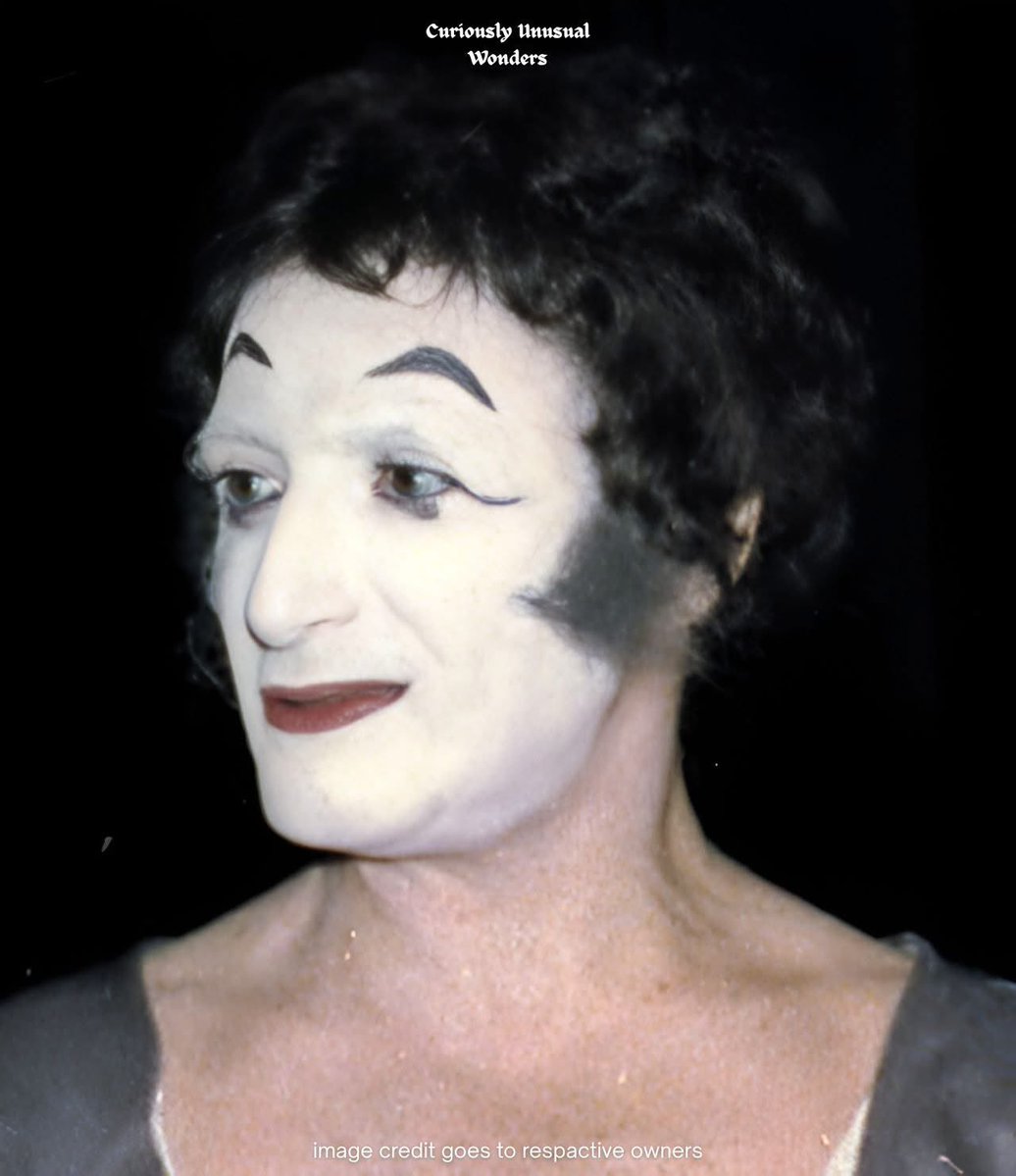
The world remembers Marcel Marceau as the master mime. The man in the striped shirt and white face paint. The artist who could make you see invisible walls and feel imaginary wind. For decades, he performed on the greatest stages of the world, moving audiences to tears without uttering a sound.
But long before the applause, before the spotlight, before the fame, he was simply Marcel Mangel. A Jewish teenager in occupied France whose father had just been taken.
It was 1944. His father, a kosher butcher in Strasbourg, had been arrested by the Nazis and deported to Auschwitz. He would never return. Marcel knew his family was being hunted. He changed his surname to "Marceau" and made a decision that would define the rest of his life.
He joined the French Resistance.
His mission was unlike anything most soldiers faced. There were orphanages scattered across France, filled with Jewish children whose parents had already been murdered or deported. These children were next on the Nazi lists. Someone had to get them out. Someone had to lead them across dangerous territory to neutral Switzerland, where they might have a chance to survive.
Marcel volunteered.
The journeys were terrifying. He would gather groups of children—sometimes as young as four or five—and lead them through forests and mountains toward the Swiss border. Nazi patrols were everywhere. A single sound could mean death for everyone. One child's cry, one moment of panic, and they would all be discovered.
How do you keep frightened children quiet when their lives depend on absolute silence?
Marcel understood something others didn't. Fear makes children cry. But wonder makes them hold their breath.
During those dangerous treks through the darkness, Marcel would use his gift. He would perform for the children. Silent pantomimes that transformed terror into enchantment. He became a character they could follow, a game they wanted to play. In the moonlight, he mimed catching invisible butterflies. He pretended to trip over imaginary logs. He acted out stories that made the children smile even as they walked through the night.
He made silence feel like magic instead of a rule they had to follow.
Over the course of the war, working alongside his cousin Georges Loinger and other resistance fighters, Marcel helped save dozens of Jewish children. He didn't just guide them through forests. He forged identity documents, altering birth certificates and creating false papers that gave these children new identities and new chances at life.
After the liberation, Marcel Marceau became one of the most celebrated performers of the 20th century. He toured the world. He influenced generations of artists. He received standing ovations in every language. But he rarely spoke about what he had done during the war.
When asked why he chose silence as his art form, he often referenced his father, murdered in Auschwitz. He once said that the survivors who returned from the camps could never find words for what they had experienced. "My name is Mangel," he explained. "In German, it means 'the lack.' I mime the lack of words."
His silence on stage wasn't just performance. It was remembrance.
Marcel Marceau proved that art can be more than entertainment. In his hands, it became survival. It became resistance. It became a way to transform fear into hope, to lead the vulnerable to safety, to speak volumes without making a sound.
He didn't need weapons to be a hero. He didn't need speeches or slogans. He just needed to move, and in moving, to give frightened children a reason to trust, to follow, and to believe they might see tomorrow.
The applause that followed him for six decades was deserved. But the silence he kept about his greatest performance—the one that saved lives in the darkest forests of Europe—might have been the most powerful act of all.
"J’étais de ces personnes prêtes à traverser l’océan pour quelqu’un qui, lui, n’aurait même pas traversé la rue pour moi. Je demandais pardon, même lorsque je n’avais rien fait de mal. Il m’a fallu beaucoup de temps pour comprendre que ce n’étaient pas les autres qui me rendaient triste ou déçue, mais ma propre illusion : celle de croire que chacun porte en lui le même cœur que moi.
C’est ce qui arrive quand certaines personnes ne t’aiment pas... Et parmi elles, il y avait toi. Mais j’ai puisé en moi la force, la dignité, le courage… et j’ai appris."
Jodie Foster