@jueun_kim_ Hi Jueun,
I'm Rafik, AI researcher @ Nanjing University. Congrats on your paper! i have one paper at AAAI and three submissions.
I work on the intersection of RL, World models and causality. Nice to connect!
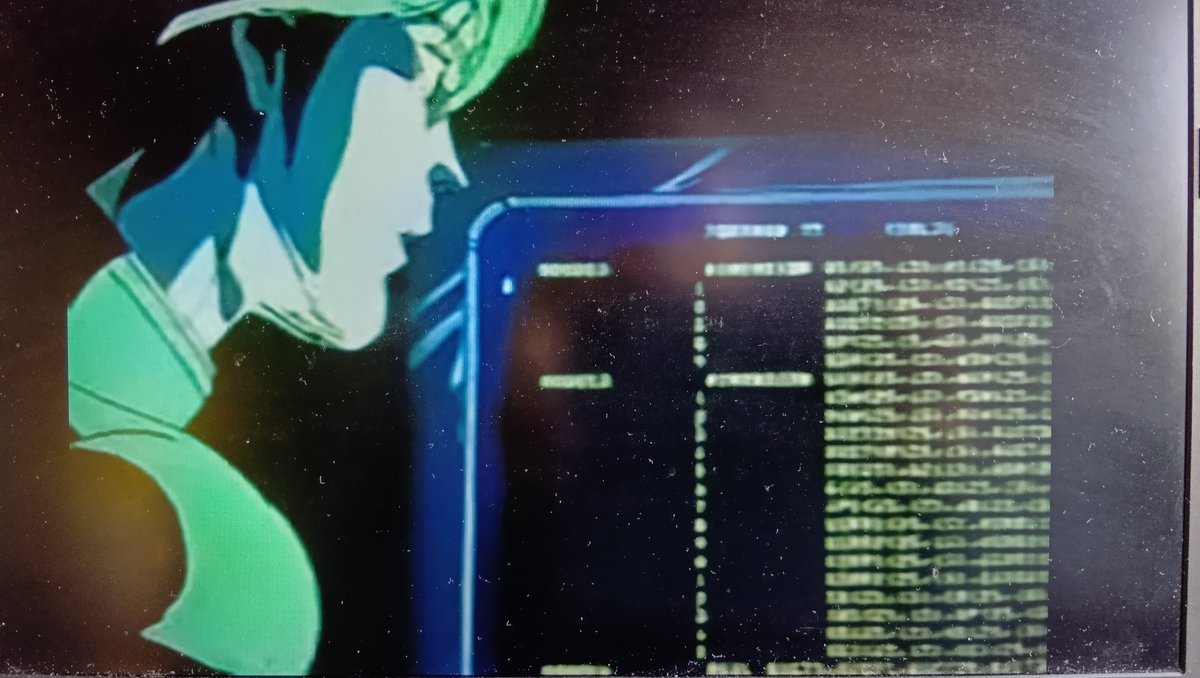
Kadokawa announces 'Re:Zero Re:Told', a remake of Re:Zero Seasons 1 and 2.
"The goal with this project is to bring these prior seasons to the visual standard of Seasons 3 and 4 while adding crucial cut content back to these seasons." Producer Sho Tanaka states in an interview.
Very nice work! Grounding world models by existing game engine is strong way to guarantee the physical consistency.
In our recent project Oneira. https://t.co/sgSnlLOoFb. Arxiv: https://t.co/hKlzv3576t. we also explored the power of coding agents for world models, with a focus on explicit world representations.
🌍 Introducing Oneira, an interactive video world model where a coding agent keeps an explicit world state.
Objects that appear as you explore become interactive, and your changes persist over long horizons.
Project: https://t.co/DhvJxnZb2j
Paper: https://t.co/7e4uo2Iqu2
TC-WM is accepted at #NeurIPS2026! 🎉
A generic visual representation isn’t always a good latent state for planning and control.
For control, we need more than visual fidelity. Instead, we aim for task-centric representations that reflect physical dynamics and task-relevant information, while still leveraging the scalability of visual foundation models.
Compared with DINO-WM, TC-WM learns a lower-dimensional representation with higher latent-space utilization and diversity. These improvements translate into stronger performance, especially with the clearest gains on 3D contact-rich manipulations.
Webpage: https://t.co/zlSkDowoC2
Paper: https://t.co/J1D3lnpwAa
Code: https://t.co/bgcUZ3JNQj
This is my thinking. Out of the British concept known as Chaos Magic, there were some people who viewed reality through the thinking way of computer architecture. As a result, the concept of using computers as tools for magic was already being born. However, I decided to take the actual process of summoning devils and turn it into a program. I went as far as creating a flowchart for it, which I then entrusted to Akemi Nakajima.
I was asked, "How did you come up with the idea of summoning devils into a computer?"However, back in 1985 when I wrote Megami Tensei, the similarities between computer theory and magical theory were already being discussed on BBS networks and in magazines. It was a popular thinking thought among the otaku of that era, and I resonated with it deeply. To be a bit more specific...